





 Portuguese
  English
  Spanish
  4 min of reading
  0 comments


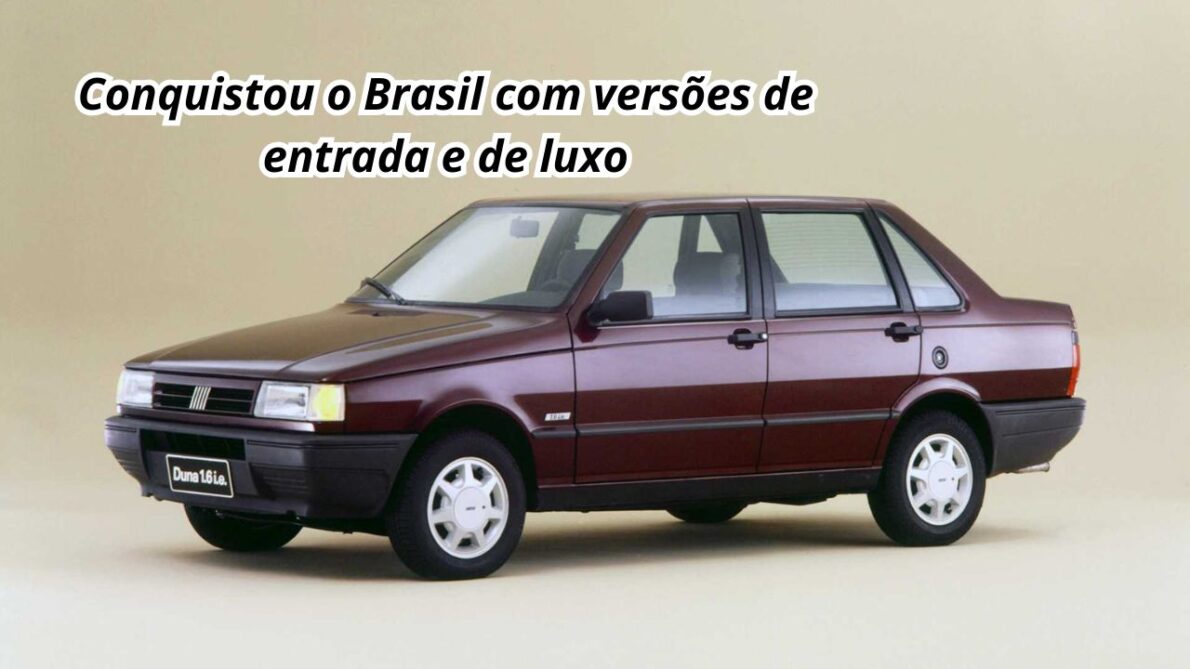
Get To Know The History And Curiosities Of The Fiat Prêmio, The Car That Conquered Brazil With Entry And Luxury Versions, Options For Two Or Four Doors, And Much More.
Get ready to embark on a nostalgic journey through the universe of the Fiat Prêmio, the sedan that not only left its mark but literally shook the Brazilian automotive industry! Yes, we are talking about that car that turned the heads of Brazilians in the 80s and 90s, with its entry-level and luxury versions, options for two or four doors, and a bunch of curiosities that most of us can hardly imagine.
The history of the Fiat Prêmio begins in the mid-80s, but to understand its importance in the Brazilian automotive industry, we need to go back a little further. In 1983, Fiat launched the Fiat Oggi, a compact sedan derived from the Fiat 147. Despite its spacious trunk, the Oggi did not win over the public due to its outdated look and discordant design.
Fiat Prêmio, The First Derivative Of The Uno
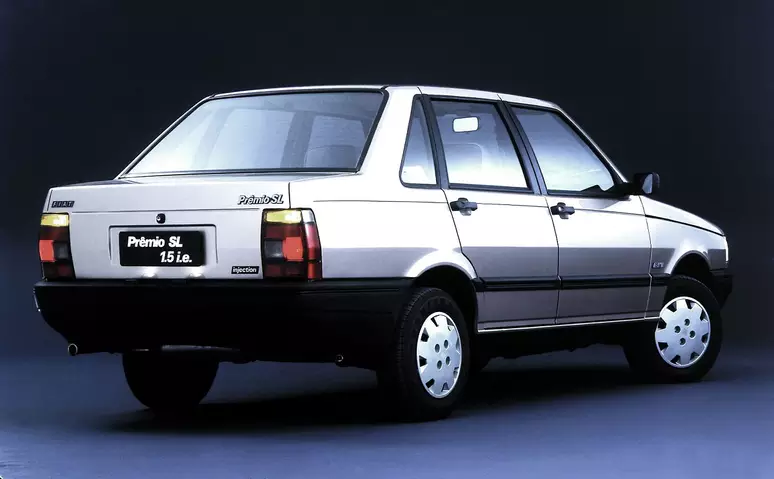
Then, in 1984, the Fiat Uno emerged, a practical compact with a boxy look and clean design. Its immediate success paved the way for the launch, in March 1985, of the Fiat Prêmio, the first derivative of the Uno. Initially available in a two-door CS version, the sedan featured well-defined three volumes and a modern look for the time.
-
OMODA & JAECOO grows in Europe in 2026 with an integrated strategy of sales, innovation, local production, and technological advancement in the United Kingdom, Italy, and Spain.

-
OMODA & JAECOO expands after-sales service in Brazil with competitive maintenance, a 7-year warranty, and high availability of parts for technological SUVs.

-
OMODA & JAECOO appoints Alessandra Souza as executive marketing director in Brazil and accelerates brand expansion with a focus on innovation, networking, and hybrid portfolio.

-
Jaecoo 7 with super hybrid SHS system exceeds 1,200 km of combined range with a 1.5 turbo engine, high-density battery, and intelligent energy management.

The front of the Fiat Prêmio was marked by a wedge-shaped hood and a single windshield wiper. The square headlights, accompanied by direction indicators at the ends and the grille with the inclined five-bar emblem, gave personality to the model. On the side, the clean lines and retractable door handles stood out. The rear displayed wraparound vertical taillights and a trunk lid that opened to the bumper, making access to the spacious 530 liters easy.
Simple But Well-Finished Interior
Inside, the Fiat Prêmio offered a simple but well-finished interior, with space for five occupants. The modern dashboard included an aluminum plate with the vehicle’s name, a removable ashtray, and satellite controls close to the steering wheel. A curiosity was the optional onboard computer, making it the first national car to offer this technology.
Engine Of The Fiat Prêmio
Under the hood, the sedan was equipped with a 1.5-liter, 4-cylinder engine that delivered 71 horsepower and 12.3 kgfm of torque at 3,000 rpm. With this setup, the Fiat Prêmio could accelerate from 0 to 100 km/h in 15 seconds and reach a top speed of 159 km/h, with an average fuel consumption of 8 km/l in the city and up to 13 km/l on the highway.
In August 1985, the more basic and affordable S version was launched, equipped with a 1.3-liter engine and a four- or five-speed manual transmission. By 1987, the four-door version arrived, featuring new trigger-type handles and a crease running along the side. That year, the luxury CSL version was also introduced, bringing more comfort and options such as air conditioning, power windows and locks, onboard computer, and check control.
Success In The National Market
With success in the national market, Fiat began exporting the Fiat Prêmio to Europe and Latin America under the name Duna. In 1988, the 1.5 engine received upgrades, boosting power to 82 horsepower. The following year, the CSL version gained aesthetic enhancements and an even more modern interior, with hollow-back seats and a driver-oriented dashboard.
In 1990, the CSL version included a 1.6-liter engine, available in gasoline and alcohol versions, delivering up to 88 horsepower. Changes continued in 1991, when the entire line received a new front design, with narrower headlights and indicators and a grille the color of the vehicle, giving the Fiat Prêmio a more elegant look.
National Production Of The Fiat Prêmio Was Terminated


Despite constant evolutions, sales began to decline. In 1994, national production of the Fiat Prêmio was terminated, giving way to the imported Fiat Duna, which maintained the legacy for a few more years until the arrival of the Fiat Siena in 1997.
The Fiat Prêmio left an indelible mark on the industry of the Brazilian automotive sector, being remembered as a sedan that offered space, comfort, and innovative technology for its time. And you, have you ever owned or know someone who owned a Fiat Prêmio? Share your stories and help keep the memory of this icon of our roads alive.









-

Uma pessoa reagiu a isso.