





 Portuguese
  English
  Spanish
  4 min of reading
  0 comments



Test Announced on February 26 by the European Space Agency Established a Space Laser Link Between Aircraft and the Alphasat Satellite at 36,000 km from Earth, Maintaining Speed of 2.6 Gbps Without Data Loss and Intensifying the Tech Competition with Similar Experiments Conducted by China in Orbital Optical Communication
A European space laser link achieved 2.6 gigabits per second between an aircraft and a geostationary satellite at 36,000 km from Earth, demonstrating stable communication in high orbit and intensifying the tech competition with similar advances announced recently by China.
The search for high-speed speed satellite communication gained new momentum after successful tests conducted by space agencies in Europe and China. Both projects reported gigabit laser connections with satellites in high orbit, indicating advances in the transmission of data over long distances in space.
The experiments show that extremely fine beams of light can now carry data stably over distances previously considered problematic for high-speed connections. The technological progress broadens the possibilities for communication in environments where traditional networks face limitations.
-
With a cost per shot close to zero, the DragonFire laser could change naval warfare in 2027 and provide British ships with nearly unlimited defense against drones.

-
A British startup creates tires that generate electricity in electric vehicles when passing over potholes, speed bumps, and cracks.

-
Scientists have created robots made with living cells that have their own nervous system, swim on their own, explore the environment, and self-organize without any genetic engineering, and now they want to do the same with human cells.

-
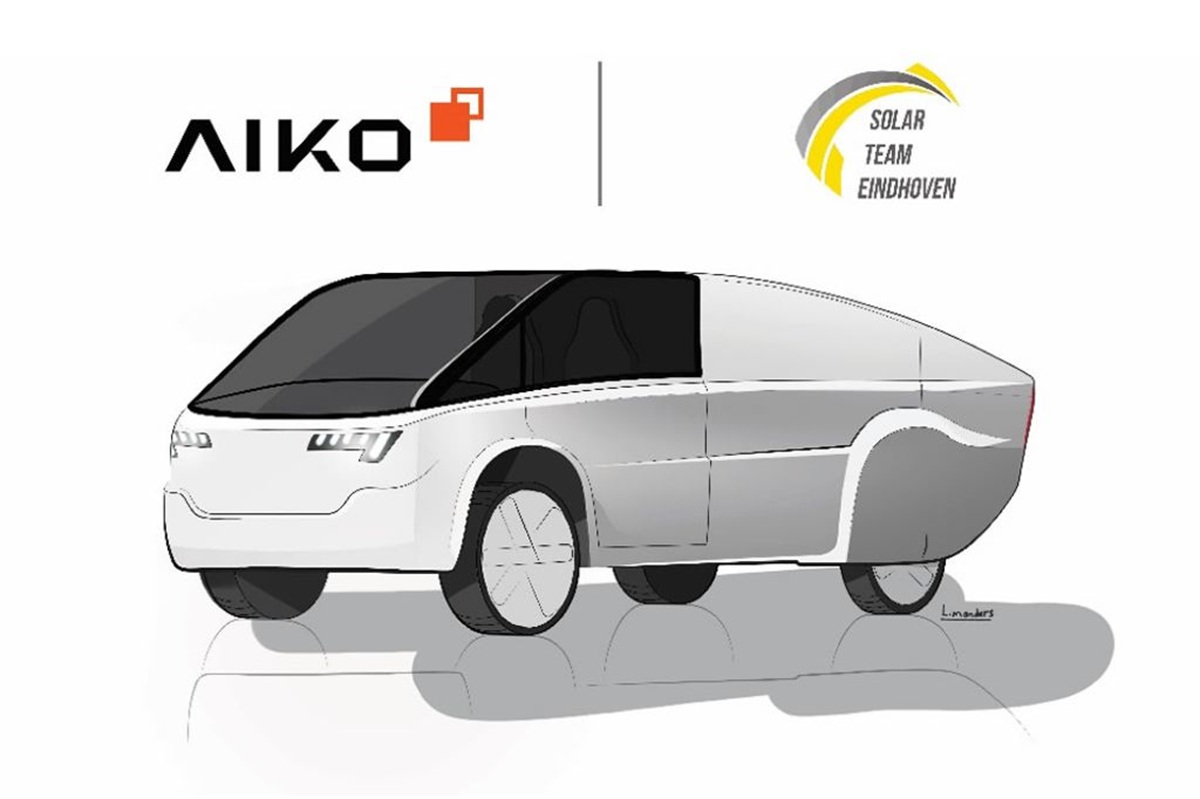
Students create a solar-powered ambulance that operates without a plug, without fuel, and still keeps medical equipment running in remote areas.

ESA Space Laser Link Reaches 2.6 Gbps at 36 Thousand km from Earth
The European Space Agency announced on February 26 the successful execution of a space laser link test between an aircraft and the geostationary satellite Alphasat TDP 1. The equipment responsible for the connection was a terminal developed by Airbus.
The satellite used in the test is located approximately 36,000 kilometers above the Earth’s surface. Even at this distance, the connection maintained a transmission rate of 2.6 gigabits per second for several minutes without recording any data packet loss.
According to ESA, a speed like this allows a high-definition movie to be transferred in just a few seconds. In conventional space transmission systems, the same file could take minutes to be transferred.
François Lombard, head of Connected Intelligence at Airbus Defence and Space, highlighted the technical complexity of the operation. He stated that establishing a space laser link between moving targets at this distance requires extreme precision due to continuous movements, platform vibrations, and atmospheric disturbances.
Technical Challenges of Maintaining Laser Connection Between Moving Targets
Optical communication via laser presents specific challenges compared to radio wave transmissions. While radio waves spread over a wide area, a laser beam must precisely hit a moving target.
This target can move at thousands of kilometers per hour while the system attempts to maintain the beam alignment. Additionally, Earth’s atmosphere causes fluctuations and turbulence that can distort the signal during transmission.
These factors make the space laser link a technically delicate task. Small variations in position or platform stability can compromise the alignment necessary for continuous data transmission.
Despite these difficulties, the success of the European experiment indicates that the technology is becoming more reliable. The stability demonstrated during the test reinforces the possibility of using optical communication in future space networks.
Possible End of the Digital “Dead Zone” in Remote Areas
Advances in space laser links may help reduce the so-called digital dead zones for communication. These areas include regions where internet coverage is limited or non-existent.
The technology paves the way for providing high-speed connectivity in different environments. Examples cited include aircraft on long-distance flights, research ships in the middle of the ocean, and vehicles crossing remote deserts.
The expectation is that users on the move can access gigabit internet connections regardless of location. This scenario will depend on the consolidation of space networks capable of maintaining stable links between satellites and mobile platforms.
Improving the reliability of laser transmissions also helps prevent data loss during communication gaps. This factor is considered crucial for the expansion of space networks.
Chinese Experiment Maintains Connection for Three Hours at 40 Thousand km
Just a few days after the European announcement, the China Optoelectronics Research Institute released its own optical communication test. The experiment was revealed on March 2 and also involved a space laser link between a satellite and a ground station.
The Chinese team used a ground-based laser communication station with a diameter of 1.8 meters. The equipment was installed at the Lijiang Gaomeigu Observatory to capture the light beam from an unidentified satellite.
The connection reached a speed of 1 gigabit per second and covered a distance of approximately 40,000 kilometers. The system was able to establish the link in just four seconds after detecting the signal.
According to the researchers, the connection remained active for three continuous hours. To reduce distortion caused by atmospheric turbulence, a high-order adaptive optics system was used.
Race for Space Communication Includes LEO Satellites and New Records
While geostationary satellites demonstrate great range, low Earth orbit systems are also rapidly advancing in transmission capacity. These orbital networks operate at lower altitudes and offer other operational advantages.
In January 2026, China announced a milestone in optical communication in low orbit by achieving a laser link of 120 gigabits per second. This result doubled the previous record obtained by the country in this type of system.
At the same time, private companies are also preparing new generations of satellites aimed at expanding global connectivity.
Starlink’s third-generation satellites, for example, are designed to achieve downlink capacities of terabits per second and uplink superior to 200 gigabits per second.
The ultimate goal of these technologies is to solve specific challenges of space networks, such as high latency and intermittent connectivity.
The evolution of space laser links indicates that light-based communication systems may play a central role in future data networks beyond Earth.








-

-

-

8 pessoas reagiram a isso.