





 Portuguese
  English
  Spanish
  5 min of reading
  0 comments


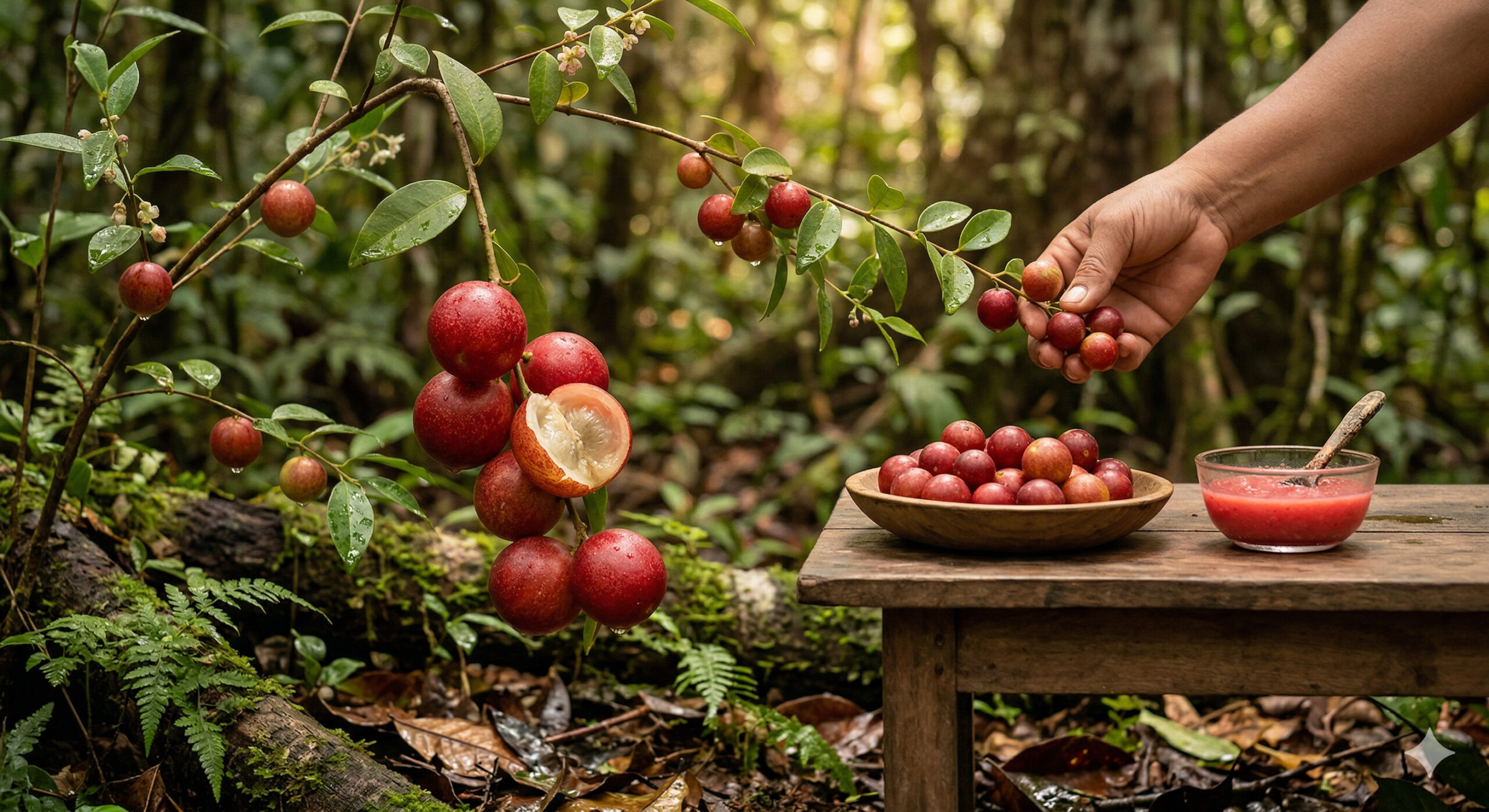
Camu-camu is an Amazonian fruit with up to 3,000 mg of vitamin C per 100 g and high antioxidant power, according to scientific studies.
In research published since 2000 by Brazilian institutions, such as the State University of Maringá, camu-camu (Myrciaria dubia), a fruit native to the Amazon, has transitioned from being little known outside local communities to becoming the subject of consistent scientific investigation. In the study published in the Latin American Archives of Nutrition, researchers recorded that the pulp can reach 2.4 to 3.0 g of vitamin C per 100 g, an equivalent range of 2,400 to 3,000 mg/100 g, an exceptional level compared to widely consumed fruits.
For comparison, the official NIH vitamin C table based on USDA data states that raw orange provides 95.8 mg of vitamin C per 180 g serving, which corresponds to about 53.2 mg per 100 g. In practice, this means that camu-camu can concentrate dozens of times more ascorbic acid, although this content varies according to factors such as ripeness, fruit origin, and pulp processing.
This data alone has already placed the fruit on the scientific radar, but interest did not stop there. In 2021, a study by the Federal University of Roraima with participation from Embrapa, conducted in Cantá, Roraima, evaluated carotenoids, anthocyanins, flavonoids, total phenolic compounds, and the antioxidant activity of camu-camu at different stages of ripeness, reinforcing that the pulp contains a complex combination of bioactive substances with relevant biological potential.
-
A new chip created by engineers challenges the limits of computing and AI by operating at extreme temperatures of 700°C, introducing a new technology capable of reducing failures and revolutionizing applications in extreme environments.

-
JBL launches BandBox in Brazil with Stem AI capable of separating vocals and instruments in real-time and features a portable amplifier of up to 135 W, 4 simultaneous inputs, a 10-hour battery, and a starting price of R$ 1,699.

-
A mass blockade of over 100 Baidu robotaxis in Wuhan exposes serious flaws as the sector tries to prove that autonomous cars are already ready.

-
Archaeologists went to study a well-known trail and ended up finding another one that is even older, dated between 3,770 and 3,640 B.C., hidden under the swamp for almost 6,000 years.

Amazonian origin and adaptation to extreme environments
Camu-camu grows naturally in floodable areas of the Amazon, especially along riverbanks and igarapés. Unlike many fruit species, it is adapted to long periods of flooding, remaining partially submerged for much of the year.

This characteristic directly influences its chemical composition. The flooded environment, with variations in oxygenation and nutrient availability, contributes to the formation of specific bioactive compounds.
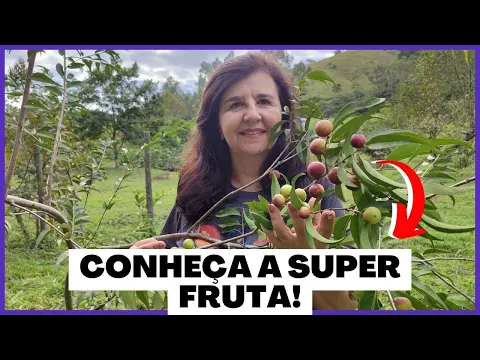
The plant can reach between 2 and 8 meters in height and produces small fruits, with colors ranging from red to dark purple, usually harvested during flood periods, when access logistics depend on boats.
This geographical and ecological context helps explain why the fruit remained little known outside the Amazon for so long.
Vitamin C concentration among the highest ever recorded in natural foods
The main characteristic that differentiates camu-camu is its concentration of vitamin C. Ascorbic acid plays essential roles in the body, including participation in collagen synthesis and acting as an antioxidant.
In the case of camu-camu, the levels recorded in studies vary widely, potentially exceeding 2,000 mg and, in some cases, reaching about 3,000 mg per 100 g of fresh pulp.
This concentration places the fruit among the richest natural sources ever documented, far surpassing traditional fruits.
Moreover, the vitamin C present in camu-camu is associated with other bioactive compounds, which may influence its stability and bioavailability.
Presence of phenolic compounds and high antioxidant activity
In addition to ascorbic acid, camu-camu features a variety of phenolic compounds, including flavonoids and anthocyanins. These compounds are widely studied for their ability to neutralize free radicals.
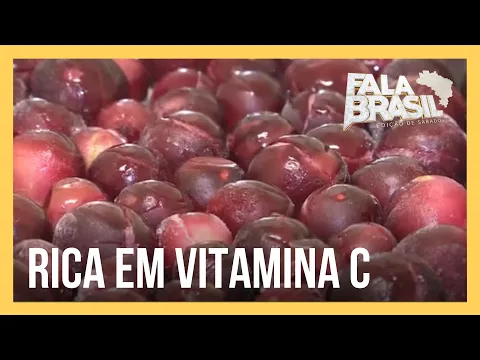
Laboratory research indicates that extracts from the fruit exhibit high antioxidant activity, often surpassing that of other tropical fruits analyzed under the same conditions.
The combination of vitamin C and phenolic compounds enhances the antioxidant effect, making camu-camu a subject of interest in studies on oxidative stress.
This complex chemical profile is one of the reasons why the fruit has been investigated not only in the field of nutrition but also in areas such as pharmacology and food technology.
Variation in nutritional levels depends on environmental factors
Although the numbers associated with camu-camu are impressive, they are not fixed. The concentration of vitamin C and other compounds can vary significantly depending on factors such as:
- Place of cultivation
- Climatic conditions
- Ripeness stage
- Processing and storage method
Studies show that fruits harvested in different regions of the Amazon can present relevant variations in chemical composition.
This means that the maximum values often cited represent peaks observed under specific conditions, and not necessarily a constant average.
Logistical challenges limit the expansion of consumption
Despite its nutritional potential, camu-camu still faces barriers to becoming widely consumed on a global scale.
One of the main challenges is perishability. The fruit has high acidity and post-harvest sensitivity, making long-distance transportation and storage difficult.
Additionally, the extremely acidic flavor limits raw consumption, leading to predominant use in processed products such as juices, frozen pulps, and extracts.
Amazônia logistics also impose limitations, as many production areas are difficult to access, especially during flood periods.
Growing interest from industry and scientific research
In recent years, camu-camu has begun to attract interest not only from academia but also from industry. Companies in the food and supplement sectors have been exploring the use of the fruit as a functional ingredient.
Concentrated extracts of camu-camu have been used in formulations that seek to leverage its antioxidant profile and vitamin C content.
Meanwhile, researchers continue to investigate additional properties, including potential applications in areas such as metabolic health and inflammation, although many of these studies are still in the experimental stage.
This movement indicates a transition of the fruit from a regional resource to a product with global potential, albeit with challenges to be overcome.
Comparison with other fruits rich in vitamin C
When compared to other fruits known for their vitamin C content, camu-camu shows a significant difference.
While fruits like acerola and kiwi are already considered high sources, camu-camu often appears at higher levels in laboratory studies.
This numerical difference is one of the main factors driving scientific interest, as it raises questions about the natural limits of concentration of this nutrient in foods.
Ecological importance and preservation of the Amazon biome
In addition to its nutritional value, camu-camu also has ecological relevance. As a native species of floodable areas, it is part of a complex ecosystem that depends on the balance between rivers, soils, and vegetation.
The commercial exploitation of the fruit raises discussions about sustainable management and environmental conservation.
The increase in economic interest can create opportunities but also requires care to avoid negative impacts on the Amazon biome.
A small fruit that challenges nutritional standards
Camu-camu represents an emblematic case of how Amazonian biodiversity still holds resources that are little explored by science and society.

With extreme levels of vitamin C and a composition rich in bioactive compounds, the fruit challenges known standards and expands the understanding of natural foods.
Even after decades of study, new research continues to reveal additional aspects of its composition and potential, indicating that there is still much to be discovered.
Did you know about a fruit with such high levels of vitamin C?
Camu-camu shows that little-known foods can present surprising characteristics when analyzed in scientific depth.
Had you heard of this Amazonian fruit or knew that it could concentrate such high levels of vitamin C?









Seja o primeiro a reagir!