





 Portuguese
  English
  Spanish
  5 min of reading
  3 comments


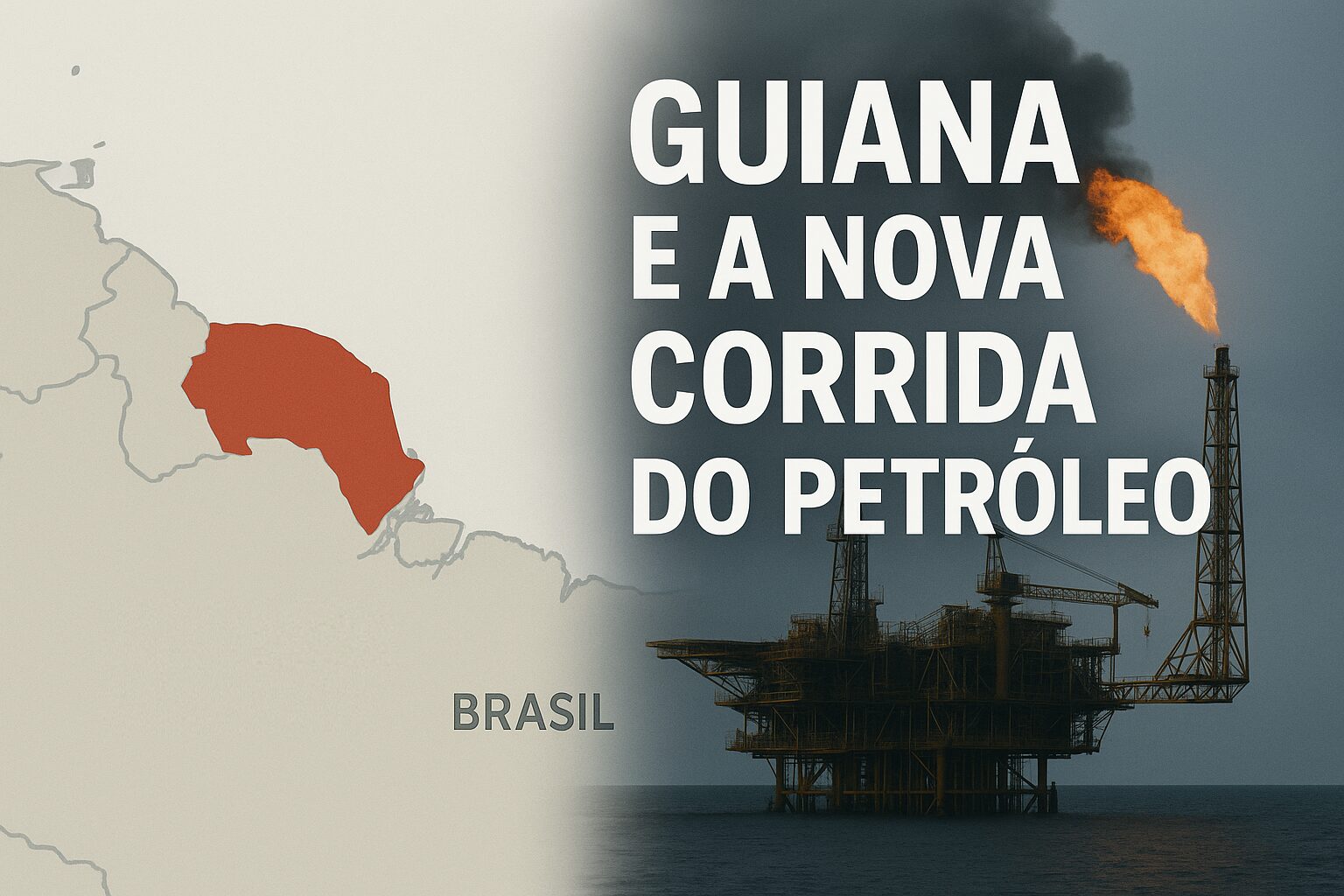

Billion-Barrel Oil Discoveries Transform Guyana Into The Fastest-Growing Economy In South America, With Accelerated Production And Environmental And Social Challenges Ahead.
With fewer than 800,000 inhabitants, Indian influence, English language, and the Amazon rainforest, Guyana seemed merely a geographical curiosity between Brazil and Venezuela. But the discovery of billions of barrels of oil changed everything. Now, the country is on track to become one of the fastest-growing economies in the world.
An Unusual Country In South America
Guyana is different from its neighbors. Located in the north of South America, it borders Brazil, Venezuela, and Suriname, and has a coastline along the Atlantic Ocean. But what makes it truly unique are its cultural and historical traits.
It was a British colony until 1966, when it gained independence and retained English as its official language.
-
USA and China compete for Brazil over resources that could be worth trillions — rare earths put the country at the center of a global dispute

-
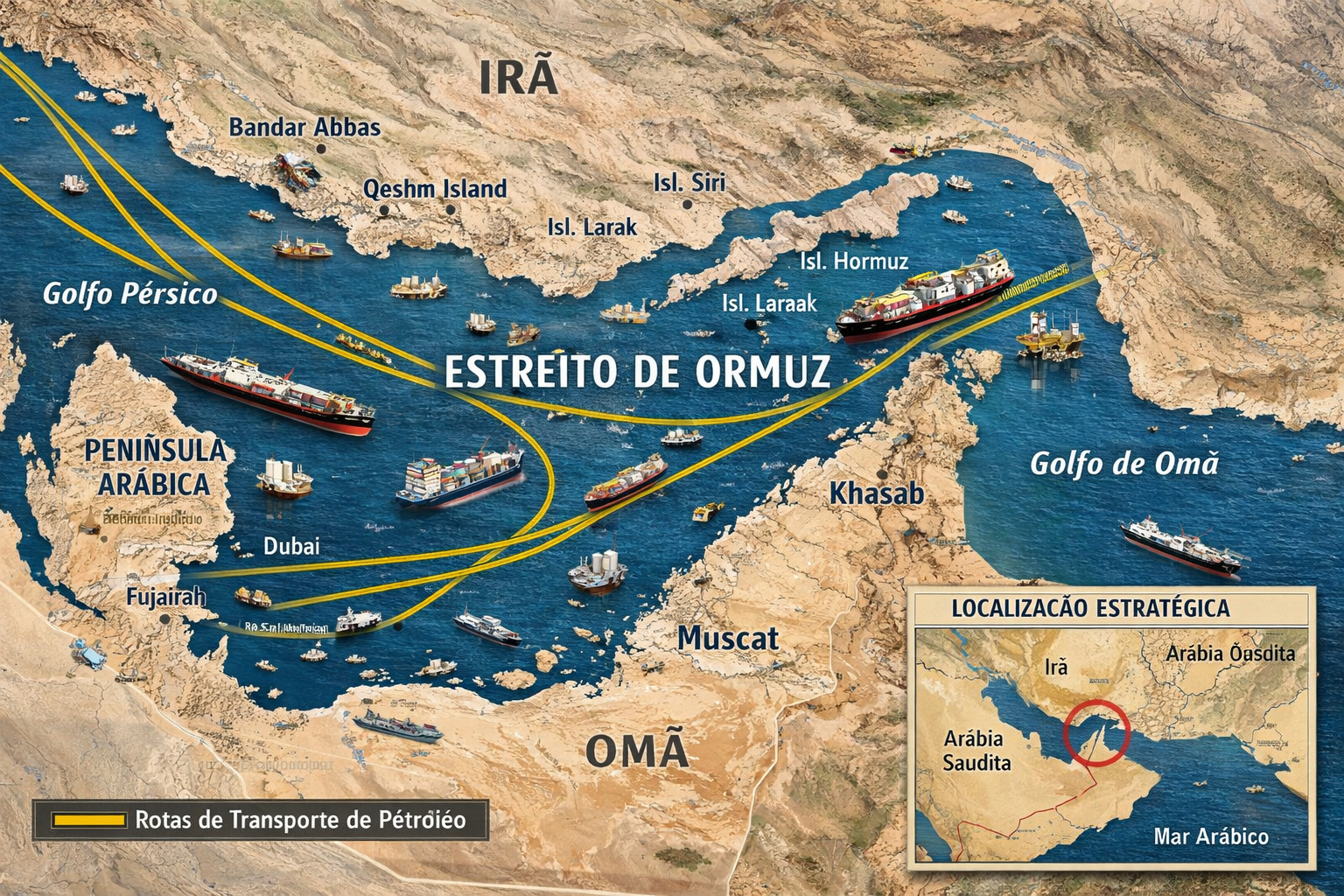
Global summit with over 40 countries pressures Iran for a blockade in the Strait of Hormuz and warns of direct impact on oil, food, and the global economy.
-
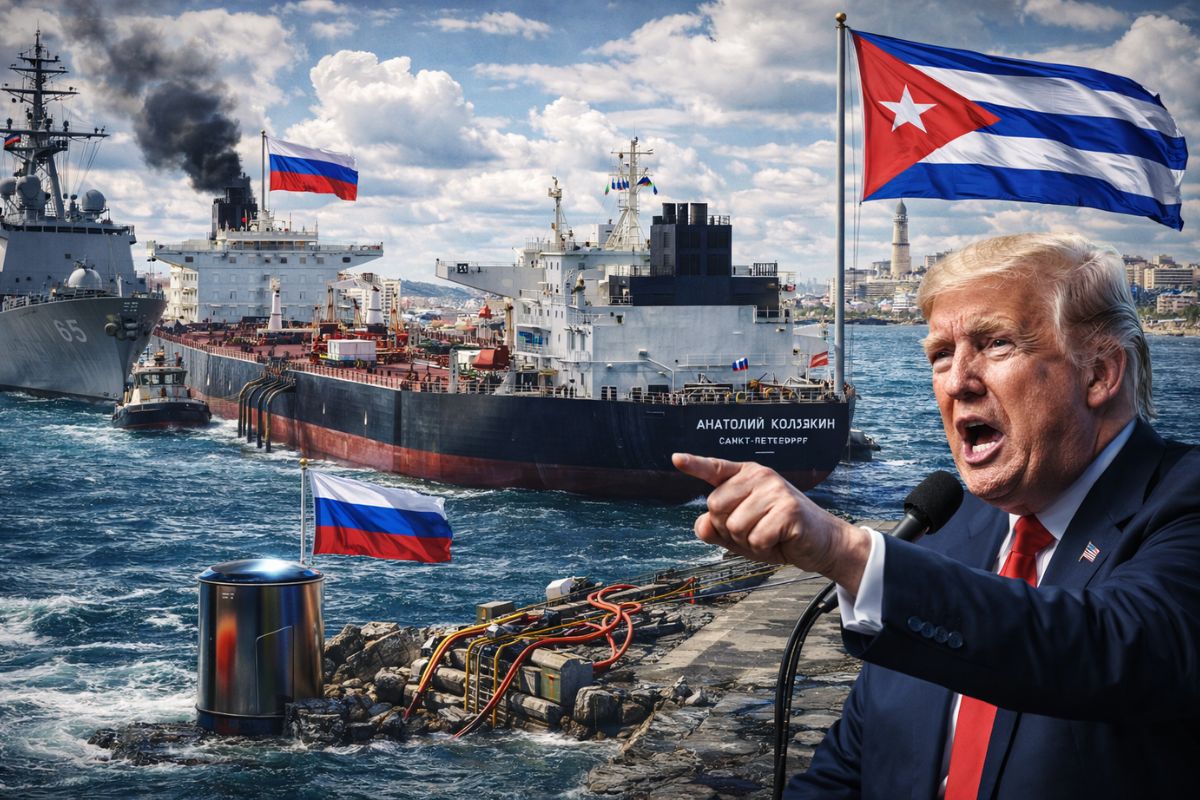
Russia has broken the U.S. maritime blockade to send oil to Cuba and is now loading a second ship while Trump says that “Cuba is next” in a possible military action against the island.
-
Spain challenges the USA and closes its airspace for operations against Iran, raising global tension and provoking the threat of a trade rupture.


Therefore, it is one of the few South American countries where people drive on the left, a legacy from the colonial period.
Cricket is the favorite sport, instead of football. And although it is on the South American continent, Guyana has a Caribbean soul—with calypso music, street carnival, and a religious mix that includes Hindu temples, churches, and mosques.
Its capital, Georgetown, preserves the architecture from British rule. St. George’s Cathedral, entirely made of wood, is a symbol of the city. The Stabroek Market, with its large clock, houses stalls of fruits, crafts, and local products.
Geography, Diversity, And Forest
With about 790,000 inhabitants, Guyana is the least populous country in South America.
Almost half of this population lives in Georgetown, where descendants of Indians are predominant.
The rest is distributed along a narrow coastal strip in the north of the territory, which does not exceed 70 kilometers in width.
The name Guyana comes from the indigenous term meaning “land of many waters”—and this definition makes sense.
The country has numerous rivers, many of them navigable, in addition to areas of dense forest. About 70% of the territory is covered by the Amazon rainforest.
In the center of the country, the Guiana Highlands is home to Mount Roraima, a geological formation that also extends into Venezuela and Brazil.
The population is extremely diverse: there are descendants of Africans, Europeans, Chinese, Indigenous people, and, mainly, Indians.
The Discovery That Changed Everything
For decades, Guyana was a rural economy, based on agriculture and mining. Sugarcane, rice, and cassava were among the main crops.
The country also exported bauxite, used in aluminum production. All of this changed in 2015, with a discovery made offshore.
The American oil giant ExxonMobil, in partnership with Hess Corporation and Chinese CNOOC, found gigantic reserves of oil in the offshore block called Stabroek, located more than 190 kilometers from the Guyanese coast. From then on, the country entered the global energy radar.
It is estimated that Guyana has more than 11 billion recoverable barrels of oil. Production officially began in December 2019 and has not stopped growing.
By 2024, the country was already producing over 600,000 barrels per day, with a target of reaching 1.2 million by 2027.
For comparison: this volume would place Guyana ahead of traditional oil countries like Norway.
In proportional terms, no other country in the world has experienced such a rapid acceleration in oil production in recent years.
The Oil Boom And The Impact On GDP
The impact was immediate. Guyana’s GDP grew over 60% in 2022, according to the International Monetary Fund (IMF), becoming the fastest-growing economy on the planet that year.
In 2023 and 2024, growth remained high, driven by increased production and the rise in international oil prices.
Guyana established a sovereign fund, the Natural Resource Fund (NRF), to manage the resources obtained from oil.
This fund receives a percentage of the royalties and profits from the operating companies.
It is overseen by a public committee and aims to fund development projects, infrastructure, and social programs.
Even so, there are still criticisms. Part of the population continues to live in precarious conditions, and many fear that the wealth from oil will benefit only an elite.
There are also warnings about risks of corruption and excessive dependence on the energy sector.
Social And Environmental Challenges
Besides economic issues, there are environmental concerns. Most of the oil is located in deep waters near the Essequibo region—an area of preserved forest and rich biodiversity.
Environmental organizations warn of the risks of spills and impacts on marine and coastal species.
The territorial dispute with Venezuela is also a source of tension. The Venezuelan government claims the Essequibo region, which represents about two-thirds of Guyana’s territory, where part of the oil reserves are located.
Although the International Court of Justice ruled favorably for Guyana in 2023, diplomatic tensions persist.
Another challenge is economic diversification.
Experts point out that the country needs to invest in education, technology, and infrastructure to avoid relying solely on oil—preventing the so-called “Dutch disease,” when other sectors of the economy are harmed by an excessive focus on natural resources.
The Promising — And Uncertain — Future
Guyana has become, in less than a decade, a strategic piece on the global energy chessboard. Large companies continue to invest in the country, new blocks are being auctioned, and local refining capacity is expected to increase in the coming years. The government is also seeking to expand the production of associated natural gas and renewable energy projects.
The country, once remembered for its rainforest, Caribbean culture, and Indian influence, is now seen as a new oil hub.
But the challenges are proportional to the opportunities. Maintaining the balance between growth, environmental preservation, and social justice will be crucial for Guyana to transform this wealth into lasting prosperity.
Guyana brings together striking contrasts: a colonial capital surrounded by rainforest, a population that loves cricket and Bollywood, and a rural economy transformed by oil.
In a continent dominated by Spanish and Portuguese speakers, the country stands out with its official English, Caribbean music, and religious diversity.
Now, with billion-barrel reserves beneath the Atlantic, Guyana has the potential to reshape not only its own future but also the global energy landscape.









O mapa mostrado não pega a região da Guaina, mas sim o Suriname, a Guiana Francesa e ainda parte do Amapá (Brasil).
Trabalhei no país na área da mineração pela Paranapanema, na mina de Tasauyne, o avião nos deixava em bamarumma de lá íamos de voadeira até a mina.
O país destacado no mapa é a Guia a Francesa e não a Guiana