





 Portuguese
  English
  Spanish
  2 min of reading
  0 comments


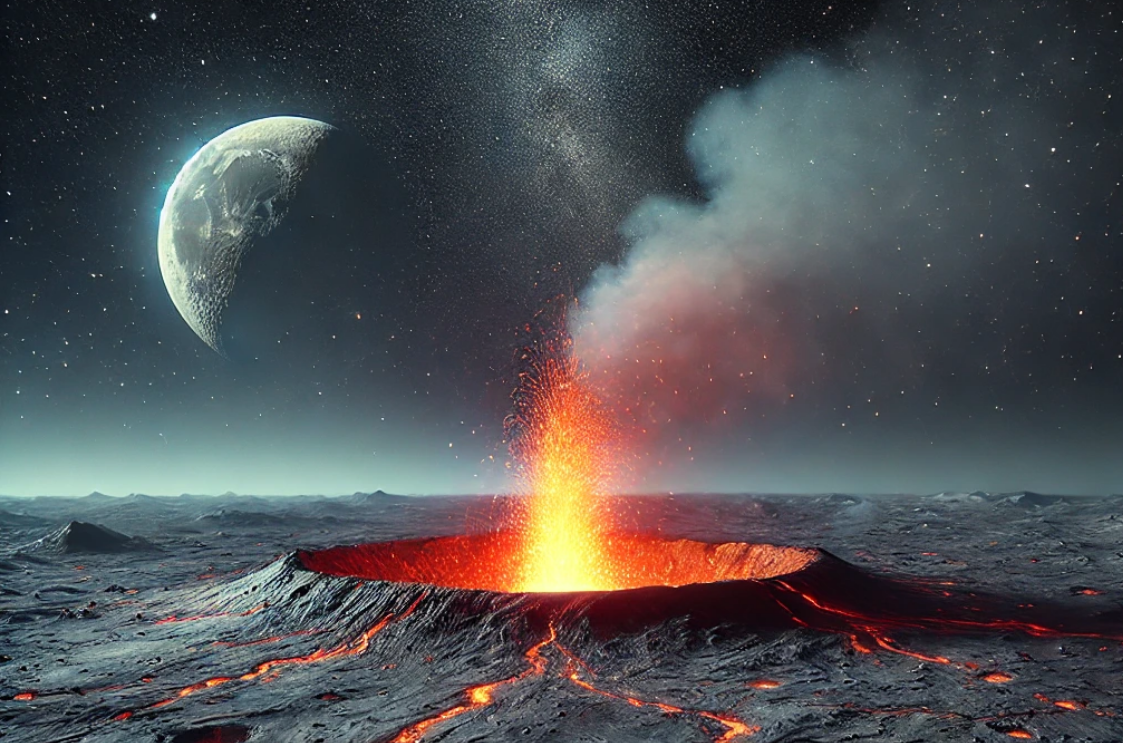
Scientists Discover That The Moon Had Active Volcanoes During The Age Of Dinosaurs, Changing The View Of Its Geological History!
A study published in the journal Science revealed that the Moon experienced volcanic eruptions about 120 million years ago, which coincides with the period when the Earth still housed dinosaurs.
The new discoveries were made possible through the analysis of glass beads collected by China’s lunar mission, Chang’e-5, conducted in 2020. Researchers analyzed no less than a thousand beads and identified three of them as being of volcanic origin.
The discovery was based on the textures and chemical composition of these beads. This confirms that volcanic activity on the Moon occurred much more recently than previously thought. Until then, researchers believed these eruptions happened about 2 billion years ago.
-
In a flooded well, archaeologists found a 1,700-year-old Roman egg that still contains clear and yolk intact inside the very thin shell.

-
Something is happening around the Earth: Inside the huge explosion of fireballs in 2026

-
A hot air bubble coming from Argentina expands over Brazil, causing thermometers to exceed 38 degrees with a thermal sensation of 40 degrees in late March, affecting 6 states at once.

-
The radish leaf that almost everyone throws away has more polyphenols, flavonoids, and fiber than the consumed root, and a 2025 study showed that the leaf contains compounds that protect the intestine, combat inflammation, and may inhibit the growth of cancer cells.


Scientists were excited about the findings. The new information suggests that smaller celestial bodies, like the Moon, may retain enough heat to sustain volcanic activity.
Although it is still a preliminary discovery, experts believe it will be possible to gain a deeper understanding of the Moon’s internal evolution.
The Importance Of The Discovery
Professor Li Qiu-Li and Associate Professor He Yuyang, co-authors of the study from the Chinese Academy of Sciences, emphasized the importance of this discovery in understanding how small celestial bodies retain internal heat. The findings also raise questions about the sources of these young volcanoes, which could shape future lunar exploration missions.
Qian Yuqi, a planetary volcanism expert at the University of Hong Kong, noted that discovering this relatively recent volcanic activity has “significant implications” for understanding the Moon’s geological history. The discovery could encourage new missions to locate the sources of these eruptions at an advanced stage.
China’s Chang’e-5 mission was groundbreaking as the first to retrieve lunar samples since the 1970s, following the U.S. Apollo missions and the Soviet Luna program. The subsequent Chang’e-6 mission, conducted in June, further demonstrated China’s capabilities by retrieving samples from the far side of the Moon for the first time in history.
The implications of this research go beyond lunar science, offering valuable insights into how other small celestial bodies may evolve. As scientists continue to analyze these samples, they hope to uncover new secrets about the Moon’s past and inspire future exploration efforts.






Seja o primeiro a reagir!