





 Portuguese
  English
  Spanish
  3 min of reading
  2 comments


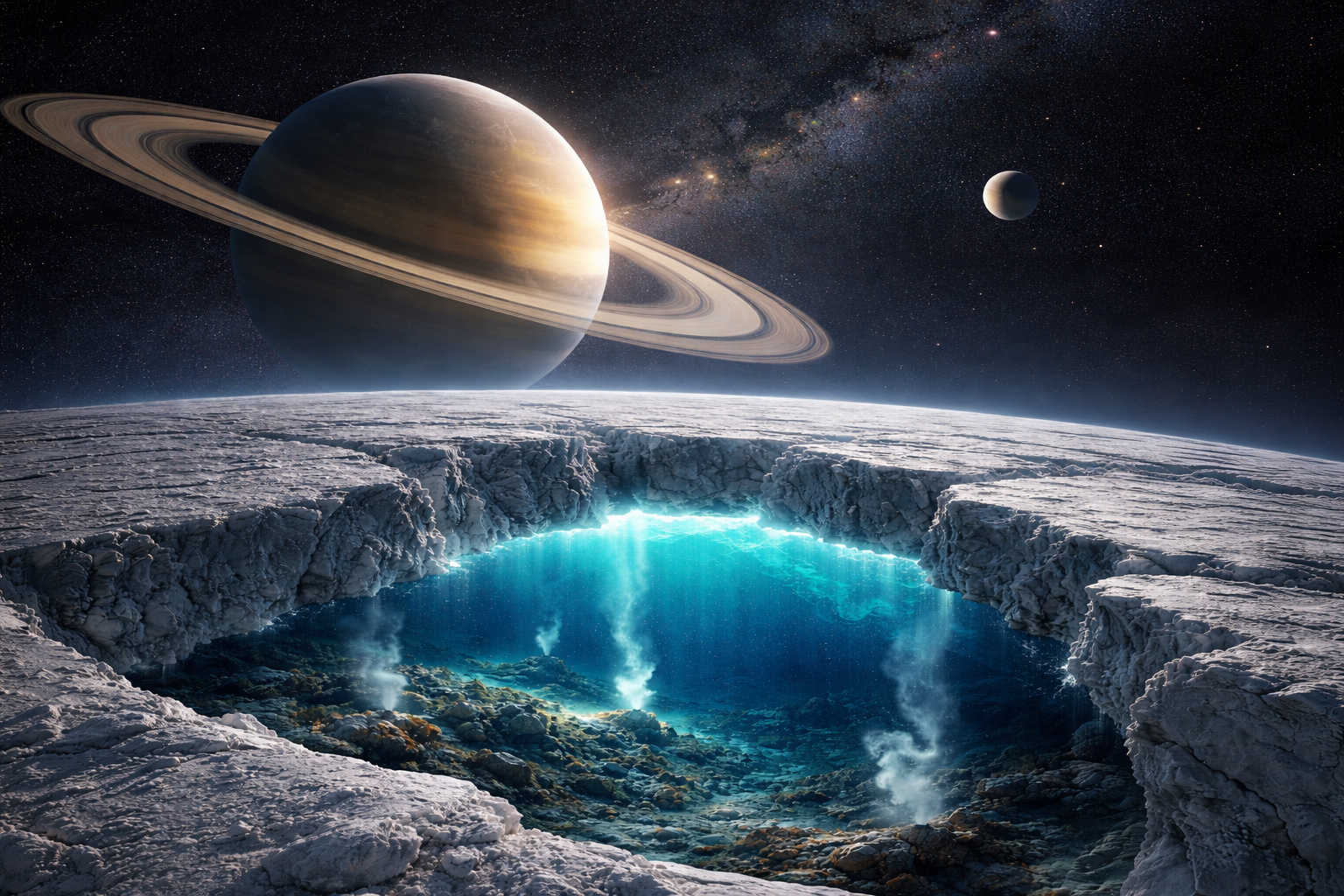


Data Released on January 26, 2026 Confirms the Existence of Liquid Water Beneath the Ice of Saturn’s Moon and Repositions the Celestial Body at the Center of Scientific Search for Life Beyond Earth
On January 26, 2026, a scientifically significant discovery drew strong international attention. NASA and the European Space Agency (ESA) jointly confirmed the existence of a vast subterranean ocean of liquid water on a moon of Saturn, after thoroughly analyzing data from the Dragonfly mission. Since then, the finding has taken a central position in studies about life beyond Earth.
According to official data, the ocean remains hidden beneath a crust of ice several kilometers thick, but maintains active internal conditions. Furthermore, sensors identified direct interaction between liquid water and complex organic compounds, an essential element for chemical processes linked to the origin of life.

Organic Compounds Strengthen Studies on Prebiotic Chemistry
Astrobiologist Elizabeth Turtle, the principal investigator of the mission, led the scientific investigation. During the announcement made in January 2026, the scientist explained that the simultaneous presence of carbon molecules, methane, ammonia, and internal heat creates a highly relevant scenario for the study of prebiotic chemistry beyond Earth.
-
In Mexico, a 3,000-year-old Maya site with the dimensions of an entire city may have been built as a colossal map of the cosmos, created to represent the order of the universe and reveal how this people organized space, time, and rituals.

-
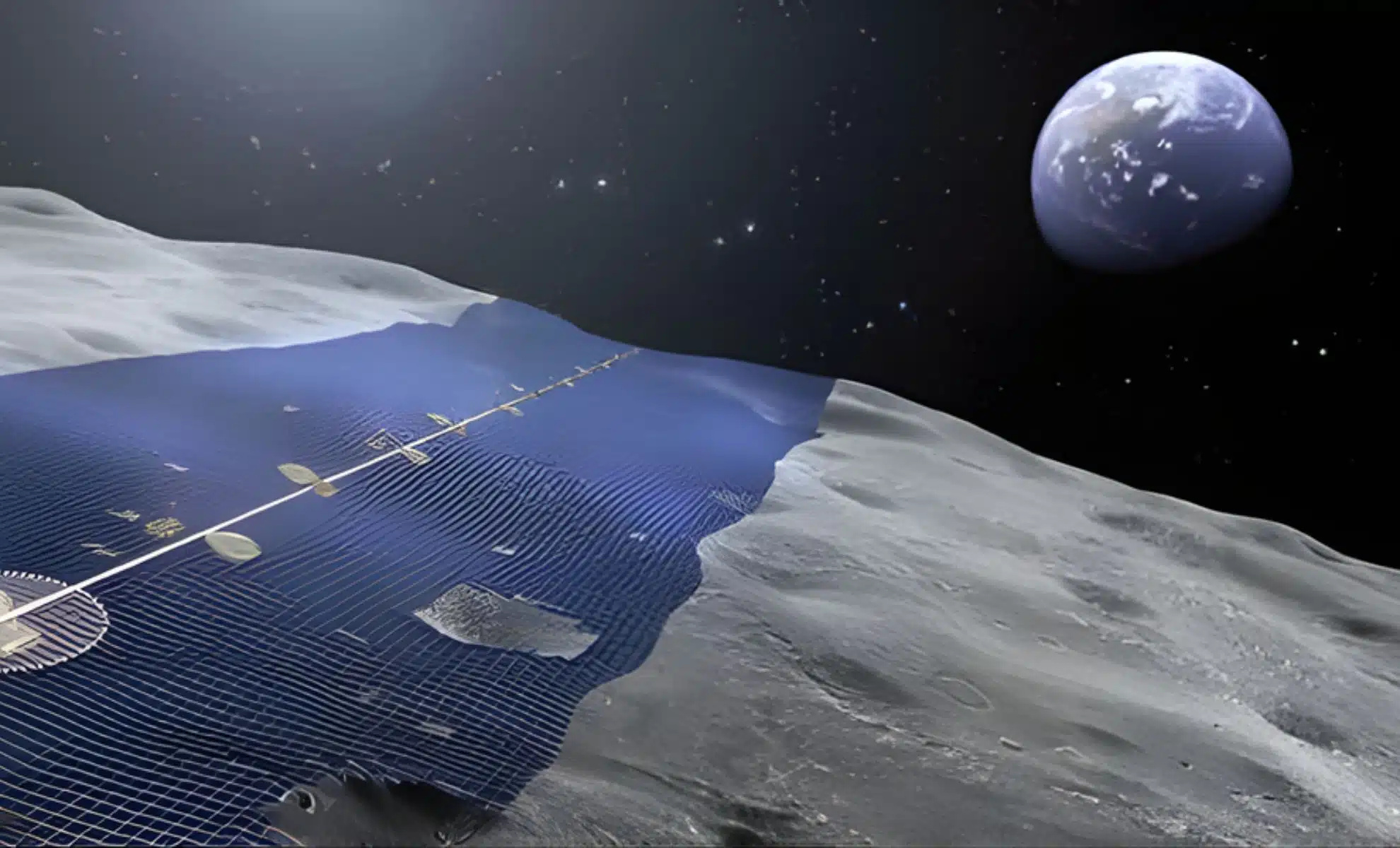
Japan wants to build a solar ring of 10,900 kilometers on the Moon to continuously send energy to Earth.
-
Weighing almost 1 ton, with temperatures of up to 3,000°C, the ability to launch 10,000 fragments within a radius of 1 km, capable of penetrating concrete and melting steel, Turkey’s terrifying bomb emerges as one of the most destructive non-nuclear weapons ever presented.

-
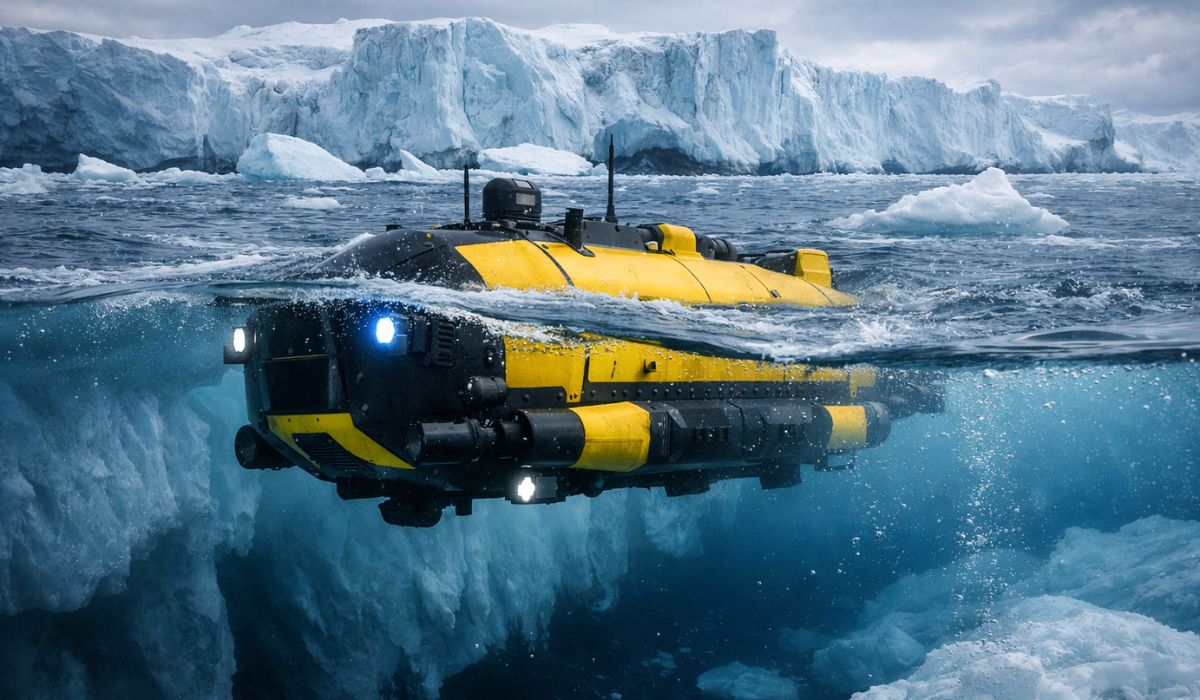
After a submarine disappeared beneath the “Doomsday Glacier,” scientists announce a new monstrous machine capable of operating at 3,000 meters depth to return to the heart of the ice and investigate a threat that could raise sea levels worldwide.

Thus, the moon ceased to be treated as an inert body and began to represent a dynamically active environment within the Solar System, with characteristics rare among known celestial bodies.
Internal Heat Suggests Possible Hydrothermal Sources
Additionally, geological analyses indicate that the subterranean ocean is in contact with a heated rocky core. According to planetary geologist Alan Stern, this interaction favors the formation of hydrothermal vents, similar to those found on the ocean floors of Earth.
These environments stand out because they provide energy and nutrients without relying on sunlight, a characteristic associated with locations where life may arise and persist.
Future Missions Face Technological Barriers
In light of this confirmation, NASA began preliminary studies to plan future missions with submersible robotic vehicles. However, technical challenges remain high. Drilling through the ice crust requires advanced thermal technologies, which, as of 2026, are still in the experimental phase.
Nevertheless, the data already guide long-term scientific planning to explore the interior of the moon directly.
International Cooperation Expands the Search for Habitable Environments
The impact of the discovery also mobilized the ESA. The agency’s director-general, Josef Aschbacher, emphasized that international cooperation will play a decisive role in the upcoming scientific advancements. According to him, science has progressed beyond the simple confirmation of water beyond Earth.
Finally, the confirmation of the ocean redefines classic models of habitable zone, previously limited to the distance between planets and their stars. Now, icy moons of gas giants emerge as significant exceptions. In the meantime, scientific teams await that by the end of 2026 new thermal maps of the interior of the moon indicate priority regions for future probes — Will this be the next big leap in the search for life beyond Earth?







Nossa ja sabe disso a mais de 30 anos . Nada de novo . Varias luas e planetas anões e ate asteroides têm agua liquida no interior . Isso não e novidade
Precisa fazer suspense pra dizer que a Lua em questão chamasse Europa. E que “NÃO VAI HAVER NENHUMA CONDIÇÃO DE QUE HUMANOS POSSAM CHEGAR LÁ.
LOGO, VAMOS PARAR DE “SONHAR” E ACORDAR PRO PLANETA TERRA, NOSSA CASA, O MELHOR PLANETA DA VIA LÁCTEA E CUIDAR BEM DELE E DE NÓS, RELÉS CONDÓMINOS DE PASSAGEM NESTA LINDA CASA.
O HINO DO BETO GUEDES PRECISA SER MAIS OUVIDO.