





 Portuguese
  English
  Spanish
  5 min of reading
  2 comments


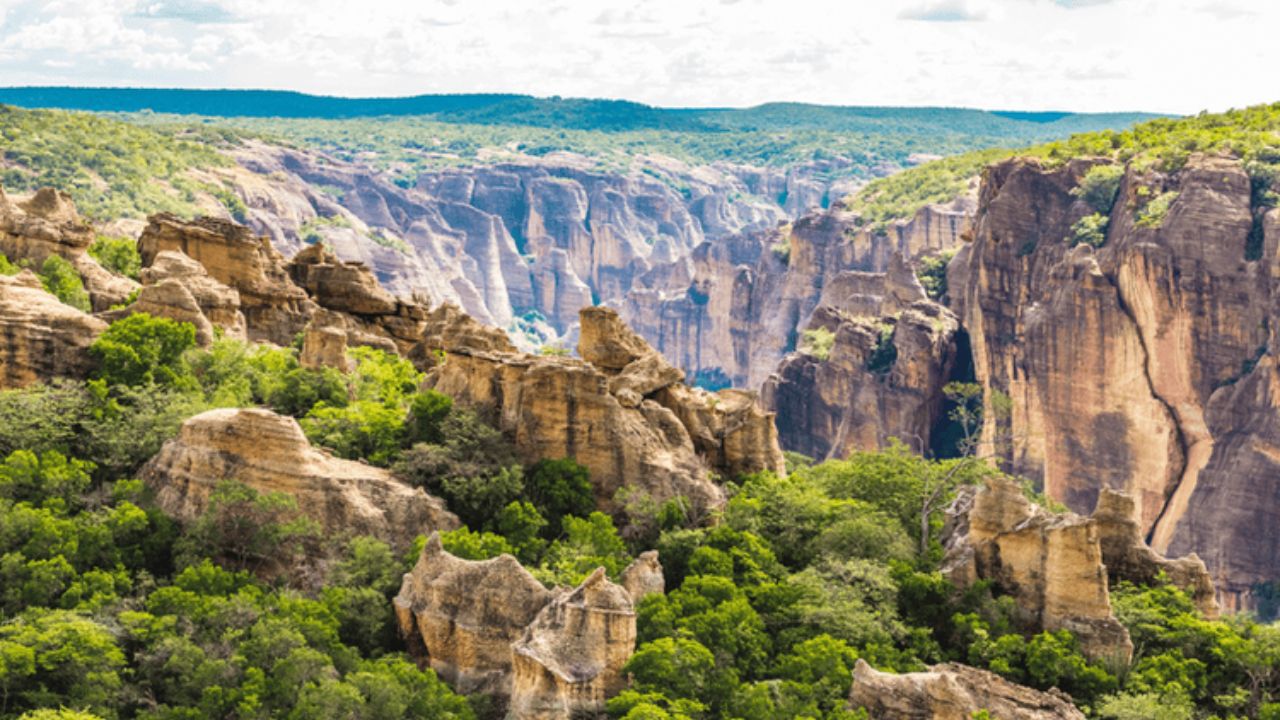


Discoveries in the Serra da Capivara Challenge the Clovis Theory and Suggest That the Occupation of the Americas May Have Occurred More Than 50 Thousand Years Ago, Changing the Understanding of Human Evolution.
The Serra da Capivara National Park, in southern Piauí, has become the place in Brazil that is rewriting the history of the occupation of the American continent. For years, science widely accepted the “Clovis Theory,” which postulated that the first humans arrived in America about 13 thousand years ago, via the Bering Strait. However, the investigations by Brazilian archaeologist Niéde Guidon, which began in the 1970s, brought to light a set of evidence that calls this chronology into question. The wealth of over 1,200 archaeological sites in the region suggests a much older and more complex human presence.
The relevance of this place in Brazil, cited by Tinocando TV as one of the greatest living examples of knowledge preservation, lies in the findings that indicate organized human activities with dating that exceed 50 thousand years of age. The discovery of charcoal from campfires, human bones, and mainly, rudimentary stone tools analyzed by Carbon 14, reinforces the thesis that the settlement of the Americas was a much longer and diverse process than previously thought, paving the way for the debate on the “Pre-Clovis Theory.”
Redefining Human Arrival: The Pre-Clovis Theory
Who was in the Americas and how long before what was thought are the central questions raised by the Serra da Capivara. Traditionally, sophisticated artifacts found in Clovis, New Mexico (USA), dated at 13 thousand years, supported the idea of a single migration, from North to South. However, the place in Brazil where Guidon found materials that “could easily exceed 50 thousand years of age” suggests that the occupation of the South American continent may have occurred through multiple routes and at different times.
-
These living root bridges and ladders are over 700 years old and help indigenous people survive in one of the rainiest regions in the world.

-
From sertanejo star to international investor: Ana Castela invests millions in a mansion in the USA, creates a themed accommodation in Orlando, and shows that the “boiadeira” also wants to grow away from the stage.

-
The 10 most stunning motorhomes in the world: a $3 million trailer with a rooftop nightclub and garage for a Ferrari, “palaces on wheels” with Italian marble, private cinema, and five-star hotel luxury for billionaires.

-
Trump wanted to spend $400 million on the White House, but the courts prohibited the million-dollar construction.


The “Pre-Clovis Theory” embraces intriguing hypotheses. One of them considers a coastal migration across the Pacific, where human groups may have traveled by boat, circumventing the continent rather than just moving southward on land. The more controversial idea, however, raises the possibility of a crossing via the South Atlantic, departing from West Africa. This idea is based on similarities between stone artifacts found in Piauí and Africa, as well as the plausibility of small boats powered by favorable ocean currents. The genetic diversity of indigenous peoples, the cultural variety, and the different technologies found at archaeological sites (as analyzed by Tinocando TV) support that the settlement was not a linear and simple event.
Where Rock Art Indicates Stability and Culture


The preservation of rock art is another pillar of the importance of the Serra da Capivara. For rock art to emerge, it is essential that basic survival needs are “reasonably met“, as Tinocando TV points out. A newly arrived group focuses on survival, not painting. The existence of detailed figures and complex compositions in a place in Brazil like this presupposes stability, a need to record, communicate, or sanctify experiences.
The Caatinga, a biome exclusively Brazilian where the Serra da Capivara is predominantly situated, with its semi-arid climate, low humidity, and sedimentary rocks rich in sandstone, created the perfect environment for the preservation of these records. It is the only place in Brazil, and one of the few in the world, where three major rock art traditions coexist, indicating a superposition of styles and chronologies:
- Northeast Tradition: Clear narratives with human and animal figures, often telling a story with a beginning, middle, and end (like the oldest depiction of a kiss).
- Agreste Tradition: Focused on symbolic and spiritual elements, with deformed figures, multiple legs, and traits linked to shamanic practices, suggesting the body as a channel between worlds.
- Geometric Tradition: The most abstract, with concentric circles, spirals, and symmetrical patterns, possibly used to mark territories or reinforce cultural identity.
The Enigma of Peoples: Nomads and the Preservation of the Past
Why is this diversity so crucial? While most archaeological sites in the world possess a single type of tradition, the concentration of this variety in the same place in Brazil suggests two main possibilities: contact between two or more different cultural groups 50 thousand years ago, or a succession of groups occupying the same location at different periods, without erasing each other’s marks. The absence of well-preserved human skeletons, a paradox in the face of the profusion of arts, suggests that these groups were nomadic or semi-nomadic, dependent on hunting, fishing, and gathering, and adapted to the semi-arid northeastern conditions.
Historically, these peoples did not receive the same international recognition as those from Central America, known for their architecture and political organization. From a Eurocentric perspective, the lack of large stone structures or a writing pattern resulted in a view that Brazil did not have a significant history before 1500. The Serra da Capivara, a UNESCO World Heritage Site, dismantles this narrative. It is worth getting to know and preserve the work of the American Man Museum Foundation (FUMDHAM), an entity that Niéde Guidon helped create and that today ensures research and dissemination of the heritage, keeping alive the legacy of this place in Brazil that continues to challenge global science.
The discoveries in the Serra da Capivara, as detailed by Tinocando TV, compel us to rethink the complexity of the settlement of the Americas. The place in Brazil at the heart of Piauí not only presents evidence that humans arrived much earlier than we thought, but also reveals a cultural, social, and spiritual richness through unparalleled rock art. This is a paradigm shift that directly touches our perception of history and identity.
Do you agree with this change? Do you think this impacts the research and tourism market in Brazil? Leave your opinion in the comments; we want to hear from those who live this in practice and what you think about the importance of preserving a place that is rewriting world history.






A semelhança entre pedras trabalhadas na África e na Capivara não reforça uma migração entre esses dois locais senão poderíamos dizer que os desenhos geométricos semelhantes entre Grécia e América Central dariam influência Grega no Brasil.Sao semelhantes as formas por causa do material que sugere no trançado de senstaria. É a relação com o material que cria a semelhança da forma , contudo a presença da civilização na ilha de Páscoa sugere que vieram ao continente portanto reforçando a teoria de múltiplas migrações.
Esta região é a + pura demonstração da falta deste país em investir em Educação, Ciência, Teclogia e Turismo.
Esta região é uma das importantes do mundo em termos de arqueologia e o Brasil e o Piaui, não dão a mínima atenção e valorização, desta que pode ser uma das mais importantes, depois das descobertas do Australopitecus na África.
Só para citar um dado: esta região é totalmente esquecida pelas autiridades nacionais. Não temos estradas, energia, infraestrura zero. Nem sequer água temos para as populações beberem, num raio de 100/200km. É triste. Mas é a realidade.
É um verdeiro absurdo o que acontece neste local tão importante p/ a humanidade.
A Professora Doutora Niède Guidon, doou praticamente toda sua carreira a este local e nunca foi reconhecida. Doou sua vida a esta região e quando morreu, parece que morreu uma formiga ou uma abelha. Não lembram × quem foi esta grande guerreira.
Só que infelizmente, os brasileiros não valorizam a Educação, o saber. Só reconhecem a politicagem.