





 Portuguese
  English
  Spanish
  3 min of reading
  0 comments



From Anomalous Gravitational Zones to Unexplained Noises and Submerged Structures, Discover 7 Real Places Where Science Has Yet to Reach a Definitive Answer.
Located in the Midwest of Brazil, the Roncador Valley has been known for decades for persistent magnetic anomalies. Technical reports indicate frequent compass failures, loss of radio signal, and erratic behavior of navigation instruments. Studies suggest the presence of geological formations rich in ferromagnetic minerals, but the intensity and extent of the phenomenon exceed what conventional geophysical models can explain. Even with geological mapping and aeromagnetic surveys, there is no consensus on the exact origin of these interferences.
The Zone of Silence, Where Transmissions Simply Disappear
In the Mapimí desert, in northern Mexico, there is an area where radio waves, TV signals, and satellite communications experience recurring interruptions. The location earned the nickname Zone of Silence after military and civilian tests recorded inexplicable failures since the 1960s. Hypotheses range from natural electromagnetic anomalies to rare atmospheric effects, but repeated measurements show irregular patterns difficult to reproduce in the lab.


Lake Hillier, Whose Pink Color Doesn’t Behave As It Should
In Western Australia, Lake Hillier maintains a vibrant and stable pink color year-round, even when the water is removed and analyzed in separate containers. Although halophilic bacteria and microalgae are cited as an explanation, chemical analyses show that the intensity and stability of the color do not change as expected when environmental variables shift. The exact origin of the phenomenon remains under scientific debate.
-
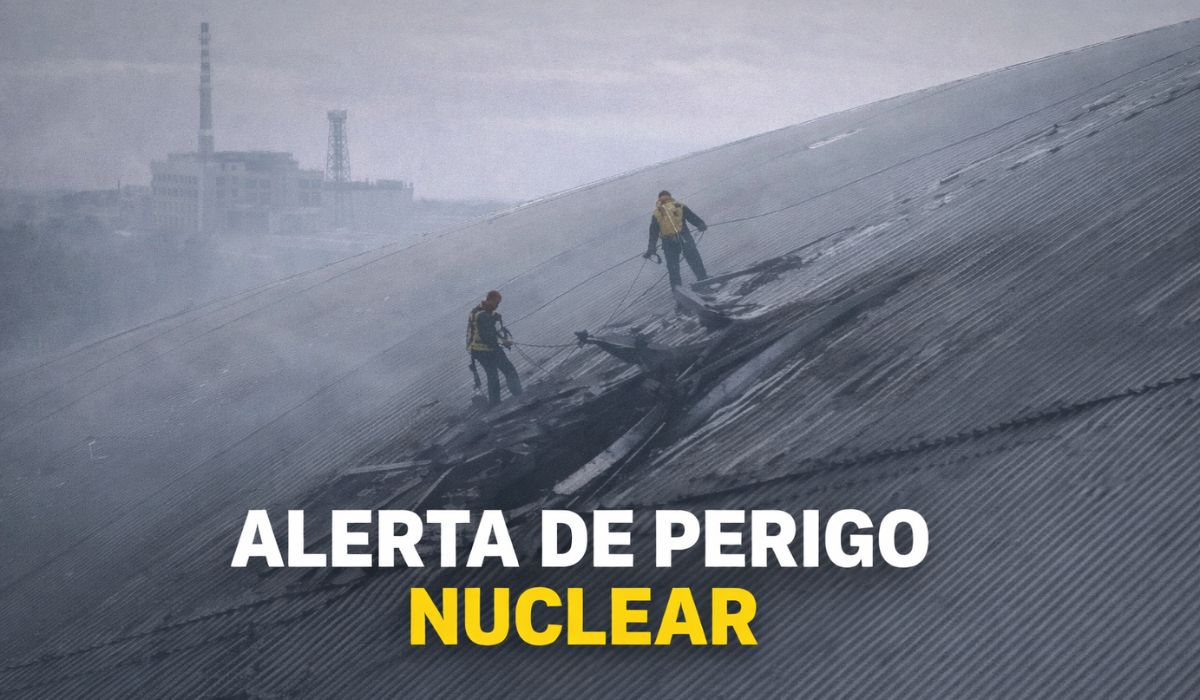
The gigantic steel shell built to contain Chernobyl for a century has been pierced by a drone, exposing a critical system and creating a hole that could cost over 500 million euros to repair.
-
Brazilian Navy reaches a new level by taking over an airport with a 1,600-meter runway used by 1,800 military personnel and autonomous attack drone testing.

-
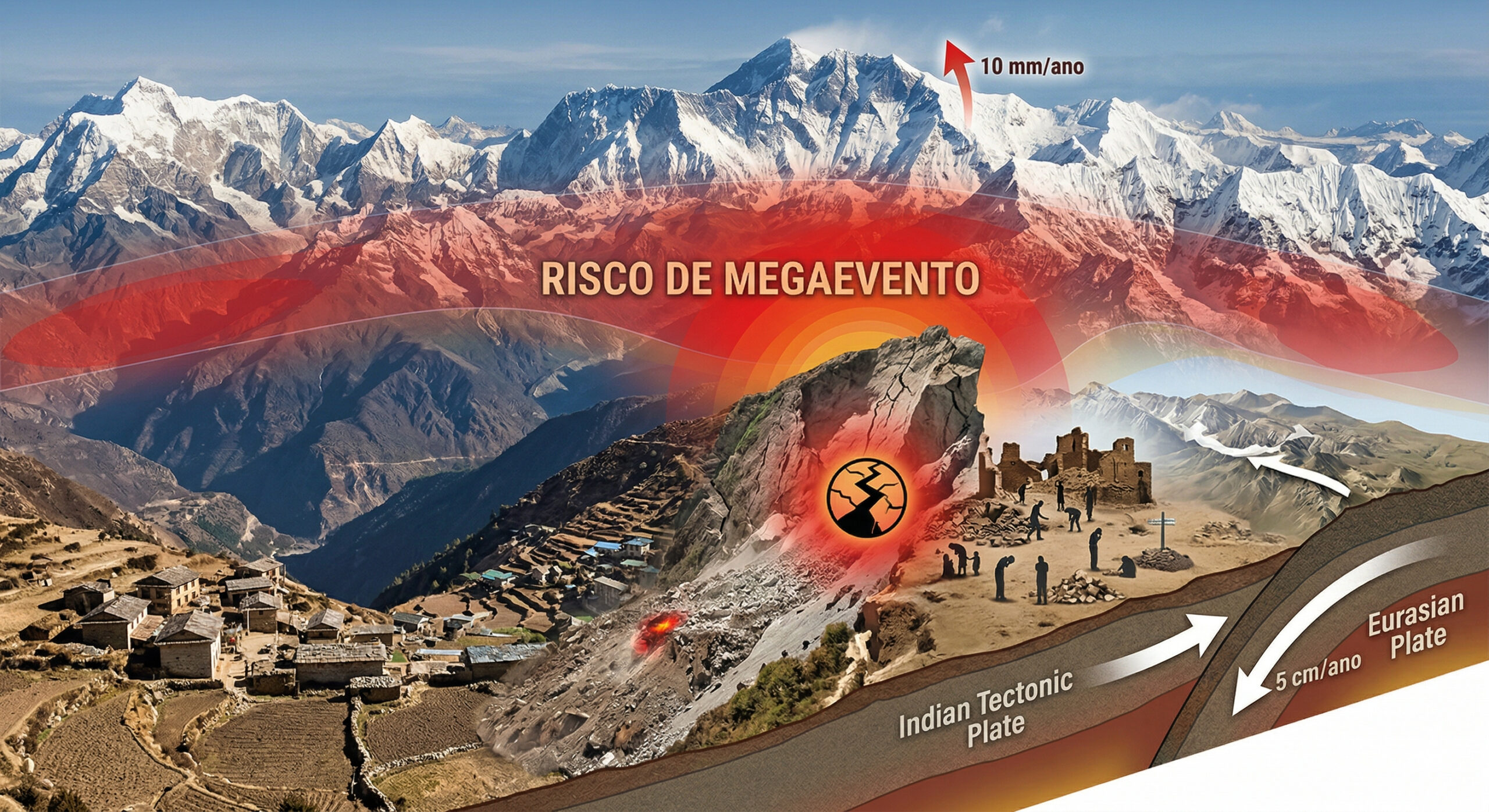
The Himalayas continue to grow to this day, with tectonic plates advancing 5 cm per year, mountains rising up to 10 mm annually, and the 2015 earthquake that killed 9,000 people may have increased the risk of an even larger seismic mega-event.
-
At an altitude of 400 km by astronauts from the International Space Station, Paris transforms at night into a golden mesh so precise that it reveals the outline of the Seine River, avenues, and entire neighborhoods like a luminous map drawn over the Earth.



The Richat Structure, Visible From Space and Without a Consensus Origin
Known as the “Eye of the Sahara,” in Mauritania, this circular formation of more than 40 kilometers in diameter has intrigued geologists for decades. Initially considered an impact crater, later studies dismissed this hypothesis. Current models suggest eroded geological domes, but none satisfactorily explain the almost perfect symmetry and the concentric organization of the rock layers.

The Taos Hum, a Low-Frequency Noise With No Identified Source
In the town of Taos, New Mexico, a portion of the population reports hearing a low and continuous hum, especially at night. Measurement equipment rarely detects the sound, and when it does, there is no clear physical source. Hypotheses include industrial infrasound, geological phenomena, or even neurological effects, but no study has been able to explain why only part of the population perceives the noise.

The Hessdalen Lights, Which Challenge Atmospheric Models
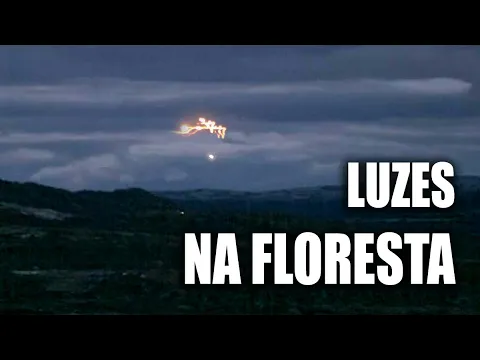
In the Hessdalen Valley, Norway, floating, moving, and self-luminous lights have been observed since the 1940s. They can remain stationary for minutes or move at high speeds. Instruments have recorded plasma, intense electric fields, and magnetic variations, but no theory — whether atmospheric chemistry or classical geophysics — fully explains the phenomenon.
Yonaguni, the Submerged Structure That Looks Like Architecture
To the south of Japan, divers have found a submerged formation with steps, right angles, and giant platforms, some extending over 100 meters. Geologists state that it may be an eroded natural formation, while other researchers point to geometric patterns incompatible with known natural processes. The absence of direct human artifacts prevents a definitive conclusion.

Why Do These Places Remain Unexplained?
The common point among all these cases is that the data exists, but does not fit perfectly into current models. In some cases, there is a lack of appropriate instruments; in others, the phenomenon occurs intermittently or depends on extremely specific conditions. This does not mean that science has failed, but that the current limits of knowledge have yet to reach complete answers.
These locations serve as natural laboratories, pushing physicists, geologists, biologists, and engineers to revisit hypotheses, create new models, and, in some cases, accept that the definitive explanation is still beyond our reach.
And you, reader: are these mysteries just temporary gaps in human knowledge — or signs that we still understand very little about the planet we live on?








-

-

-

3 pessoas reagiram a isso.