





 Portuguese
  English
  Spanish
  4 min of reading
  0 comments


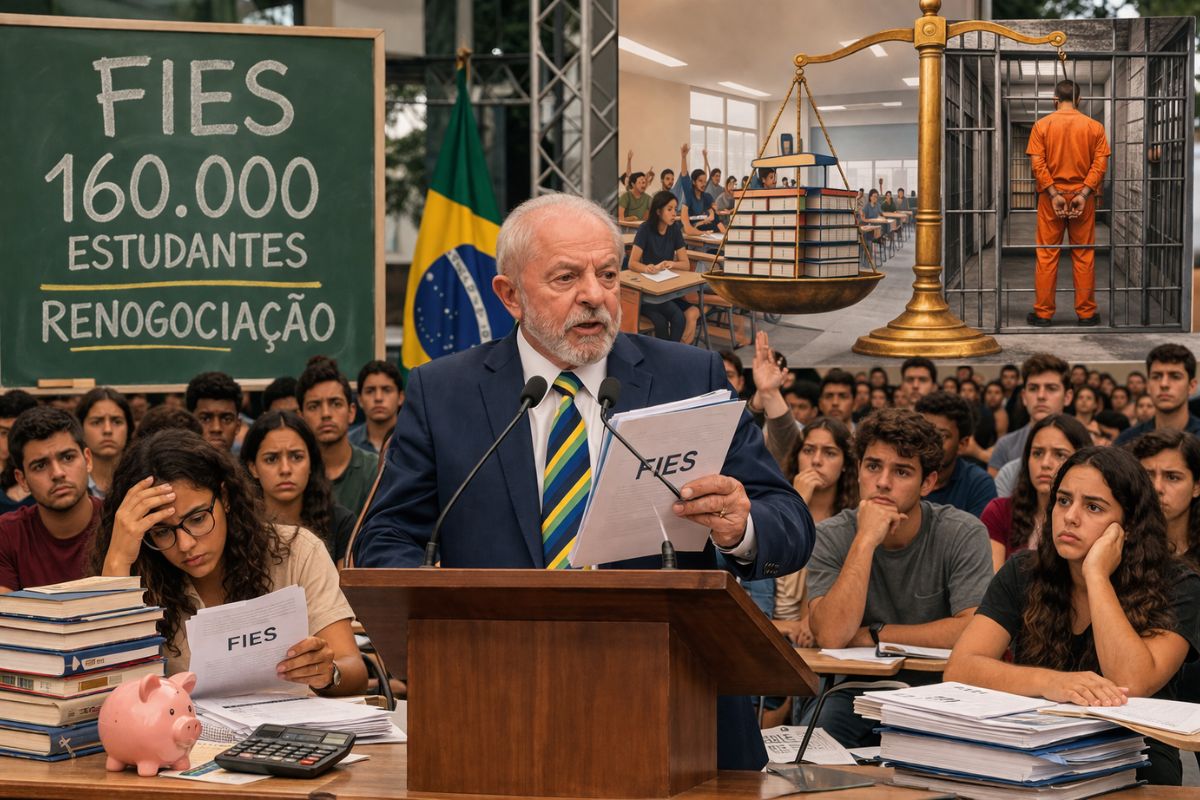
The president made the statement during the inauguration of a campus of the Federal Institute in Sorocaba (SP). The debt balance of FIES defaulters reaches R$ 1.8 billion. Lula did not detail the conditions of the renegotiation but said that “he cannot take away the dream of a young person who is in debt for their university course.”
President Lula said this Friday (10) that he will include students with debts in FIES within the package of measures against indebtedness that the federal government is preparing. The statement was made during the inauguration of a new unit of the Federal Institute of São Paulo (IFSP) in Sorocaba.
“The indebtedness of FIES students is increasing. And we will have to include them in our debt negotiation. We cannot take away the dream of a young person who is in debt for their university course.”, the president stated.
According to data from the Ministry of Education from October 2025, 160,000 students are behind on FIES payments, which represents R$ 1.8 billion in debt. Lula did not detail how the renegotiation will be conducted, but indicated that FIES defaulters will enter the same program being designed to renegotiate debts of Brazilian workers.
-
Young people are leaving college in the United States and competing for jobs in construction with salaries of R$ 500,000 per year.

-
The minimum wage for 2027 could reach R$ 1,717, and the value circulating in government circles is beginning to raise curiosity as it suggests possible changes in income, social benefits, and the purchasing power of millions of Brazilians.

-
These 6 professions allow you to retire early with just 15 years of contribution and 55 years of age.

-
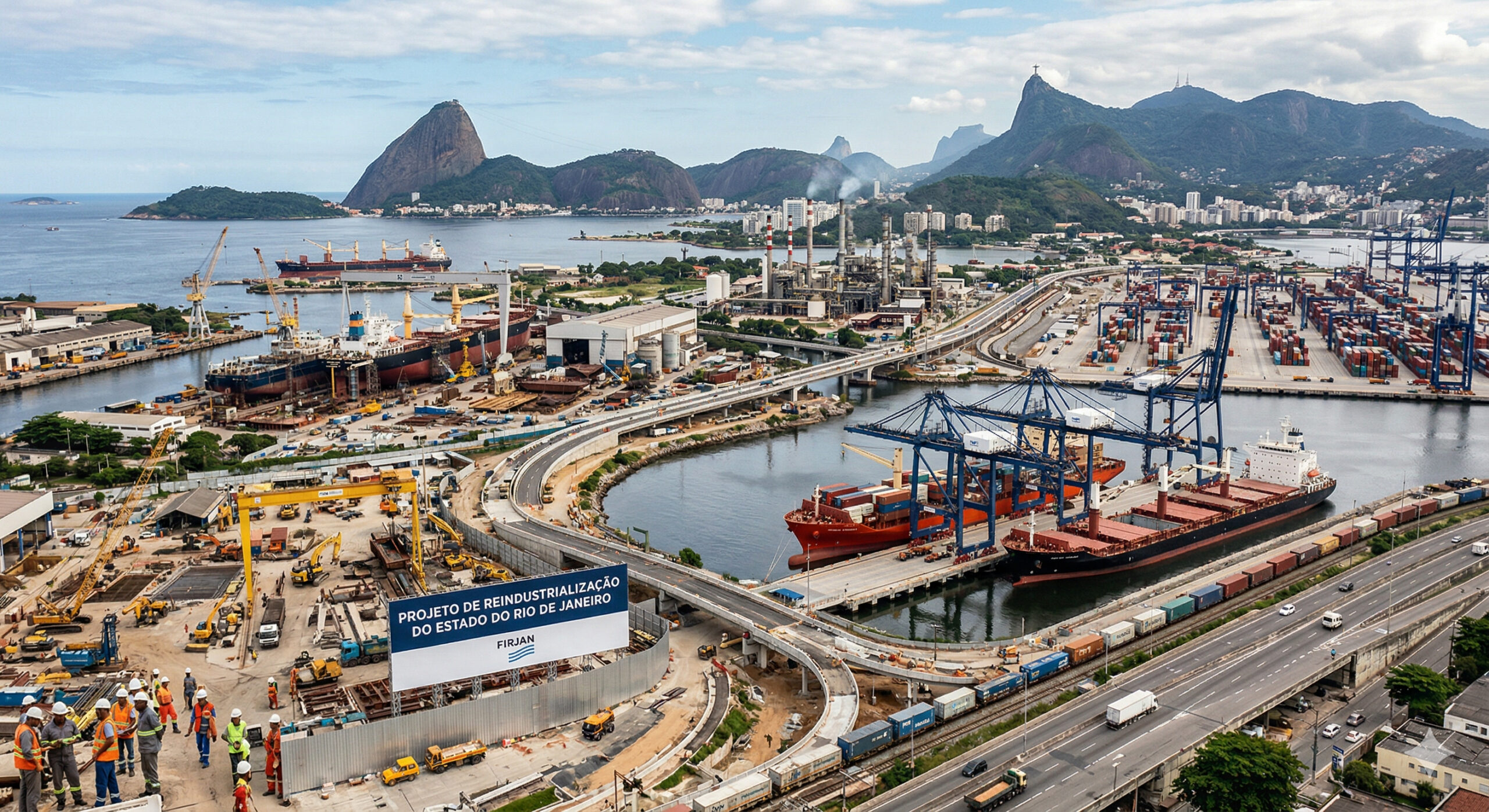
The plan of R$ 526.3 billion that could reindustrialize Rio de Janeiro by 2028 includes nearly 2,000 projects mapped by Firjan and creates one of the largest waves of investments ever concentrated in a single Brazilian state.
The data that stopped the speech
In the middle of his speech, Lula made a comparison that summarized his entire argument in two numbers.
“A prisoner in a maximum-security federal prison costs R$ 40,000 per year. In other prisons, R$ 35,000 per year. A student at the Federal Institute costs R$ 16,000 per year. In other words, half of what a criminal costs.”
And he added: “We invest in criminals when we do not invest in education.”
This phrase was the most shared from the speech. Not because it is new. Lula has used variations of this comparison before. But because R$ 40,000 against R$ 16,000 is the kind of contrast that needs no explanation. Anyone can understand the math.
What FIES has become
The Student Financing Fund was created to provide access to higher education for those who could not afford it. More than 2.5 million Brazilians have already used the program. But in recent years, FIES has become synonymous with problems.
Students who graduated and could not find jobs were left with debts that grew with interest and fines. In many cases, the debt balance doubled or tripled the original financing amount. The result: thousands of young people with diplomas in hand, bad credit, and unable to pay a debt that keeps growing.
The inclusion of these students in the government’s renegotiation package could mean discounts on the debt balance, extended payment plans, and forgiveness of charges, similar to what has been offered in previous programs like Desenrola.
The suggestion Lula made to the deputies
In the same speech, Lula made a direct proposal to the parliamentarians. He suggested that each federal deputy and each senator use part of their parliamentary amendments to build a school.
“Imagine if all of them take on the responsibility of financing the construction of a school. There are 513 deputies, that’s 513 schools. There are 81 senators, that’s 81 schools.”
The math is simple: each deputy has about R$ 40 million per year in amendments. If each one allocated a fraction of that to education, the country would have 594 new schools per year. It’s a hypothetical calculation, but the number is large enough to make anyone wonder why this doesn’t happen.
What comes next
The federal government’s debt renegotiation package is still in the drafting phase. Lula indicated that it could be launched in the coming days. The inclusion of FIES defaulters expands the scope of the program, which was initially focused on consumer and credit card debts.
The president concluded the speech with a statement about the international context: “We do not want war. We want peace. Whoever wants war, go to the other side of the planet, because here we are the land of peace and love.”
The new unit of IFSP inaugurated in Sorocaba has 4,600 square meters, was made possible by the New PAC, and will offer technical and technological education with laboratories, classrooms, and an administrative block.
For the 160,000 students who owe R$ 1.8 billion to FIES, today’s announcement is the first sign that the debt may no longer be a permanent sentence. The details, as always, will determine whether the promise becomes a reality.
With information from Agência Brasil, Diário do Grande ABC, and Brasil 247.








Seja o primeiro a reagir!