





 Portuguese
  English
  Spanish
 6 min of reading
  0 comments


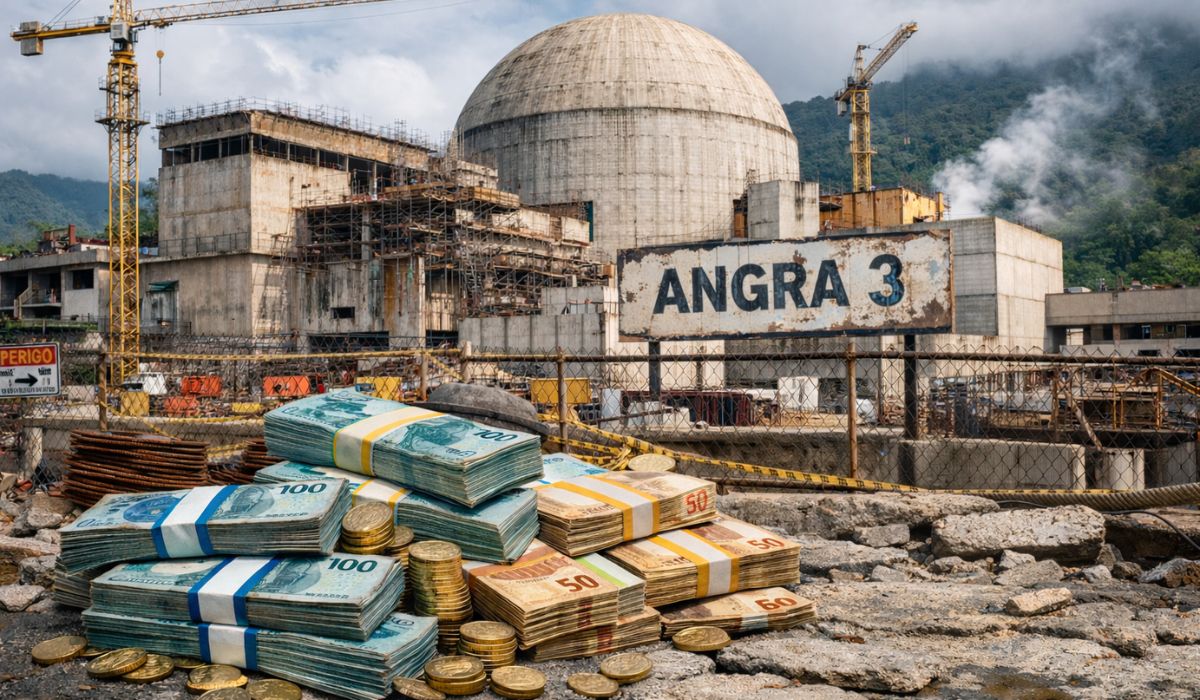
Angra 3 Back to the Center of the Government With Billion-Dollar Estimates to Finish or Close the Project and Annual Maintenance Costs While the Work Remains Stopped, Pressuring the Budget, Energy Tariff, and the Financial Situation of Eletronuclear.
The Lula government will have to decide the future of Angra 3, a nuclear plant in Angra dos Reis (RJ) whose construction spans decades and now puts the Executive in a deadlock with high costs in any alternative.
The latest estimates cited in the text indicate R$ 23.9 billion to complete the work and between R$ 21.9 billion and R$ 25.97 billion to close the project.
While there is no definition, Eletronuclear reports that it pays about R$ 1 billion per year to maintain the paralyzed project, with no energy delivery to the system.
-
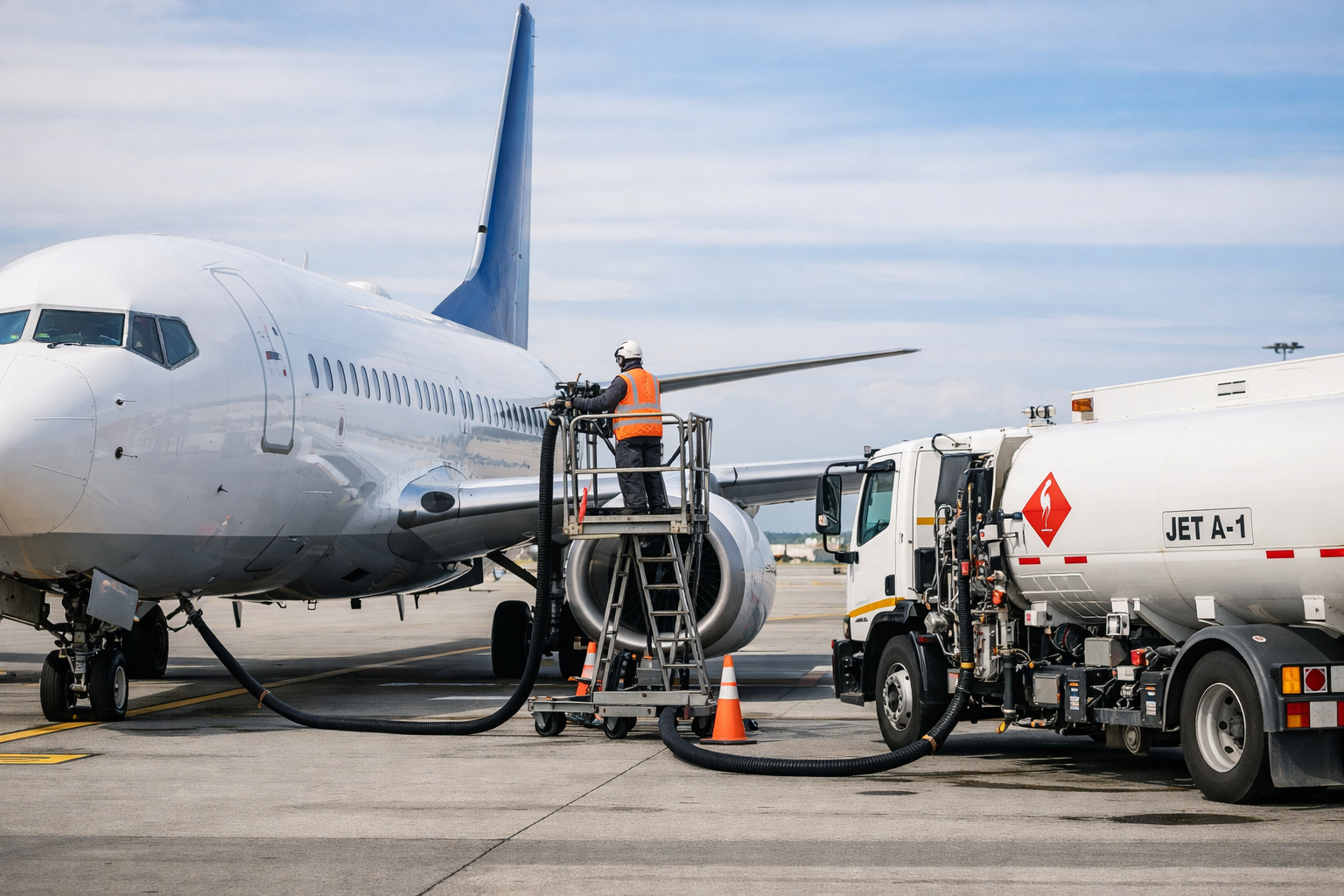
Airfare prices may rise with increasing fuel costs, and the government is considering urgent measures to avoid a direct impact on the wallets of Brazilians.
-
Chocolate prices soar nearly 15% and become a luxury item for Easter 2026, with increases surpassing inflation and changes in Brazilian consumption habits.

-
The Federal Revenue issues a good alert for Brazilian taxpayers: 60.9% are already using the pre-filled tax return, automatic refunds via Pix reach millions, and the government plans for a fully automated income tax in the coming years.

-
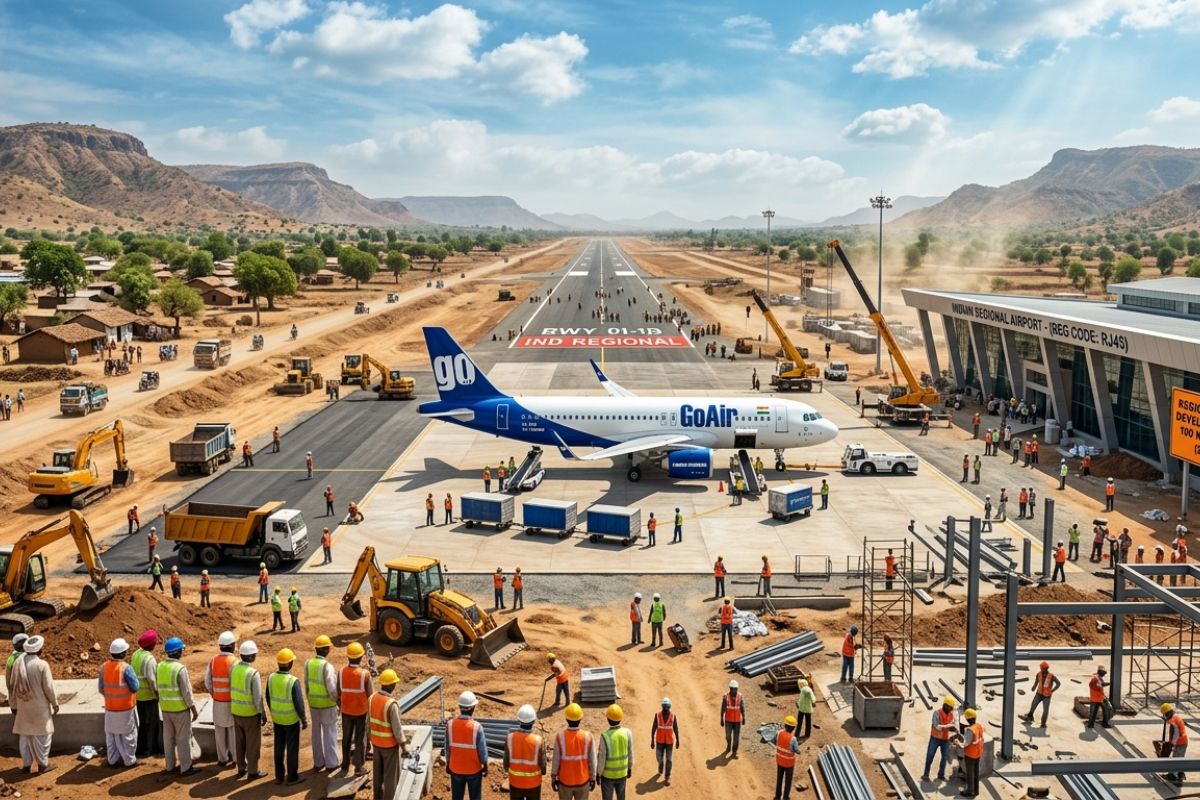
India announces a plan of $3.06 billion to bring aviation to forgotten regions: 100 new airports, $1.07 billion in subsidies, and regional routes guaranteed for 10 years, from 2026 to 2036, away from the centers.

The decision goes through the National Energy Policy Council (CNPE), connected to the Ministry of Mines and Energy, and has a direct impact on public accounts and the electricity bill.
At the center of the debate are two routes: resuming construction in the hope of enabling operation or formalizing closure and assuming the exit costs.
In both cases, consumers and taxpayers are likely to be affected, either through tariff mechanisms or through budget expenses.
Maintenance of Angra 3 and the Annual Cost Without Generation
Without generation and with the construction site preserved, Angra 3 continues to consume resources.
According to data attributed to Eletronuclear in the original text, annual maintenance is around R$ 1 billion, with a significant portion allocated to debt service with the BNDES and Caixa, in addition to expenses for equipment maintenance and payroll.
In this scenario, the recurring expense has been pointed out by government members and sector analysts as a factor that increases pressure on the budget.

The expense prevents the deterioration of structures and equipment, but does not increase energy supply or change tariffs in the short term.
In practice, the halt maintains a continuous cost associated with an asset that is still incomplete.
BNDES Study and Estimates to Complete or Abandon Angra 3
The discussion gained new weight after the release, in November 2025, of a study by BNDES that updated the project’s accounts.
The document estimated R$ 23.9 billion to finalize Angra 3 and calculated that abandonment would require R$ 21.9 billion to R$ 25.97 billion, considering the settlement of debts, contractual fines, and demobilization.
In an interview cited by Gazeta do Povo, the Minister of Management and Innovation in Public Services, Esther Dweck, stated that the decision is complex because the cost of halting is close to the cost of continuing: “It’s not simple to stop because the cost of not continuing is very close to the cost of continuing.”
The evaluation expressed by the minister reinforces the perception, both inside and outside the government, that closure does not automatically eliminate expenses and may require concentrated payments.
On the other hand, continuity also opens a second debate: how the additional investment would be financed and how this would reach the consumer.
In projects of this type, capital remuneration and the way energy is contracted can influence tariffs, which brings the issue back to the regulatory and fiscal field.

Ministry of Finance, Energy Tariff, and Subsidy Model
The economic area has shown resistance to resuming, mainly due to the potential effect on the electricity bill and, indirectly, on inflation.
In the background reported in the text, members of the government began signaling that the position could change if there is a financial design that reduces the tariff impact.
According to values presented in the original text, the energy from Angra 3 was estimated between R$ 778.86 and R$ 817.27 per MWh.
In the same section, references to recent thermal contracts in auctions were mentioned, around R$ 315 per MWh, which helps to frame the difference pointed out by industry sources.
Given this range, the government would discuss alternatives to lower costs to consumers, such as subsidized financing lines and a review of the projected internal rate of return, cited in the text as 8%.
The National Treasury, according to the presented report, maintains the alert that direct contributions to Eletronuclear to rebalance the company could require cuts or compensations in other areas, as it is an expense affecting public cash flow.
Technical Debate on Electric Matrix, Competitiveness, and Nuclear Waste
Beyond the accounts, Angra 3 reopens the discussion about the competitiveness of the electrical system.
Professor Erik Eduardo Rego, from the Polytechnic School of USP, stated in the original text that, from the consumer’s perspective, the plant would not be attractive compared to alternatives with lower cost and risk, citing hydropower, wind, solar, and natural gas.
The reading expressed by the professor is that contracting energy at higher prices could structurally pressure tariffs, with possible effects on industrial costs and prices in general.
In the same set of arguments, Rego called attention to the management of nuclear waste, a point that, according to industry experts, needs to be considered in decisions for the expansion or maintenance of nuclear generation.
Financial Risk in Eletronuclear and the Impact on Angra 1 and Angra 2
The financial situation of Eletronuclear appears as another vector of urgency.
According to Gazeta do Povo, the president of the state-owned company, Alexandre Caporal, warned that the company could face a collapse in a few months if the decision on Angra 3 remains undefined, and mentioned the risk that the deadlock could compromise even the operation of Angra 1 and Angra 2, as maintaining the third unit would consume resources generated by the others.

Along the same lines, Caporal advocated at least one strategy to handle financial clauses while the government decides.
“If the government doesn’t feel ready to make the decision, at least it should organize to obtain a waiver on that debt,” he said, according to the cited statement.
He also argued, in the cited excerpt, that the annual spending could be directed toward continuing the work, rather than being limited to preserving the construction site.
Experts consulted in the original text also pointed out risks in prolonging the uncertainty.
The lawyer Lucas Monet, cited as an expert in corporate law, stated that the decision needs to be technical, transparent, and well-founded, because its effects fall on society and the energy matrix.
Meanwhile, the lawyer Diogo Nebias, cited as an expert in infrastructure contracts, assessed that closing the project would require dealing with a high volume of costs, including terminations and obligations already assumed.
J&F, Âmbar Energia and the Corporate Configuration Around Angra 3
The original text also reports the entry of the J&F group, through Âmbar Energia, into the company linked to Eletronuclear, with the purchase of a stake for R$ 535 million.
The move is described as a factor that altered the political and regulatory environment surrounding the project, by introducing a private partner in the mentioned corporate arrangement.
According to the text, there was a possibility for the Union to repurchase the stake for the same amount, but this alternative was dismissed under the argument of avoiding having the government solely assume the liabilities linked to Angra 3.
The private participation, in turn, is treated with reservations by critics mentioned in the text, who point to previous episodes involving regulatory changes in the electricity sector and disputes over who bears costs, whether the Treasury, sector charges, or tariffs.






-

-

3 pessoas reagiram a isso.