





 Portuguese
  English
  Spanish
  6 min of reading
  0 comments


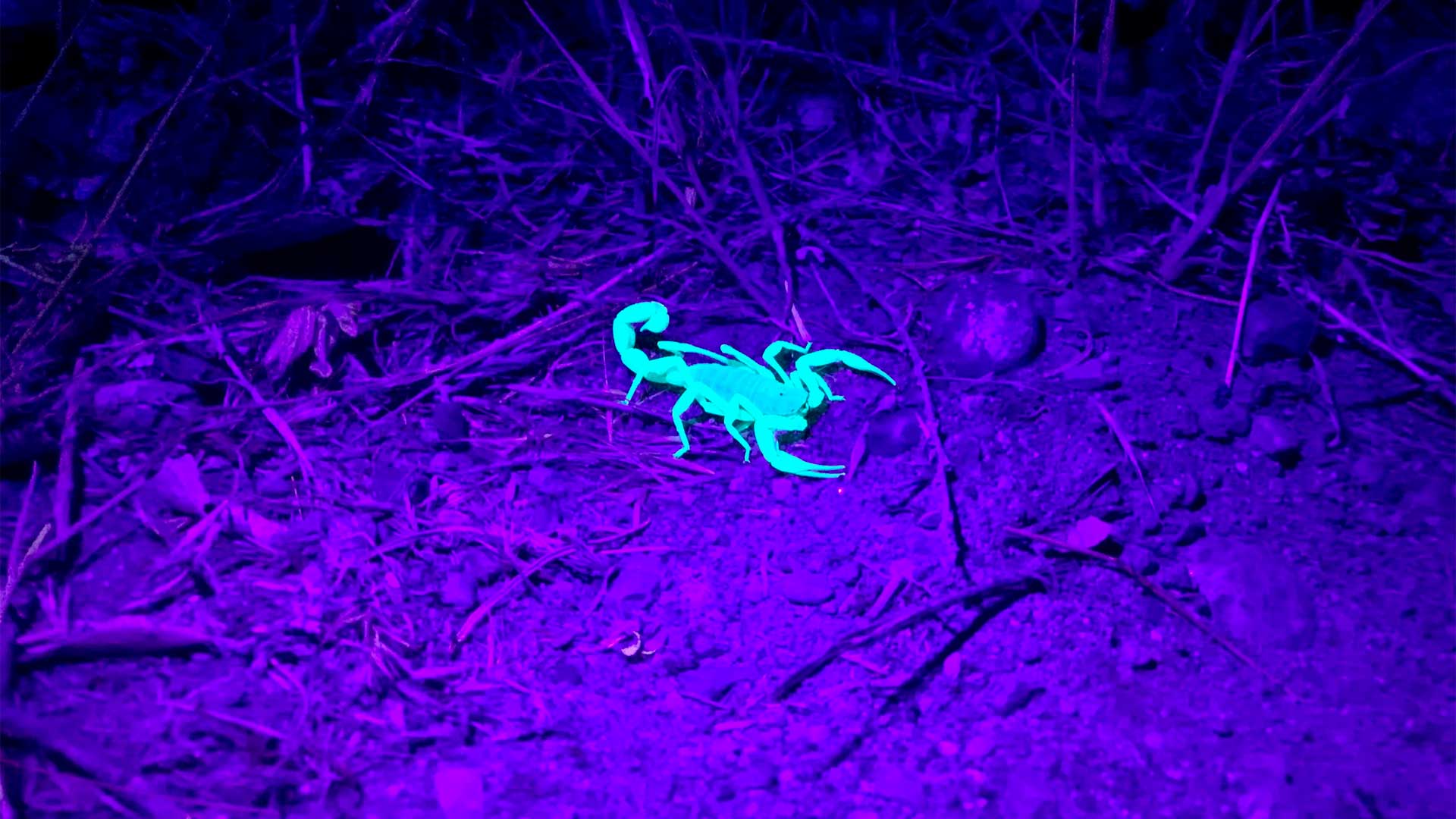
Scorpions, Gliding Squirrels, Platypuses, and Even Snakes Reveal Vibrant Colors When Illuminated by UV Light. Recent Research Shows That 95% of Tested Mammals Exhibit Photoluminescence.
Imagine walking through a forest at night with a ultraviolet flashlight. Suddenly, blue-fluorescent scorpions, pink gliding squirrels, and intensely glowing frogs appear around you.
What seems like a science fiction scenario is, in fact, a common biological phenomenon called photoluminescence, and scientists are discovering that it is much more widespread in nature than previously thought.
Unlike bioluminescence, where the animal produces its own light like fireflies, photoluminescence occurs when the skin, fur, or exoskeleton absorbs ultraviolet light and re-emits it in vibrant visible colors.
-
How an innovative city combines high technology, well-being, and sustainability to become the largest reference in clean energy on the planet.

-
Couple buys 1846 church in ruins for R$ 660,000, invests R$ 3.2 million in renovations, transforms it into a millionaire mansion, and even preserved a historic cemetery with over 300 graves.

-
He started running at 66 years old, broke records at 82, and is now a subject of study for having a metabolic age comparable to that of a 20-year-old, in a case that is intriguing scientists and inspiring the world.

-
Oldest tree on the planet reappears after 130 years of searches: Wattieza, 385 million years old, was 10 meters tall and had no leaves or seeds; Gilboa fossils in New York solved the mystery in 2007.


According to information published by National Geographic in May 2025, this phenomenon is present in practically the entire animal kingdom.
Scorpions Have Led the Fluorescent Spectacle Since 1954
Scorpions are the stars of this natural phenomenon. All species of scorpions fluoresce when exposed to ultraviolet light, according to the Zoology Portal of Pernambuco. This characteristic was first observed in 1954, and since then, UV flashlights have become essential tools for detecting these arachnids in their natural habitats.
The ghostly blue-green glow of scorpions originates from an ultrathin layer of their exoskeleton called hyaline exocuticle, rich in mucopolysaccharides and lipoproteins.


According to research from California State University, Professor Carl Kloock suggests that this glow acts as a rudimentary light sensor. The exoskeleton acts as a full-body photon collector, helping the animal detect if it is exposed or in a safe place.
Interestingly, this characteristic appears in fossils that are 430 million years old. Young scorpions or those that have just molted do not exhibit fluorescence, as the cuticle needs to be fully hardened for the phenomenon to occur.
Mammals Surprise with Impressive Numbers of Fluorescence
The major revelation came with recent studies on mammals. Linda Reinhold, a zoologist at James Cook University in Australia, tested skins from 141 species of Australian mammals in 2023 and found that 95% exhibited photoluminescent properties. The results were published in the Australian Journal of Zoology.
“Recent articles suggest that this is something really rare and special. But it is the norm, not the exception”, Reinhold stated in an interview with National Geographic. The researcher reported that stopping by the roadside and illuminating road-killed animals with a UV flashlight produced truly stunning results.
Platypuses joined this select group in 2020. Researchers from biologist Paula Spaeth Anich at Northland College in Wisconsin discovered that these already peculiar animals emit a blue-green glow under ultraviolet light. The discovery happened by accident when the team was testing preserved gliding squirrels at the Field Museum of Natural History in Chicago and, out of curiosity, illuminated a platypus specimen stored there.
Gliding Squirrels Reveal Bright Pink Secret
Gliding squirrels are another fascinating case. The three American species glow in a vivid pink shade under UV light, according to a study published in the Journal of Mammalogy in January 2025. Biologist Paula Anich discovered the phenomenon during a nighttime exploration in Wisconsin when her colleague Jon Martin examined lichens with a UV flashlight.
The fluorescence was present in specimens from the 19th to the 21st century, from Guatemala to Canada, in males and females collected in all seasons.
It is believed that the pink glow relates to nighttime perception and communication, especially in snowy environments, where high UV reflection may amplify the visual signal.
According to National Geographic, only about two dozen species of opossums were known to have fluorescent fur before this discovery. These marsupials, spread across the Americas, glow in purple-pink tones under ultraviolet light.
Snakes and Reptiles Join the List with Camouflage Function
In 2024, researchers added snakes to the long list of photoluminescent animals. About 110 species of snakes, from Colorado to Peru, were analyzed, and approximately 90% showed signs of ultraviolet coloration or UV light reflection, according to National Geographic.
The study revealed interesting patterns related to habitat. Prairie rattlesnakes, which live outdoors, show little UV coloration, appearing like “ghosts in the landscape”. On the other hand, their tropical cousins of the genus Bothrops exhibit full UV coloration. For tree-dwelling snakes, the UV glow may serve as camouflage, as many plants also reflect this light.
The data on amphibians are equally impressive: 92% of 187 species of frogs analyzed had photoluminescent skin, according to information released in May 2025.
Oceans Hold Invisible Secret Communication to Humans
In the marine environment, photoluminescence plays a crucial role in communication. Researchers identified 95 species of coral reef fish that glow in ultraviolet light.
Sharks take on neon green tones, while sea turtles of the comb become true underwater Christmas decorations with greens and reds arranged in geometric patterns.
Blue light penetrates the ocean depths the most. According to scientific sources, fish, sharks, and turtles use UV glow to communicate in an “invisible visual portal” that is completely clear to their peers but invisible to humans. This underwater communication represents a sensory channel completely hidden from human perception.
Evolutionary Functions Continue to Intrigue Scientists
The mystery surrounding the adaptive functions of photoluminescence remains unanswered, especially in mammals. Reinhold and colleagues tested how wildlife interacted with rat models with and without UV glow in different lunar phases. The results were disappointing: there was no preference for either model, neither among herbivores and carnivores nor among different groups of mammals.
Hypotheses vary according to the animal group. For scorpions, in addition to serving as a light sensor, it is believed that the glow facilitates recognition among individuals of the same species and may disorient small insects, making them easier prey. Some compounds responsible for the glow may also play a role in protection against solar UV radiation and have antifungal and antiparasitic properties.
For birds, 181 species with photoluminescent plumage have been identified. UV coloration seems to be involved in the mate selection process, as evidenced by the neon beaks of puffins.
Citizen Science Expands Discoveries Democratically
In 2024, citizen scientists made important discoveries using UV flashlights in their own backyards. Bright geckos and millipedes were documented, further expanding knowledge about the distribution of the phenomenon. This democratization of research shows that anyone with an ultraviolet flashlight can contribute to science.
The characteristic of scorpion fossils glowing that are 430 million years old suggests that photoluminescence is an extremely ancient evolutionary trait. It may be an ancestral peculiarity maintained over millions of years or have adaptive functions that we still do not fully understand.
Researchers now have the tools to “see” the world in a new light. Nature reveals itself to be much more colorful than our eyes can perceive, operating in invisible frequencies that create an entire parallel dimension of visual communication and ecological interaction. The nighttime world, when illuminated by UV light, transforms into a neon kaleidoscope that has existed for millions of years but remained hidden from humanity until recently.
And you, have you ever wondered how many animals around you might be glowing right now without you realizing it? Photoluminescence raises fascinating questions about the limitations of human perception and what else might be occurring in nature beyond the reach of our senses. Will the function of this glow in mammals remain a mystery, or will new studies provide definitive answers? Share your thoughts in the comments.







-

3 pessoas reagiram a isso.