





 Portuguese
  English
  Spanish
  5 min of reading
  0 comments


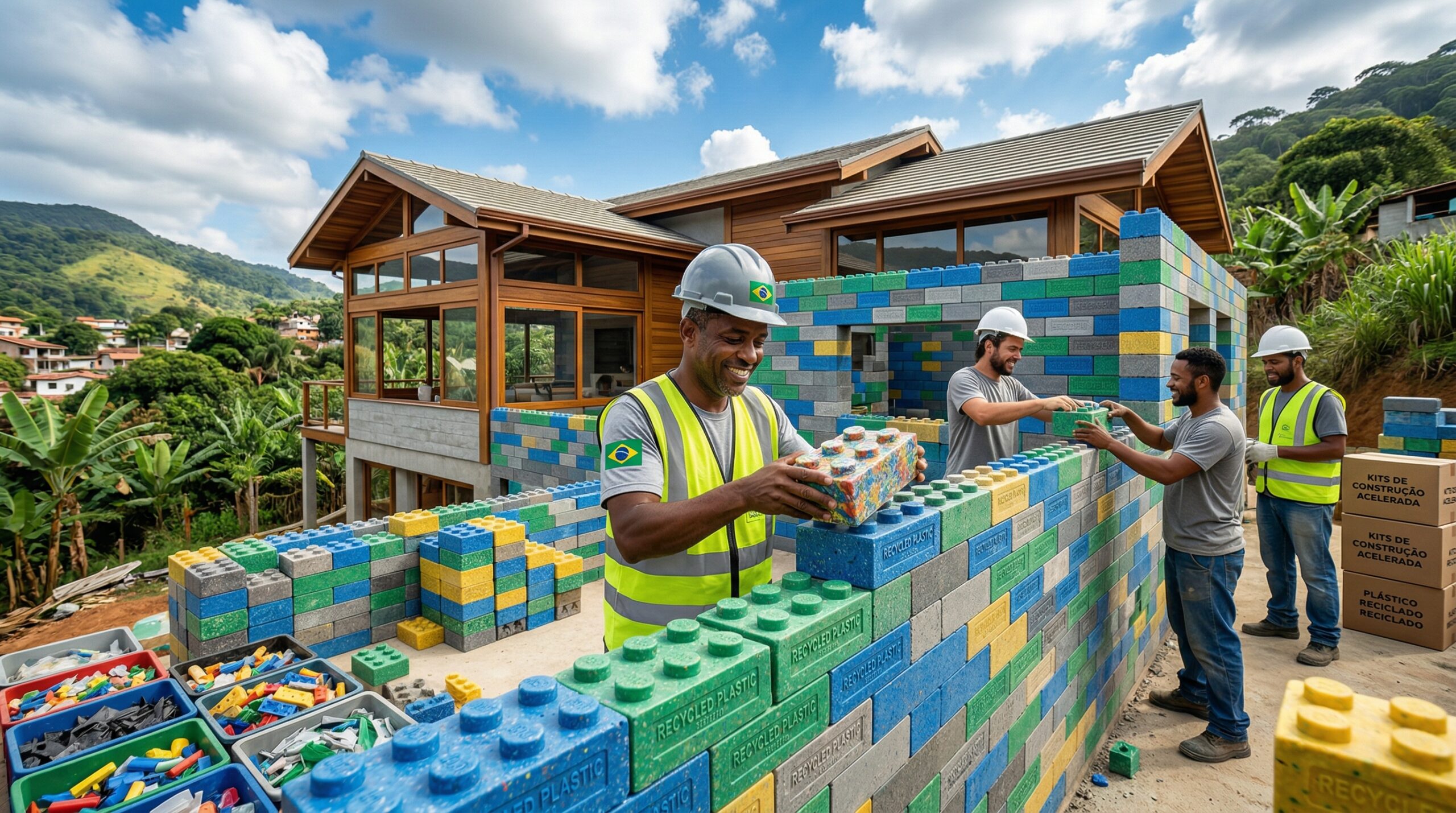
The brick transforms recycled plastic into a home, reinforces rapid construction, increases thermal comfort, and reduces humidity in daily use.
The brick made from recycled plastic was presented as the basis of a construction system that has already built a 180 m² house in 15 days and is being applied in different formats, from residences to modular structures. Inspired by the interlocking of Lego pieces, the material is created from waste that would be discarded and becomes part of a chain that mixes engineering, recycling, and speed of assembly.
In addition to the proposal for accelerated construction, the brick draws attention for its performance in daily use. The promise is for cooler environments, less contact with humidity, the possibility of conventional cladding, and adaptation for both higher-standard homes and popular housing kits. In practice, the material attempts to solve construction, comfort, and waste reuse simultaneously.
Recycled brick is born from waste and becomes an engineering product

The proposal is based on a simple principle: plastic waste goes through recycling, becomes granules, and then is transformed into construction pieces.
-
A robot with a silicone face and 26 facial motors learns to move its lips accurately by observing its own reflection like a child, then analyzes hours of videos on YouTube to reproduce how humans speak and sing, now articulating words in several languages, has already recorded a music album generated by AI, and is beginning to cross the uncanny valley that causes people to reject almost human robots.

-
Iron foundry in Senegal reveals a pile of 100 tons of slag, 35 furnace bases, and a rare technique that has remained stable for centuries.
-
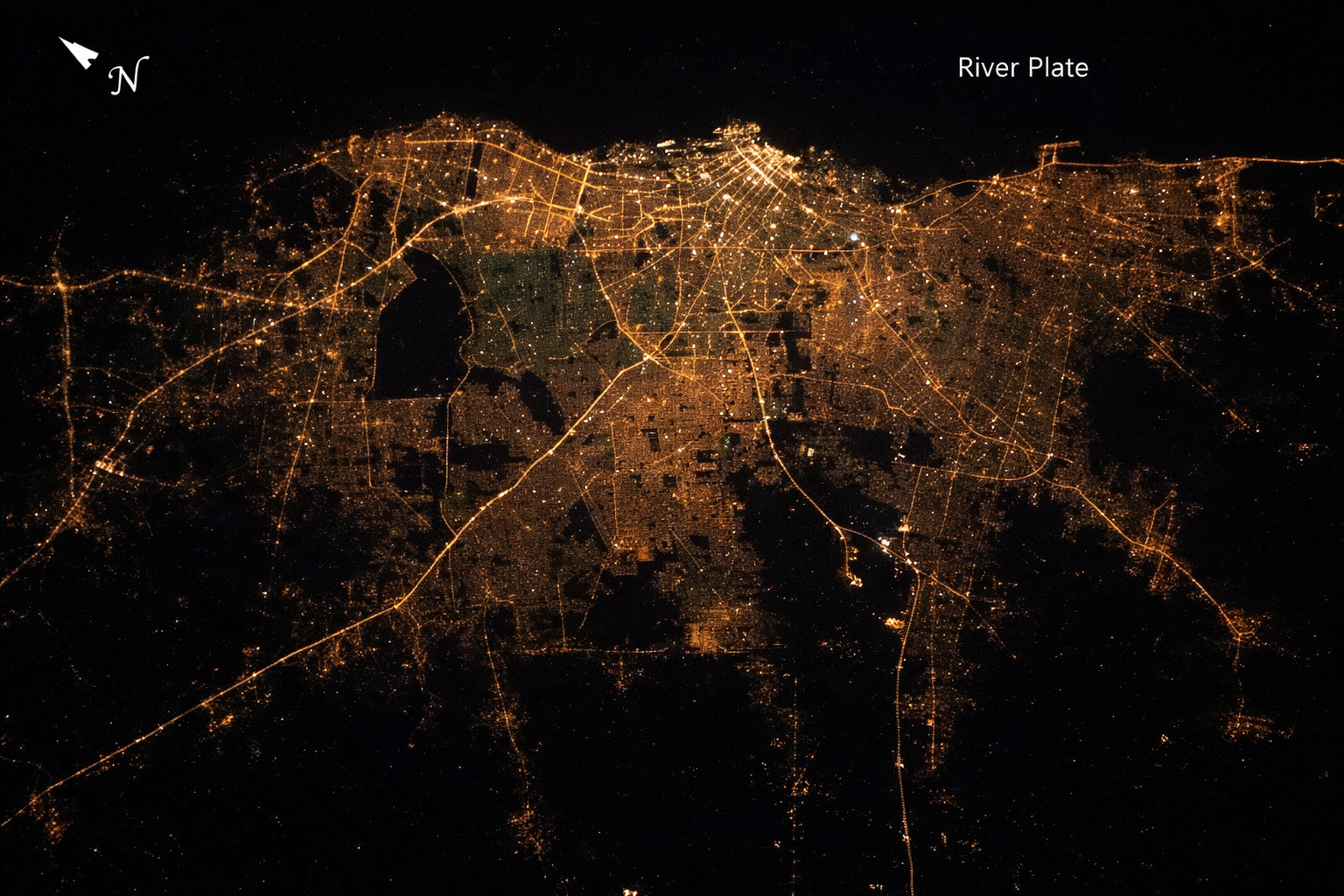
The only man-made structure in the world that can be clearly seen from space is not the pyramids of Egypt nor the Great Wall of China.

-
An analysis by NASA highlighted that the Great Wall of China and the Pyramids of Egypt are not visible to the naked eye from the International Space Station, and only one man-made structure is visible in this way.

The result is a brick that ceases to be just a curious idea and is treated as an engineering product, with applications in houses, boxes, modules, and other solutions.
According to the presentation of the system, the material also mobilizes cooperatives and social organizations linked to the collection of caps and other waste.
What would previously be waste now enters a value chain, generating raw material for construction and income for those involved in this process.
180 m² house was assembled in 15 days

One of the strongest examples shown in the project is a 180 m² house built in 15 days. The residence, presented as a showcase of the system, was used to demonstrate how the brick can accelerate construction without compromising comfort and finishing.
Upon entering the property, the highlighted perception is of a cooler environment, even with heat outside. Cross ventilation helps, but thermal performance is also linked to how the block was designed. The central idea is that the house should not only depend on the speed of assembly but also deliver quality of use.
How the brick helps with thermal comfort
The system uses internal voids and structural ties to create a dynamic air circulation. When the sun heats the wall, a pocket of warm air forms that rises and generates natural exhaustion, as if the structure functions like a chimney.
This behavior is pointed out as one of the differentials of the brick, as it helps to reduce the feeling of heat inside the environments.
Instead of merely acting as a seal, the material participates in the thermal performance of the construction. It is a solution that tries to transform the wall itself into an active element of comfort.
Brick prevents humidity and reduces common masonry problems

Another highlighted point is the resistance to humidity. The system starts from a slab with a galvanized frame and fastening elements that keep the structure together without the block absorbing moisture from the ground as is common in conventional constructions.
In practice, this means that the brick does not transfer humidity into the residence in the same way that traditional materials can transfer.
The promise includes a lower risk of mold, less characteristic smell of closed environments, and greater stability in humid regions, such as coastal areas. This is one of the strongest arguments of the project, as it addresses a common problem in many homes.
System accepts cladding and can have a conventional appearance

Despite the striking appearance of the material, the project does not depend on leaving the brick exposed. The structure can receive panels, plaster, porcelain, ceramics, wood, and other finishes, allowing the house to have a similar appearance to a conventional construction.
It was also shown to be used in combination with external textures and solutions for wet areas. This expands the flexibility of the system, which can follow a more industrial, more discreet, or even more sophisticated line, depending on the chosen finish.
The proposal is not to force an “experimental” look but to allow the method to adapt to the taste and standard of each construction.
Kit construction attempts to tackle labor shortages
One of the most repeated points in the presentation is the gain in speed. The system was designed to arrive in a kit, with blocks, doors, windows, profiles, and other components organized to facilitate assembly. In some cases, the main structure can be raised in a few hours.
This format makes the brick a direct response to the labor shortage in the sector. Instead of relying on long artisanal stages, the construction follows a more industrialized logic, with pre-assembly, fitting, and locking. This changes the pace of construction and can reduce part of the complexity of the site.
Method ranges from affordable housing to higher-standard properties
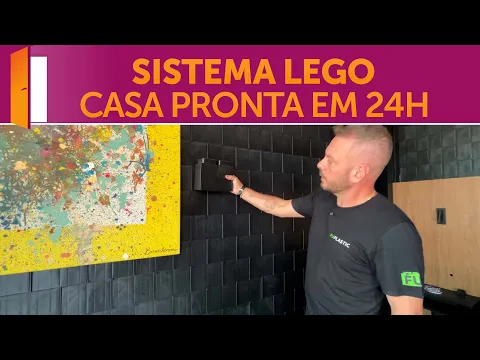

The system was not presented for just one type of property. There are everything from affordable housing kits of 48 m² to larger residences and high-standard projects. Applications also appear in aviaries, support modules, technical boxes, and transportable structures.
This broader reach reinforces the attempt to position the brick as a construction platform, and not just as a piece for an isolated niche.
The same logic of fitting, locking, and speed is adapted according to the size and needs of the construction. The material ceases to be a curiosity and begins to compete with established construction methods.
Recycling, logistics, and rapid construction unite in the same model
In addition to construction performance, the project bets on the logistical argument. Recycled plastic becomes granules, granules become pieces, and pieces go to assembled or pre-assembled kits, simplifying transport and installation on site.
In this sense, the brick concentrates three important promises: reuse of waste, acceleration of construction, and generation of economic value from what would be waste.
The combination of these factors helps explain why the system tries to position itself as a complete solution, from material to final assembly.
The proposal goes beyond building quickly: it aims to reorganize how waste enters the construction chain.
Would you live in a house made with recycled plastic brick?




Seja o primeiro a reagir!