





 English
  Francês
  Alemão
  Italiano
  Japonês
  Norueguês
  Portuguese
  Spanish
  3 min of reading


Biolionary Project Is Greenfield, Meaning It Will Start From Scratch, With Expectations Of Generating Hundreds Of Jobs
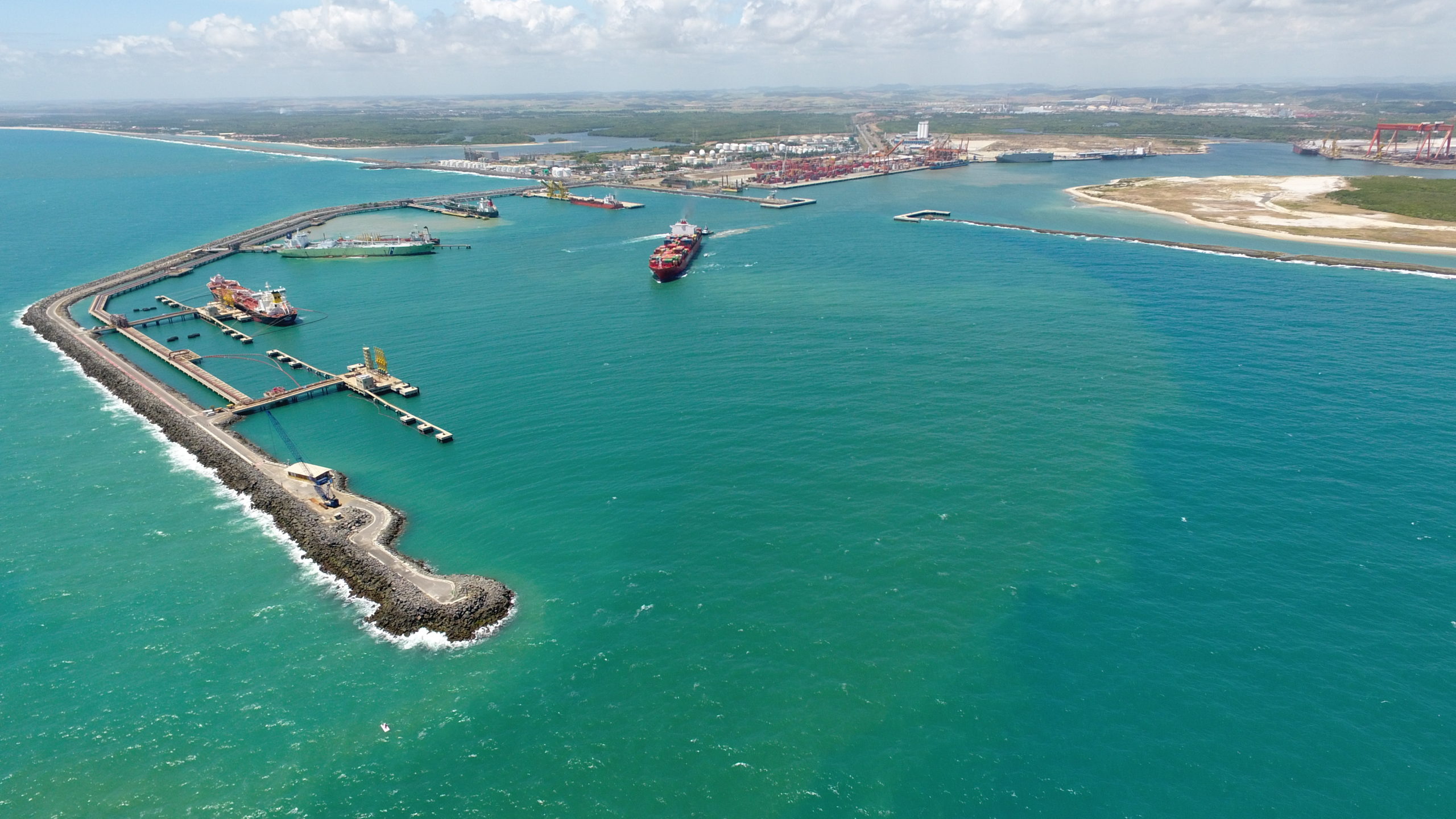
Maersk, the world’s largest maritime logistics company, plans to begin construction on a new container terminal at the Port of Suape, in the metropolitan region of Recife (PE), next year. The company, through APM Terminals, won an internal area of the Atlântico Sul shipyard in July of this year, after a long, fierce, and controversial legal battle with other competing companies.
With a projected investment of up to R$ 2.6 billion, the space should initially have the capacity to handle 400,000 TEUs (twenty-foot equivalent units), increasing the operational potential of the Suape port complex by 55%. However, these changes are subject to licenses and other expected bureaucratic actions. Therefore, Maersk’s expectation is that construction will start between the end of 2023 and the beginning of 2024, with operations commencing in 2026.
It is worth noting that the terminal project in Suape is greenfield. In other words, it will start from scratch. This is one of the examples of how much the company has been investing in Brazil and Latin America, contributing to the improvement of local infrastructure and making the Brazilian port sector more efficient. Maersk owns over 70 port terminals worldwide, with 11 in South America.
-
New shoe factory in Ceará is expected to create 400 jobs and strengthen the local economy.
-
No one imagined it, but a mixture of sawdust with a mineral that fights fires surprises scientists with a result that changes the course of fire-resistant construction.

-
From empty land to a high-end house, wooden construction uses a lightweight system, metal structure for the foundation, ventilated ceramic cladding, and special windows to create an efficient and comfortable living space throughout the year.
-
From vacant land to a high-end house, wooden construction uses a lightweight system, a metal structure for support, ventilated ceramic cladding, and special windows to create an efficient and comfortable living space throughout the year.

In a statement sent to the reporters from the portal Click Petróleo e Gás – CPG, the company states that “investments in Suape will contribute to the development of a modern and competitive terminal, significantly reducing costs for customers and improving services, thanks to a qualified workforce and the introduction of an innovative operational standard.”
Maersk’s Arrival in Suape Ends Tecon’s Monopoly
The purchase of the internal area of the Atlântico Sul shipyard by Maersk was celebrated by the Port of Suape itself. The arrival of the Danish company will end the monopoly of Tecon in container handling at the site.
The Filipinos at Tecon have been operating in Suape since 2001 under a concession, which is why they follow organized port operational standards and apply what are considered the highest tariffs in the country. APM Terminals will establish its Private Use Terminal (TUP) outside the organized port, bringing competition to Tecon.
For APM Terminals, “competition can add value for customers and attract new cargo flows, helping the Port of Suape to grow more quickly and generating more business for the State of Pernambuco.”
Recent Investments Are Already Part of the Strategy Targeting Suape
At the end of November, Maersk announced that it will expand its terrestrial transportation after purchasing 222 new trailers and 113 “tractor units” (EURO 5 Meteor and Constellation), marking the largest batch of the model ever delivered by Volkswagen.
These new trucks are suitable for road freight transport over medium and long distances. Thus, the company will expand its business in sectors such as food and beverages, electronics, household items, and even personal use items.
This is a strategy that strengthens its routes from São Paulo to Amazonas and expands operations in Bahia, Santa Catarina, and Pernambuco, areas where the company has established itself through legal battles for new business, including the purchase of the area located at the Atlântico Sul Shipyard in Suape.
Dredging in Suape
While Maersk’s billion-dollar project is not yet underway, the Port of Suape is carrying out improvement works at the site to meet future demand. In November, dredging resumed in the main access channel to the Pernambuco terminal.
This service had been halted with 85% of the work completed since 2013 due to a legal impasse between the Government of Pernambuco and the Dutch company Royal Van Oord. Negotiations resumed in October 2021 and resulted in a mutually beneficial agreement.
The dredging will entail a deepening of 20 meters over six kilometers at a cost of R$ 140 million. A state-of-the-art dredger is being used for the removal of sediments and rocks.









Seja o primeiro a reagir!