





 Portuguese
  English
  Spanish
 4 min of reading
  0 comments


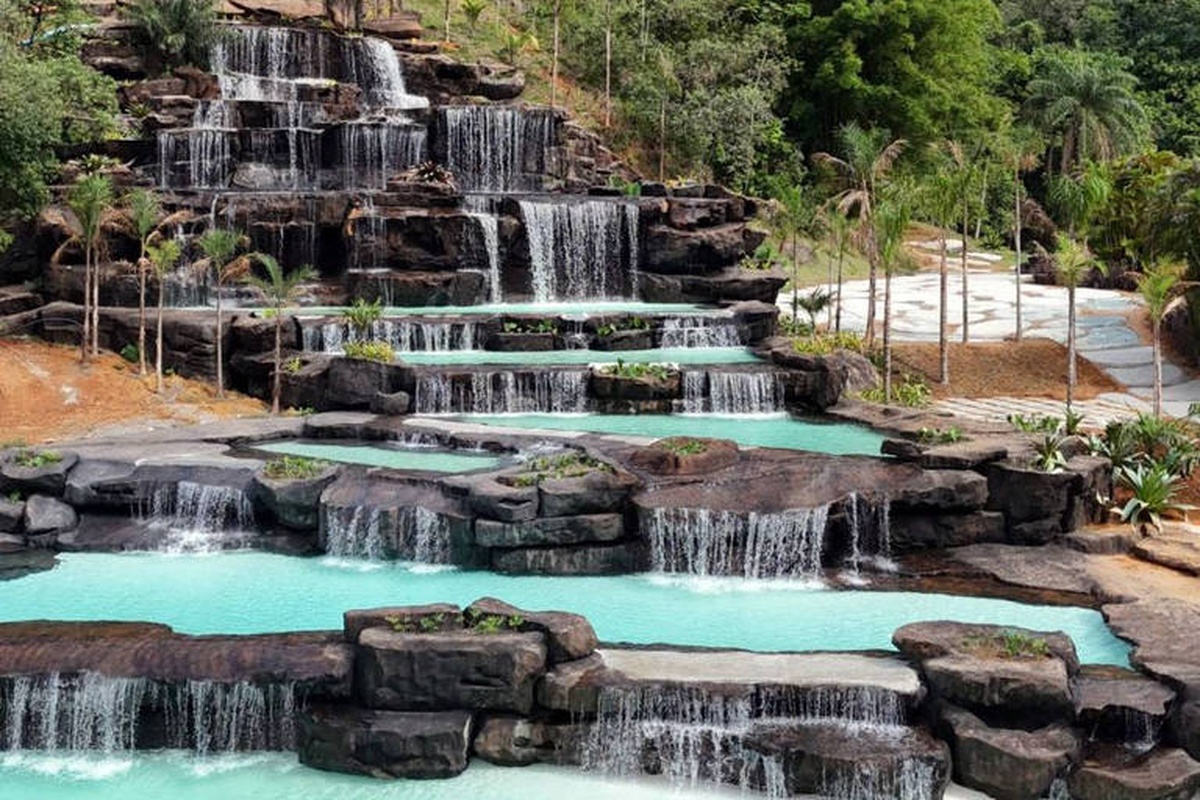
Ecological Project Reuses Tyres and Bottles Removed from Guanabara Bay and Integrates Environmental Education with Local Tourism
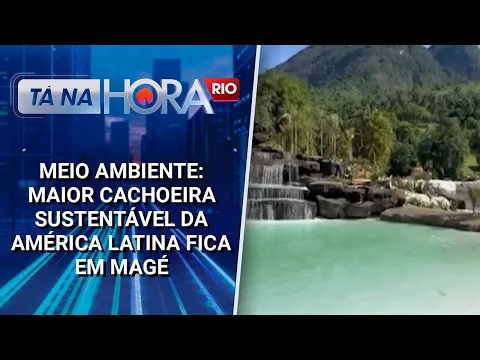
The city of Magé, located in the Baixada Fluminense, unveiled one of the largest sustainable artificial waterfalls on the continent on June 5, 2025.
This pioneering structure, built with 40 tons of waste such as truck tires, PET bottles, and Styrofoam collected from Guanabara Bay, began operation at the Eco Resort Castelinho, located in the Santo Aleixo district.
At 25 meters high and supplied by an autonomous rainwater catchment and treatment system, the waterfall stands out for uniting leisure, environmental awareness, and social inclusion.
According to the project’s creator, entrepreneur André Marinho de Moraes, the goal has always been to create a proposal that promotes development without harming nature.
He emphasizes that the initiative also aims to open new doors for sustainable tourism in the region. During the inauguration, approximately 200 students from public and private schools participated in an educational tour of the site.
The official opening to the public is expected to occur at the end of 2025, with tickets to be sold in the future.
The investment amount remains confidential, although the execution has already drawn national attention for its innovative and environmentally responsible character.
-
Embrapa’s discovery reveals an unexpected advancement by allowing the production of seedlings from the caatinga using brackish water, opening a new frontier for farmers to face drought more efficiently.
-
6 sources of free fertilizer that you are throwing away every day and can transform your garden without spending anything.
-
With a water crisis on the radar, Sabesp invests in reclaimed water for data centers and transforms sewage treatment into a solution that saves millions of liters and protects public supply.

-
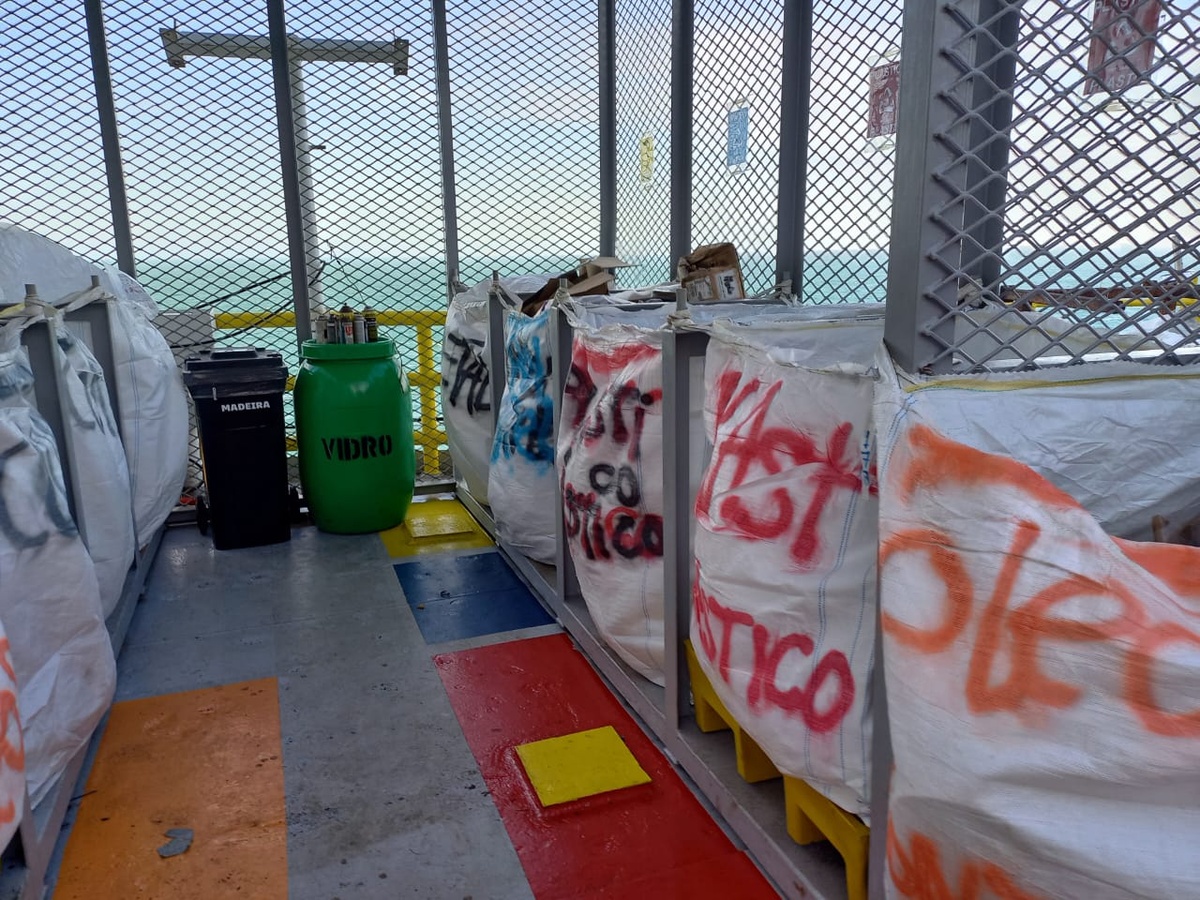
Foresea achieves 100% offshore waste reuse in 2025, eliminates landfill disposal, and consolidates sustainable strategy with 1,500 tons recycled.

Ecological Structure Built with Recycled Waste and Support from Local Fishermen
Since the beginning, the construction of the waterfall has involved active collaboration from artisanal fishermen.
They were responsible for removing materials from the slopes and mangroves of Guanabara Bay, in collections conducted up to three times a week.
In partnership with the Águas da Guanabara project, the action managed to collect around 1,300 tons of solid waste over three years.
A large part of this waste has gained a new purpose by becoming part of the stones of the artificial waterfall, made internally from recyclable materials and coated with concrete.
It is estimated that about 6,000 tyres, along with plastics and Styrofoam, have been reused.
Furthermore, the land was previously a useless lawn but underwent an extensive reforestation process.
So far, 12,000 seedlings of native and fruit-bearing species, such as pitanga, ingá, and guava, have been planted.
Despite occupying only 1% of the total area of 3.35 million square meters of the land, the waterfall fully complies with environmental regulations and contributes to the recovery of local vegetation.
Environmental Monitoring Ensures Legality and Biodiversity Preservation
Ibama officially recognized Eco Resort Castelinho as a wildlife release area.
Additionally, the unit has technical monitoring from the APA Petrópolis, part of ICMBio, ensuring total compliance with biodiversity preservation guidelines.
The project serves as a national reference. It generates a positive impact on the community and complies with current legislation.
The project promotes conscious interaction between the population and nature.
The creators planned each stage to avoid negative impacts on local fauna and flora.
Environmental Education as a Tool for Transformation and Territory Valuation
Among the next steps, the Eco Resort is preparing to install an Environmental Education Center. Set to open in 2026, the space will house educational trails adapted for children, workshop rooms, native plant nurseries, and even an interactive butterfly garden.
The proposal aims to offer continuous and free activities for students from the municipal network, strengthening awareness from childhood.
The focus is on shaping a generation connected to nature.
“We want young people not only to visit the forest but to learn to protect it, observe it, and value it as part of their history,” highlights the project leader.
For this reason, the construction of the center is being planned with accessibility criteria, social inclusion, and pedagogical monitoring.
The planned workshops and experiences also include training local youth to work as environmental guides, expanding the project’s social impact.
The intention is to ensure that the benefits generated extend beyond tourism and become an educational and environmental policy for the municipality.
Sustainable Tourism Boosts Economy and Restores Local Population’s Self-Esteem
The Magé City Hall officially recognizes the project as a vector of ecological and economic transformation.
As highlighted by Bruno Lourenço, the municipal secretary of culture, tourism, and events, the initiative also has the potential to position the municipality as a reference in environmental tourism in the state of Rio de Janeiro.
“The proposal is fully aligned with the identity of Magé, a territory privileged by natural beauty and biological diversity,” he emphasizes.
The public authorities, therefore, also consider that the Eco Resort and its sustainable waterfall represent a replicable model, especially for municipalities that similarly face challenges related to unemployment and environmental degradation.
As André Marinho stated, the intention, above all, has always been to create something that could be copied, adapted, and multiplied in other communities.
Thus, in addition to preserving the ecosystem and promoting education, the project consequently also boosts the self-esteem of residents by transforming waste into opportunities.
In this way, the example of Magé reinforces that even in areas with a history of vulnerability, it is still possible to generate development in a fair, balanced, and lasting manner.









Seja o primeiro a reagir!