






 Portuguese
  Spanish


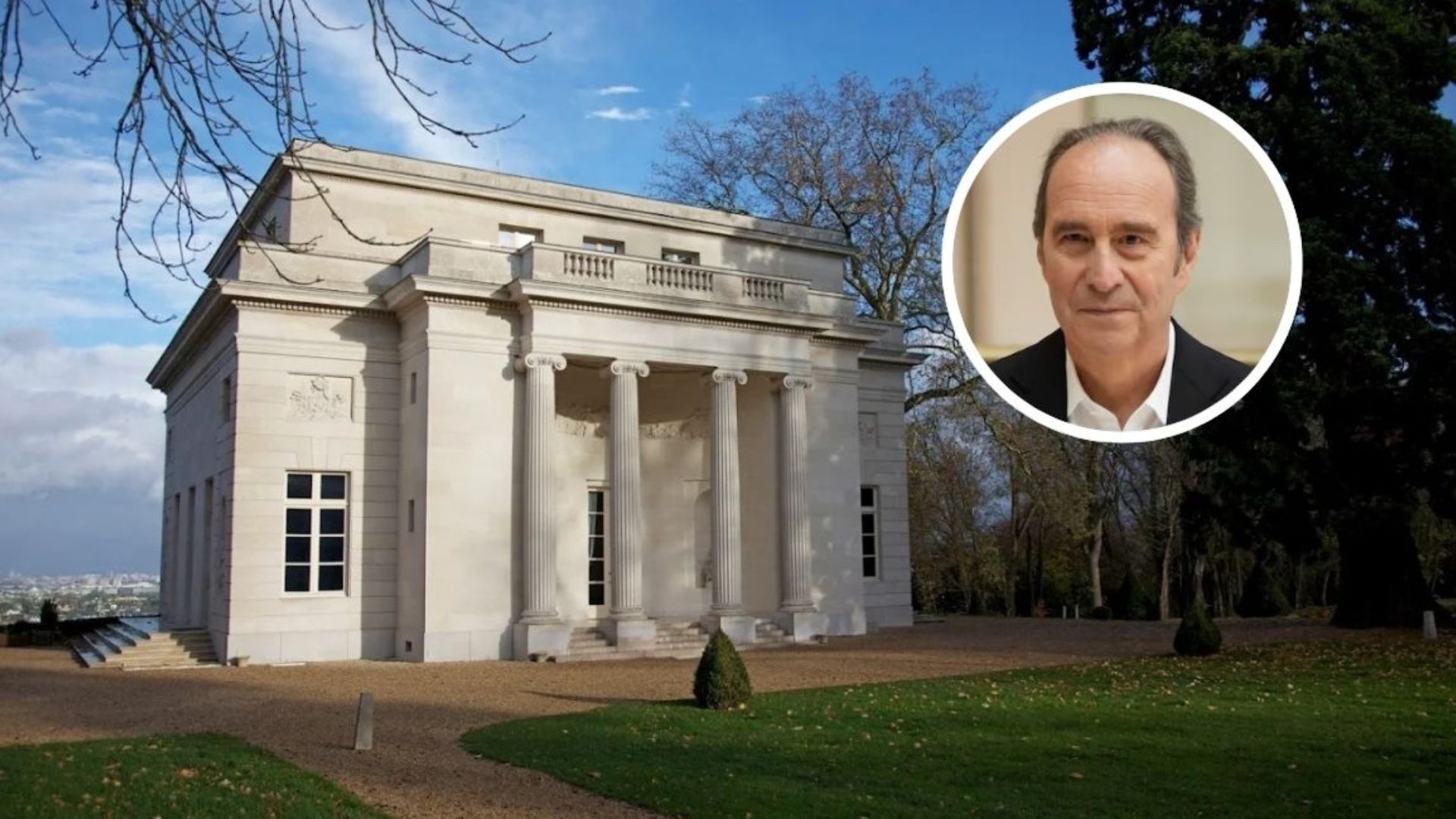


Historic Residence Associated with Louis XV’s Last Mistress Changes Hands for Millions and Returns to the Spotlight for Its Combination of Neoclassical Architecture, Rare Gardens, and Cultural Significance in France.
The French billionaire Xavier Niel, founder of the European telecommunications group Iliad, purchased the historic Pavillon de Musique de la comtesse du Barry in Louveciennes, on the outskirts of Versailles, for €38.7 million – around R$ 242 million at the current exchange rate.
Built around 1770 as a reception pavilion for Jeanne Bécu, the countess du Barry, the last official mistress of King Louis XV, the property combines neoclassical architecture, marble halls, a distant view of the Eiffel Tower, and historic gardens spanning about 4 hectares.
History of the Pavilion and Connection with Madame du Barry
Located in Louveciennes, in the Île-de-France region, the pavilion was designed by architect Claude Nicolas Ledoux, one of the central figures of French neoclassicism in the 18th century.
-
Award-Winning Japanese Restaurant Reveals It Has Preserved Part of the Same Frying Oil for 66 Years

-
American Youth Transforms from Severe Obesity to U.S. Air Force Enlistment, Losing 90 Kilograms in Two Years
-
11-Year-Old Entrepreneur Sells 60 Homemade Sweets Daily, Mastering Cost Calculation, Social Media Promotion, and Client Negotiation Since Age 7

-
Peruvian Mountain’s 5,200 Aligned Holes May Unveil Ancient Indigenous Market for Corn and Cotton


Construction began in late 1770 and continued until early 1772, fulfilling Madame du Barry’s desire for a specific space for receptions, concerts, and dinners away from the rigid protocol of the Versailles court.
Although it was not her main residence, the pavilion served as the setting for the most private evenings of the court.
There, Louis XV would meet with his mistress, accompanied by a select circle of guests.

The parties, concerts, and dinners reinforced the countess’s role as the “official mistress of the French monarch”, a status that placed her at the center of political and social life of the period.
The history of the building parallels the countess’s own trajectory.
Madame du Barry used the pavilion until the outbreak of the French Revolution.
In 1793, after refusing exile, she was imprisoned in Louveciennes and later guillotined in Paris.
Her assets were confiscated and declared national property, and the pavilion changed hands several times throughout the 19th century.
Neoclassical Architecture and Marble Halls
The Pavillon de Musique is an emblematic example of neoclassical architecture in pre-revolutionary France.
Ledoux designed the building as a small “temple” with sober lines, geometric volumes, elegant colonnades, and light facades overlooking the Seine Valley.
Inside, a main hall clad in marble stands out, conceived for hosting concerts and dinners.
Statues and gilded elements, as well as decorative sculpted panels, emphasized the prestige of the location.
The proportions of the ground floor were designed to create a sequence of large enfilade halls, organized for fluid circulation between receptions, music, and meals.

On an upper level, five rooms were organized which now open onto a long balcony with an unobstructed view of Paris and, in the distance, the Eiffel Tower.
Historic Gardens with a View of Paris
In addition to the architecture, the landscape dimension is one of the main assets of the property.
The pavilion is situated at an elevated position, dominating a broad curve of the Seine River.
Contemporary accounts highlighted the view as one of the most beautiful over the valley, and real estate descriptions currently mention panoramas extending from Paris to Saint-Germain-en-Laye, with the silhouette of the Eiffel Tower visible in the distance.
The estate comprises about 4 hectares of landscaped gardens, featuring centennial trees, shaded areas, and paths redesigned over various periods.
The gardens have undergone several phases since the 18th century.
At the end of the monarchy, Madame du Barry introduced English garden elements, favoring a more natural style.
In the following centuries, new interventions preserved the integration between the building, the river, and the view of Paris.
Former Owners: From François Coty to Dior
After the French Revolution, the pavilion changed ownership multiple times.

In the early 20th century, the property was purchased by perfumer François Coty, who made significant structural interventions.
Coty reinforced the building with concrete and steel and reconstructed the facade in stone while preserving original decorative elements.
This operation helped to preserve the monument in light of terrain issues.
In the second half of the 20th century, the building housed the American School of Paris before being acquired by French entrepreneurs.
Since the 2000s, it has been under the responsibility of the Fondation Julienne Dumeste, which restored the place and opened it sporadically to the public until putting it up for sale in 2019.
More recently, the pavilion gained new visibility as a backdrop for a Christian Dior Couture campaign, featured in images for the Lady Dior collection.
Xavier Niel’s Strategy and the Million-Dollar Purchase
The transaction of €38.7 million was recorded in July 2025 after the property remained on the market since 2019 at an initial price of €44 million.

The deal was finalized in favor of the owning foundation, which utilized the space for events, and transferred to Xavier Niel’s personal assets.
Niel, whose fortune exceeds US$ 13 billion, built his career mainly in the telecommunications sector with the Iliad group and the Free brand.
In recent years, however, he has been reinforcing the strategy of investing in historic and high-end properties, regarded by him as a pillar of business diversification.
Among well-known acquisitions are the Hôtel Lambert, a historic mansion on Île Saint-Louis, in addition to stakes in the real estate group Unibail-Rodamco-Westfield.
Niel is also involved in innovation and education initiatives, such as the Station F startup campus and the programming school 42.
With the Pavillon de Musique, the entrepreneur adds to his portfolio a monument classified as a historical heritage site and associated with the memory of the French monarchy.
There is still no official definition regarding the future use of the site, which currently operates as a reception pavilion and space for private events.


Poderiam transformar em museu de história da época seria mais interessante.
É MUITA EFEMERIDADE ; PAGAR $ 242 MILHÕES POR UMA CASA VELHA. ELE QUER RESSUSCITAR LUÍS XV PRÁ MORAR COM O CASAL NESSE BAÚ DE MOFO ? MORADA DE FANTASMAS !
PENSE NUM PRESENTE DE **** !
A VERDADEIRA VIDA, CONSISTE EM VALORES HUMANOS E REAIS. PRESENTES VERDADEIROS NÃO SE COMPRA.
Quem pode, pode. Quem não pode ser sacode.
E você já entrou ou morou nessa mansão pra afirmar que é baú de mofo ? O fato de ser antigo não quer dizer até seja mal cuidada e suja . Tem casas , mansões atuais que são feias , retas e cheias de podridão , física e dos donos ..
Não fosse a vida efêmera, mas,a arte persiste. Bravo!!!
O cara deve morar de aluguel na zona leste de São Paulo, ou em São Gonçalo no Rio, ai vem pitacar, que, “presentes verdadeiros não se compra”. O cara trabalhou é bilionário e compra o que quiser! Os phudidos ficam só comentando! 🤣🤣🤣
Realmente verdade verdadeira
Em Itajubá MG tem uma réplica, pesquise por Clube itajubense, em Itajubá MG.