





 Portuguese
  English
  Spanish
  3 min of reading
  0 comments


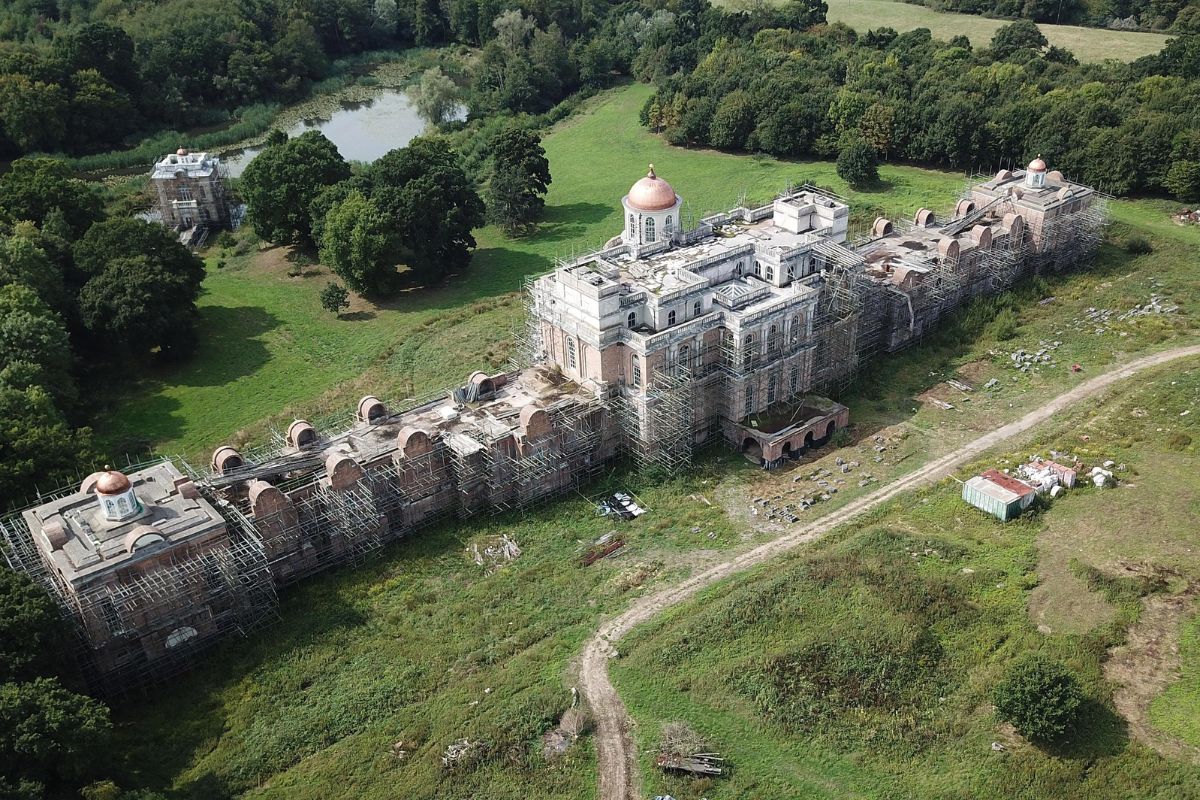
For Almost 40 Years, Hamilton Palace Has Remained Unfinished. We Unravel the Story Behind the Property, Its Controversial British Owner, and the Myth of the Russian Magnate.
In the heart of East Sussex, England, a colossal and unfinished structure has intrigued and frustrated residents for nearly four decades: Hamilton Palace. Often associated with a mysterious Russian magnate, the reality behind this abandoned “castle” worth US$40 million is even more complex and controversial.
This article dives into the history of Hamilton Palace. We will clarify who its true and controversial owner is, the ambitions behind the project, the reasons for its abandonment, and the impact this modern ruin has on the local community and public opinion.
Hamilton Palace: The “Ghost of US$40 Million” in the English Landscape and the Truth About Its Owner
Near the town of Uckfield, Hamilton Palace has stood unfinished since 1985. Its neoclassical facade is larger than that of Buckingham Palace. Enveloped in scaffolding and covered with vegetation, it has earned nicknames such as “The Ghost House of Sussex” and “the largest slum in Britain.”
-
China is building a city in Brazil: a complex with an investment of R$ 5.5 billion comes to light, but allegations involving workers draw attention.

-
While Argentina buys old war equipment, Brazil is keeping an eye open and joins the select group of nations with advanced military technology by investing $5.2 billion, producing 36 Gripen fighters in the country, and reducing operational costs.

-
Brazil on alert? Why invading Brazil is a NIGHTMARE for the USA: 8.5 million km², 213 million inhabitants, Amazon covering 60% of the territory, trillion-dollar war, and resistance that even 13,000 aircraft could not control.

-
How to build a floating island from scratch with reeds, giant blocks, and stakes in the lake in a process that needs to be repeated almost every day.


It is crucial to correct misinformation. The owner is not a Russian magnate named Nikolai Privalov, but rather Nicholas van Hoogstraten, a well-known and controversial British property mogul. This palace in Sussex should not be confused with the historic Hamilton Palace in Scotland, which has already been demolished.
Ambition, Art, and a Private Mausoleum
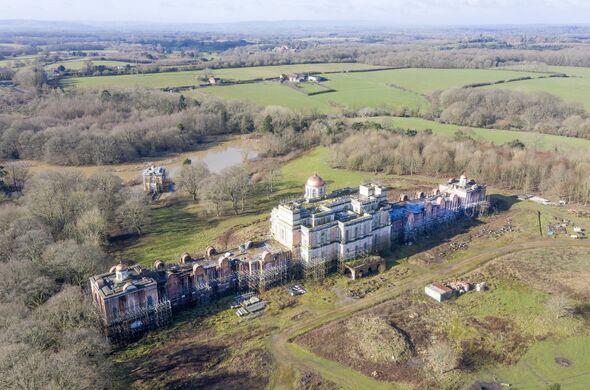
The construction of Hamilton Palace began in 1985. Nicholas van Hoogstraten’s vision was to create the largest private residence built in Britain in the last century. The palace would not only be a luxurious home but would also house his vast art collection and a personal mausoleum.
The project, by architect Anthony Browne, included a grand central staircase, art galleries, and a rooftop garden. The walls, nearly one meter thick, were designed to last “forever”. The private mausoleum was part of a legal strategy: by designating the palace as such, a trust in Bermuda could hold the property perpetually after van Hoogstraten’s death.
Nicholas van Hoogstraten: The Controversial British Property Mogul Behind the Gates
Nicholas van Hoogstraten, born in 1945, had a meteoric rise in the real estate sector. At the age of 22, he was already considered Britain’s youngest millionaire, with hundreds of properties. His methods, however, were controversial, including tactics to “persuade” tenants to vacate rent-controlled properties.
His career has been marked by legal troubles. In 1968, he was arrested for paying to have a grenade thrown at a rabbi’s house. In the 1980s, he faced accusations of harassment toward tenants and tax debts. The most notorious case was his conviction in 2002 for the manslaughter of a business associate, Mohammed Raja, later overturned (although a civil court held him liable in 2005). Known for pseudonyms and derogatory statements about neighbors and the homeless, van Hoogstraten currently resides in Zimbabwe.
Why Was Hamilton Palace Abandoned and What Are the Legal and Social Implications?
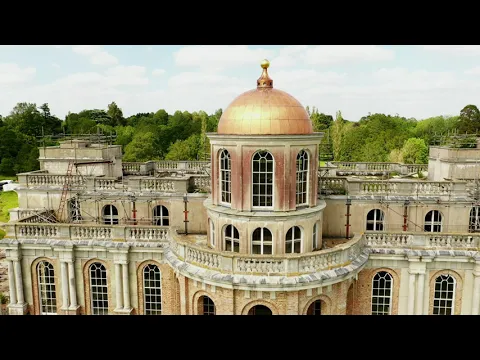

The halt of construction at Hamilton Palace, around 2000-2001, is attributed by experts and reports to a combination of factors. A “misunderstanding” between van Hoogstraten and architect Anthony Browne is often cited. Furthermore, this period coincided with the owner’s serious legal troubles, including his imprisonment and trials related to the Mohammed Raja case.
Urban planning and real estate law experts point out that large-scale abandoned properties, like Hamilton Palace, pose significant challenges for local authorities. The Wealden District Council states that the building permit remains valid and that illegal behaviors are a matter for the police. However, the wealth and litigious nature of owners like van Hoogstraten, combined with the use of complex ownership structures (like trusts in tax havens), can complicate effective regulatory interventions. The case illustrates the conflict between private property rights and community well-being.







-

Uma pessoa reagiu a isso.