





 Portuguese
  English
  Spanish
  5 min of reading
  0 comments


The Largest Excavation in Human History Is at the Bingham Canyon Mine in the United States, Where Over a Century of Mining Has Removed Billions of Tons of Rock, Creating a Gigantic Crater Used to Extract Copper Essential for Electricity, Vehicles, and Technology
The largest excavation in human history did not arise from a single monumental work but from a continuous process that spanned over a century of mining. In the state of Utah, in the United States, the Bingham Canyon Mine has grown layer by layer to become a gigantic crater visible from miles away.
Today, this operation represents one of the most impressive examples of mineral engineering ever achieved. The largest excavation in human history reveals how far technology and the need for natural resources can lead to the transformation of the planet’s very landscape, all in search of an essential metal: copper.
How the Largest Excavation in Human History Started
The largest excavation in human history was born from the search for copper, a metal that underpins much of modern infrastructure. Copper is present in the electric wiring of homes, in plumbing systems, in electronic devices, and even in hybrid vehicles and industrial equipment.
-
While restoring a historic mansion from 1910, a brick structure with an old turbine that generated energy from the Rio do Testo emerged, along with a hidden door and a rare floor concealed under layers of wax.

-
Italian researchers have detected what appears to be a second Sphinx buried under the sands of Egypt, and satellite scans reveal a gigantic underground megastructure hidden beneath the Giza Plateau for over 3,000 years.

-
There are 4,223 drums and 1,343 metal boxes concreted with 50-centimeter walls that store the radioactive waste from Cesium-137 in the worst radiological accident in Brazil, just 23 kilometers from Goiânia, with environmental monitoring every three months.
-
Giant Roman treasure found at the bottom of Lake Neuchâtel in Switzerland reveals an advanced trade system, circulation of goods, and armed escort in the Roman Empire about two thousand years ago.

At the Bingham Canyon Mine, the ore found in the rock contains only small amounts of copper. This means that enormous volumes of material must be removed to obtain small fractions of pure metal, which explains why the excavation has grown so much over the decades.
During over a century of operation, approximately 8 billion tons of material have been removed from the mine, while about 19 million tons of copper have been produced. This ratio shows how large-scale mining relies on moving gigantic volumes of earth and rock.
The Impressive Size of the Open Crater in the Ground
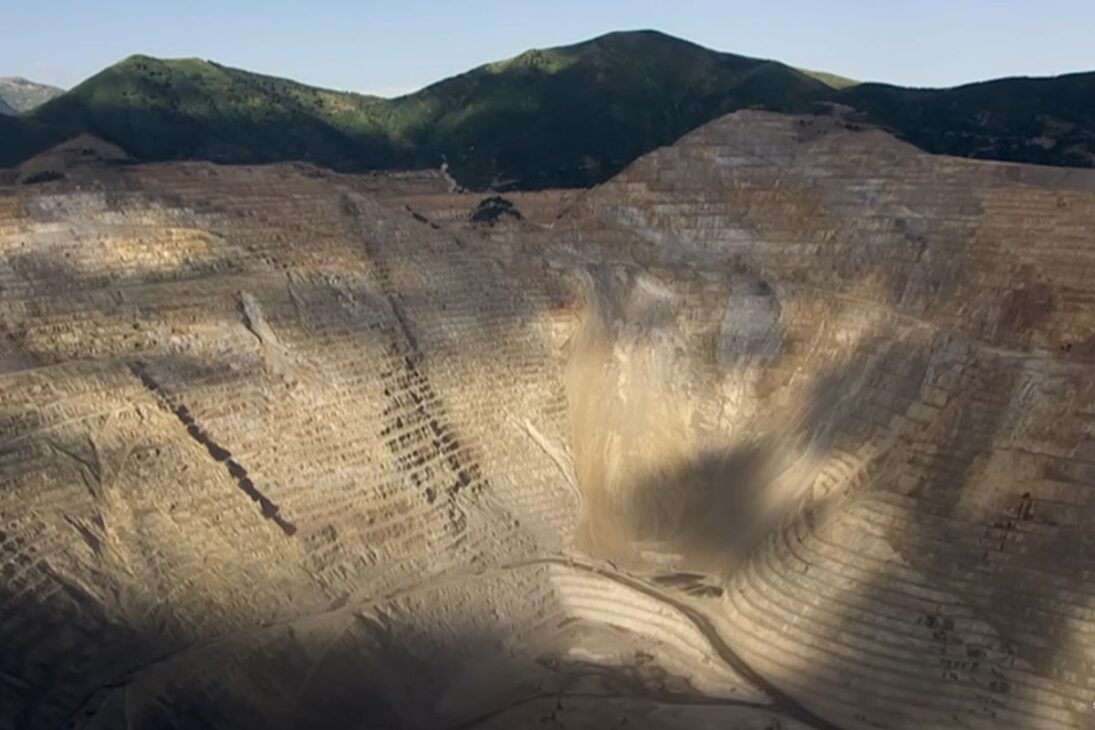
Over the decades, the largest excavation in human history has reached dimensions that defy any common comparison. At its widest point, the mine stretches to about four kilometers in length, while its depth approaches one mile, forming a gigantic spiral of excavated steps.
Each expansion of the mine occurs in successive horizontal cuts along the inner slope of the crater. These cuts can be approximately one thousand feet wide, and mining gradually progresses towards the layers where the ore is concentrated.
In some cases, crews need to excavate for up to seven years just to remove sterile rock before reaching a layer with copper. This scale of work shows that the largest excavation in human history is not the result of a single deep excavation but a continuous process of removing entire mountains.
Giant Machines Make It Possible to Move Billions of Tons
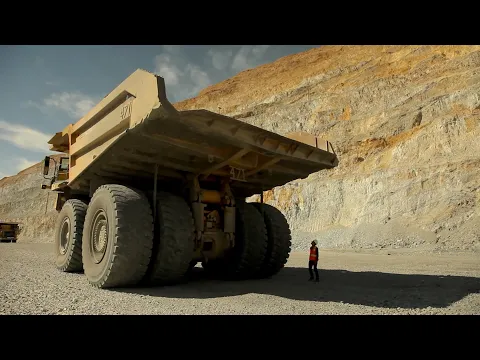

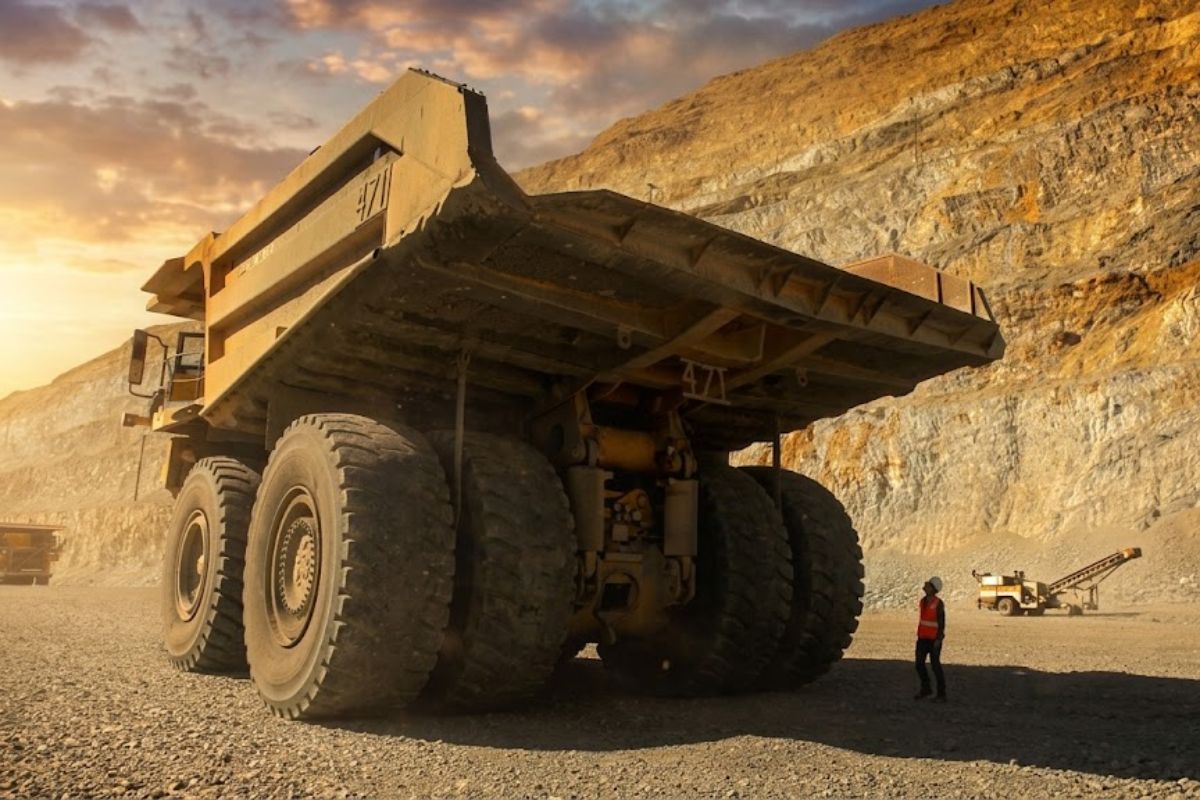
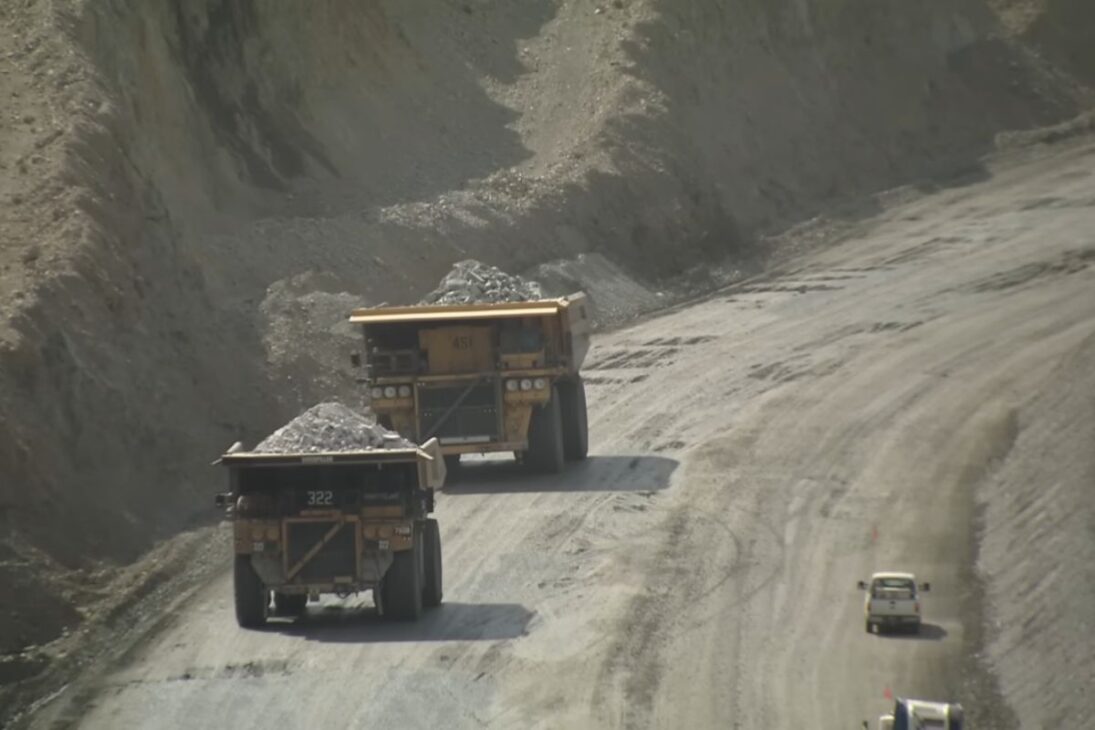
Everything in the largest excavation in human history was designed on an extreme scale. Giant trucks travel through the mine transporting tons of material with each trip. Each of these vehicles can weigh more than a large commercial airplane.
Operators driving these machines report that, from inside the cab, it is hard to perceive the real dimensions of the site. The sense of scale disappears because everything around is also gigantic.
These trucks consume approximately 100 gallons of fuel per hour when loaded and ascending, highlighting the level of energy required to keep the operation running. They work continuously removing rock and transporting ore for processing.
But the trucks do not do everything alone. Giant excavators load the material into the vehicles, while drilling systems prepare the ground for controlled explosions.
Daily Explosions Shaped the Landscape Over a Century
The largest excavation in human history was also built with the constant use of industrial explosives. On average, the mine performs three explosions per day to fragment large volumes of rock.
These detonations break the material into smaller pieces that can be removed by the excavators and trucks. Without this process, it would be virtually impossible to move such large quantities of solid material.
Over more than a century of mining, thousands of explosions have helped transform an entire mountain into a gigantic spiral-shaped crater, visible from space and considered one of the largest human interventions in the natural landscape.
Why Copper Justifies Such a Large Excavation
The reason the largest excavation in human history remains active is tied to the importance of copper in the modern economy. The metal is essential for electrical systems, telecommunications, electronics, construction, and various technologies.
The annual production of the mine generates enough copper to redo all the electrical wiring in homes in the United States and Mexico. This volume helps explain why such complex operations remain economically viable.
If a resource cannot be grown, it must be extracted, and copper has become one of the pillars of global technological infrastructure. Smartphones, hybrid cars, energy systems, and industrial equipment all rely directly on this metal.
The Bingham Canyon Mine represents, therefore, a direct link between natural resources and the daily functioning of modern society.
A Century Transforming Mountains into Metal
When observing the largest excavation in human history, it becomes clear that it is not merely a gigantic hole in the ground. It is the result of over a hundred years of engineering, logistics, planning, and human labor on an industrial scale.
During this time, billions of tons of rock have been removed to release small amounts of copper hidden in the underground layers. Each truck, each explosion, and each cut in the slope gradually enlarged the crater that today dominates the landscape of Utah.
The mine continues to grow gradually, advancing towards new layers of ore that still remain buried.
The largest excavation in human history shows how far the need for natural resources can transform the planet. What began as a mining operation has become a colossal work that has completely changed the local geography.
Mountains have been removed, billions of tons of rock have been transported, and a crater kilometers wide has come to symbolize the impact of human activity on Earth.
And you, upon seeing the largest excavation in human history, do you think projects of this scale are inevitable to sustain modern technology or should they have stricter limits?









Seja o primeiro a reagir!