





 Portuguese
  English
  Spanish
  5 min of reading
  3 comments





Discover The Details Of The World’s Largest Engine: 28m Long, 14m High, And 109,000 HP, Making It Seven Times More Powerful Than The Titanic
In the depths of the oceans, gigantic vessels traverse trade routes, carrying goods that sustain the global economy. These colossal ships require engines to match their proportions, and in this scenario, the RT-flex96C-14, the largest engine in the world, shines as a masterpiece of engineering.
Produced by Wärtsilä-Sulzer, the engine is the heart of vessels like the Emma Mærsk, one of the largest container ships ever built. It came into operation in 2006, replacing the Wärtsilä-Sulzer RTA96-C, which had practically the same specifications, but was less technological.
-
Historic bankruptcy of Centauro shocks the market, and the century-old company puts more than 500,000 products, machines, and complete infrastructure up for online auction.

-
New shoe factory in Ceará is expected to create 400 jobs and strengthen the local economy.

-
No one imagined it, but a mixture of sawdust with a mineral that fights fires surprises scientists with a result that changes the course of fire-resistant construction.

-
From empty land to a high-end house, wooden construction uses a lightweight system, metal structure for the foundation, ventilated ceramic cladding, and special windows to create an efficient and comfortable living space throughout the year.


With 108,920 HP of power, this machine impresses not only by size but also by efficiency. It is a perfect example of how technology can meet global needs while facing the challenges of sustainability and energy efficiency.

The engine is so large that it alone equals the power of nearly 1,200 popular cars. On average, a popular car has a power of 95 horsepower.
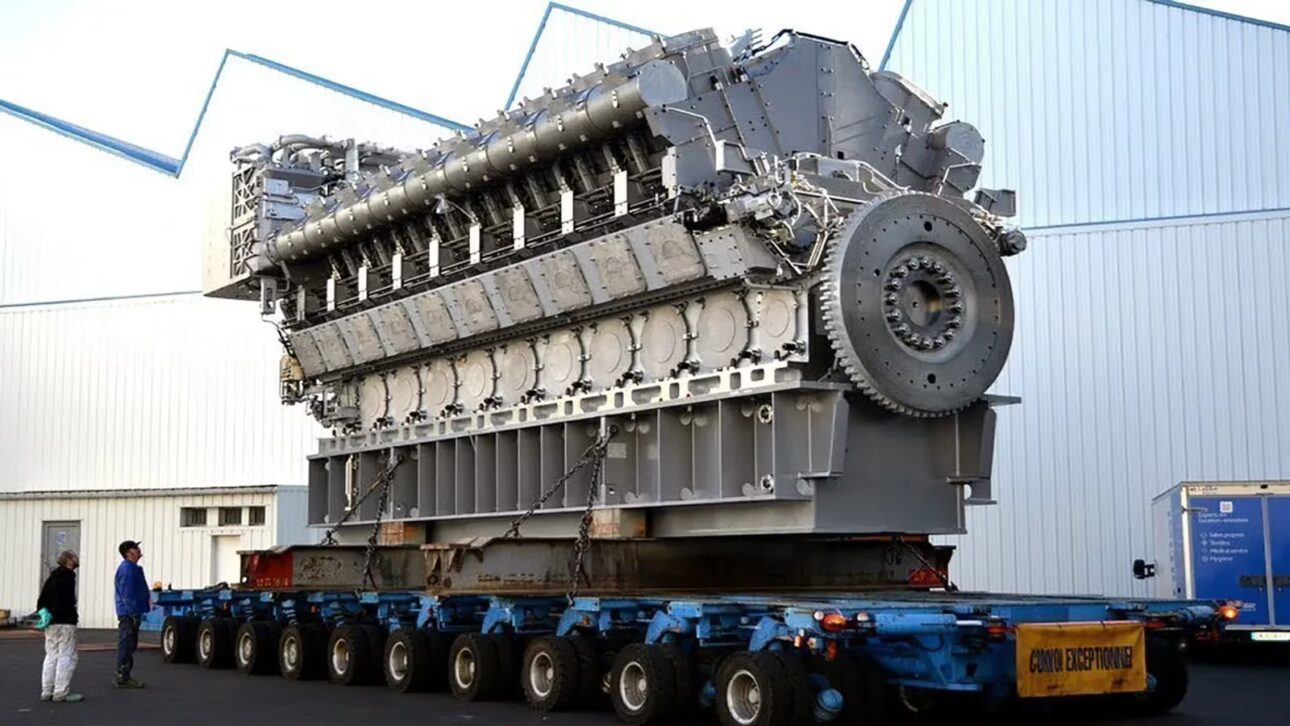
RT-flex96C-14 – The Largest Engine In The World
The Wärtsilä RT-flex96C-14 is a turbocharged engine with 14 cylinders and two strokes, designed to operate with monstrous loads. At 13.5 meters high and 26.6 meters long, it surpasses the size of four-story buildings.
Weighing around 2,300 tons, the engine is responsible for propelling vessels that transport up to 11,000 containers, symbolizing the monumental scale of maritime logistics.
Despite its size, the engine is surprisingly efficient. It reaches its maximum power at just 102 RPM, generating 80,080 kW of energy – enough to supply a medium-sized city.
Each cylinder consumes 6.5 ounces of diesel per cycle, but the direct injection system optimizes fuel use, reducing waste. This is crucial in an industry that constantly strives to balance cost and sustainability.
| Specification | Details |
|---|
| Engine Type | Two-Stroke Diesel, Turbocharged, With Common Rail Injection |
| Number Of Cylinders | 14 Inline |
| Cylinder Diameter | 960 mm |
| Piston Stroke | 2,500 mm |
| Total Displacement | 25,480 Liters (1,820 Liters Per Cylinder) |
| Maximum Power | 80,080 kW (108,920 HP) At 102 RPM |
| Maximum Torque | 7,603,850 Nm At 102 RPM |
| Rotation Speed | 22 To 102 RPM |
| Specific Fuel Consumption | 171 g/kWh At Full Load; 163 g/kWh At Maximum Efficiency |
| Total Weight | 2,300 Tons |
| Dimensions | Length: 26.59 m; Height: 13.5 m |
| Crankshaft Weight | 300 Tons |
| Piston Average Speed | 8.5 m/s |
| Mean Effective Pressure | 1.96 MPa |
| Fuel Consumption Per Cycle (Per Cylinder) | ~160 g At Full Load |
| Lubrication | Separate Systems For Cylinders And Crankcase, With Specific Lubricants |
| Application | Propulsion Of Large Container Ships |
The Strategic Importance Of Maritime Transport
Maritime transport is the primary means of moving goods worldwide. About 90% of global trade depends on ships, and vessels like the Emma Mærsk are key pieces in this puzzle.
These ships are true floating cities, capable of crossing oceans at speeds of up to 31 knots (approximately 57 km/h).
Maintaining such a grand operation is no easy task. Engines like the RT-flex96C-14 require constant maintenance to ensure optimal performance. Any failure can cause significant delays in supply chains and billions in losses for companies.
Additionally, the engine’s efficiency allows ships to make fewer trips to transport the same amount of goods, reducing costs and optimizing logistics operations. This is essential in an industry where competitiveness is directly tied to the ability to deliver more in less time.
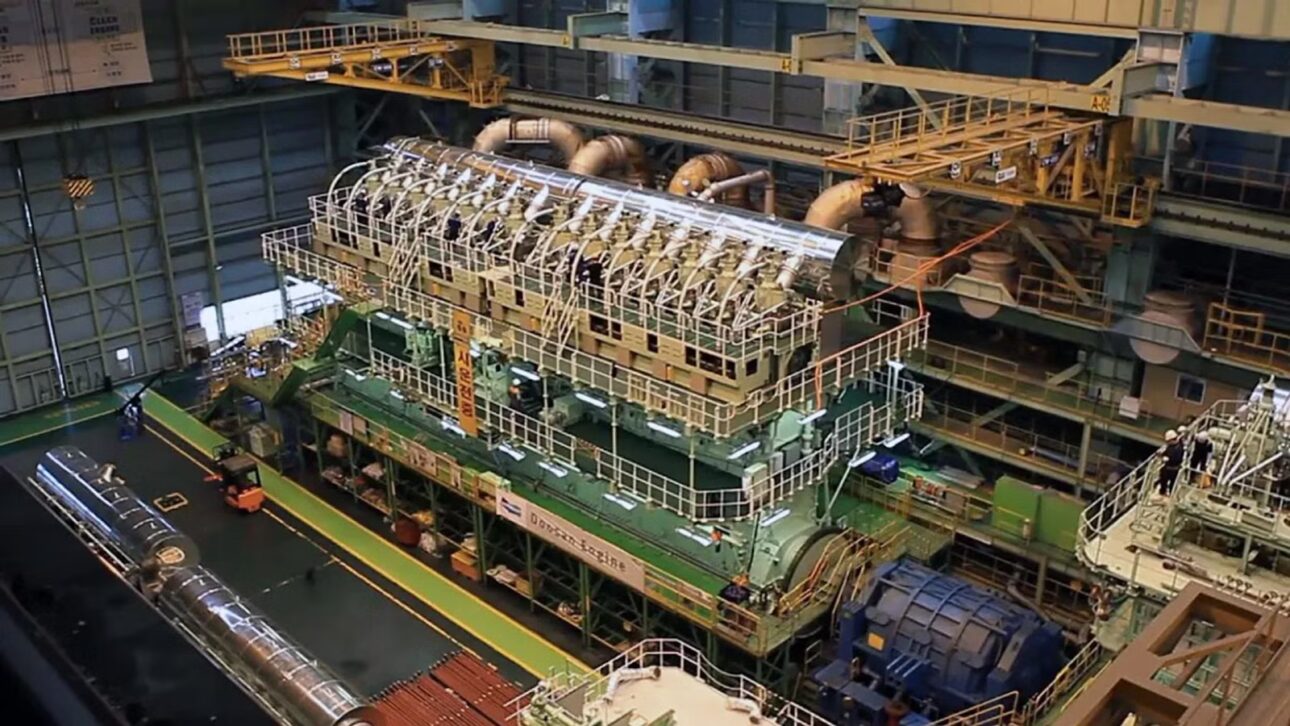
Technological Evolution: From Titanic Engines To Today’s Largest Engine
The comparison with the past illustrates how engineering has advanced over the decades. In the early 20th century, the Titanic was powered by engines capable of generating 15,000 HP, an innovation for its time. Today, the RT-flex96C-14 surpasses this power by more than seven times, demonstrating how modern demands have driven technological development.
This advancement was motivated by the growth of global trade, which required larger and faster ships. Over the years, mechanical engineering has sought not only to increase power but also to improve efficiency and reduce environmental impacts.
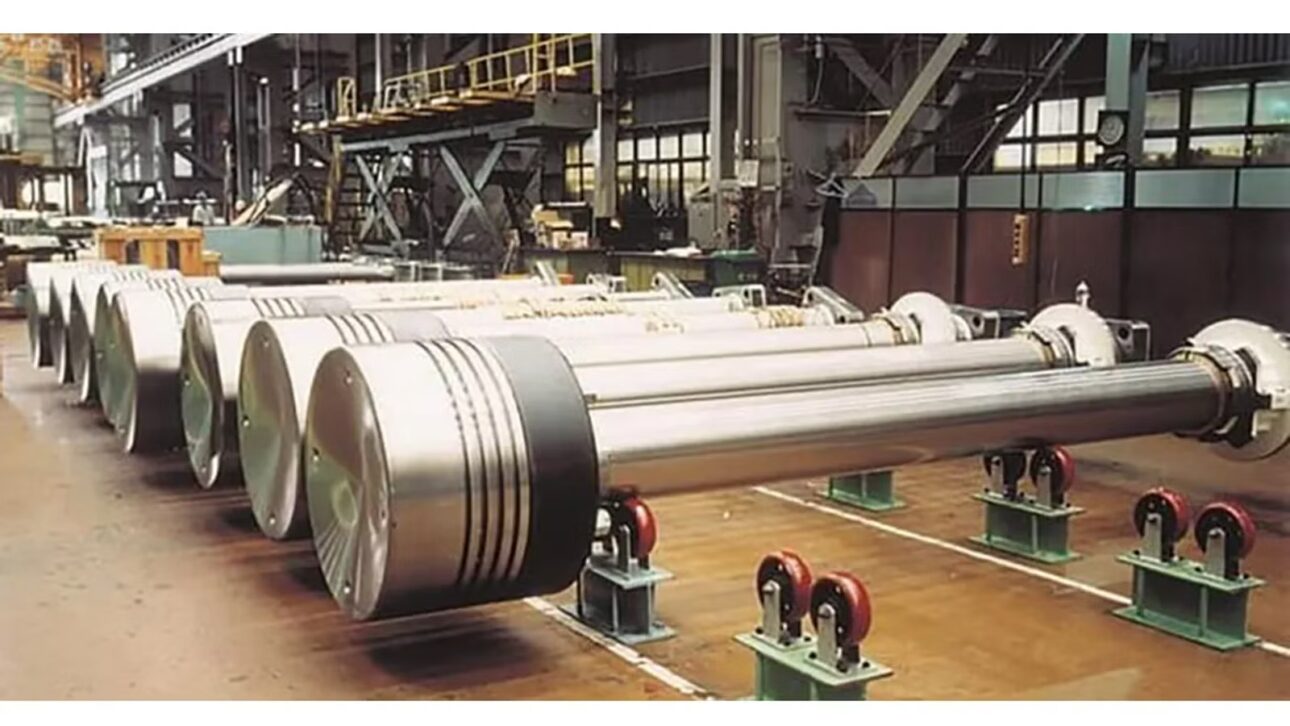
Colossal Engines In Other Sectors
Although the RT-flex96C-14 is the largest operational engine in the world, other giants also deserve attention in their respective fields:
MTU 20V8000M93: Produced by the German company MTU Friedrichshafen, this engine was designed for military vessels and superyachts. With 101,000 HP, it is a popular choice for operations requiring high performance in tight spaces. Although smaller than the Wärtsilä, its reliability in extreme conditions makes it a reference in marine engines.
Caterpillar C175-20: In the mining sector, the Caterpillar C175-20 reigns as the largest diesel engine for trucks. It generates up to 5,630 HP, enough to move loads of hundreds of tons over rough terrain. Its robust design and simplified maintenance make it indispensable in large-scale operations.
WS150: Aimed at heavy industrial applications, the WS150 impresses with its size. Although less powerful than other engines mentioned, its massive structure allows continuous operation in power generation systems and cargo handling equipment.
XR-7755: In the aerospace sector, the XR-7755 holds the title of the largest piston engine ever built. Developed by Pratt & Whitney, it was designed for World War II aircraft but never became widely used. Its legacy remains as a landmark of the transition to jet engines.


The Future Of Maritime Engineering
While the RT-flex96C-14 is an unbeatable giant today, the maritime sector is constantly evolving. The demand for even larger and more efficient vessels is leading to the creation of hybrid engines that combine diesel with electricity, and even hydrogen-powered technologies. These innovations aim to reduce emissions and comply with increasingly stringent environmental regulations.
Furthermore, alternative fuels like liquefied natural gas (LNG) are being widely explored. Companies like Wärtsilä are investing in green energy technologies to maintain their relevance in a transforming market.
Engines As Symbols Of Human Progress: Despite the high fuel consumption, the Wärtsilä represents a monumental achievement in engineering. It not only moves ships, but symbolizes humanity’s ability to face challenges of giant scale.
In the future, new advances may even surpass this impressive machine, but the legacy of the RT-flex96C-14 will continue to stand as a milestone in engineering history.
The RT-flex96C-14 is not just the largest diesel engine in the world; it is a key piece in the global economy. Its efficiency and power highlight the importance of technological innovation in the maritime sector.
At the same time, the engine is a reminder that human progress always seeks to push boundaries, whether in maritime transport, mining, or aviation.
As the world faces new environmental and economic challenges, engineering will continue to play a crucial role. And, at the center of this evolution will be engines like Wärtsilä, symbols of an era where power and efficiency go hand in hand.









Esse site as vezes publica matérias com erros gramaticais básicos. Essa é a única reclamação que faço sobre o CPG
Apenas uma ressalva no começo do texto. “Nas profundezas dos oceanos, gigantescas embarcações cruzam rotas comerciais, carregando mercadorias que sustentam a economia global.” As embarcações não cruzam o oceano nas profundezas e sim na superfície.
Ele achou que era de submarino. KKKkk