





 Portuguese
  English
  Spanish
 4 min of reading
  0 comments



A New State Park Strengthens Water Preservation and Expands Protection of the Atlantic Forest in a Strategic Area Near the Capital of São Paulo.
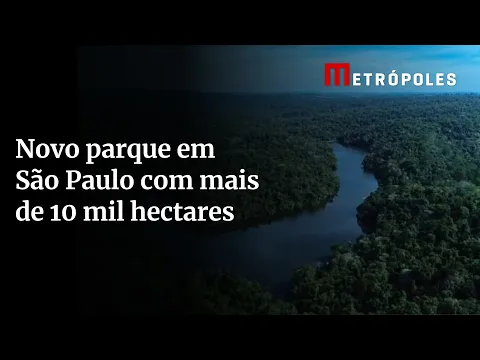
The state of São Paulo has officially created the Morro Grande State Park, an integral protection conservation unit with 10,870 hectares of preserved Atlantic Forest between Cotia and Ibiúna.
The area, equivalent to about 60 times the size of Ibirapuera Park, protects springs and streams that help supply more than 400 thousand residents of the São Paulo Metropolitan Region with high-quality water.
The decree transforming the former Morro Grande Forest Reserve into a state park was signed on November 4 by Governor Tarcísio de Freitas.
-
These living root bridges and ladders are over 700 years old and help indigenous people survive in one of the rainiest regions in the world.

-
From sertanejo star to international investor: Ana Castela invests millions in a mansion in the USA, creates a themed accommodation in Orlando, and shows that the “boiadeira” also wants to grow away from the stage.

-
The 10 most stunning motorhomes in the world: a $3 million trailer with a rooftop nightclub and garage for a Ferrari, “palaces on wheels” with Italian marble, private cinema, and five-star hotel luxury for billionaires.

-
Trump wanted to spend $400 million on the White House, but the courts prohibited the million-dollar construction.


The change occurred during the SP+Green Agenda Summit held in the capital of São Paulo.
With the new designation, the area becomes part of the group of Conservation Units of Integral Protection, which prioritize maximum preservation of natural resources.
This type of Conservation Unit only allows indirect use, such as scientific research, environmental education, and controlled ecological visitation.

The management of the park will be the responsibility of the Secretary of Environment, Infrastructure and Logistics (Semil), through the Forest Foundation.
According to the state government, public access is scheduled for the first half of 2026.
Visits will occur with specialized guidance and specific rules to ensure the preservation of ecosystems.
Water Protection and Regional Importance
The main goal of establishing the park is to strengthen the water security of Greater São Paulo.
The territory houses springs and headwaters of the Cotia River, in addition to waterways that feed the Pedro Beicht and Cachoeira da Graça reservoirs.
These reservoirs are part of the Alto Cotia system, responsible for supplying more than 400 thousand people.
During the announcement, the governor emphasized that Morro Grande plays a fundamental role in protecting the water sources used daily by the population.
The mayor of Cotia, Welington Formiga, stated that the change represents the fulfillment of a commitment made with environmentalists and residents.
Extension and Preservation of the Atlantic Forest
The park occupies 10,870 hectares, which is equivalent to about 10 thousand soccer fields and approximately 60 Ibirapuera Parks.

The area also corresponds to about a third of the territory of Cotia.
Studies indicate that 87% of the park is still covered by native vegetation.
This index places Morro Grande among the most preserved remnants of Atlantic Forest near the capital.
The park is also part of the Biosphere Reserve of the Green Belt of São Paulo, recognized by UNESCO.
This classification reinforces its importance in maintaining essential environmental services, such as thermal regulation, soil protection, and preservation of water resources.
Fauna and Flora of High Relevance
The region is home to about 290 species of native trees, including araucarias and species typical of dense rainforest.
There have been 198 species of birds recorded, as well as various medium and large mammals.
There is also an expressive community of orb-weaving spiders from the Araneidae family, recognized as indicators of high ecological quality environments.
Consistent preservation of the territory favors scientific research and continuous monitoring of biodiversity.
Researchers claim that the new designation should expand partnerships with universities and strengthen conservation programs.
Controlled Public Use and Environmental Rules

As an integral protection unit, the park does not allow any direct economic exploitation.
Activities such as plant extraction or business establishment are not authorized.
Permitted uses include scientific research, environmental education, and nature tourism under controlled conditions.
Visitation must follow guided trails and routes focused on environmental interpretation.
The objective is to offer an educational experience without compromising the integrity of the fauna and flora.
The transformation of the area into a park results from decades of mobilization by residents, environmentalists, and researchers.
The region had already been protected by legislation since 1979 and now receives a new legal status.
The expansion of legal guarantees strengthens the protection of its ecosystems.
How will the society of São Paulo monitor and participate in the management of this new park to ensure it fulfills its preservation role for future generations?







-

-

-

-

5 pessoas reagiram a isso.