





 Portuguese
  English
  Spanish
  4 min of reading
  0 comments


With The Largest Harvest in Brazilian History, At 355 Million Tons, The Country Faces Bottlenecks in Ports, Silos, and Transportation That Threaten Grain Flow and Export Pace
Brazil is expected to harvest the largest harvest in Brazilian history, with a total of 355 million tons of grains in 2025. The number consolidates the country as a global agribusiness powerhouse but also highlights a structural fragility: logistical capacity is growing at a much slower pace than production.
As soybean, corn, wheat, and rice crops advance in productivity and planted area, ports, warehouses, and roads are operating near physical and operational limits. The result is a delicate equation: more grains, less space, and a higher risk of bottlenecks in transportation and storage.
Soybeans and Corn Account for Over 85% of National Production
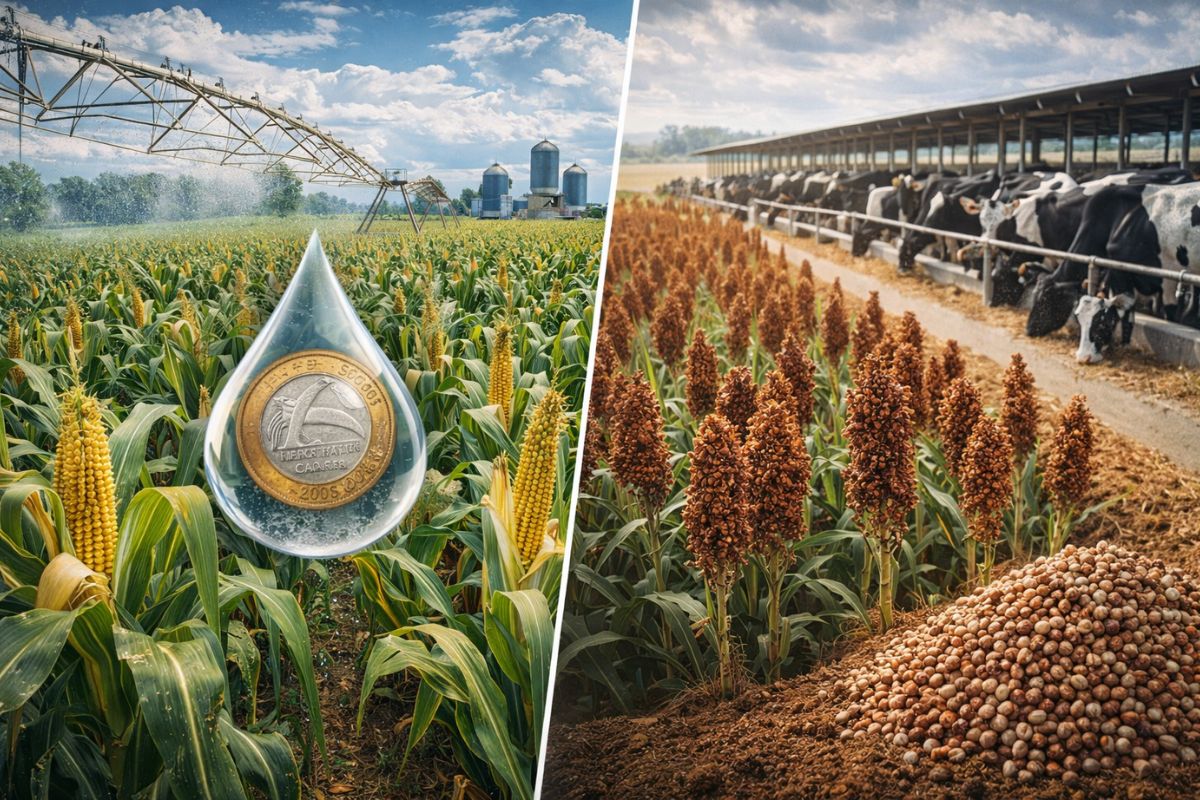
The Brazilian agricultural advance relies primarily on two crops: soybeans and corn, which together account for over 85% of the total harvested.
-
Agricultural drone sprayed poison into the air and destroyed the neighbor’s crops, causing 1 million in damages; 48 cows died from nitrite poisoning in the pasture, and Russia is hiding a possible outbreak of foot-and-mouth disease: the week was brutal for the rural sector.
-
Russia cut fertilizers, China cut fertilizers, and oil prices soared with the war in the Middle East: sugarcane producers in the interior of São Paulo are seeing costs explode from all sides and warn that the effects will take months to be absorbed.
-
It does not come from flowers, is produced only every two years, and more than 90% goes straight to Europe: meet the bracatinga honeydew honey from Santa Catarina, considered one of the rarest in the world and overlooked by Brazil itself.
-
They said no to 26 million dollars and would do it all over again: mother and daughter from Kentucky reject a million-dollar offer from a mysterious company that wants to build the largest data center in the state on more than 2,000 acres of rural land.


Soybeans are expected to reach about 177 million tons, consolidating Brazil as the global leader in soybean exports.
Corn is expected to reach approximately 139 million tons, supported by full harvests in the Midwest and Matopiba.
Although part of the production is targeted for domestic consumption, the largest portion of soybeans goes directly to ports, especially Santos, Paranaguá, and Itaqui, destined for China and other Asian markets.
Corn, on the other hand, maintains an essential role in domestic supply, feeding animal protein chains and the expansion of corn ethanol plants, which are multiplying in the Midwest.
Major Traders Control the Flow of Exports
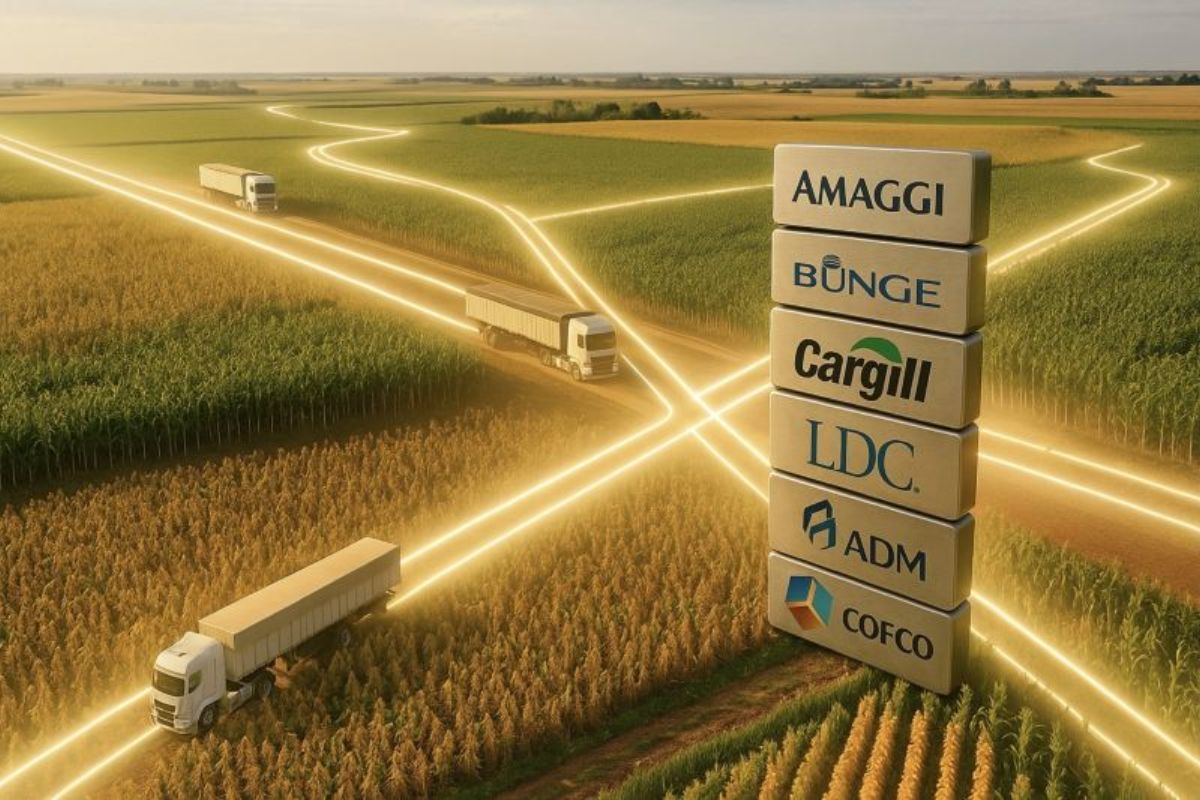
About 70% of all exported volume passes through six major global companies: Amaggi, Bunge, COFCO International, Cargill, Louis Dreyfus Company, and Archer Daniels Midland Company.
These companies dominate the origination, storage, and shipping engineering of grains, coordinating a highly synchronized execution chain between field, railway, highway, and port.
Despite the technical sophistication, the logistical concentration in the hands of these giants highlights another challenge: the reliance on few export corridors.
Any interruption, such as strikes, floods, or port restrictions, can create a domino effect across the entire chain, increasing costs and delaying international contracts.
Lack of Space and Adequate Infrastructure
The storage infrastructure remains one of the main bottlenecks of the largest harvest in Brazilian history.
The country has an estimated storage capacity of about 185 million tons, well below the produced volume.
This means that almost half of the production needs to be transported immediately after harvest, which overloads roads and ports during peak seasons.
The logistical lag also reflects on transport costs, which are still heavily dependent on road transport.
More than 60% of grains are transported by trucks, which face long queues, increased freight, and congestion on export routes.
This structural mismatch threatens the competitiveness of Brazilian agribusiness in external markets.
Energy, Storage, and Risk of Paralysis
In addition to the physical infrastructure, the operational energy of the chain has also reached records: more trucks, more fuel, more hours of operation, and more pressure on ports and rail terminals.
During peak periods, movement can exceed 10,000 trucks per day in regions like Rondonópolis, Sorriso, and Lucas do Rio Verde.
This intensity increases the risk of logistical bottlenecks and requires joint planning among producers, cooperatives, and traders.
The lack of port windows, space in silos, and sufficient rail access can delay shipments, generate losses, and increase the final cost of the exported ton.
The Challenge of Balancing Production and Infrastructure
The Brazilian agricultural performance reaffirms the country’s potential as a global supplier of food and renewable energy, but the growth of production cannot continue to be disconnected from logistical expansion.
Investments in railways, regional warehouses, and port terminals will be essential to sustain the new production level without compromising margins and competitiveness.
Experts point out that, without coordinated modernization, the largest harvest in Brazilian history could become a stress test for the sector, revealing the physical limit of a system that has long operated at the edge of efficiency.
The record harvest of 355 million tons consolidates Brazil as a giant in agribusiness, but exposes a fundamental problem: the infrastructure still does not keep pace with the crops.
Do you believe that the country will be able to adapt its ports, roads, and silos to the new scale of agribusiness? Leave your opinion in the comments; we want to hear from those closely experiencing the impacts of this advance in the field and along export routes.








Seja o primeiro a reagir!