





 Portuguese
  English
  Spanish
  4 min of reading
  0 comments


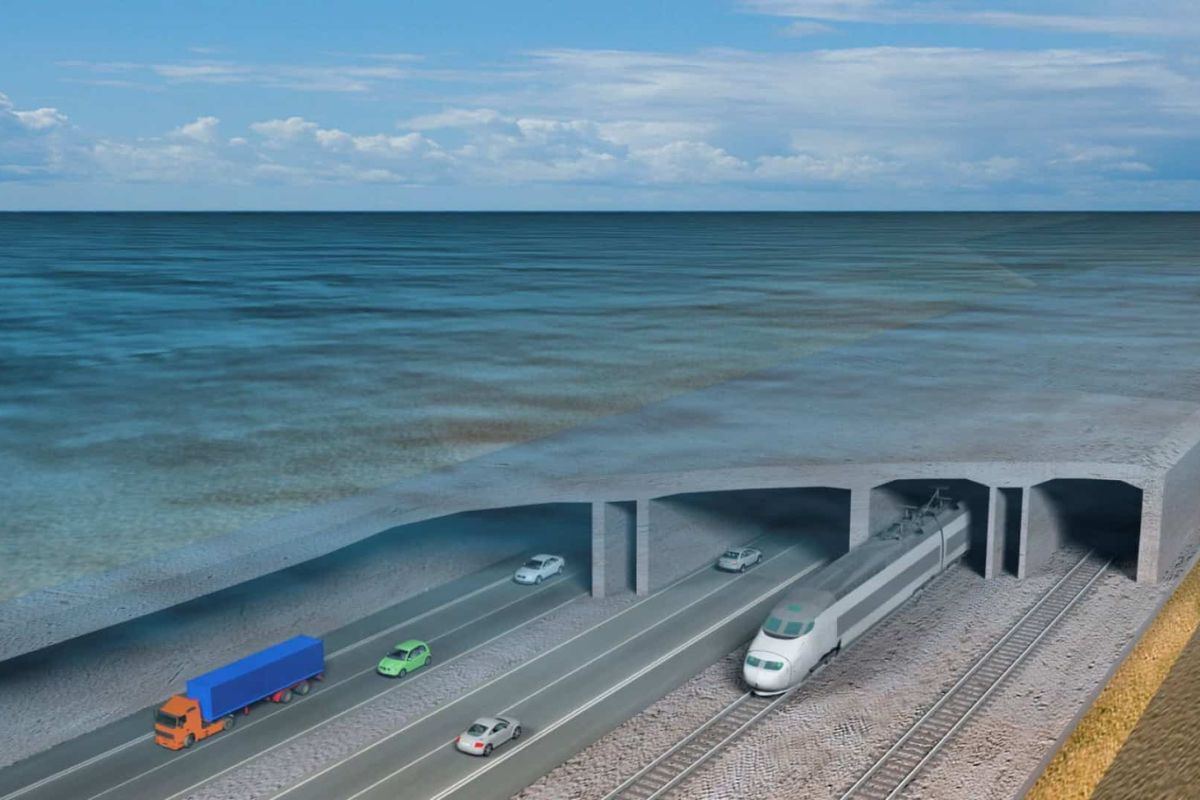


Structure of 18 Km Connecting Denmark to Germany Will Be Completed by 2029 with Submerged Modules, Own Factory, and Advanced Technology
Europe is building the world’s largest immersed tunnel, with a length of 18 kilometers, connecting the Danish island of Lolland to the German Fehmarn. The project uses a different technique from conventional excavations: the modules are prefabricated and sunk to the seabed, then interconnected with millimeter precision.
According to Femern A/S, the Danish state company responsible for the work, the tunnel will be ready by 2029, after a journey divided into eight large stages. The structure promises to shorten travel time between the two countries while serving as a model for future projects, such as the immersed tunnel between Santos and Guarujá, in Brazil.
Preparation of the Ground on the Islands of Lolland and Fehmarn
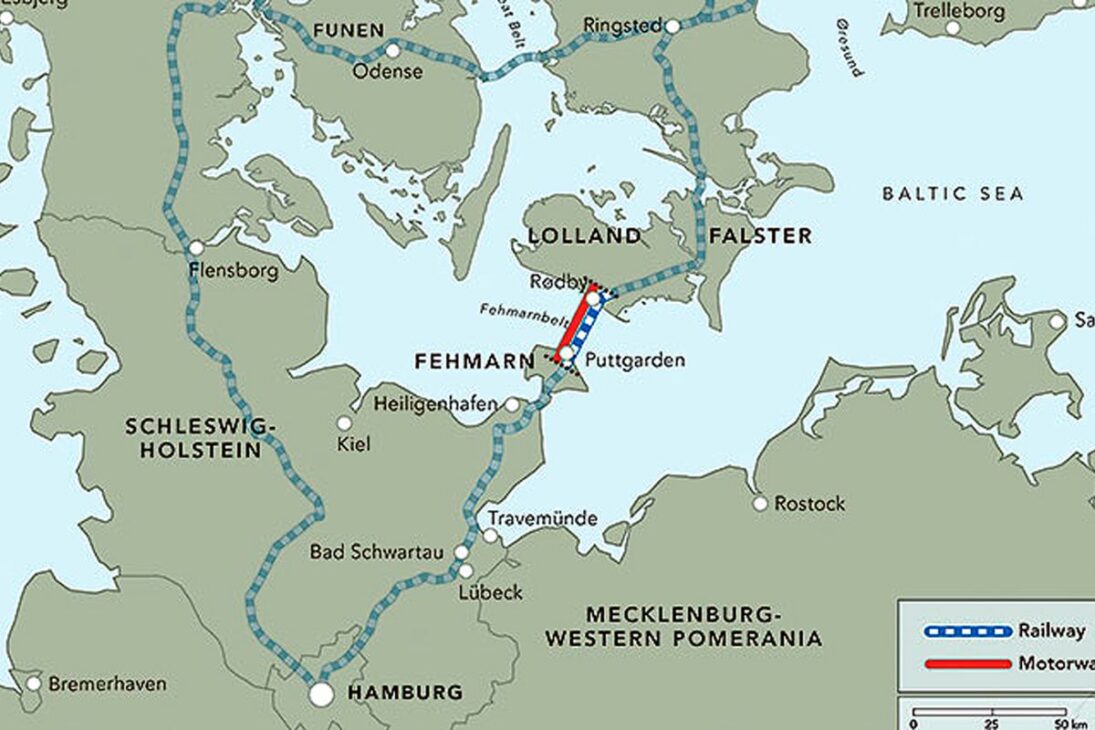
The first phase consisted of preparing both ends of the tunnel, in Rødbyhavn (Denmark) and Puttgarden (Germany). Access channels were built, utilities installed, and old structures demolished. Environmental measures were also taken, such as creating artificial ponds for amphibians and protective fences around the construction site.
-
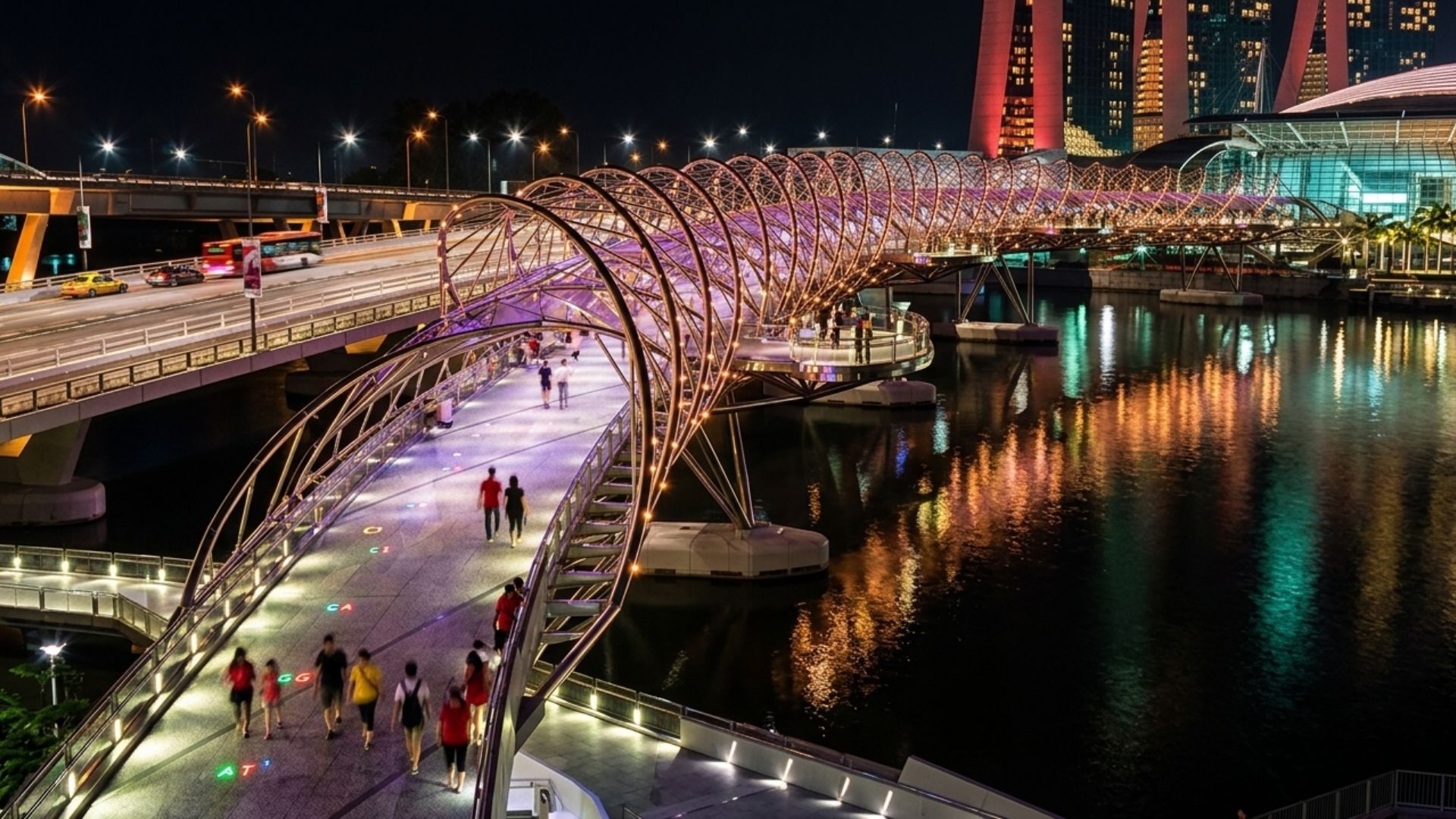
With a DNA shape, this bridge in Singapore draws attention in modern architecture and surprises tourists by transforming a simple crossing into an unforgettable visual experience in the urban heart.
-
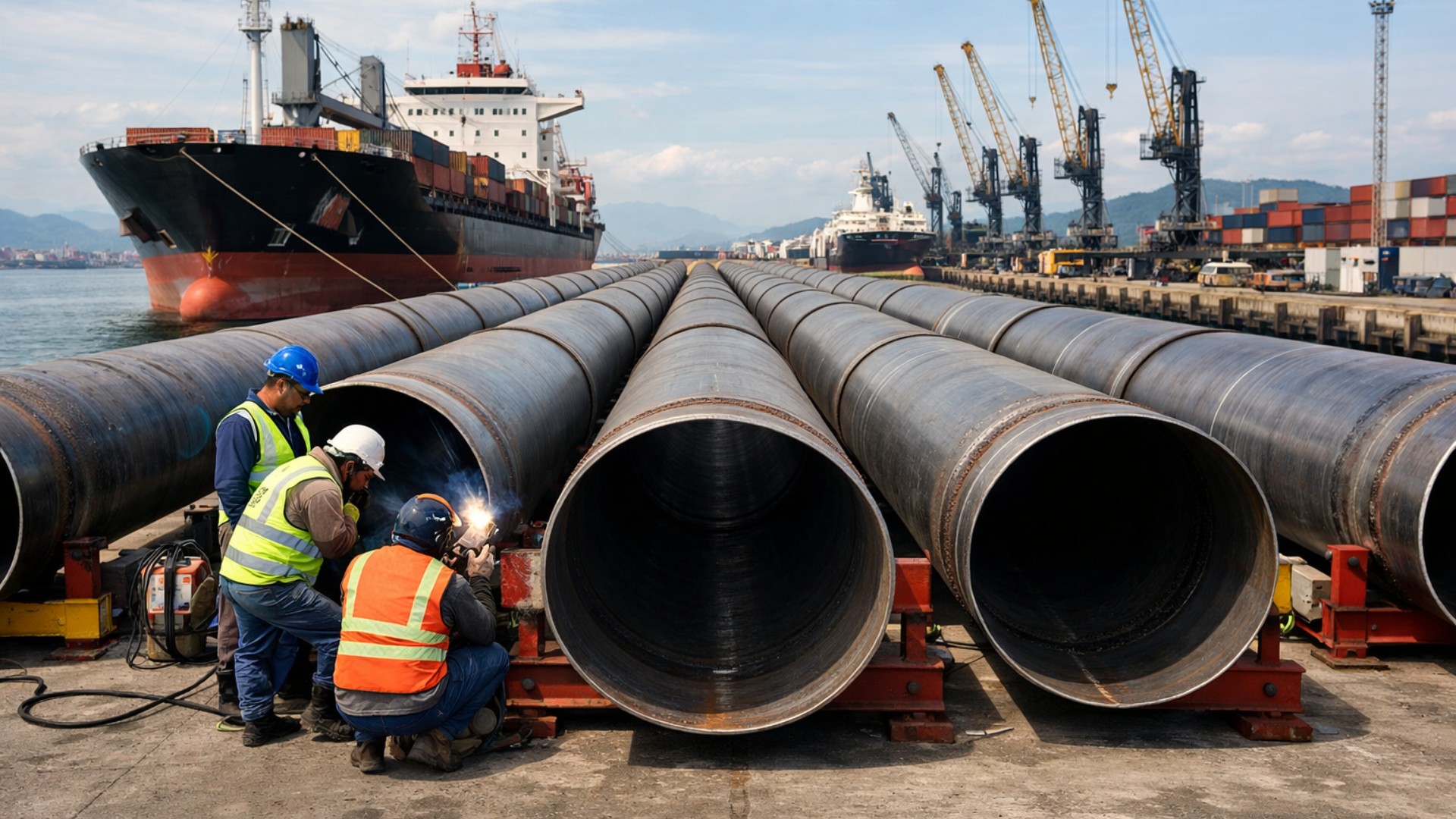
Giant underwater pipeline begins to take shape with a R$ 134.7 million project at the Port of Santos: the 1.7 km structure uses 12-meter and 700 mm pipes to supply water to 450,000 people in Guarujá.
-
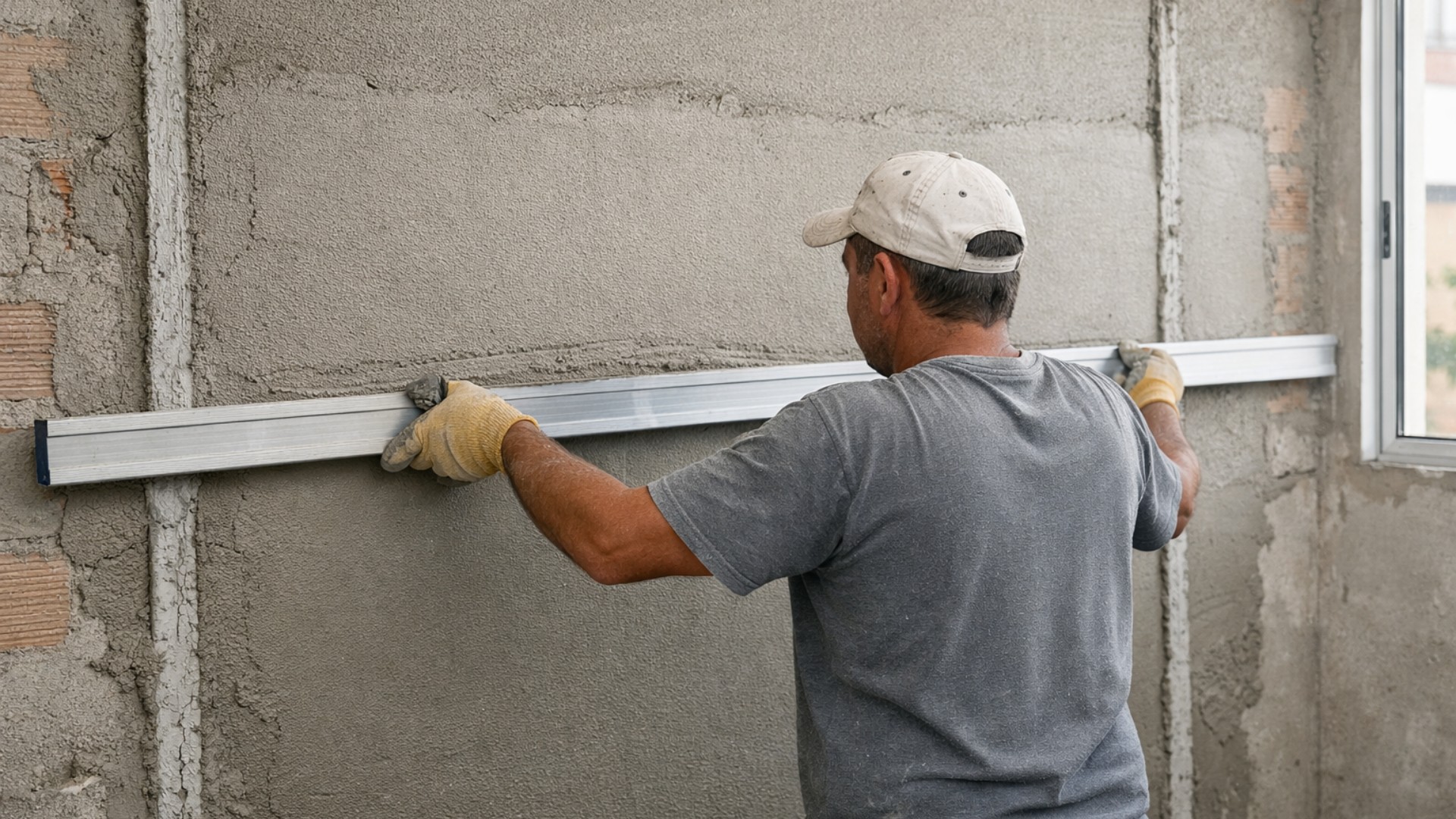
A mason reveals a professional plastering technique that uses aligned guides and a 3-meter ruler to plaster an entire wall in up to 3 hours, without visible seams, with uniform thickness, perfect plumb, and a finish ready for painting without rework.
-
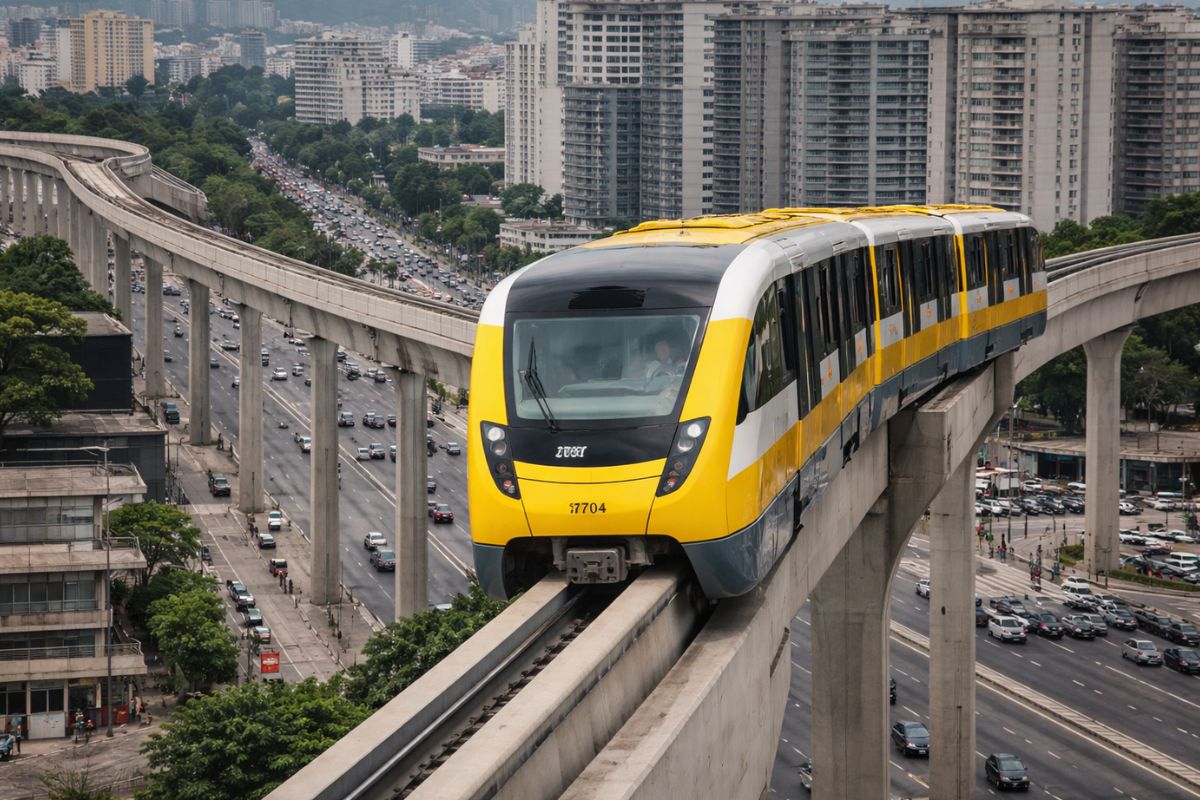
The project that was supposed to be ready for the 2014 World Cup in Brazil debuted with a 12-year delay and nearly R$ 6 billion invested: the Line 17-Gold of the São Paulo monorail opened with reduced hours and is only expected to operate fully in October.
This preparatory work was essential to ensure safety, logistics, and respect for the local ecosystem, allowing subsequent stages to be executed with minimal interference to the environment.
Construction of the Work Ports
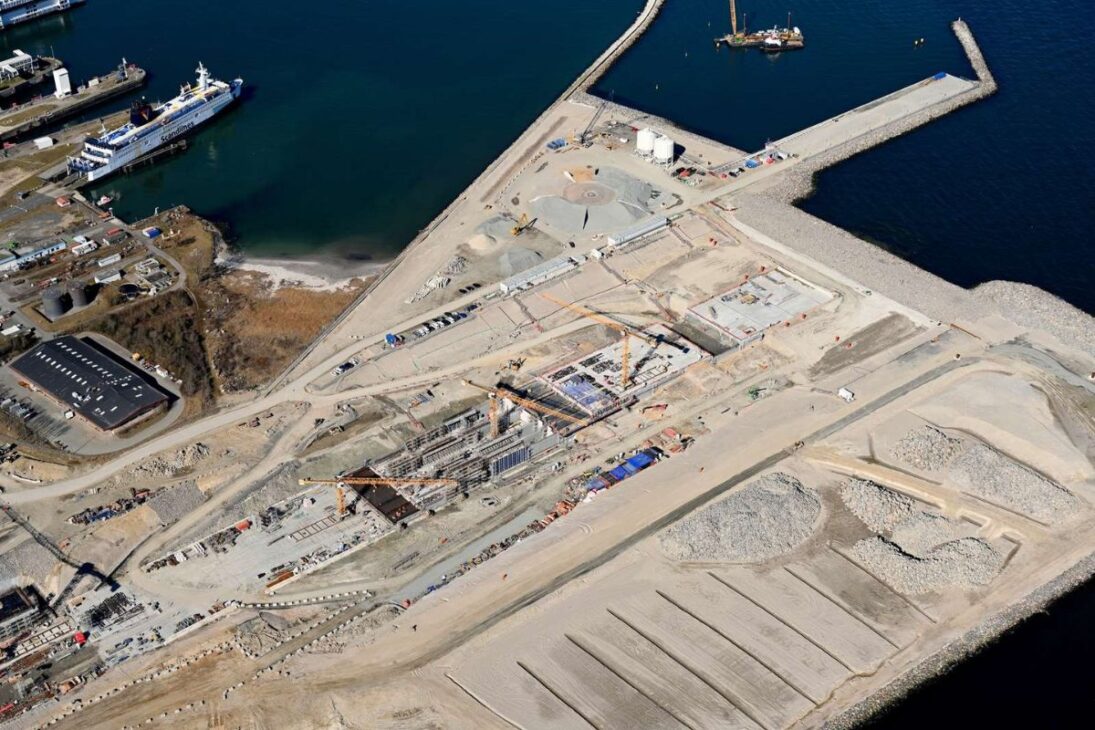
With the locations defined, construction of the support ports for the construction began, through which the materials used in the tunnel arrive. The largest port was erected in Rødbyhavn, as the production of the modules will take place there. It became operational in 2022. The German port was completed a year later.
These ports help to reduce land traffic and optimize maritime transport of large concrete blocks, essential for the next phase: the dredging of the seabed.
Dredging of the 18 Km Canal in the Fehmarnbelt
An 18-kilometer canal was dug between the two countries to accommodate the tunnel modules. The dredging removed tons of sand, stones, and sediments from the seabed, creating a space with sufficient depth and width for the installation of the pieces.
Part of the dredged material was reused to create nearby coastal areas, especially in Rødbyhavn. This stage was completed in 2024 and paved the way for the start of the tunnel assembly.
Tunnel Factory and Workers Village
To produce the 89 modules that make up the tunnel, a specific factory was built in Rødbyhavn with six assembly lines. Five are for standard modules and one for special models. Next to it, the “tunnel village” emerged, with accommodations for over 1,300 workers.
The first piece was molded in 2023. The factory structure enables mass production with high quality control, ensuring that each module meets the technical and environmental requirements of the project.
Construction of the Entry Portals
The entrances to the tunnel are being built simultaneously in both countries. These structures will serve as connections to the local road and rail networks. In 2024, the front sections of these portals began to be submerged, preparing the coupling point of the modules.
Precision engineering is essential here. The portals are the link between the land system and the immersed tunnel, and any misalignment could compromise the entire structure.
Production and Submersion of the Modules
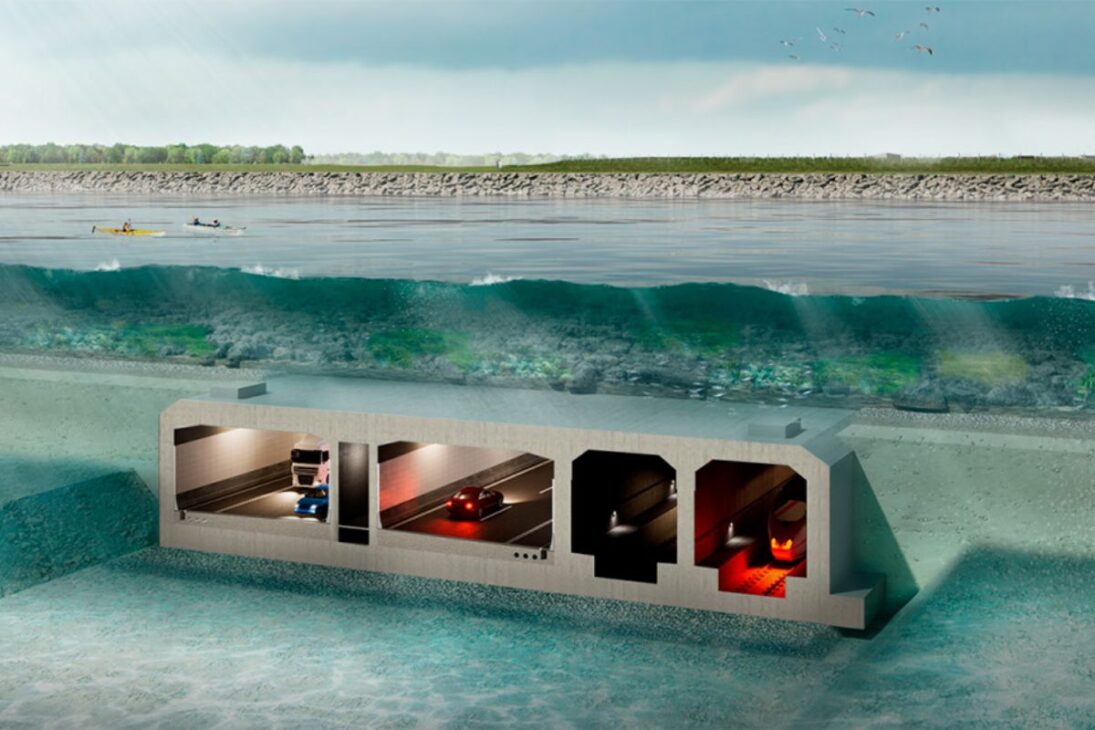
Starting in 2025, the modules will begin to be towed and submerged in the excavated canal. Each piece will be carefully positioned, aligned, and sealed to form a single continuous tunnel, with roads for cars and tracks for trains. Assembly will begin from both sides, advancing toward the center of the Fehmarnbelt.
This method reduces construction time and avoids geological risks associated with underwater excavation, such as landslides or rock ruptures.
Installation of Internal Technology
After assembly, the installation of the internal systems will take place: ventilation, communication, lighting, signaling, energy, and infrastructure for vehicles and trains. The entire system will be automated and monitored by sensors, ensuring operational safety 24 hours a day.
The tunnel will also be equipped for emergencies, with evacuation routes, smoke detectors, and rapid response networks, following international standards.
Testing and Opening to the Public
Before the inauguration scheduled for 2029, all facilities will undergo rigorous testing. This includes traffic simulations, power failures, fires, and evacuations. Only after approval from the transport and safety authorities of both countries will traffic be released.
The tunnel will reduce travel time from 45 to 10 minutes between Denmark and Germany, transforming the logistics map of Europe and serving as a reference for engineering projects worldwide.
Do you think Brazil should invest more in immersed tunnels like this? Share your opinion on this technology and its possible uses here.





A segurança e o mais importante, qual a duração desses tuneis prefabricados
Em acidente rodoviário tipo explosão veículos combustível, tremor terra , tsunamis, e bom poupar o tempo entre países mas debaixo toneladas água e uma catástrofe se algo der errado , não concordo com essa evolução demasiado arriscado