





 Portuguese
  English
  Spanish
  3 min of reading
  0 comments


Find Out Who Is Really Cashing In on Brazilian Oil, See the Numbers and Discover the Surprises of the May/2025 Ranking
The oil market in Brazil has never been so competitive! Although Petrobras remains the major player, it is no longer possible to speak of absolute dominance without mentioning names like PRIO, Brava Energia, and even PPSA, which has been growing quietly.
You will be surprised to discover who is truly bringing the black gold home and how independent companies are changing the game. After all, it is not only Petrobras that is thriving in the Brazilian fields!
What Changed in the Brazilian Oil Scenario in 2025?
If you thought that only Petrobras was relevant, you need to rethink your concepts! The May/2025 ranking shows a new landscape. Although the state-owned company is still responsible for 54.86% of all the oil produced in Brazil, the share of independents and foreigners is already starting to disturb — and even scare some giants.
-
The rise in oil prices could ensure an extra revenue of R$ 100 billion for the Federal Government, indicates a recent economic study.

-
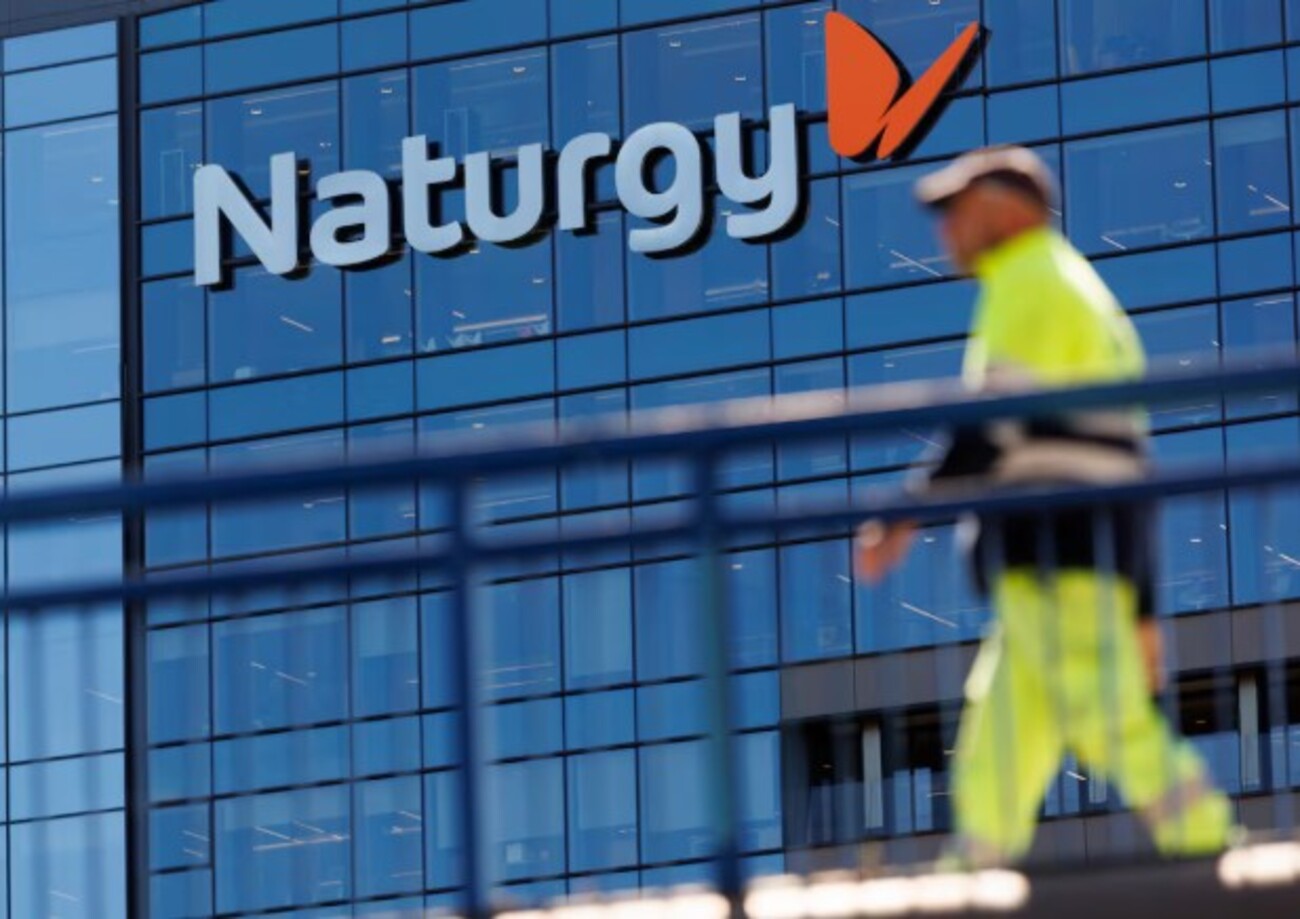
Naturgy begins an investment of R$ 1.6 million to expand the gas network in Niterói and benefit thousands of new residences and businesses.
-
A major turn in the Justice system suspends tax increases and directly impacts oil and gas companies in Brazil by affecting costs, contracts, and financial planning, leaving uncertain what could happen to the sector if these costs had increased.

-
Brava Energia begins drilling in Papa-Terra and Atlanta and could change the game by reducing costs in oil while increasing production and strengthening competitiveness in the offshore market.


PRIO and Brava Energia, for example, are continuously growing and show that with strategy, technology, and boldness, it is possible to bite a good piece of this billion-dollar market.
In addition, companies like Shell, TotalEnergies, and Petrogal remain strong, participating in strategic consortia and securing their share of the pie in some of the largest fields in the country, such as Lula (Tupi), Búzios, and Mero (Libra).
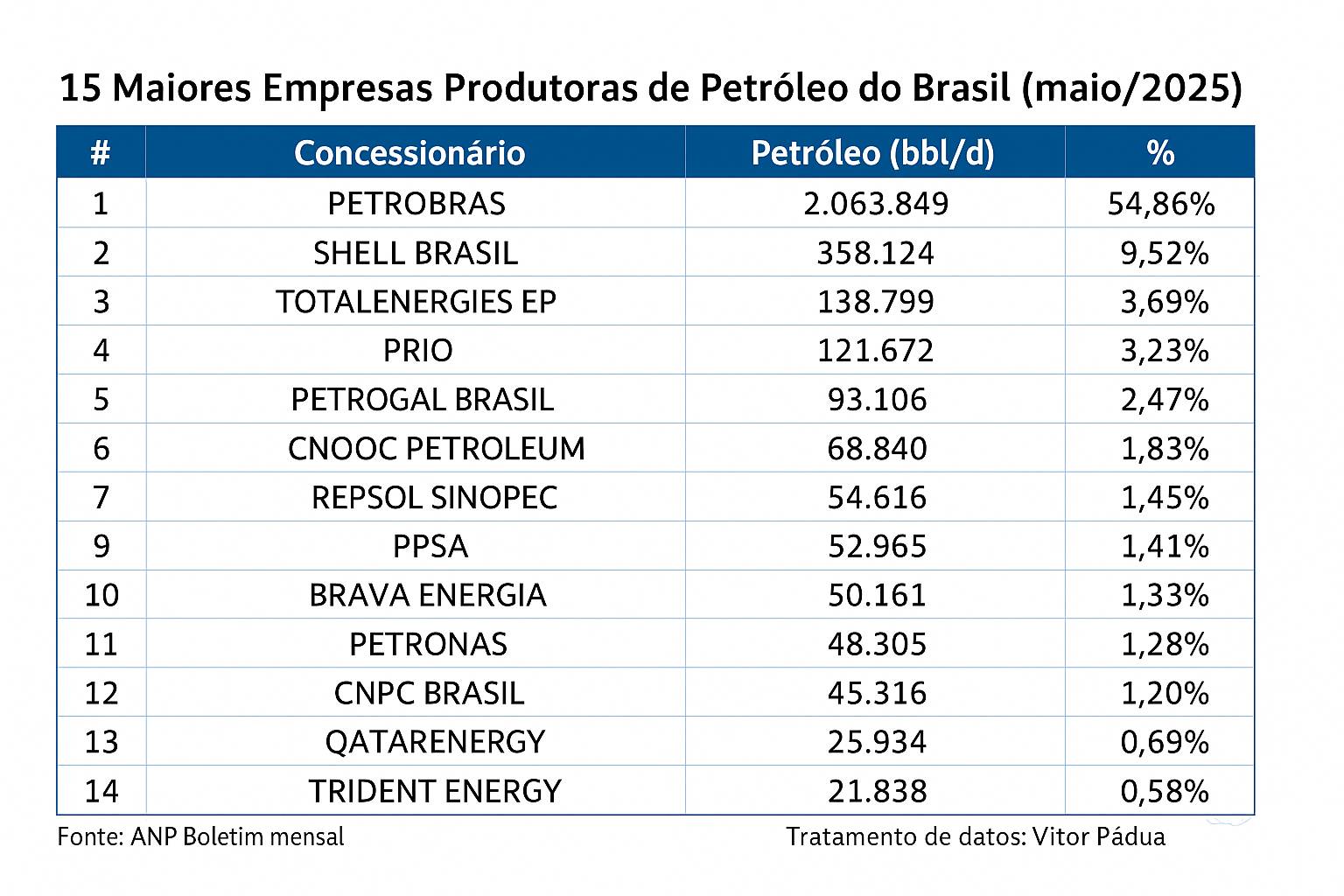
Ranking of the 15 Largest Oil Producers in Brazil in May 2025
Now check out who the real sharks of national oil are, along with each one’s production, according to official data from ANP (National Agency of Petroleum):
| # | Company/Consortium | Production (bbl/d) | % of National Production |
|---|---|---|---|
| 1st | Petrobras | 2,063,849 | 54.86% |
| 2nd | Shell Brasil | 358,124 | 9.52% |
| 3rd | TotalEnergies EP | 138,799 | 3.69% |
| 4th | PRIO | 121,672 | 3.23% |
| 5th | Petrogal Brasil | 93,106 | 2.47% |
| 6th | Equinor Brasil | 73,691 | 1.96% |
| 7th | CNOOC Petroleum | 68,840 | 1.83% |
| 8th | Repsol Sinopec | 54,616 | 1.45% |
| 9th | PPSA | 52,965 | 1.41% |
| 10th | Brava Energia | 50,161 | 1.33% |
| 11th | Petronas | 48,305 | 1.28% |
| 12th | CNPC Brasil | 45,316 | 1.20% |
| 13th | QatarEnergy | 25,934 | 0.69% |
| 14th | Trident Energy | 21,838 | 0.58% |
| 15th | Perenco Brasil | 15,778 | 0.42% |
(Source: ANP, May/2025 — Treatment: Vítor Pádua)
What Do These Numbers Reveal?
- Petrobras, despite having the largest structure, no longer has a monopoly on investments and profits.
- Shell and TotalEnergies are highlighted, riding the wave of mega fields in the pre-salt and strategic partnerships.
- PRIO demonstrates the strength of national independents. With modern management, innovation, and a focus on mature assets, the company has already transformed from a promise to a reality!
- Brava Energia, already among the top ten, is an example of how new players can grow quickly and compete with the giants.
- PPSA, the government representative in the sharing agreements, has already surpassed traditional multinationals, showing how the sharing policy has changed the market.
- Other internationals, such as Petronas, CNPC, QatarEnergy, and Trident, did not come to play and continue to advance.
15 Companies Concentrate 86% of Production: Will There Be Space for New Players?
These 15 companies account for more than 86% of all oil extracted in Brazil. In other words, the rest of the market is fragmented among dozens of smaller operators, who together contribute only 14% of national production.
The trend is that consortia, partnerships, and independents will gain increasing relevance, especially with Petrobras’s divestments and the entry of new international groups into the game.
Source: ANP; endorsed by Vitor de Paula, O&G Communicator.
And you, would you bet on any of these companies to lead in the future? Or do you think Petrobras will remain on top for many years?
Leave your opinion in the comments and share this ranking with that friend who still thinks that Petrobras is the only player in Brazilian oil!








-

4 pessoas reagiram a isso.