





 Portuguese
  English
  Spanish
  7 min of reading
  0 comments


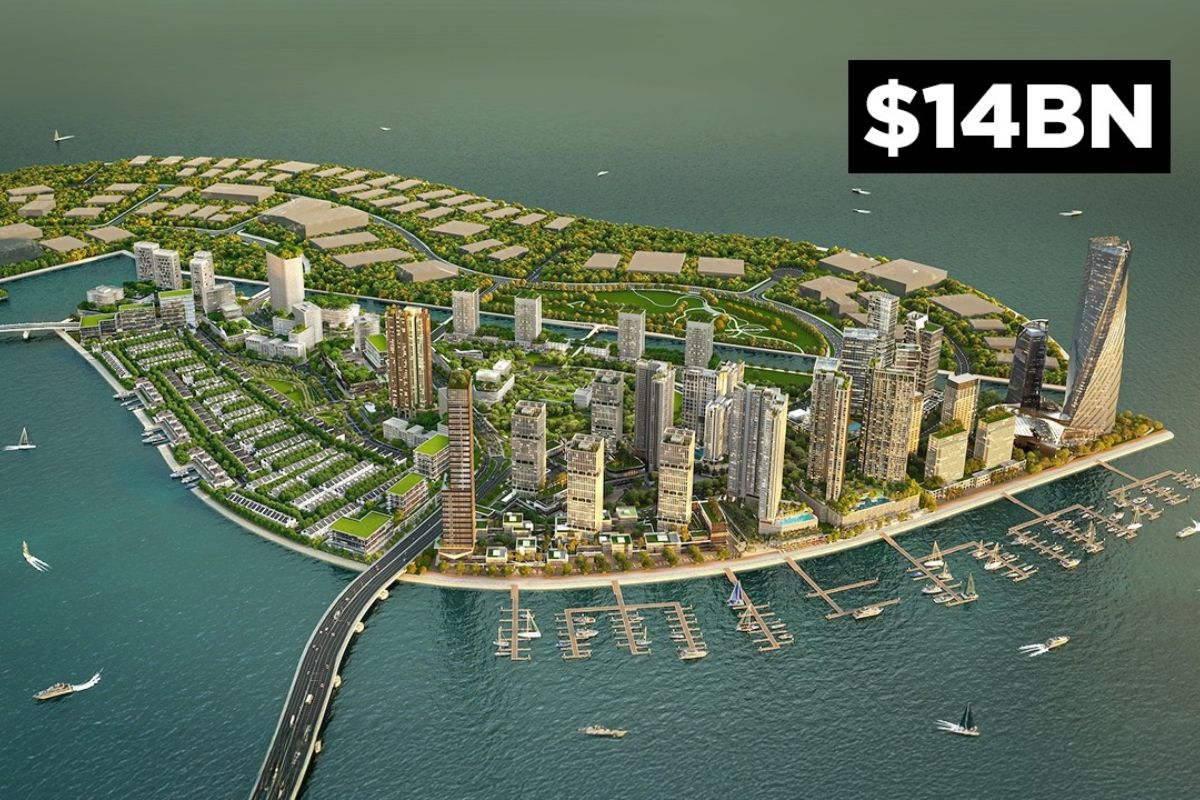
Designed As A Billion-Dollar Artificial Island For 16,000 Residents By 2030, Andaman Rises From The Sea In Penang With Sand Fill, Dikes Tested In The 2004 Tsunami And Luxury Prices In The Shadow Of The Forest City Failure, As Malaysia Bets On Reclaimed Land And Challenges Cautious Investors
Since 1991, Malaysia has reclaimed more than 80 square kilometers from the sea, and a growing part of this expansion focuses around Penang Island. In 2008, George Town was declared a UNESCO World Heritage Site, increasing the pressure for urban space and high-end developments on an island with limited area and mountainous terrain, where building has become expensive and complex. In this context, the bet on a billion-dollar artificial island offshore is both a market solution and a high-risk urban experiment.
At the same time, the country carries the recent trauma of Forest City, a megaproject of about 100 billion dollars planned for four artificial islands and 700,000 residents, in the state of Johor. Announced as a global showcase, the venture stagnated after the Chinese real estate crisis, capital restrictions imposed on construction companies and, in 2018, harsh statements from the then prime minister against granting visas for foreigners to settle there. Reports from 2023 indicated only about 1% occupancy in 28,000 apartments, turning a promise of a city of the future into a potential ghost town symbol.
How A Billion-Dollar Artificial Island Is Born In Penang

Andaman is presented as a direct response to the real estate bottleneck in Penang.
-
A megaproject worth R$ 89 billion is advancing in Iraq and promises to change the game in global trade by creating a new corridor between Asia and Europe, reducing traditional routes and repositioning the country as a logistics powerhouse.
-
Goodbye bedside table: floating shelves become a trend in 2026 by freeing up space in the bedroom, improving circulation, bringing visual lightness, and integrating technology without taking up floor space.

-
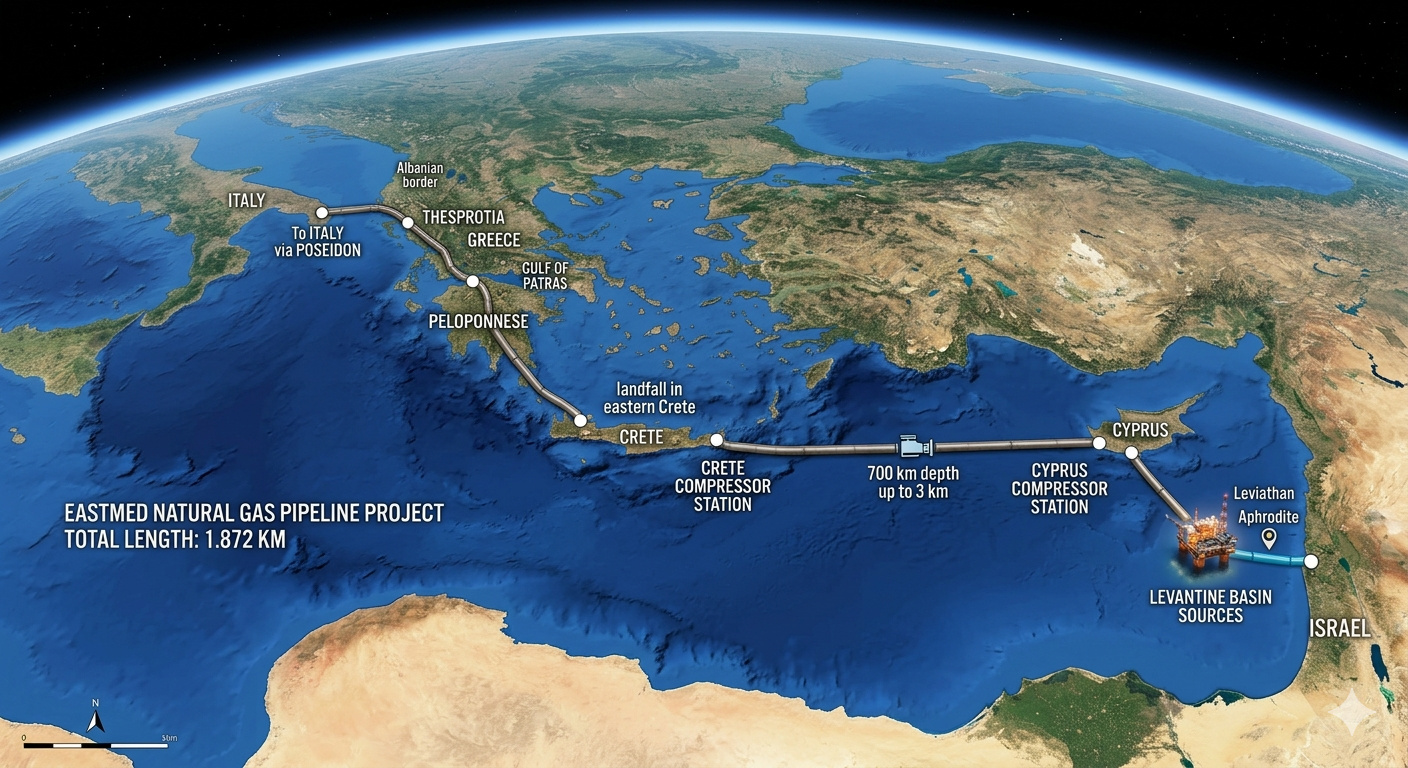
Israel, Greece, and Cyprus signed an agreement in 2020 to transport gas from the Mediterranean to Europe via a 1,872 km pipeline, but Turkey claimed sovereignty over part of the maritime route, and the project never materialized.
-
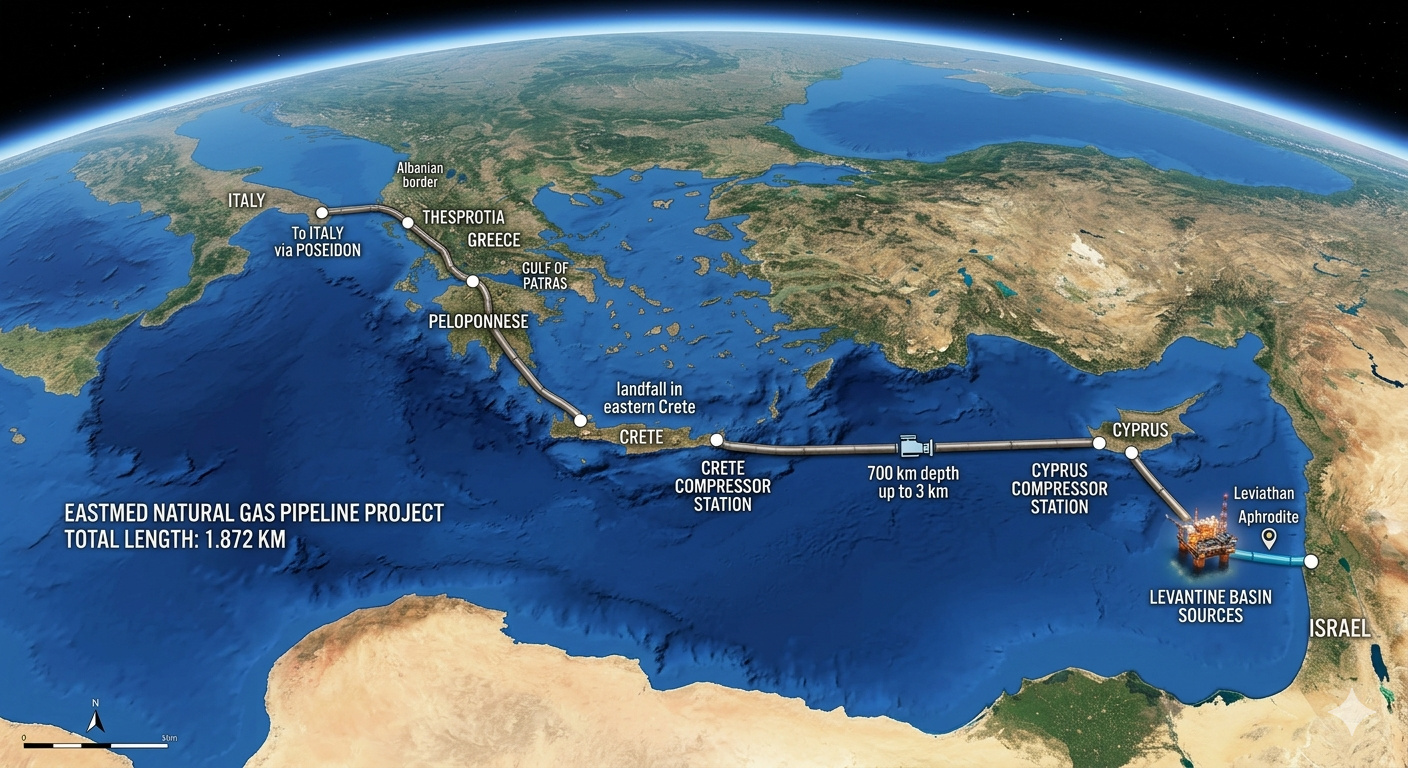
Israel, Greece, and Cyprus signed an agreement in 2020 to transport gas from the Mediterranean to Europe via a 1,872 km pipeline, but Turkey claimed sovereignty over part of the maritime route, and the project never materialized.

The new island, estimated at around 14 billion dollars, encompasses about 760 acres, equivalent to more than 300 hectares of reclaimed land off the coast of Penang Island.
The proposal is clear: to create a billion-dollar artificial island contiguous to an already heated market, rather than inaugurate an isolated hub far from established flows.
The physical base of the project begins at the bottom of the sea.
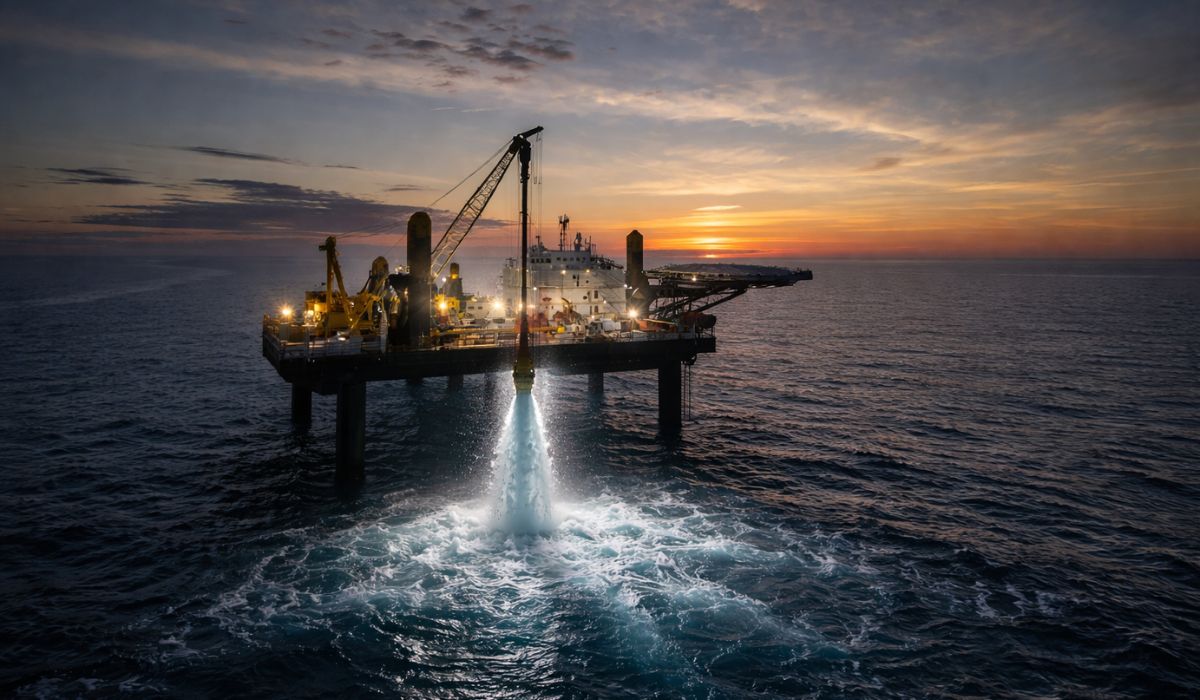
Dredges remove large quantities of sand from selected areas and transport it through pipes and conveyors to the Andaman site.
The sand is deposited in successive layers, forming an artificial platform that, at first glance, seems simple: an advance of land into the sea.
In practice, however, it is a delicate geotechnical system that requires strict control of compaction, drainage, and stability over the years.
Compressed Sand, Deep Drainage, And Stone Dikes Against Tsunamis

To transform that immense fill into usable urban base, it is necessary to slowly extract the water trapped in the sand and clay.
Prefabricated vertical drainage equipment inserts drains into the ground, creating channels for water to escape.
Over this still unstable ground, a thick layer of surcharge is applied, which acts as additional weight to accelerate compaction. Months of monitoring accompany the soil settling before any tower is authorized to rise.
The island’s perimeter is protected by a stone dike, built with blocks that can weigh more than 100 kilograms each.
This wall is shaped on a slope, forming an inclined face capable of dissipating wave energy before it reaches the fill.
In 2004, when a tsunami struck Malaysia, the first phase of coastal works in Penang was not yet fully completed, but the containment system withstood the impact, reinforcing engineering teams’ confidence in that coastal defense concept.
In Andaman, the logic is similar: the billion-dollar artificial island relies on a rocky ring that needs to withstand decades of erosion, storms, and the possibility of new extreme events.
With the subsoil stabilized, centrifuged concrete piles come into play, driven through layers of sand and clay until reaching firmer levels.
These piles support the foundations of the buildings, transferring the weight of the structures to a set of resilient points distributed underneath the island.
From there, the construction site transforms into an urban landscape: towers begin to emerge, internal thoroughfares are opened, and the two bridges connecting Andaman to Penang Island become vital corridors for integration.
Luxury For 16,000 Residents In 5,000 Residential Units
The declared ambition is to accommodate around 16,000 residents in approximately 5,000 residences, a high density for an area of 760 acres.
Andaman was designed to function as a natural extension of the already dense Penang, with shopping centers, offices, commercial spaces, and high-end residential condominiums.
The developers themselves point to luxury housing as the central economic engine of the billion-dollar artificial island.
Prices reflect this positioning. While the average value of a new apartment in Malaysia is around 140,000 dollars, the units in Andaman are listed in a range from about 120,000 to 1.6 million dollars.
In practice, this means that the entry-level typologies may even appeal to a segment of the local upper-middle class, but most of the inventory tends to focus on apartments and penthouses aimed at the regional elite.
Market studies cited indicate that coastal properties in Penang are already averaging 50% higher in value than other areas, which allows Andaman’s launches to position themselves even higher.
The location helps explain the business logic. Penang is already a consolidated destination, with a relevant industrial and technological base, active tourism, and international recognition, thanks to George Town.
Unlike Forest City, which depended on attracting foreign buyers on a large scale to a relatively isolated area, Andaman seeks to capture existing demand that concentrates around a physically limited island, but with a strong appetite for luxury expansion.
Forest City, Chinese Debt, And The Fear Of A New Ghost Town
The comparison with Forest City is inevitable.
The Johor project was conceived as a total urban theme park: hotel, golf course, shopping centers, offices, residences, and high-end leisure, all supported by a mass transit system interconnecting four artificial islands.
The estimated cost approached 100 billion dollars, led by the Chinese construction company Country Garden and its Malaysian partner Esplanade Danga 88.
When China plunged into a real estate crisis, with strict limits on loans to builders and tighter controls on how much citizens could spend abroad, the financial backbone of Forest City was hit.
From 2018 onwards, public statements from the Malaysian government against granting visas for foreigners to settle there further undermined the business model.
The pandemic only consolidated the picture: sales falling, works slowing down, and reports in 2023 indicating that only about 1% of the 28,000 apartments were effectively occupied.
It is this history that feeds skepticism regarding Andaman.
The scale is smaller, the total cost is substantially lower, and ownership control is led by a Malaysian company, E&O Berhad, reducing exposure to external crises like the Chinese one.
Still, the question remains: how many billion-dollar artificial island projects can a country sustain without reproducing, in miniature, the ghost town narrative that now haunts Forest City.
Differentials Of Andaman And Lessons Learned From Penang And Forest City
There are objective differences between the two projects. Forest City was designed as an almost autonomous destination, with a strong dependence on foreign buyers and marketing aimed at a global clientele, especially Chinese.
Andaman, on the other hand, is anchored in a region that already presents robust local and regional demand, with Penang positioned as an economic, touristic, and cultural hub.
Initial sales data indicate that recently launched residential buildings achieved a high commercialization rate, suggesting greater adherence to the local buyer profile.
On the technical front, Andaman benefits from decades of Malaysian experience in coastal area reclamation.
From the first fill projects to works completed before the 2004 tsunami, Penang has built a track record that provides concrete references on how dikes, slopes, and drainage systems react to extreme events.
This does not eliminate the risk, but places the billion-dollar artificial island on a distinct level of improvisation, relying on practical learning that Forest City, to some extent, had to build from scratch on another coastline.
Still, questions remain open.
The environmental pressure on marine ecosystems, the impact of intensive sand use for filling, and the increased vulnerability to rising sea levels are factors that, even mitigated by engineering, will continue to be subject to criticism and international scrutiny.
The choice of luxury skyscrapers aimed at a restricted audience also raises doubts about Andaman’s ability to generate social diversity and mixed use over time, or whether it will remain a high-income enclave subject to market fluctuations.
Consolidated Millionaire Hub Or Another Ghost Town By The Sea?
Viewed together, the elements at play organize an ambiguous scenario. On one side, a billion-dollar artificial island linked to a real estate market, in a region with proven demand and consolidated infrastructure.
On the other, a country that has already witnessed the reputational and financial cost of announcing megacities on reclaimed land that, years later, still struggle to fill empty apartments and justify dikes, bridges, and monumental fills.
The future of Andaman will depend on the effective absorption of residential units, the ability to diversify uses beyond luxury residential, rigorous environmental management, and adaptation to a global context of increased sensitivity to climate and real estate risks.
The doubts raised in the public debate itself are direct: Is Penang gaining a new sustainable millionaire hub or just the next candidate for a high-end ghost town in Asia.
In your opinion, looking at the history of Forest City, the size of Andaman, and Malaysia’s bet on reclaimed land, does this project have a better chance of consolidating a new millionaire hub in Penang or becoming just another ghost island on the Asian map?





-

Uma pessoa reagiu a isso.