






 Portuguese


The bulk carrier MIRO G ran aground on Cap de l’Homy beach in Lit-et-Mixe, in the Landes region, early Friday, November 20, 2026. A military helicopter rescued 19 crew members. As of Monday, November 23, the ship remains on the beach, with no pollution detected
The MIRO G, a 169-meter bulk carrier flying the Maltese flag, ran aground on a beach in Lit-et-Mixe, in the Landes region of southwestern France. The grounding occurred at 12:55 a.m. Friday, November 20, 2026.
The incident was reported that day by the U.S. website gCaptain, citing the French Atlantic Maritime Prefecture and Agence France-Presse (AFP). The French authority issued new statements on Saturday, November 21, and Monday, November 23.
The ship was carrying no cargo. It had more than 100 metric tons of diesel on board, AFP reported, as cited by gCaptain. As of Monday, no oil slick had been spotted near the hull.
-
Hanwha, the South Korean group that built Petrobras’ P-79, starts U.S. construction on first of four 49,500-ton tankers, marking decade-high ship size

-
Russian corvette Merkury, one of Moscow’s newest warships, capsizes at Benghazi port in Libya after an attack by seven naval drones Ukraine says were launched from a mothership
-
Russian cargo ship Sparta II, a 121-meter vessel linked to Russia’s Defense Ministry, catches fire after drone attack in Gulf of Finland and is towed out of Finnish waters after all 16 crew members are evacuated
-
Buenavista Cruise Ship from Spain’s Corazul Barred by Court from Leaving Port of Santos Since November 13, with R$1.77 Million Guarantee Needed and Cruises Suspended Until End of Month


How the MIRO G ended up on the beach at Lit-et-Mixe
The alert was raised Thursday night, November 19. The MIRO G told the CROSS-A Étel maritime rescue coordination center that it was having difficulty maneuvering. Wind and waves were pushing the ship.
The crew dropped both anchors about 1.8 nautical miles from the beach, or roughly 3 km. The information appears in the first statement from the French Atlantic Maritime Prefecture.
Wind gusts reached 48 knots, about 90 km/h. The anchors dragged across the sandy seabed, and the ship was swept onto the beach. Waves were 5 to 6 meters high.
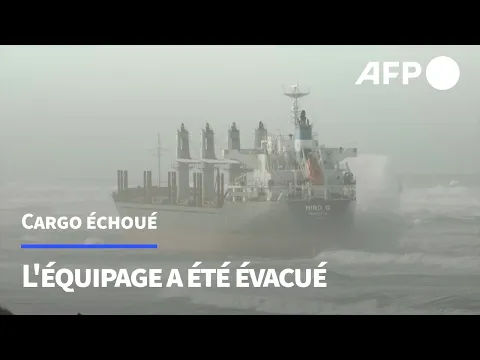
AFP posted a video on X in French on Friday, November 20. The post said the cargo ship ran aground shortly after midnight, unable to overcome the waves and crosswinds.
The maritime prefecture activated Level 3 of the ORSEC plan, France’s emergency response system at sea. It also activated the Biscay Plan, an agreement between France and Spain for rescue operations in the Bay of Biscay.
Helicopter rescue of the 19 crew members
There were 22 crew members on board. At the captain’s request, a Caracal helicopter from the French Air and Space Force, based at Cazaux, hoisted 19 sailors before dawn Friday.

The captain and two sailors remained aboard the MIRO G to assist the authorities. No one was injured, the regional broadcaster ici reported.
The prefect of Landes posted a summary of the overnight operation in French on X. The post says the freighter ran aground at 12:55 a.m. after drifting in strong winds, and that 19 sailors were hoisted aboard helicopters.
Also on Friday, a French Navy Dauphin helicopter brought an assessment team to the ship. The team inspected the hull and assessed the chances of freeing the bulk carrier from the sand.
Who remained aboard and Saturday’s second evacuation
On Saturday, November 21, forecasts of winds reaching 50 to 74 km/h on Sunday prompted another evacuation. The same helicopter from Cazaux air base took 11 people off the ship.
They included the three remaining crew members, including the captain, four Navy specialists, three technicians from the towing company Les Abeilles International, and a representative of the shipowner’s insurer.
Before leaving, the team filled the ballast tanks with seawater. This limits the hull’s movement and prevents the ship from capsizing, according to Saturday’s statement.
AFP posted footage of the freighter on the beach to YouTube on Friday, November 20. The French-language description says the Maltese-flagged ship stopped at Lit-et-Mixe and that some of the crew left by helicopter.

What is known about the ship and its voyage
The MIRO G was built in 2011. It is 169.4 meters long, 27.2 meters wide and has a deadweight tonnage of 28,207, according to French maritime news site Mer et Marine.
Even empty, the ship weighs more than 7,000 metric tons. It was bound for Rouen, in northern France, where it was due to load about 30,000 metric tons of wheat for Libya, according to gCaptain.
On its previous voyage, it carried fertilizer from Egypt, which was unloaded in Santander, Spain. The ship left there empty on November 17, the EFE news agency reported in an article published by swissinfo.
France’s Atlantic Maritime Prefecture also reported the incident on X in French on Friday, November 20. The post said the ship had run aground, a helicopter had been dispatched and Level 3 of the ORSEC plan had been activated.
Diesel on board and pollution risk in Landes
Mer et Marine puts the amount of fuel on board at about 100 metric tons, probably diesel. The main risk is a rupture of the tanks, which could spill fuel onto the beach.
A French Navy Falcon 50 surveillance aircraft flew over the ship. No pollution was detected. One option under consideration is pumping out the diesel, which would also make the hull lighter.
Experts collected samples from the dune and the sand. Lit-et-Mixe’s first deputy mayor, Sylvie Vuillemin, told ici on Monday that the risk exists, especially during towing.
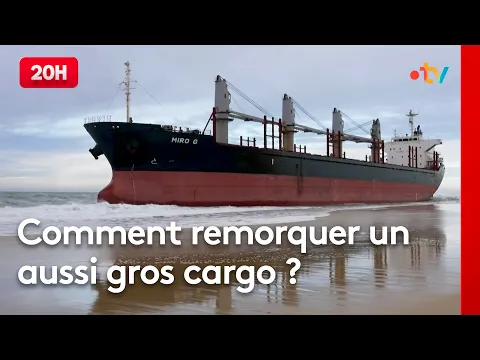
franceinfo posted a video on YouTube on Saturday, November 21, about how to tow the bulk carrier. The description, in French, mentions about 100 metric tons of diesel and a one-kilometer cable.
The maritime prefecture and the Landes prefecture are preparing a preventive pollution-response plan, with teams on land and at sea.
The plan to pull the MIRO G off the sand
The tug Abeille Bretagne left Brest and stopped in La Pallice, in La Rochelle, to pick up the towline. It has been stationed off Lit-et-Mixe since Saturday night.

The Spanish tug Sar Gavia left Bilbao on Thursday under the Biscay Plan. It returned on Friday, when French resources took over the operation.
Monday’s statement gives details about the towline: 1,900 meters of synthetic fiber, in 250-meter sections. The material is lightweight, floats and, at the same weight, is stronger than steel.
An SNSM rescue boat, operated by France’s sea rescue organization, and two jet skis will carry the line to the ship. The towline will be secured at several points on the bow.
The shipowner hired Smit Salvage. The company is working with technicians from Abeilles International and the French Navy. Teams are being brought aboard by helicopter in stages.
Why the tow depends on the tide and wind
The MIRO G ran aground at high tide, the worst possible time. At the next favorable high tide, the water is expected to rise more than a meter above its level on the day of the grounding.
Tide coefficients are rising through Thursday, the 26th, when they will reach 97, according to Mer et Marine. They will then fall to 66 by Monday, the 30th.
Because of the shallow water, the Abeille Bretagne cannot get closer than 900 meters to the hull. This makes it harder to pass the towline to the bulk carrier.
The ballast tanks also need to be emptied. The two main generators that power the pumps have been temporarily repaired. An additional mobile generator is considered essential.
The maritime prefecture has identified two risks. The ship could gradually sink into the sand. And a sandbank farther offshore could complicate the maneuver once the hull is freed.
French minister holds shipowner responsible
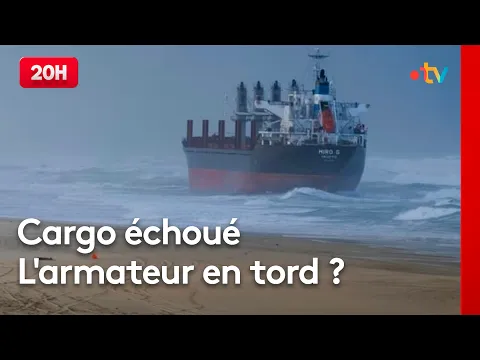
France’s minister delegate for the Sea and Fisheries, Catherine Chabaud, said Sunday, the 22nd, that the shipowner had put the vessel in danger. She made the remarks to franceinfo, which were reported by EFE.
In the minister’s view, a ship should not put to sea in 30-knot winds with gusts of 40 knots. She said the investigation will have to establish who was responsible.
franceinfo published a report on the issue on YouTube on Sunday, the 22nd. Its description, in French, says the minister blames the shipowner for sending the cargo ship to sea in those conditions.
On Friday, the Atlantic maritime prefect had already issued a formal order directing the shipowner to mobilize the resources needed to remove the vessel safely and protect the environment.
Beach closed as next steps are expected from Tuesday
Access to Cap de l’Homy beach is prohibited. Onlookers must stay in the cordoned-off areas. Sylvie Vuillemin reported incidents of vandalism by visitors.
The deputy mayor expects the tow to take place in the early hours from Monday into Tuesday, on Tuesday or perhaps Wednesday, the 25th. She said conditions are more favorable at the start of the week.
The maritime prefecture says sea conditions are improving, though they are still not ideal, and that more strong winds are forecast. An attempt will be made during one of the next high tides if all the conditions come together.
The agency describes the operation as particularly complex, with a highly uncertain outcome. If the MIRO G is not pulled off the sand in the coming days, a longer operation will be necessary.
The date of the attempt still depends on the tide and wind along the Landes coast.


