





 Portuguese
  English
  Spanish
  5 min of reading
  0 comments


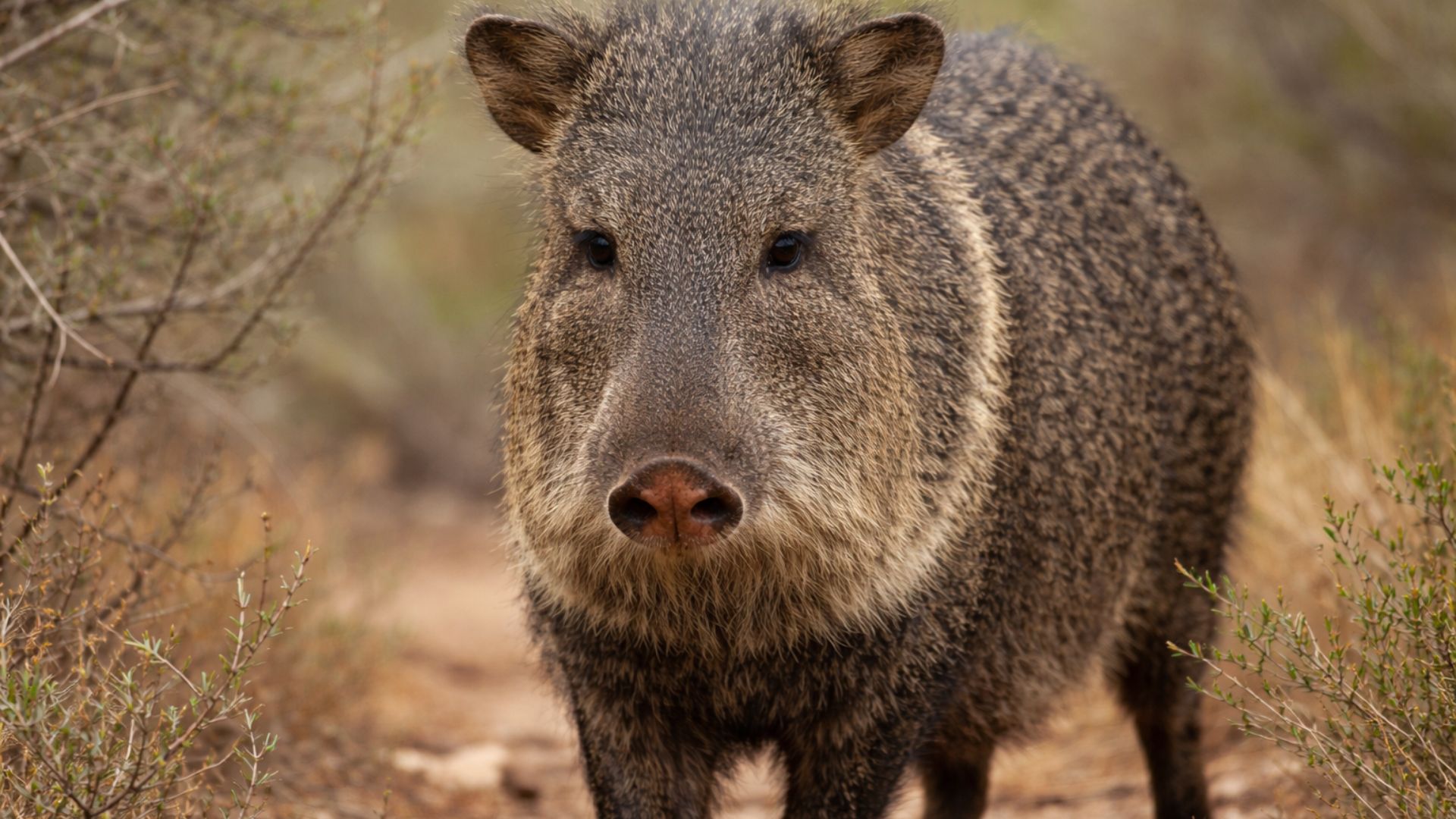
Rare Mammal That Defied Extinction Is Once Again Recognized in the Gran Chaco, Region Where Dry Vegetation Hides Species for Decades and Where Human Expansion Pressures the Habitat. Rediscovery Turned the Tagua into a Global Symbol, Scientific Research and Environmental Alert.
A mammal that science described from ancient bones and that for decades was treated as a species vanished from the face of the Earth is back in the news for a rare reason: it exists, is alive, and still survives in one of the hardest and least known regions of the South American continent.
The Chaco peccary, also known as tagua, gained international fame by defying the idea of “definitive extinction” and becoming a symbol of how biodiversity can surprise even when it seems there is no more hope.
Chaco Peccary and the “Return” That Surprised Science
The species belongs to the group of wild pigs, medium-sized animals related to pigs, but with a distinct evolutionary history in the Americas.
-
He started running at 66 years old, broke records at 82, and is now a subject of study for having a metabolic age comparable to that of a 20-year-old, in a case that is intriguing scientists and inspiring the world.

-
Oldest tree on the planet reappears after 130 years of searches: Wattieza, 385 million years old, was 10 meters tall and had no leaves or seeds; Gilboa fossils in New York solved the mystery in 2007.

-
A 48-square-meter house assembled in hours with 4,000 bricks made of recycled plastic that does not absorb moisture, has natural thermal insulation, and costs less than 90,000 reais in a complete kit.

-
Luciano Hang revealed that Havan’s air fleet has already accumulated more than 20,000 landings, 10,000 flight hours, and 6 million kilometers traveled, and he says that without the planes, the company would never have grown so quickly.


The impact of the tagua case is not only in its size or behavior, but in the fact that it was presented to the scientific world as if it were a relic of the past.
Before existing as an animal observed in the field by researchers, it was known only from ancient records and associated with a scenario where there would be no more living populations.
Gran Chaco, the Extreme Habitat Where the Species Resists
What changed the course of this story was the confirmation of living individuals in the Gran Chaco, a vast expanse of dry forests, savannas, and thorny vegetation that extends across parts of Paraguay, Bolivia, and Argentina.
From the moment specimens were documented and studied, the tagua ceased to be just a collection name and began to rank as the third recognized living peccary species by science, alongside the collared peccary and the white-lipped peccary, more widespread species on the continent.
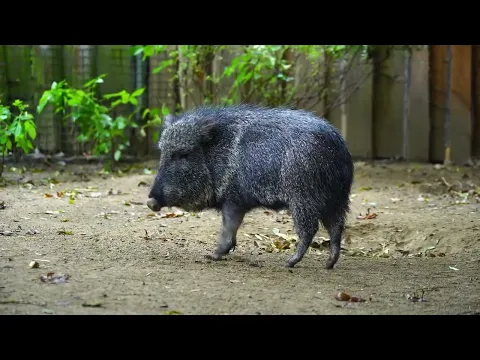

Deforestation and Environmental Pressure in the Chaco Biome
The rediscovery did not represent just a zoological curiosity.
It opened a new front of concern for conservationists by revealing that a rare mammal, with a limited geographical distribution and specific habitat needs, was confined to a region under strong environmental pressure.
The Gran Chaco is a biome with an extreme climate, featuring long dry periods and vegetation adapted to water scarcity.
At the same time, it is one of the areas most affected by changes in land use in different sections, especially due to agricultural expansion and the conversion of natural environments.
When an animal reappears in this context, the immediate question becomes twofold: how did it manage to survive off the radar for so long, and now that its existence is confirmed, what could lead it to disappear again?
Why the Species Was Off the Radar for Decades
In the case of the tagua, the very landscape helps explain why it remained virtually invisible to the academic world for decades.
The region it inhabits is vast, sparsely populated in many areas, with difficult access and a low density of continuous historical research compared to other tropical areas on the continent.
Record in Science and the Scientific Confirmation of the Tagua

The scientific confirmation of the Chaco peccary was formalized in an article published in the journal Science by Ralph M. Wetzel, describing the animal as a peccary that had until then been considered “extinct” and was found alive in Paraguay.
This type of record carries particular weight because it is not an isolated sighting or an oral report, but rather a documented milestone that allows other researchers to review classification, distribution, and threats.
From there, the tagua began to be included in discussions about conservation and management of the Chaco, ceasing to be merely a rarity and becoming an indicator of how much unknown still may exist in little-studied biomes.
“Lazarus” Species and What Science Calls Reappearance
The species also illustrates how the notion of “extinct” can vary depending on the evidence base available at any given time.
In practical terms, “extinction” is a conclusion supported by absence of records and reasonable expectations of detection, and the tagua fit for a long time the type of animal that seemed to have disappeared before even being studied in life.
This history reinforced the category of “Lazarus species,” used for organisms that reappear after long periods without reliable observations, altering the scientific understanding of their survival.
Conservation of the Chaco Peccary and Monitoring Challenges
After the species returned to the map, the focus shifted to its real situation in the environment.
Conservation organizations and technical literature emphasize that the tagua occupies areas of the Chaco with specific vegetation cover, including environments associated with succulent and cacti plants, important resources in dry regions.
This type of adaptation does not make it invulnerable; on the contrary, it may render it more dependent on certain landscape mosaics.
In scenarios of deforestation, fragmentation, and soil alteration, even a well-adapted animal to adverse conditions may lose movement corridors, feeding sites, and safe areas for reproduction.
Why the Rediscovery of a Large Mammal Attracts Global Attention

Another point that reinforces the “impact” nature of the tagua is the symbolic value of being a large mammal rediscovered in a relatively recent period of scientific history.
The majority of global “reappearances” that attract public attention involve small birds, amphibians, or insects, groups where detection may be naturally difficult.
A peccary, being larger and living in groups, creates the impression that it would be unlikely to go unnoticed, which heightens the element of surprise and draws the curiosity of readers in any country.
Protection of the Gran Chaco and the Risk of Another Disappearance
Following the confirmation of its existence, research and conservation initiatives have begun to monitor occurrences and discuss protection strategies in the Gran Chaco.
The challenge lies in reconciling the need to preserve key areas with the regional economic dynamics that drive habitat conversion.
In many cases, the protection of a threatened mammal relies on the design of conserved areas, hunting control, and the maintenance of continuous patches of native vegetation, factors that vary depending on local policies and land occupation models.
The story of the tagua also highlights a frequent paradox in conservation: an animal can reappear and still remain at risk.
The “return” does not represent a fresh start, but rather confirmation that something has survived against the odds.
What is decided from there — how to protect, where to prioritize, and which pressures to mitigate — will define whether the reappearance is remembered as a real rescue or merely as a brief interval before a new disappearance.
If a large mammal managed to stay hidden for so long in the Chaco and return to be recognized by science, how many other species may still be quietly resisting in under-monitored regions of the planet?








-

-

-

-

-

-

33 pessoas reagiram a isso.