





 Portuguese
  English
  Spanish
  5 min of reading
  0 comments


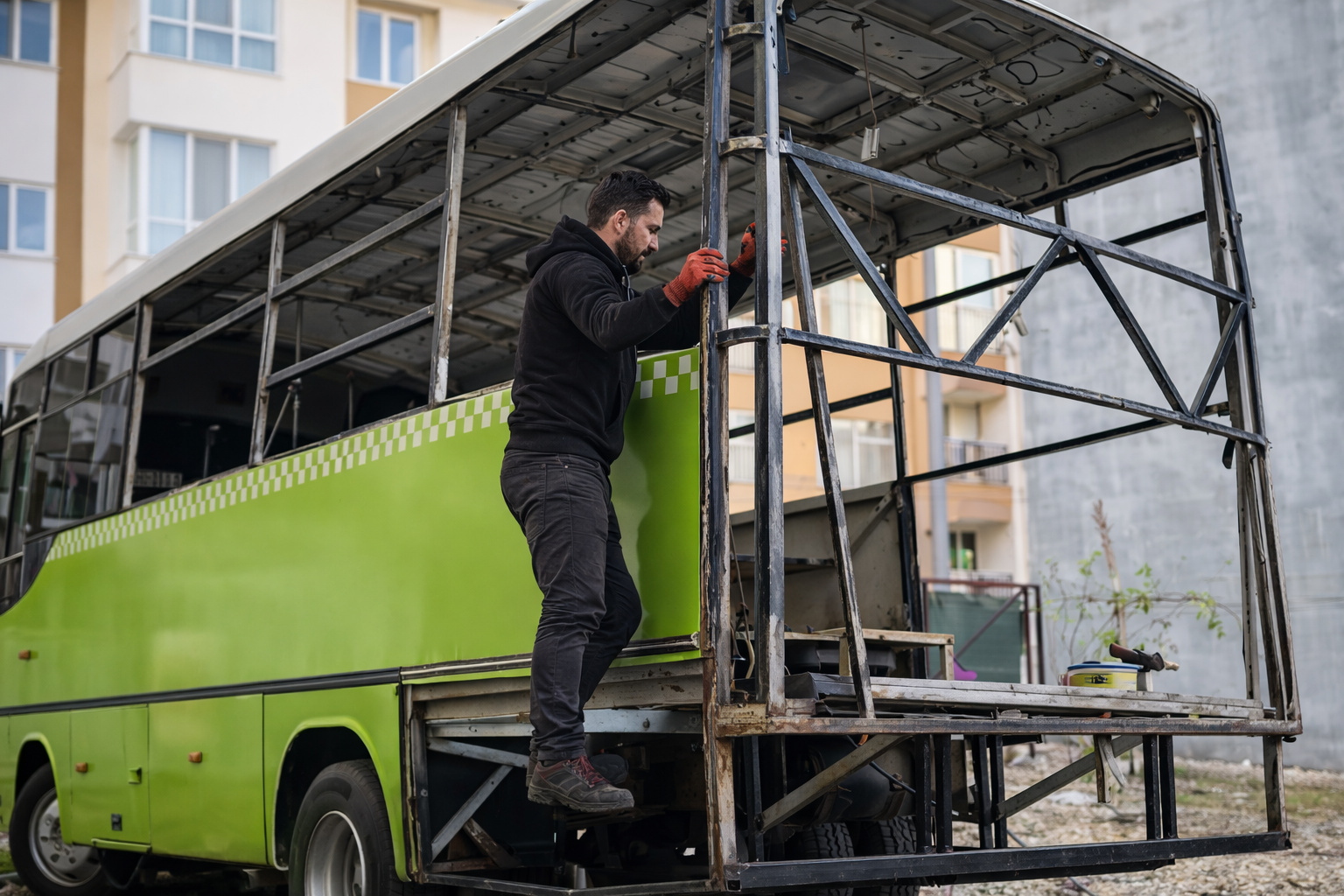
The builder man was able to show how a common bus turned into a house on wheels with furniture and solar energy, making use of every part of its structure
A man decided to transform an old bus into a house on wheels, creating a functional environment with wooden furniture, an elevated area, and a solar energy system. The result draws attention for its internal organization and the complete adaptation of the vehicle’s original structure.
The change begins with the removal of old elements and progresses to the assembly of a livable space with a bed, cabinets, and access to the ceiling. Each step alters the use of the interior and expands the possibilities of staying in the location.
The theme gained prominence after the publication by Quantum Tech HD, a digital channel focused on technology and practical projects, which presented the complete transformation process. The case practically shows how a bus can be reorganized to serve new functions.
-
Since the Aztecs, farmers in Mexico have built artificial islands surrounded by canals and maintain a highly productive system that still challenges the logic of conventional agriculture today.

-
Scientists are looking for volunteers to live for free for a month in a refuge in the Italian Alps at an altitude of 2,300 meters, with accommodation, food, and a payment of 400 euros to participate in a health study.

-
A 19-year-old is ripped from a mobile home by an F2 tornado, thrown 398 meters, survives with minor injuries, and enters the Guinness World Records in one of the most extreme cases ever recorded in meteorology.

-
An impact crater has turned into agricultural land in Finland, and its almost perfect outline creates a circular design so strange that it resembles a landscape from another planet viewed from space.


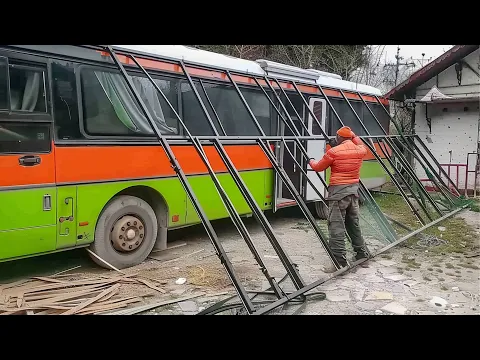

Removal of the seats opens space for a new internal structure of the bus
The interior of the bus initially features rows of seats fixed to the floor. The removal of these seats completely frees up the space and reveals the metal base, with beams and visible fastening points along the floor.
The work involves loosening screws and cutting metal supports. Each seat is removed individually, leaving the interior free for new installations. The floor becomes continuous and allows for better visibility of the total area.
As a result, the environment ceases to be segmented and transforms into an open space. This change facilitates the organization of the next steps, such as the installation of wooden furniture and internal panels.
Paneling prepares the bus to become a house on wheels
After cleaning the space, panels begin to be installed on the sides and ceiling. These panels cover the metal structure and create more uniform surfaces inside the vehicle.
The pieces are cut and adjusted to fit around the windows and the curves of the ceiling. Screws secure the panels directly to the structure, forming more organized internal walls.
This process completely changes the visual aspect of the bus. The interior now has an appearance closer to a house on wheels, facilitating the installation of furniture and other elements.
An important detail is the manual adjustment of the panels, which ensures a precise fit even in irregular areas of the body.
Assembly of wooden furniture creates areas for rest and storage
With the paneling completed, wooden furniture comes into play. Structures such as beds, benches, and cabinets are assembled along the sides, making use of every available space.
The pieces are secured with screws and fittings, creating firm bases. Drawers and compartments emerge integrated, allowing for the storage of objects and organization of the internal environment.
The result is the division of space into functional areas. Even within a reduced volume, the bus now has defined places for rest and storage.

The use of wood facilitates cuts and adjustments, allowing each piece of furniture to be adapted to the shape of the vehicle’s structure.
Internal staircase connects the interior to the terrace on the roof of the bus
A wooden staircase is installed to connect the internal floor to the top of the bus. The steps are secured to a vertical structure attached to the floor and the side.
The alignment of the steps ensures stable ascent. The staircase occupies a small space but creates a new way of circulation within the house on wheels.
This solution expands the use of the vehicle by adding a second level. Access to the roof transforms an area that was previously unused into functional space.
The most visible detail is the firm fit of the steps, showing care for safety and stability.
Opening in the roof and installation of structure create elevated external area
A part of the roof has a cutout to allow the passage of the staircase. The opening receives finishing on the edges and connects the interior to the top of the bus.
On the roof, panels and supports are installed to form a flat base. This area is now used as external space, expanding the use of the vehicle.
The change transforms the bus into a structure with two levels. The upper area allows for staying and circulation, creating an extension of the house.
Quantum Tech HD, a digital channel focused on technology and practical projects, also highlighted this stage as one of the most remarkable in the transformation.
Solar energy system increases the autonomy of the house on wheels
On the roof of the bus, panels connected to the solar energy system appear. These panels are positioned over the upper structure, taking advantage of direct exposure.
The components are secured to the surface and connect via visible wires. The system occupies part of the roof and integrates with the already adapted space.
The presence of solar energy increases the autonomy of the house on wheels. The vehicle now has its own source of energy, reducing external dependence.
This detail reinforces the functional nature of the project, which combines mobility with a livable structure.
Final organization shows integration between furniture, structure, and solar energy
With all stages completed, the interior presents a clear distribution. The wooden furniture, the paneling, and the staircase form an integrated set.
The surfaces are aligned, and the spaces are well defined. The internal environment connects directly with the terrace and with the solar energy system on the roof.
The result is a complete house on wheels, where each element has a specific function and occupies a strategic position within the vehicle.

The transformation shows how planning and practical execution can efficiently and functionally repurpose a bus.
The process highlights that the adaptation of the internal structure and the use of wood are decisive factors in creating a livable space. The inclusion of solar energy further expands the possibilities of use.
This type of project reveals pathways for those seeking compact and mobile solutions, intelligently utilizing existing structures.
Did you like this transformation? Leave your comment and share with those who are also interested in creative projects and practical solutions.






Seja o primeiro a reagir!