Portuguese
  Spanish


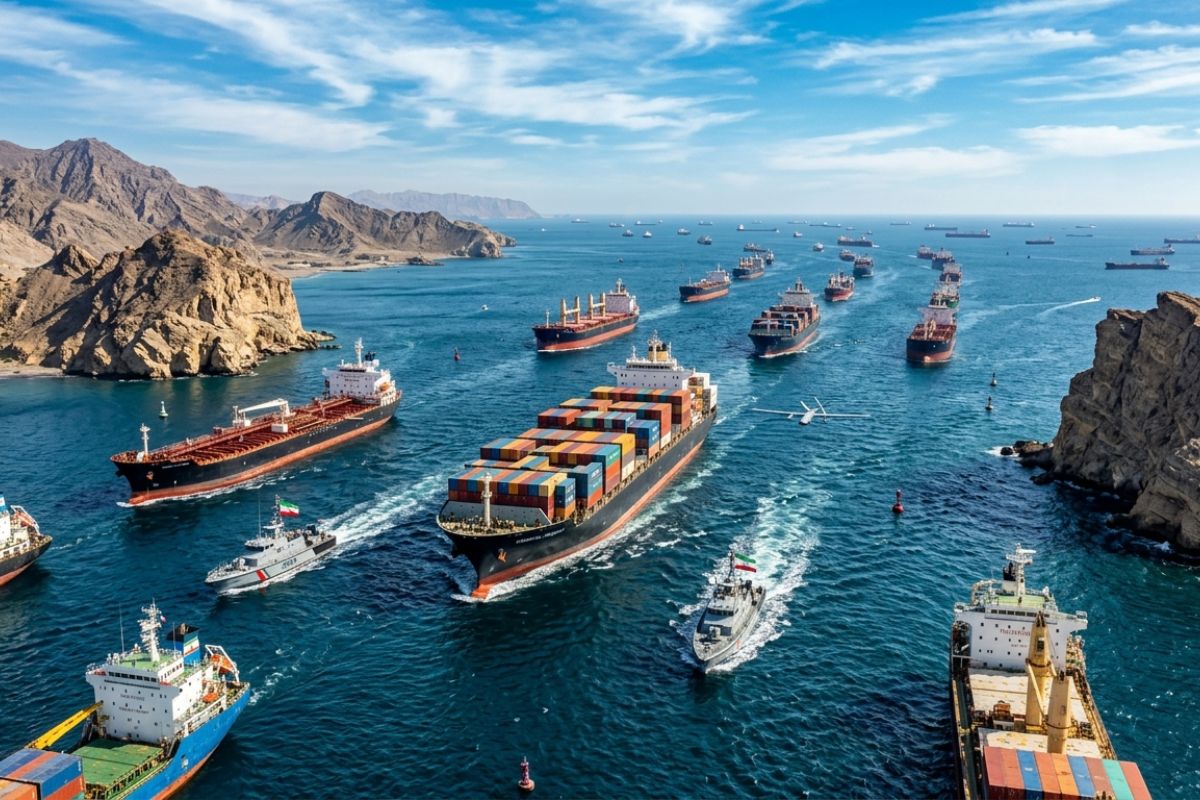

The passage of ships carrying essential goods through the Strait of Hormuz requires coordination, while the UN Security Council stalls debate on the use of force
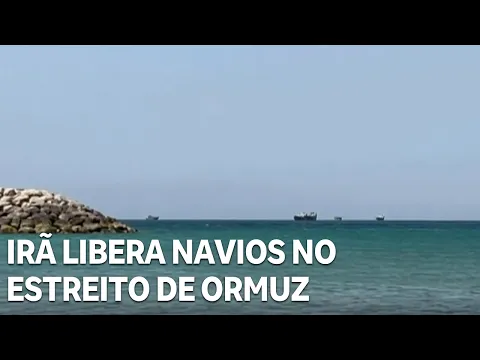
Iran has authorized the passage of ships loaded with essential goods through the Strait of Hormuz, according to the state agency Tazim. The measure, described in a letter, stipulates that vessels, including those already in the Gulf of Oman, must coordinate their crossing with Iranian authorities and follow specific protocols.
The release comes at a time of severe restrictions on maritime traffic. Iran has maintained strict control over the Strait of Hormuz since the onset of the conflict with the United States and Israel at the end of February and has limited the movement of ships in the area.
What Iran has authorized and what rules come into effect
According to Tazim, the authorization for ships carrying essential goods comes with formal requirements. The cited letter establishes that vessels need to coordinate their crossing with Iranian authorities and comply with specific protocols to traverse the region.
-
Chinese Nuclear Submarine Launches Simulated Warhead Missile in Pacific, Heightening Regional Tensions Amid Naval Drills with Russia Near Qingdao; New Zealand and Papua New Guinea Warn of Persistent Chinese Military Presence

-
Ayatollah Ali Khamenei’s Funeral Draws 15 to 20 Million in Tehran, Calls for Revenge Against Trump After Joint Israel-U.S. Attack

-
U.S. Establishes Permanent Embassy in Jerusalem, Reigniting International Debate Over Israel’s Capital
-
The world has nearly 12,000 nuclear warheads, with the majority held by the United States and Russia; see the figures for China, France, and the United Kingdom.


In practice, the decision signals a partial opening in a scenario described as restrictive to traffic, with tighter control over the movement of ships in Hormuz.
Why the Strait of Hormuz has become the most sensitive point of the crisis
The Strait of Hormuz is identified as a strategic choke point as it is responsible for the flow of 20% of the world’s oil. Therefore, any limitation or uncertainty regarding the passage of ships raises the alert level and amplifies the impact beyond the region.
It is in this context that the authorization for essential goods occurs, while the dispute continues over how to deal with the blockade and the control exercised by Iran in the area.
UN delays vote on reopening the route and debate stalls in the Council

The UN Security Council has postponed the vote on a resolution that would authorize defensive military operations to reopen the strait. The body, with 15 members, had committed to discussing the proposal presented by Barim, the country presiding over the council.
The postponement comes amid signs of opposition within the Council itself, which weakens the chance of consensus on an immediate response involving the maritime route and the movement of ships.
China, France, and Russia reject the use of force
China, which has veto power, has already positioned itself against any authorization for the use of force. France and Russia, also permanent members capable of blocking votes, have indicated opposition to the measure.
Thus, even with pressure on the oil route and on the movement of ships, the scenario in the Council points to resistance to a solution based on military action authorized by the UN.
What changes for the ships in practice
The authorization for ships carrying essential goods indicates that Iran may allow specific flows, as long as they are within rules and coordinated with its authorities. At the same time, the environment remains marked by restrictions, diplomatic disputes, and a deadlock in the UN over how to fully reopen the route.
For those following the crisis, the clearest signal is this: the passage of ships does not depend only on the sea; it depends on politics, protocol, and power.
Do you think that the release of ships carrying essential goods reduces tension in Hormuz, or is it just a temporary measure within a larger crisis?