





 Portuguese
  English
  Spanish
  4 min of reading
  0 comments


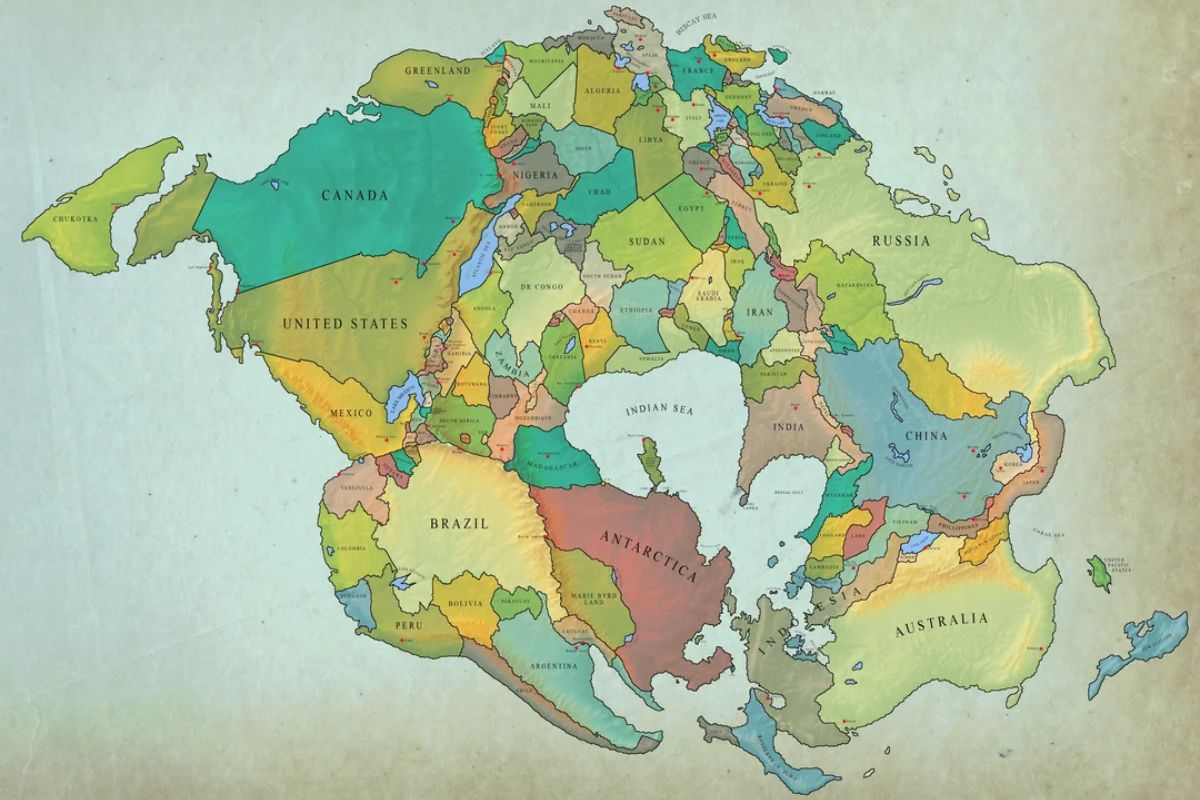
The Earth tends to gather continents into a new supercontinent, and simulations point to extreme heat, higher CO₂, and few areas with milder climates, like Spain.
The Earth may look like another world in 250 million years, according to a map that projects the return of the continents to a single block called Pangea Ultima. The idea is simple and powerful: what was once separated will come together again, because tectonic plates continue to move.
The future scenario of the Earth, however, comes with a heavy warning. A study cited in the database estimates that 92% of the Earth could become uninhabitable for mammals, with temperatures above 40°C in much of the supercontinent and CO₂ levels that could make life extremely difficult.
The map that attempts to predict the Earth of the future
To draw how the Earth may look, American geographer Christopher Scotese comes into play, creator of the PALEOMAP Project. The proposal is to show how the continents have moved over the last billion years and also project how they may rearrange in the future.
-
After two years of internal discussions, Paraguay has finally regulated the law that opens the country to foreign technology and service companies with tax incentives that promise to create thousands of jobs and change the economy.

-
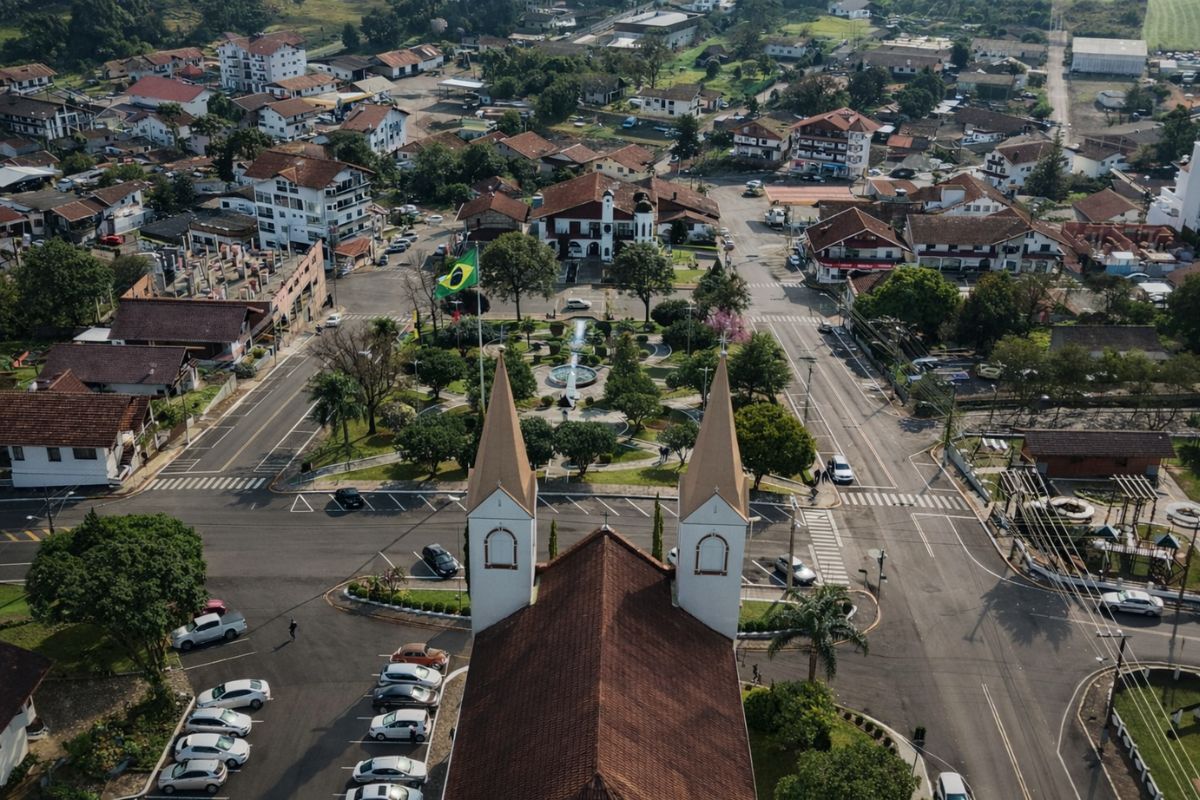
The Brazilian city founded by a former Austrian minister that preserves Tyrolean dialect, alpine architecture, and a centennial festival in Santa Catarina; with fewer than 10,000 inhabitants, Treze Tílias has become a rare symbol of European heritage.
-
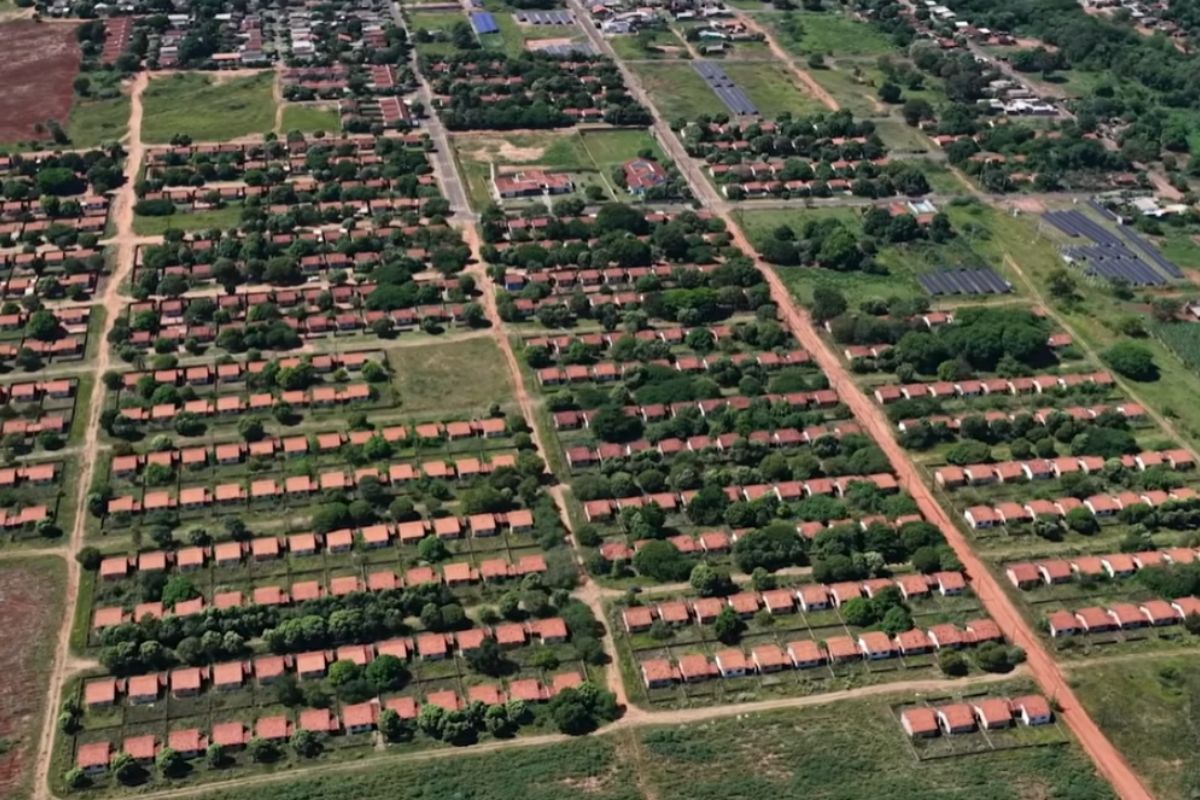
It looks like a movie scene: a traveler enters Paraná City, in the northwest of Paraná, and finds 900 new houses all abandoned; the village of the Santa Terezinha plant became empty after machines replaced manual sugarcane cutters.
-
China has just inaugurated the world’s largest outdoor escalator, measuring 914 meters in length, with 21 connected escalators and a journey time of 20 minutes, transporting 9,000 people per day up the mountain in Wushan County.

In this model, the destination is Pangea Ultima, a supercontinent that reunites the landmasses again. The map does not promise absolute certainty, but presents a hypothesis consistent with the ongoing behavior of tectonic plates.
How Pangea Ultima forms
The theory describes a sequence of gradual rearrangements on the Earth. In about 50 million years, North America would rotate to the point where Alaska would be at a subtropical latitude, while Eurasia would also rotate, bringing Great Britain closer to the North Pole.
Africa would move towards Europe and Arabia, which could cause the Red Sea and the Mediterranean to disappear. Around 100 million years, the Atlantic would begin to shrink, and by about 150 million years it would disappear, bringing North America, Eurasia, and Africa even closer together. The peak would be the formation of a new supercontinent, with the Indian Ocean as the central sea.
Unlikely neighbors and the “luck” of Spain in the reorganized Earth

In the design of this future Earth, some countries gain unexpected neighbors. Spain would remain close to France and Portugal but would also be near Italy, Morocco, Tunisia, and Algeria. England would move closer to France, and Korea would appear in a curious position between Japan and China.
The base text reinforces an irony: it won’t make a difference for those living today, because humanity may not even exist by then. Still, the map draws attention by suggesting that Spain appears among the regions that could escape the worst climatic scenario.
Why 92% of the Earth could become uninhabitable for mammals
The harshest warning does not come from the map itself, but from climate simulations associated with this future reunified Earth. The prediction is that much of Pangea Ultima will exceed 40°C, creating a hostile environment for mammals.
The mechanism behind this is a dangerous combination. Collisions between tectonic plates would increase volcanic activity, raising CO₂ emissions and further warming the planet. Additionally, the database points out that CO₂ levels could double and that the Sun would be 2.5% brighter, contributing to a drier and hotter Earth.
Where there could still be “islands” of more bearable climate on Earth
Even with a harsh outlook, the scenario of the Earth would not be equally bad everywhere. Areas closer to the North Pole would tend to have milder climates, facilitating adaptation and reducing some thermal stress.
In this group, Spain, Portugal, Morocco, and England appear as possible relative exceptions. The text also suggests that, in an extreme future, life could seek adaptation strategies, including nocturnal habits, as a cultural parallel with desert environments.
Other hypotheses for the future of the Earth
Pangea Ultima is not the only hypothesis for the Earth in hundreds of millions of years. The database cites other supercontinent models, such as Novopangea, Aurica, and Amasia, varying mainly in which oceans close first.
Despite the differences, the logic repeats: the Earth goes through cycles of union and fragmentation, and after a new supercontinent, the Atlantic could open again, restarting the process of separation of continental masses.
What this projection says about today’s Earth
The main message is not prediction, but perspective. The Earth changes on gigantic timescales, and events such as continental rearrangement, CO₂ variation, and changes in solar luminosity reinforce that the planet is always in transformation.
At the same time, the database reminds an essential point: life finds a way, even after mass extinctions, which have occurred several times in the history of the Earth.
If you had to choose a place to “bet” on the Earth in 250 million years, would you go for the northern regions mentioned, or do you think no area would really be safe?







Seja o primeiro a reagir!