Portuguese
  Spanish


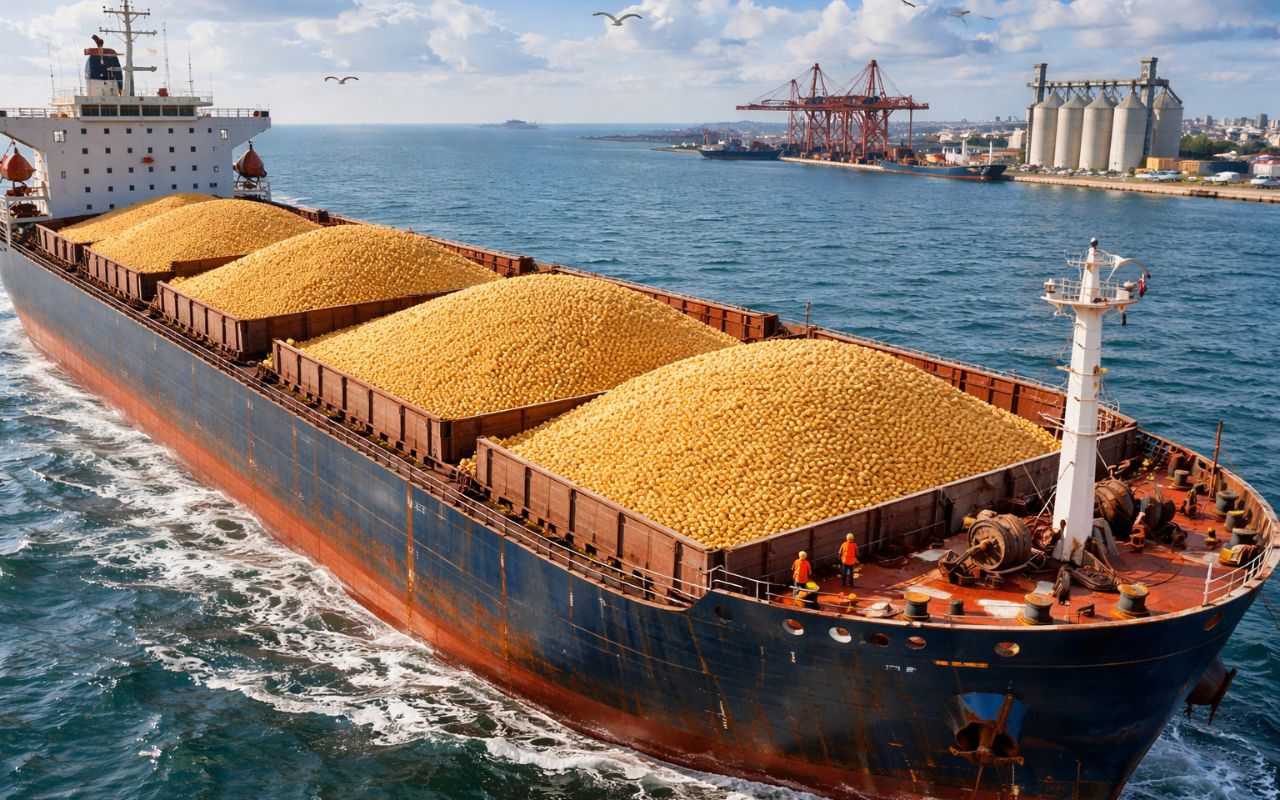

Brazil hits record in March with 17.1 million tons of grains exported, led by soybean, and maintains global leadership in agriculture.
The Brazilian agribusiness started the year 2026 showing international strength, with historic exports of 17.1 million tons of grains in March. The result reinforces the country’s position as a protagonist in the global food trade and highlights the logistical and productive efficiency of the sector.
According to the National Association of Cereal Exporters (Anec), the volume includes soybeans, corn, wheat, and derivatives.
Even in the face of logistical challenges and market fluctuations, Brazil shows the ability to maintain records and consolidate itself as a leader in various categories of agribusiness.
-
Small Farm in Brazil’s Minas Gerais Produces 403 Liters of Milk Daily, Sets Benchmark for Rural Producers

-
Man Revives 1930s Abandoned Trout Farm, Learns from Scratch, and Earns $1.1 Million Annually Selling Fish to Michelin-Starred Restaurants

-
Bangladeshi Farmers Use Bamboo Levers to Pump Thousands of Liters of Water Daily Without Engines or Electricity
-
Brazilian Forests Could Expand by an Area Twice the Size of Switzerland by 2035, but Agricultural Sector Holds the Key, Study Finds





Meats and milk register price increase even with stable volumes
Even without a significant increase in the volume of shipments, the Brazilian protein sector recorded a substantial appreciation in March.
The daily average of exports reached 11,100 tons of beef, 22,000 tons of chicken, and 5,952 tons of pork.
Prices, however, rose consistently: 18% for beef, 2% for chicken, and 10% for pork, reflecting strong demand in international markets.
Milk also showed a positive reaction, reaching R$ 2.1464 per liter in February, an increase of 5.4% compared to January.
This increase is a result of reduced supply, caused by climatic seasonality and lower collection from producers, which pressured prices even with volumes close to those recorded last year.
Soybean leads export records
After the highlight of proteins and milk, soybean takes the spotlight again. In March, 15.9 million tons were exported, surpassing the previous record of 15.7 million.
Soybean meal also showed historic performance, with 2.24 million tons shipped, consolidating Brazil as a global reference.
In the accumulated first quarter of 2026, soybean exports already total 27.2 million tons, exceeding the same period last year.
The industry’s projection indicates that the country should reach 111.5 million tons of soybeans and 24.6 million tons of meal by the end of the year.
Corn maintains leadership even outside the harvest peak
Corn also contributed to the historic record. There were 888,000 tons exported in March, surpassing volumes from previous years.
Brazil remains the world’s largest corn exporter, ahead of the United States, and maintains its competitiveness even in periods of lower production.
The growth in sales is driven by the corn ethanol sector. The DDGS byproduct, rich in protein, had 292,000 tons exported in the first quarter, an increase of 15% compared to 2025.
Wheat and sorghum strengthen agricultural diversification
Other grains also had relevant performance. Wheat exports totaled 398,000 tons, surpassing the same period in 2025, while sorghum, with 35,000 tons shipped, shows growth potential.
The diversification of production increases Brazil’s resilience against fluctuations in the international market.
The set of data shows that Brazil maintains its prominent position in international food trade.
With soybeans on the rise, competitive corn, appreciated proteins, and new grains gaining ground, the country is heading for another year of records, supported by scale, productive efficiency, and strong global demand.
Source: Compre Rural