





 Portuguese
  English
  Spanish
  4 min of reading
  0 comments


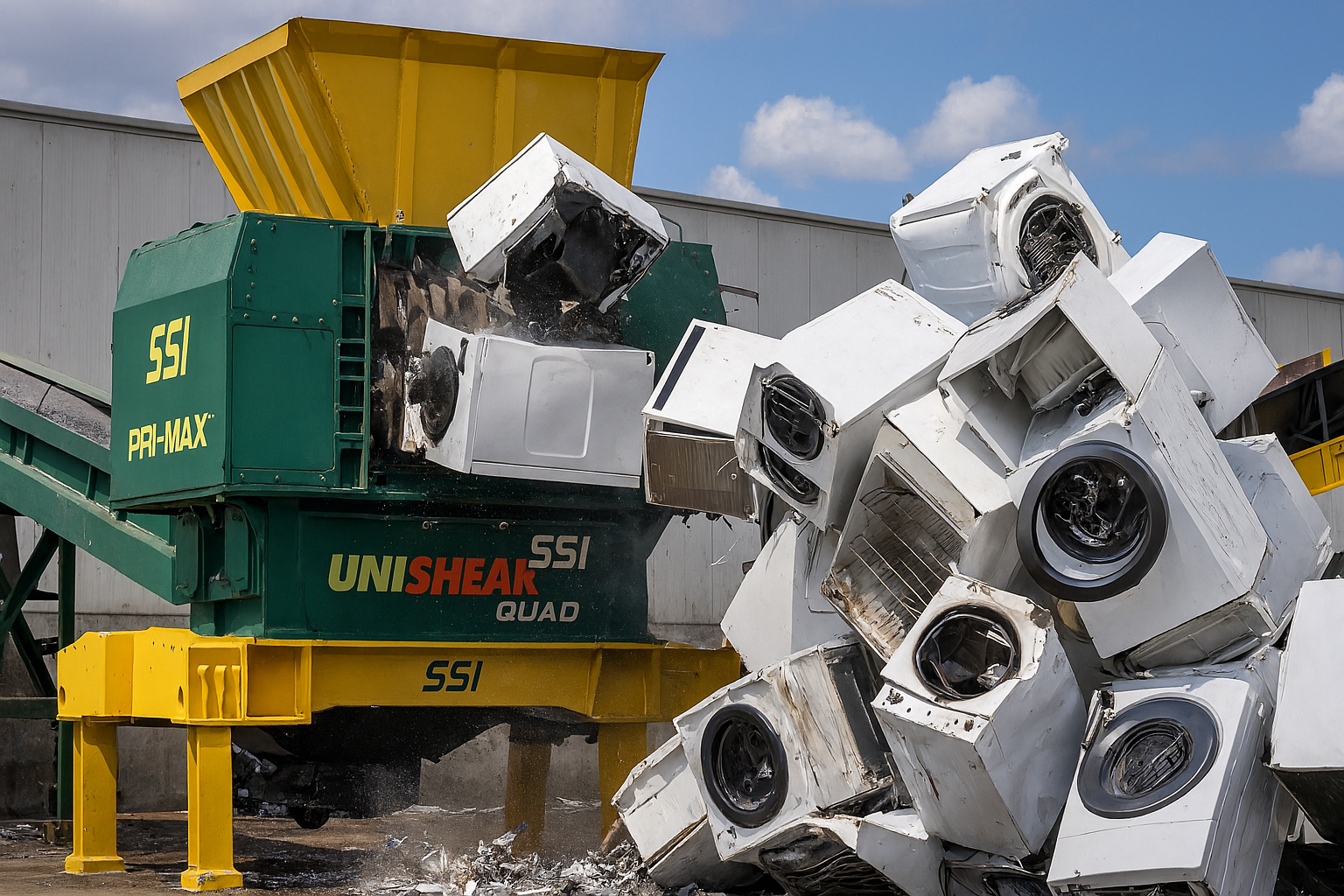
Machines Crush Refrigerators and Washers to Extract Copper, Aluminum, and Steel. Understand the Billion-Dollar Industry of Recycling Appliances That Transforms Scrap into Wealth.
Few people imagine the fate of an old refrigerator, that washing machine that suddenly stops working, or a rusty freezer abandoned in a business’s service area. When these appliances disappear from the consumer’s sight, they do not vanish. They are swallowed by one of the most discreet yet strategic industrial chains of the new economy: the large-scale processing and recycling of appliances, capable of transforming heavy scrap into precious metals that feed steel mills, wire manufacturers, automobile makers, and even battery plants.
Globally, it is estimated that the volume of electronic and household waste exceeds 50 million tons per year and is growing due to consumption, urbanization, and the rapid replacement of equipment. Behind this movement emerges a billion-dollar industrial ecosystem that operates with machines that literally destroy, crush, and separate each component with precision. What was a scrapped appliance, seen as household waste, returns as a strategic input for critical sectors of the global economy.

How the Machines That Crush Refrigerators and Washers Work
The industrial process is a choreography of heavy engineering. Specialized units receive trucks full of refrigerators, stoves, washing machines, and decommissioned freezers. The equipment goes through initial dismantling lines, where motors, compressors, and larger components are removed.
-
With 74% of companies facing difficulties in hiring, technicians and engineers in renewable energy are becoming scarce in Brazil and are essential to support the expansion of solar, wind, and green hydrogen projects.

-
Historic bankruptcy of Centauro shocks the market, and the century-old company puts more than 500,000 products, machines, and complete infrastructure up for online auction.

-
New shoe factory in Ceará is expected to create 400 jobs and strengthen the local economy.
-
No one imagined it, but a mixture of sawdust with a mineral that fights fires surprises scientists with a result that changes the course of fire-resistant construction.
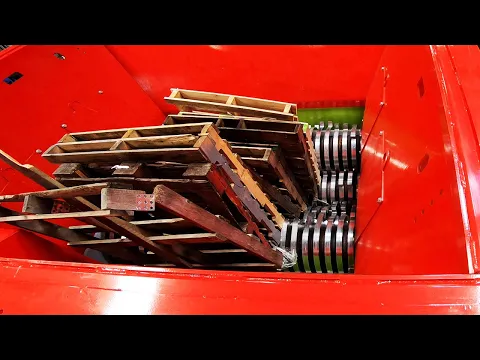
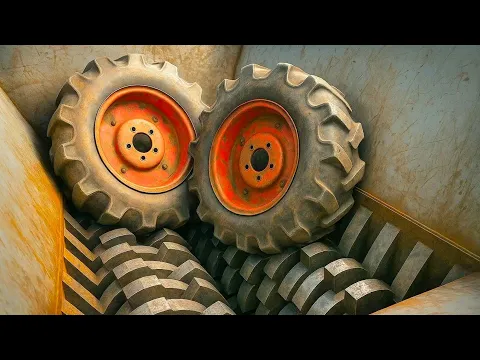
Next comes the impressive technology: shredders with tempered steel blades capable of shredding thick sheets, copper coils, motors, and reinforced structures. In a matter of seconds, an entire refrigerator is transformed into metallic fragments and technological scraps ready for sorting stages.
Magnetic separation isolates the steel, which goes to steel mills. Density and eddy current systems isolate the aluminum, essential for the automotive and packaging industries. Wires and motors go through specific shredders to release the copper, one of the most valuable metals in this chain, vital for electrical cables, industrial motors, and power grids. Nothing is random. Each kilogram of material has a specific destination, and the technical efficiency of recovery is what defines the profit of the operation.
The Economic Power of Recycling Household Appliances
On the international stage, giant players operate plants capable of processing thousands of tons per month. Countries like Germany, Japan, and South Korea have developed robust systems to recover as much steel, aluminum, and copper as possible.
Recycled steel is transformed into bars and sheets for construction and heavy industry; aluminum returns for automotive manufacturing and high-value packaging; and copper remains as red gold, highly sought after by manufacturers of motors, cables, and electrical systems.
In Brazil, although the sector still has significant informality, large groups have begun to professionalize the complete cycle of collection, shredding, and recovery. The growth of domestic consumption and the need to reduce imports of strategic raw materials pave the way for an industry with enormous potential.
Environmental pressure also accelerates investments, as recycling reduces the need for mining, lowers emissions, and prevents illegal dumping, a historical problem in Brazilian cities.
The Environmental Role and the Race for Strategic Metals
Recycling household appliances is more than just a profitable business; it is an environmental tool. Old equipment contains harmful refrigerant gases and materials that, if improperly discarded, can contaminate soil and water.
Moreover, the reuse of metals reduces the demand for mineral extraction and dramatically decreases the energy expenditure required to produce primary steel and aluminum.
In a world discussing energy transition, vehicle electrification, and expansion of power grids, copper becomes increasingly critical.
The “race for copper” is a real expression in the global market, and recycling motors and wires from household appliances helps meet this growing demand without solely relying on new mines, which have high environmental and financial costs.
The Future of Industrial Recycling in Brazil
Brazil is moving towards better structuring this chain. Large urban centers already have licensed industrial operators capable of processing complete batches of household appliances, while manufacturers and retailers are beginning to implement reverse logistics programs.
The scenario points to even larger plants, with robotic lines, artificial intelligence for sorting, and dedicated systems for critical materials.
Whether in discreet industrial parks on the outskirts of cities or in integrated steel mills that already incorporate ferrous and non-ferrous scrap in their blast furnaces, the country is faced with a mechanism that blends sustainability, industrial necessity, and economic opportunity.
When an old refrigerator leaves a house, it does not disappear: it enters an industrial line that can generate jobs, reduce environmental impacts, and keep productive chains functioning.
The question that arises is simple and inevitable: will Brazil be able to accelerate this transformation and occupy the space that the circular economy demands, or will it continue exporting scrap and importing added value?








Seja o primeiro a reagir!