





 English
  Francês
  Alemão
  Italiano
  Japonês
  Norueguês
  Portuguese
  Spanish
  4 min of reading


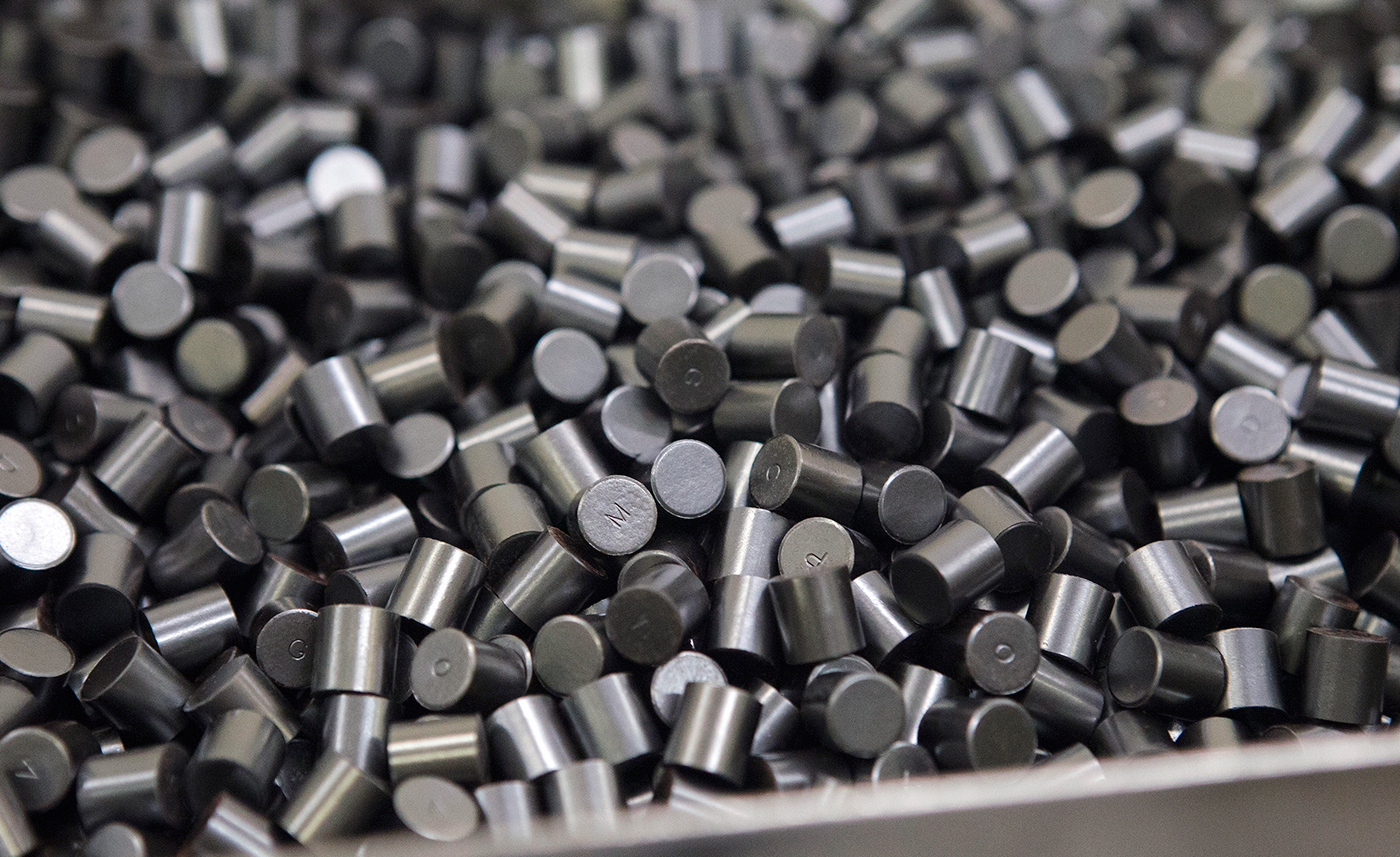
INB and the Brazilian Navy, After Years of Partnership, Boost Production of Nuclear Fuel Pellets with Energy Equivalent to Three Barrels of Oil
A Memorandum of Understanding was signed between the General Directorate of Nuclear and Technological Development of the Navy (DGDNTM) and Indústrias Nucleares do Brasil (INB) in November 2020 to create nuclear production and technological processes through the complementary resources and expertise of each institution. The partnership between INB and the Brazilian Navy enabled the creation of nuclear fuel pellets that are equivalent to three barrels of oil.
Read Also
Results of the Partnership Between INB and the Brazilian Navy
Last year, the action made it possible to celebrate a contract between the Technological Center of the Brazilian Navy and INB for the production of nuclear fuel pellets (uranium dioxide) UO2.
Between August and December of last year, pellets were manufactured in which each unit had energy equivalent to approximately three barrels of oil. The product will be part of the nuclear fuel for the Nuclear Power Generation Laboratory (LABGENE).
-
Petrobras announces new oil discovery in the pre-salt of the Campos Basin and reinforces Brazil’s prominence with high-quality reserves that can increase production and energy revenues.

-
Alert in the fuel market: Analysts and a former director of ANP warn that oil prices may worsen in the coming months due to global instability.
-
Ocyan brings executives and digital solutions to Macaé Energy 2026 and highlights offshore expansion with Nexio and a new base in Macaé.

-
Petrobras advances 4.6% with rising oil prices and the dollar, reigniting the debate on macro risks, pricing policy, and fiscal impact in Brazil.
After production, the pellets from the Brazilian Navy and INB will undergo several tests for the validation of the fuel element project related to nuclear safety aspects, aiming to meet the requirements of the licensing process.
The manufacture of nuclear fuel pellets at INB for LABGENE exemplifies the advancement of the uranium production chain, stemming from the indigenous technology created and installed in Brazil, enabling the evolution of the Nuclear Program of the Brazilian Navy.
Contract for the Tenth Cascade of Ultracentrifuges
In December of last year, the two institutions signed a contract that provides for the supply of ten cascades of ultracentrifuges for uranium isotopic enrichment. According to Guilherme Dionísio Alves, director of CTMSP, a contract that was essential not only for the Brazilian Navy but for the entire country was signed 20 years ago.
Through this contract, it was possible to develop the technology for the manufacturing and enrichment of ultracentrifuges. This contract is expected to conclude this year, 2022, with the delivery of the tenth cascade. Carlos Freire Moreira, president of INB, highlighted the possibility of new projects created in partnership.
According to the president, there are challenges for this year, thus he sees the possibility of expanding partnerships between the entities, including that of fuel pellets.
INB Inaugurates the Ninth Cascade of Ultracentrifuges
In November 2021, INB inaugurated the ninth cascade of ultracentrifuges at the Uranium Isotopic Enrichment Plant in Rio de Janeiro, at FCN. With the start of the cascade operation, it is now possible to produce 65% of the annual demand of Angra 1, which equates to an increase of about 5% compared to the current capacity.
At the inauguration event of the new plant in RJ, the Minister of Mines and Energy, Bento Albuquerque, was present and highlighted the evolution of the Brazilian Nuclear Program to expand Brazil’s energy matrix, being considered one of the most sustainable sources in the world.
Brazilian Navy Develops the Country’s First Nuclear Technology Submarine
In São Paulo, the Brazilian Navy is preparing to test the first submarine that will use a motor powered by nuclear technology. The technology was entirely created on national soil and is part of the project to renew Brazil’s submarine fleet. The nuclear technology motor is being assembled at the Navy’s Technological Center in Iperó, 125 kilometers from the capital of São Paulo.
The motor uses a technology mastered by only six countries in the world: the United States, the United Kingdom, Russia, France, India, and China. In Brazil, it has been received in an unprecedented manner. Everything is being created with great secrecy.
The Director of the Nuclear Industrial Center of Aramar, Commander Luís Cláudio Farina, emphasized that the secrecy of the project is to ensure greater security for the nuclear technology submarine and the generated knowledge. According to the director, the mission is that this knowledge remains within the Brazilian Navy and is not diverted to other projects that are not for peaceful purposes. Everything is being created at full scale so that it is possible to simulate the reactor operation and make necessary modifications before the engineers install it definitively.
At the Brazilian Navy’s Technological Center, the equipment also serves to monitor the radioactivity of nuclear technology, which is harmful to the human body. Thus, safety tests are essential.






Seja o primeiro a reagir!