





 Portuguese
  English
  Spanish
 4 min of reading
  1 comment


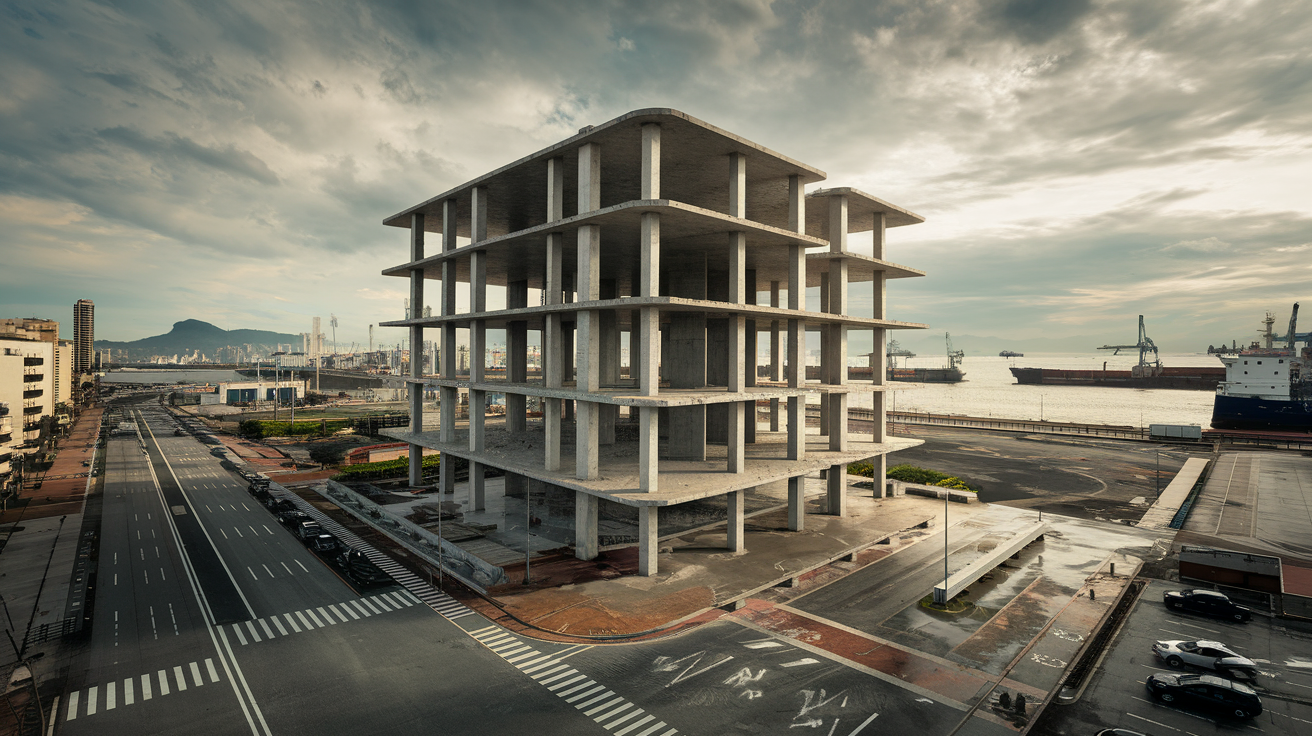

A Monumental Structure of R$ 87 Million Remains Unfinished in the Port Zone of Rio de Janeiro. The Central Bank Is in Advanced Negotiations with the Navy to
In the heart of the port zone of Rio de Janeiro, a monumental structure remains unfinished, symbolizing intertwined challenges and opportunities over the years.
Started in 2010, the construction that promised to be the new headquarters of the Central Bank (BC) has become a “skeleton” of concrete, awaiting a definition about its fate.
Currently, according to the Diário do Rio, the Central Bank is in talks with the Brazilian Navy to transfer this construction, which has been halted since 2019, after an investment of R$ 87.5 million.
-
“No one will make us change the Pix,” says Lula after the US report.

-
He started running at 66 years old, broke records at 82, and is now a subject of study for having a metabolic age comparable to that of a 20-year-old, in a case that is intriguing scientists and inspiring the world.

-
Oldest tree on the planet reappears after 130 years of searches: Wattieza, 385 million years old, was 10 meters tall and had no leaves or seeds; Gilboa fossils in New York solved the mystery in 2007.

-
A 48-square-meter house assembled in hours with 4,000 bricks made of recycled plastic that does not absorb moisture, has natural thermal insulation, and costs less than 90,000 reais in a complete kit.


The building, designed to house the Department of Currency Circulation (Mecir), responsible for the distribution of banknotes and coins produced by the Mint, faces obstacles ranging from archaeological discoveries at the site to the judicial recovery of the contractor responsible for the construction.
History of the Construction
Since the 1970s, the BC planned to transfer the Mecir from Avenida Rio Branco, in downtown Rio, due to limitations imposed by the preservation of the building by the Institute of National Historical and Artistic Heritage (Iphan).
These restrictions hindered the construction of strongrooms for the storage of valuables and improvements in the infrastructure aimed at the destruction of banknotes.
Additionally, the intense flow of money transportation in the central region caused disruptions in local traffic.
The choice of the port zone, under revitalization, was based on local infrastructure, with wider avenues and better logistics for the transport of valuables.
However, the construction faced various obstacles, including the need for changes in urban legislation to allow the construction of a seven-story building in an area where, originally, only three floors were permitted.
In 2012, after the approval of legal changes, the contract with the contractor Engefort was expanded to include the planned seven floors.
However, the available resources were sufficient only to raise the reinforced concrete structure and part of the finishing, leading to the project’s halt in 2019 due to lack of funds.
Navy Plans for the Building
If the transfer is finalized, the Navy intends to use the building to concentrate various units currently spread throughout the city. Among the planned installations are:
- Directorate of Ports and Coasts (DPC);
- Housing Construction Fund for Navy Personnel (CCCPM);
- Social Communication Center of the Navy in Rio de Janeiro (CCSM-Rio);
- Navy Veterans and Pensioners Service (SVPM);
- Navy Postgraduate Institute (INPG);
- Special Prosecutor’s Office of the Navy (PEM);
- Navy Library;
- Veterans Department of the Marine Corps Personnel Command (CPesFN-70).
The centralization of these units aims to reduce operational costs and optimize the workforce.
The Navy emphasizes that the concentration will provide savings in budgetary resources due to reduced maintenance and operating costs, in addition to better use of the workforce and support services.
Additionally, the presence of the units on site could boost the economy of the port area, with the daily movement of approximately 1,090 military personnel and about 1,000 visitors.
Challenges and Audits
The construction has faced numerous challenges over the years. In 2012, an audit by the Court of Auditors of the Union (TCU) identified a possible overpricing of R$ 23 million in the bidding notice.
The agency even fined involved public servants, but the punishment was later annulled, as the Court concluded that the penalized officials were not responsible for supervising the construction.
The Federal Public Ministry (MPF) also investigated the case but archived the process after the BC justified that the halt occurred due to lack of funds.

Next Steps
The transfer of the property is still under analysis by the Superintendency of the Union’s Heritage.
In the meantime, the Navy is preparing a bidding process for the preparation of the basic project for completing the work, aiming to install military units aimed at the external public on site.
The Central Bank stated that the lack of availability in the Union’s budget for the continuity of services in 2020 led to the suspension of the contract in December 2019.
The agency emphasized that there was no budget forecast for 2021 and that, in 2022, the work was removed from planning, initiating negotiations for its destination.
The realization of this transfer represents not only a solution for an unfinished work but also an opportunity for revitalization and development for the port zone of Rio de Janeiro, aligning institutional interests and benefits for society.







E a tal da necessidade de se ter local adequado para o MECIR, não existe mais? E se ainda existe, nova obra? Será que agora termina?