





 Portuguese
  English
  Spanish
 2 min of reading


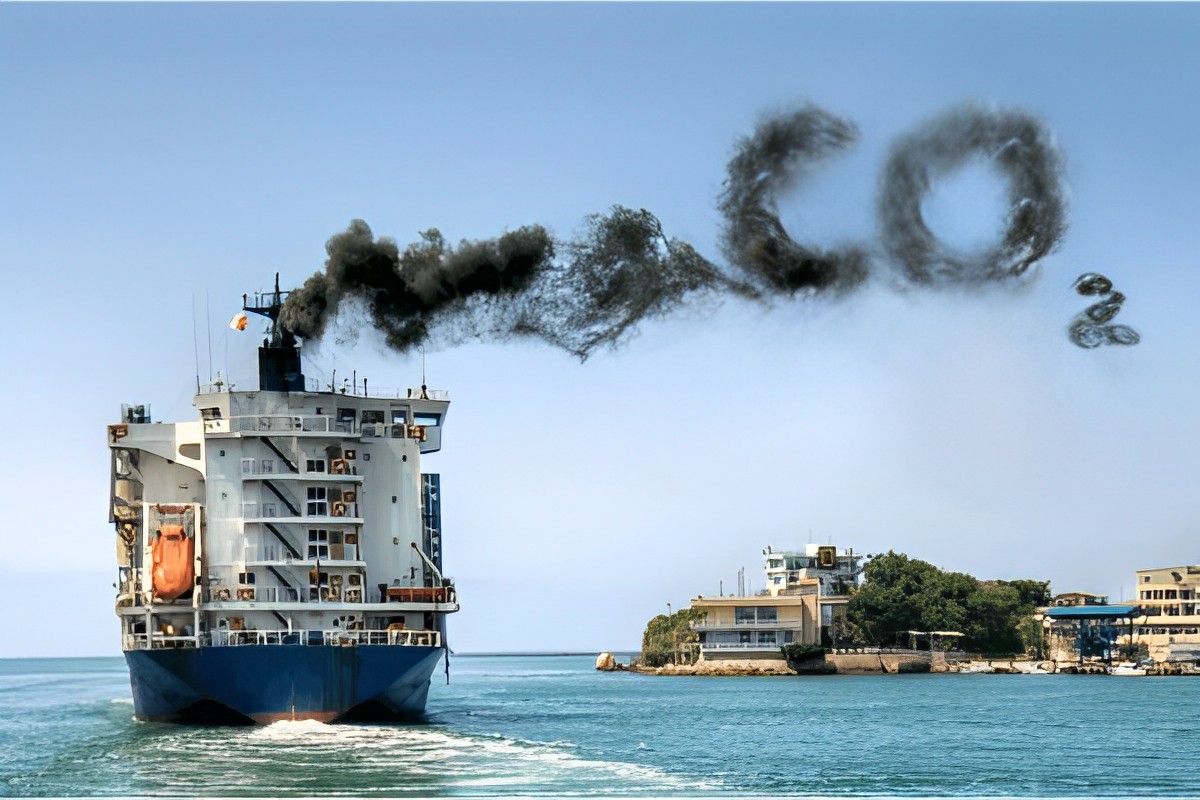
To Achieve the Greenhouse Gas Reduction Goals Set by the International Maritime Organization (IMO), Decarbonizing the Maritime Industry Could Be a Significant Solution.
Many experts agree that a multifaceted approach is necessary, including renewable energy sources such as wind and solar, leveraging hydrogen technology, and developing new technologies, as is the case with decarbonizing the maritime industry. Maritime transport is one of the most energy-efficient modes of goods transport compared to other means, as it uses five times less energy, for example.
However, the near-total reliance on fossil fuels in the maritime sector makes it disproportionately energy-intensive, and decarbonizing the maritime industry has been heavily researched.
Moreover, since approximately 90% of global trade is conducted via maritime routes, the shipping industry is responsible for 3% of all global emissions. Experts say that if the industry maintains its current carbon intensity, it could rise to 10% by 2050.
-
The government puts R$ 8.6 billion on the table to change the highway (BR) with 50 overpasses, 28 bridges, 4 tunnels, and 40 km of bike lanes in 180 km of historic duplication.

-
São Paulo surprises the world with a colossal railway network project that promises over 1,000 km of tracks, R$ 194 billion in investments, and 40 projects connecting the capital to the interior with fast and sustainable trains.

-
The world’s largest escalator, measuring 905 meters in China, reduces urban travel time from 1 hour to about 20 minutes and transforms mobility in mountainous regions with an engineering solution adapted to the terrain.

-
A R$ 300 million logistics giant is taking shape in Serra with over 100,000 m² and raises a question: how can this transform e-commerce and distribution in the state?


How Decarbonizing the Maritime Industry Can Be Useful
Hydrogen can help decarbonize the global maritime industry, according to the UK Government’s Hydrogen Strategy.
The reason is not just that it can power ships, but hydrogen technology is also compatible with many other elements. For example, using renewable energy sources like hydrogen to power port activities, such as cargo handling, would have a massive impact on the carbon footprint of the maritime industry, as ports are centers where land and sea meet.
Similar to fossil fuels, hydrogen can be stored and transported in tanks. Furthermore, existing ships can be retrofitted with hydrogen technologies like fuel cells. Unlike batteries, hydrogen fuel cells need frequent refueling, allowing for quick recharges and are better suited for larger vessels that require longer international journeys.
Additionally, storing and transporting hydrogen in containers as either liquid or compressed gas not only presents health and safety risks but also requires more storage space at extremely low temperatures. Another major challenge is that for hydrogen fuel to be a truly clean solution, it needs to be produced by electrolysis using renewable energy sources such as solar and wind power.
How Decarbonizing the Maritime Industry Can Be Scalable Using Hydrogen Technology and Other Clean Alternatives?
In addition to the need for more adopters of technology, many gaps in the hydrogen supply chain must be addressed to meet future demand. For example, there needs to be more suppliers capable of supporting large-scale compressed hydrogen storage, as well as qualified pipeline manufacturers to work with hydrogen.
In summary, as in other industries, decarbonizing the maritime sector on a large scale will require the use of all viable clean energy solutions, not just hydrogen technology.










Seja o primeiro a reagir!