





 Portuguese
  English
  Spanish
  4 min of reading
  0 comments


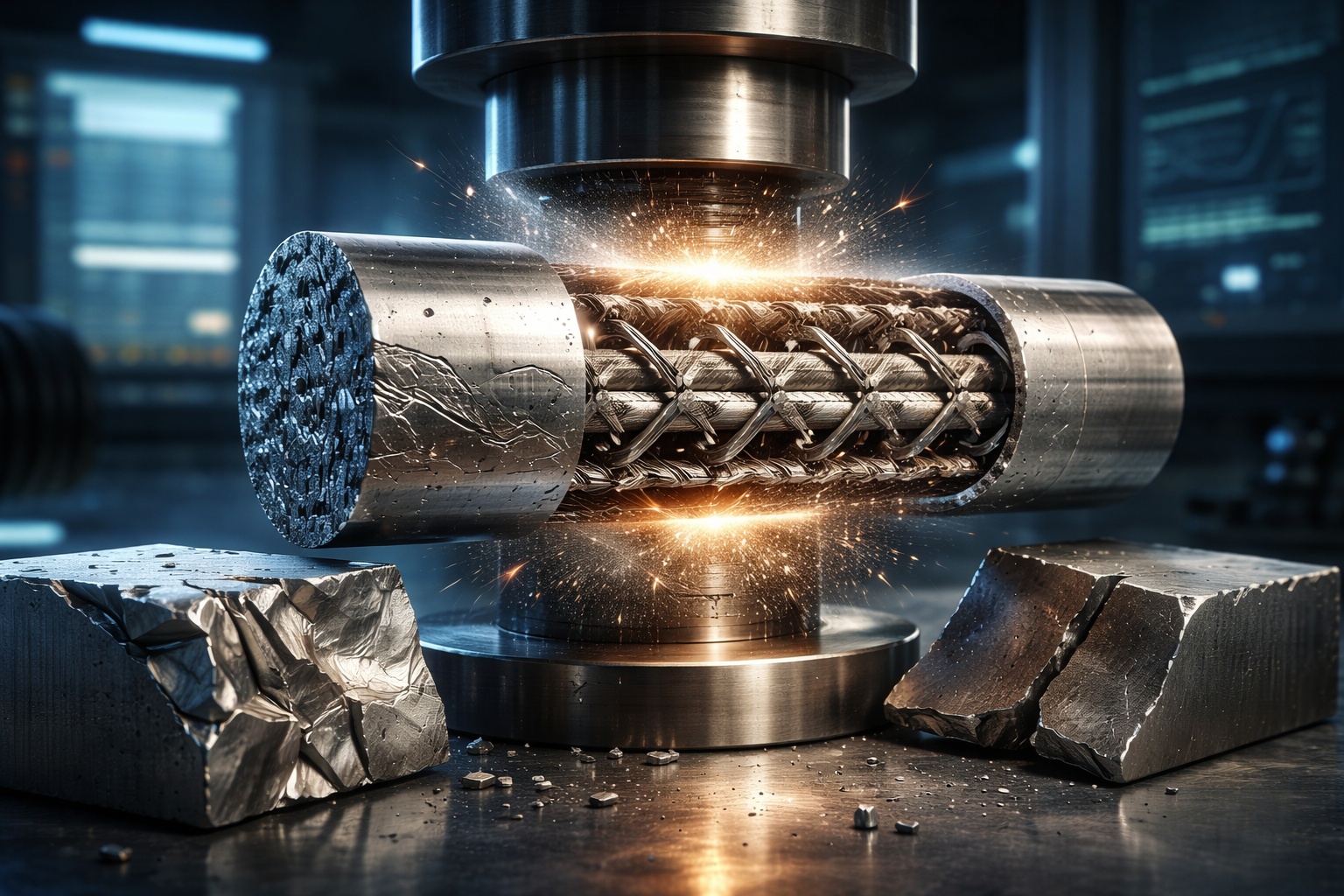
Metallic Composites Inspired by Reinforced Concrete Show Superior Strength Compared to Steel and Aluminum in Tests and Can Change Structural Engineering.
Reinforced concrete is one of the most successful concepts in engineering history: a material weak in tension combined with a strong internal reinforcement, creating a much more efficient set than each element isolated. Now, this same principle is being applied in reverse in the field of materials engineering, giving rise to advanced metallic composites that mimic the behavior of reinforced concrete, but at a microscopic scale.
Instead of steel bars within the concrete, these materials combine a metal matrix with internal ceramic or metallic reinforcements, creating structures that withstand high loads, dissipate energy, and are more resistant to failure than conventional metals.
What Are Metallic Composites and Why Do They Behave Differently
The so-called Metal Matrix Composites (MMCs) are materials in which a metal — such as aluminum, titanium, or magnesium — acts as the matrix, while particles, fibers, or networks of another material serve as structural reinforcement.
-
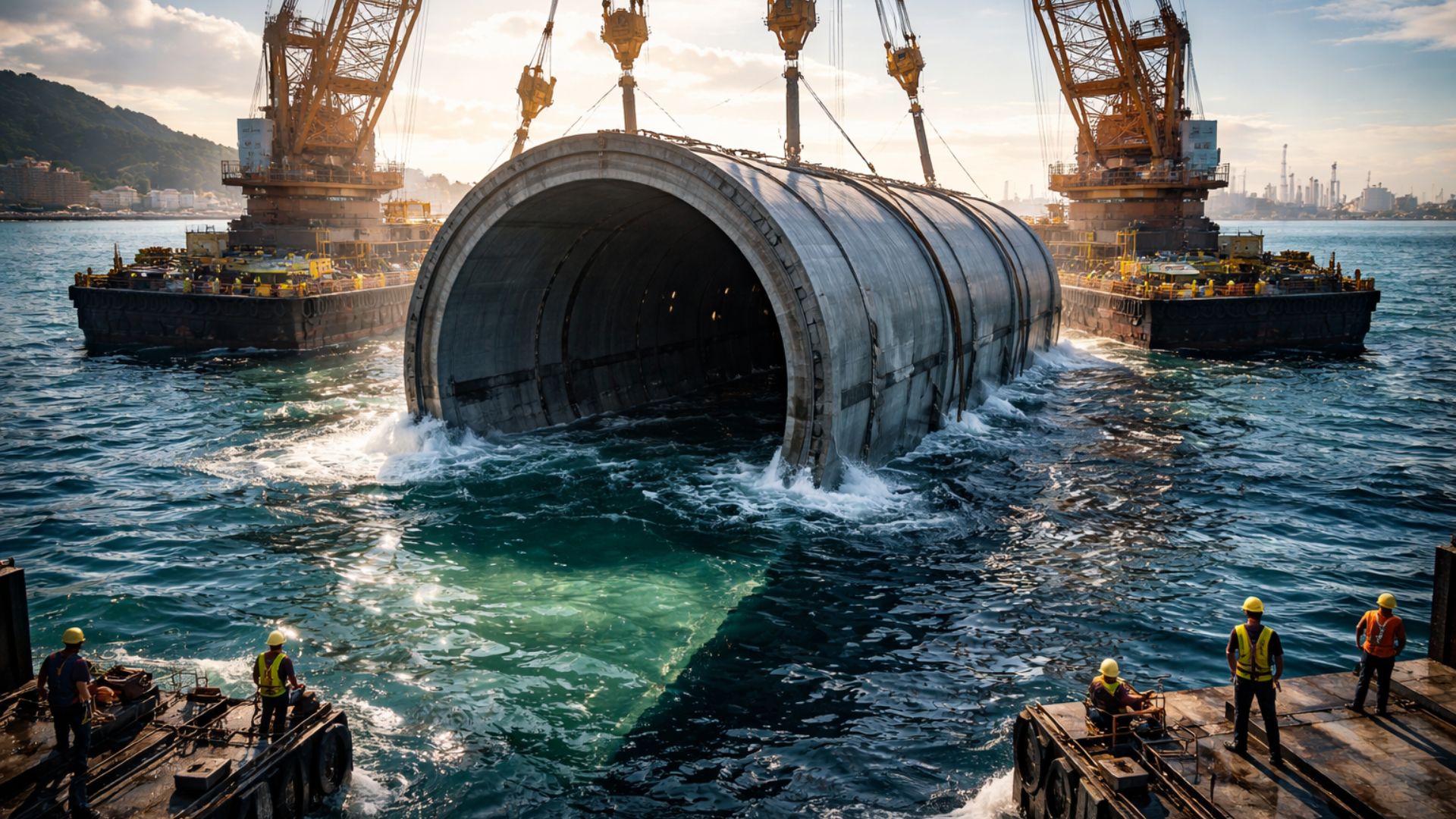
The government opens the vault and deposits R$ 2.6 billion for the construction of Brazil’s first underwater tunnel, with a length of 1.5 km, 870 m under the sea, a total project cost of R$ 6.8 billion, and a 30-year concession.
-
Only 46 meters remain for Brazil and Paraguay to connect via the Bioceanic Route bridge, the project that will link the Atlantic to the Pacific by land and change the logistical map of four countries in South America.

-
The bridge that holds the largest stone railway arch in the world: built over 100 years ago, destroyed in the war, and rebuilt to continue operating to this day, it still carries trains over the Soča River in Slovenia.

-
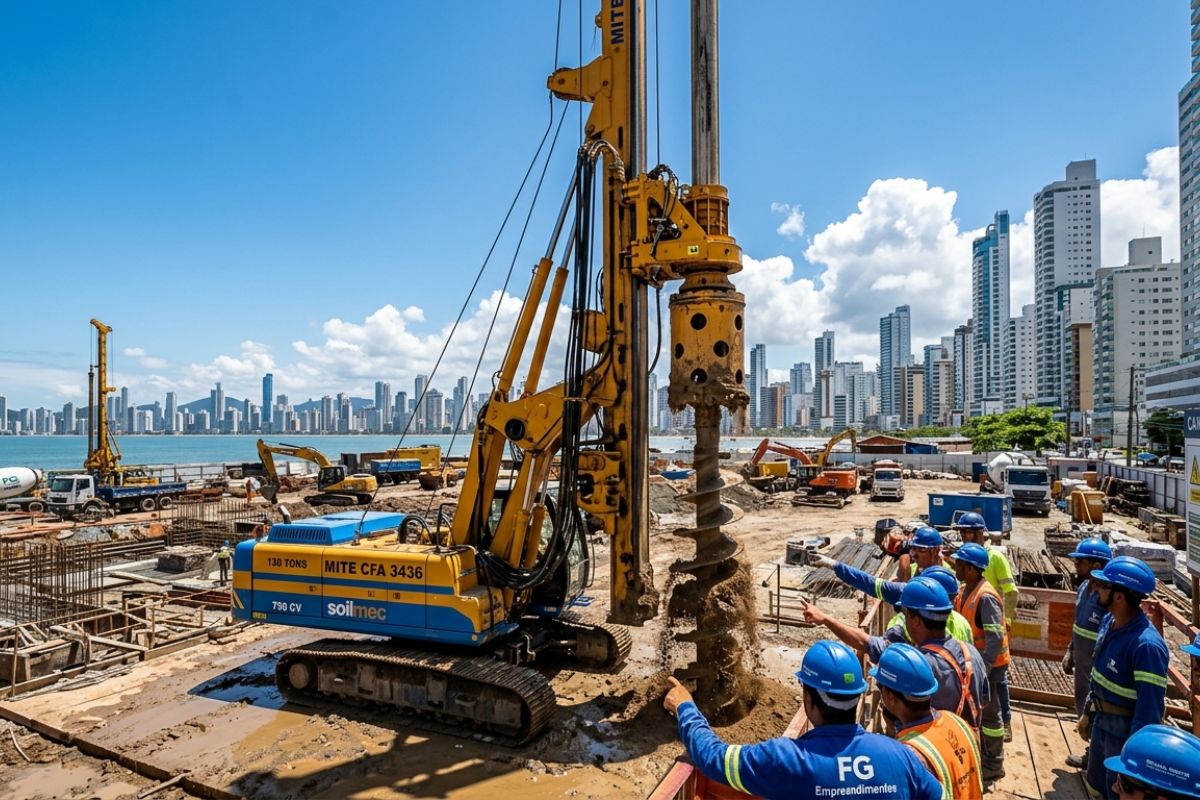
Italian giant of 130 tons arrives at the Senna Tower construction site and accelerates foundations: Mite CFA 3436 drills up to 50 m, 750 hp engine, investment of R$ 20 million, unique in Latin America.



In practice, the base metal absorbs deformations and distributes stresses, while the internal reinforcement limits cracks, increases stiffness, and improves mechanical resistance. The result is a material that does not fail abruptly, exhibiting behavior very similar to that of reinforced concrete when compared to plain concrete.
This mechanism allows the composite to present better crack control, higher tensile strength, and better performance under fatigue.
Superior Performance Compared to Steel and Aluminum in Specific Situations
Laboratory tests show that certain metallic composites can achieve mechanical strengths comparable to or greater than structural steel, with an important advantage: significantly lower weight. Compared to conventional aluminum, the leap is even more evident, especially in stiffness and wear resistance.
In some tests, aluminum matrix composites reinforced with ceramic particles showed yield strength well above traditional aluminum alloys, approaching or exceeding materials used as structural reinforcement.
This does not mean they can replace steel in any application, but that in projects where weight, specific strength, and durability are critical, these materials become extremely competitive.
A More Predictable and Safe Structural Behavior
One of the major problems with conventional metals is how they fail. Steel can suffer sudden rupture after reaching its limit, and aluminum tends to exhibit significant plastic deformation before failure. In contrast, metallic composites have an intermediate and more controllable behavior.

Thanks to the internal reinforcement, cracks have difficulty propagating quickly. This creates a mechanism for absorbing energy, highly valued in applications where structural safety is essential, such as transportation, lightweight bridges, movable structures, and even impact components.
This “almost ductile” behavior is precisely what makes the analogy with reinforced concrete technically correct.
Where These Materials Are Already Being Used in Practice
Although still not common in traditional construction, metallic composites are already widely used in sectors where extreme performance justifies the cost.
In the aerospace industry, they are used in structural components subjected to high loads and thermal variations. In the automotive sector, they appear in parts that need to be lightweight and wear-resistant. In industrial equipment, they are employed where there is constant friction and a need for high durability.
These real-world uses demonstrate that this is not experimental material, but rather a mature technology in high-demand environments.
Why Don’t They Dominate Construction Sites Yet?
The main obstacle to large-scale use in construction is still economic and productive. The manufacturing of metallic composites requires strict control of processes, specialized equipment, and often, more expensive raw materials.
In addition, construction technical standards are historically conservative, based on decades of use of steel and concrete. The adoption of new materials requires time, real-scale testing, and adaptation of structural codes.
Even so, researchers and engineers see these composites as natural candidates for specific applications, such as modular structures, lightweight prefabricated elements, and hybrid systems.
A Step Beyond Steel, Not the End of It
It is important to emphasize that these composites do not represent the “end of steel”, but rather an expansion of the range of structural solutions. Just as reinforced concrete did not completely replace other materials, metallic composites should occupy niches where their specific performance makes sense.
The real innovation lies in the concept: using the logic of reinforced concrete at a microscopic scale, creating metals that work together with their own internal reinforcements.
The Future of Engineering Lies in Hybrid Materials
The trend in modern engineering is not to choose between concrete, steel, or aluminum, but to combine properties.
Metallic composites represent exactly that: the union of strength, lightweight, and failure control in a single material.
If in the 20th century reinforced concrete redefined cities, in the 21st century, materials inspired by that same principle can redefine the way we design metal structures, machines, and high-performance systems.








Seja o primeiro a reagir!