





 Portuguese
  English
  Spanish
  4 min of reading
  0 comments


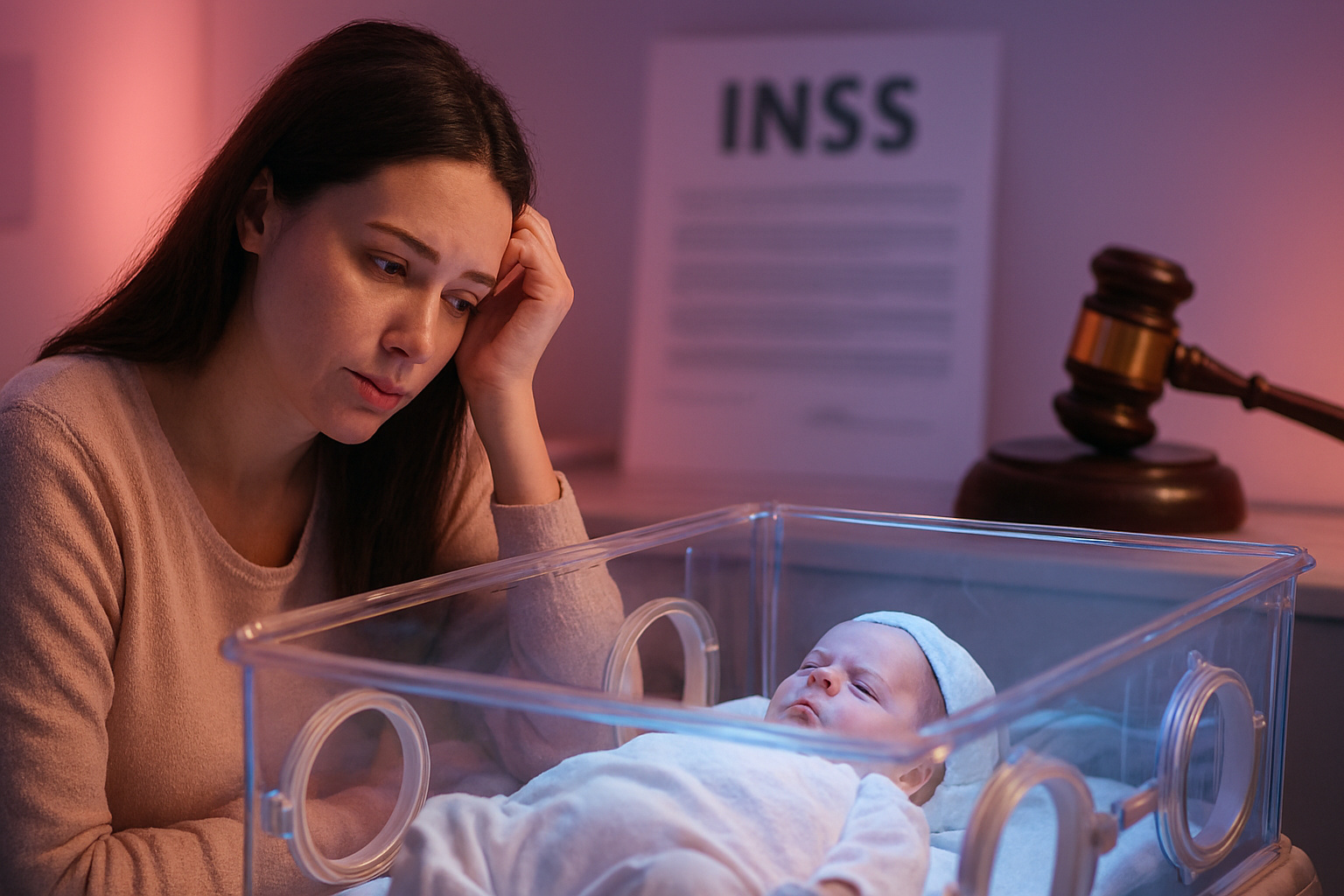
New Law 15.222/2025 Expands Maternity Leave for Hospitalizations After Childbirth and Guarantees Full Payment from Social Security. See How It Works and Who Is Entitled.
The expansion of maternity leave has ceased to be just a historical demand and has become a right guaranteed by law, yet almost no one knows about it. Sanctioned on September 29, 2025, Law No. 15.222/2025 amends the CLT and the Social Security Benefits Law to allow for the extension of maternity leave when the mother or baby remain hospitalized after childbirth, a common situation in cases of prematurity, surgical complications, or neonatal infections.
The impact is enormous: thousands of women who were previously required to return to work even after long periods of hospitalization of their newborns now receive a new period of leave, fully paid by Social Security, ensuring real time for recovery and bonding with the baby. This change profoundly alters maternity protection in Brazil — and, despite its importance, the benefit is still little known even among HR professionals, doctors, and beneficiaries.
Extension of Maternity Leave: How the New Law 15.222/2025 Works
The new regulation modifies two pillars of Brazilian legislation:
-
The noise law will no longer be in effect at 10 PM starting in June with a new rule valid during the 2026 World Cup.

-
The Chamber opens a debate on driver’s licenses at 16 years old as part of a reform that includes around 270 proposals to change the Brazilian Traffic Code and may redesign rules for licensing, enforcement, and circulation in the country.

-
The new Civil Code could revolutionize marriages in Brazil with “express divorce” and changes that could exclude spouses from inheritance.
-
Banco do Brasil sues famous influencer for million-dollar debt and intensifies debate on delinquency, risks of seizure, and direct impact on Gkay’s credibility.


- Art. 392 of the CLT – which defines maternity leave for 120 days
- Art. 71 of Law 8.213/1991 – which regulates maternity pay paid by Social Security
Now, when the mother or baby remain hospitalized for more than 14 days after childbirth, the leave period does not begin counting on the day of birth, but rather from the hospital discharge. Furthermore, the period exceeding the two weeks will be added to the existing 120 days of leave.


Example based on the application of the law: If the baby is hospitalized for 45 days and the mother remains hospitalized for 20 days, the period that exceeds 14 days will be added to the leave. In this case, the beneficiary would have 31 extra days, in addition to the already guaranteed 120 days.
This means that, depending on the clinical severity, a mother may have 150, 180, or even more than 200 days of paid leave, all funded by Social Security.
Maternity Pay Is Also Extended Automatically
The law established that maternity pay will be paid:
- For the entire hospitalization period;
- For all additional days after discharge;
- And the regular 120 days.
The benefit covers:
- Employees with a formal contract;
- Self-employed workers;
- Individual Microentrepreneurs (MEIs);
- Volunteers;
- Domestic workers;
- Intermittent workers.
In other words, it does not depend on agreements with the employer — it is a social security right.
Who Is Entitled to the Extension
The Law No. 15.222/2025 applies when there is:
- Hospitalization of the newborn for more than 14 days;
- Hospitalization of the mother due to postpartum complications;
- Normal births, cesarean sections, or premature births;
- Clinical situations requiring extended hospital stays.
The extension applies regardless of whether the childbirth occurred in a public or private hospital.
To exercise the right, the beneficiary must prove the hospitalization with medical documents or a hospital declaration.
How to Request the Extension of Leave
The extension is not automatic — and this is one of the reasons why so many women are not even aware of the benefit. The recommended step-by-step is:
- Request from the hospital a formal declaration of hospitalization, with admission and discharge dates.
- Gather certificates and medical records that prove the reason and total period.
- Submit a request to Social Security through Meu INSS.
- Inform the company’s HR for updating the payroll and the leave.
HR and hospitals are still adapting to the regulation, making information essential to ensure the right.
Why the Law Was Created: Numbers That Explain the Urgency
The processing of the law was supported by alarming data:
- Brazil is among the countries with the highest rate of prematurity in the world — about 11% of births, according to WHO;
- Thousands of babies remain weeks or months in neonatal ICUs;
- Many mothers exhausted their leave before even bringing their baby home.
This legal gap caused emotional suffering, psychological impact, and complicated the recovery of mothers and children. The new legislation corrects this historical distortion.
Impact on Families, Companies, and the Healthcare System
- For Families: increased mother-baby bonding, greater emotional stability, guaranteed breastfeeding, adequate recovery.
- For Companies: no additional costs, reduced labor lawsuits, more legal security.
- For the Healthcare System: reduced readmissions, greater effectiveness in post-discharge, protection for early childhood.
Is the Law Already in Effect?
Yes. Law No. 15.222/2025 has been in effect since its publication on September 29, 2025, in the Official Gazette of the Union. From this date, all employers and Social Security must immediately apply the new rules.
Although it is one of the greatest achievements for Brazilian mothers in decades, the extension of maternity leave is still unknown both to beneficiaries and companies. Many people who went through long hospitalizations in the past would have been entitled to the benefit if it had existed.
And now, those who are pregnant or have just had a baby need to know: if there is prolonged hospitalization, the leave increases — and Social Security pays for everything.









-

Uma pessoa reagiu a isso.