





 English
  Francês
  Alemão
  Italiano
  Japonês
  Norueguês
  Portuguese
  Spanish
 4 min of reading


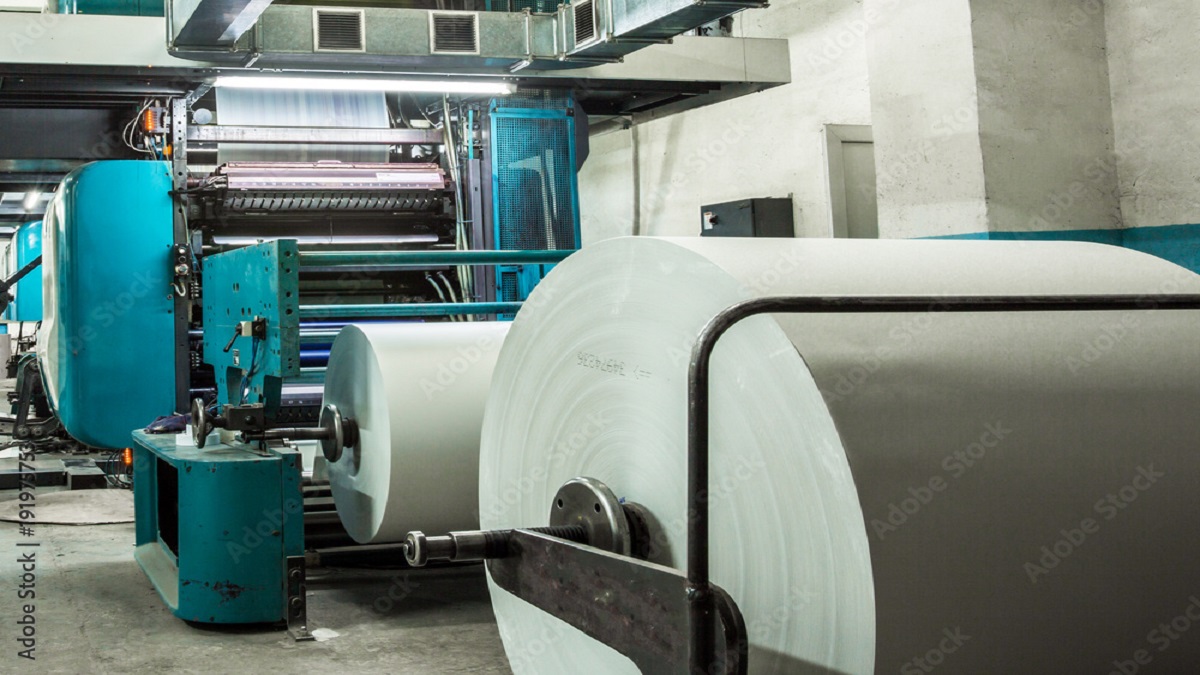
The Two Pulp Megafactories to Be Installed in Mato Grosso do Sul Belong to Suzano and Arauco
It is expected that, in the coming years, Mato Grosso do Sul will receive more than R$ 34 billion in investments in just two pulp megafactories: Suzano, with the Cerrado Project in Ribas do Rio Pardo, and Arauco, with the Sucuriú Project, which was announced last week. To give an idea, the works correspond, in values, to double the annual budget of the state, which is R$ 17 billion.
As a result, it is expected that the ventures will ensure, in the following years, a growth of 5% in the state’s Gross Domestic Product (GDP). In addition, according to the state governor, Reinaldo Azambuja, attracting companies of this size will make it the largest global hub for pulp.
In this regard, Azambuja also stated that the current moment is very special, and that legal security and reliability are necessary for a location to be chosen as the recipient of a venture of this caliber.
-
Chinese giant worth nearly R$ 4 billion that manufactures cables for electric cars, solar energy, and robotics wants to open a factory in SC.

-
Many employers do not know, but the law guarantees domestic workers a 25% increase in salary during trips, 50% for overtime, 20% for night shifts, and 17 additional benefits that can lead to labor lawsuits if not paid.

-
Gasoline prices soar and the question arises: is ethanol more advantageous? The 70% rule reveals the limit with gasoline.

-
The government has made a decision and is starting a test with more ethanol in gasoline, anticipating a mixture of up to 35%, diesel with 25% biodiesel, and a study to assess the impacts on engines.


The Chilean group Arauco will invest more than R$ 15 billion in the municipality of Inocência, solely in the industrial sector. Considering the forest base project, the total investment will reach R$ 20 billion, which shows that, to plant 290,000 hectares of forest, there is an additional cost of R$ 5 billion.
In this sense, Azambuja emphasized that the incentives given to Arauco were the same as those received by Eldorado and Suzano. He explains that the production chain is treated as a whole in Mato Grosso do Sul, so that no unfair competition is created, and the incentives are equal for different companies. The governor also adds that he is aware of the importance of an investment attraction policy for creating jobs for the population.
Thousands of Job Openings Are Available from the Pulp Ventures
According to Azambuja, the State has created a solid investment base that expands job opportunities in Mato Grosso do Sul. Arauco, for instance, predicts that more than 12,000 jobs will be opened just during the construction phase of the plant in Inocência and that, once operational, the factory will additionally generate around 550 direct and indirect jobs, plus another 1,800 in the forestry sector.
The Cerrado Project, in turn, operated by Suzano in the municipality of Ribas do Rio Pardo, has an investment of more than R$ 19 billion and is under full construction. Currently, the construction works for the Suzano plant employ about 4,000 workers. By the first half of 2023, at the peak of the construction, the venture is expected to be responsible for creating around 10,000 direct jobs, in addition to thousands of indirect jobs in the region.
When operational, the expectation is that the new Suzano factory will offer 3,000 jobs, both direct and indirect, to support industrial and forestry operations.
Suzano also has two factories in the municipality of Três Lagoas, where 6,000 jobs associated with the company are generated.
Governor Reinaldo Azambuja stated, in light of this scenario, that Mato Grosso do Sul is undergoing a valuation of regional assets. According to him, the Arauco venture allows rural properties, commerce, and all economic activities in the region of Inocência, Cassilândia, Paranaíba, Água Clara, and Três Lagoas to be valued, with all these municipalities being positively impacted.
Jaime Verruck Highlights the Paths Taken for Mato Grosso do Sul to Reach Its Current Economic Situation
The Secretary of State for Production, Environment, Economic Development and Family Agriculture (Semagro), Jaime Verruck, emphasized that, to reach this moment of a vibrant economy, Mato Grosso do Sul faced numerous challenges. He reported that, thus, it was established that one of the guidelines to structure the state would be planning.
In this context, one of the paths to develop Mato Grosso do Sul would be to encourage structuring projects. Verruck assessed that this was done through diversification, agro-industrialization, and increasing exports, with variations in international markets as well.
Moreover, the secretary pointed out that it was necessary to adapt and prepare the state to attract structured investments. Thus, the spending ceiling was reduced, fiscal incentive changes were implemented, a Public-Private Partnerships Office was established, among other measures to make the region more attractive.
Currently, there are three pulp factories installed and operating in the municipality of Três Lagoas: one from Eldorado Brasil, with a production capacity of 1.8 million tons of pulp per year, and two from Suzano, which together produce 3.25 million tons per year. On the other hand, the factory being built by Suzano in Ribas do Rio Pardo will produce 2.55 million tons per year, becoming the largest industrial pulp plant in the world.
Verruck states that Três Lagoas is considered the world capital of pulp, while Mato Grosso do Sul is the state that exports the most in Brazil, accounting for 27% of all pulp sold abroad. He adds that Suzano is the export leader and is expected to remain so for the coming years.
Regarding the forest base, the secretary emphasizes that Mato Grosso do Sul currently has 1.3 million hectares cultivated, with a current demand for an additional 542,000 hectares. For him, the Arauco venture should cause this amount to grow, bringing the state to a cultivated area of 2 million hectares.
Verruck concluded by explaining that the forestry industry is not developed over native forest but rather through the reform of degraded pastures, which occupy more than 8 million hectares. Currently, this sector generates more than 26,000 direct jobs in the state.





Seja o primeiro a reagir!