





 Portuguese
  English
  Spanish
  4 min of reading
  0 comments


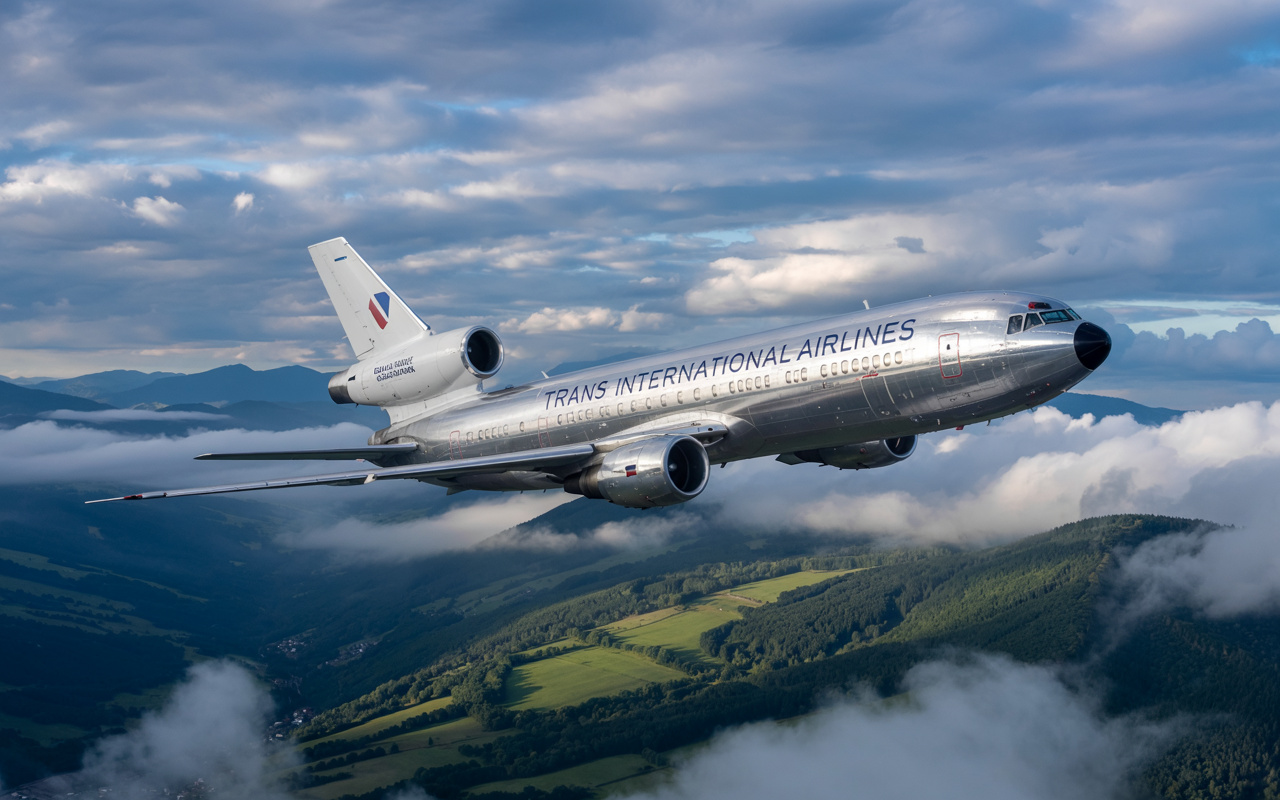
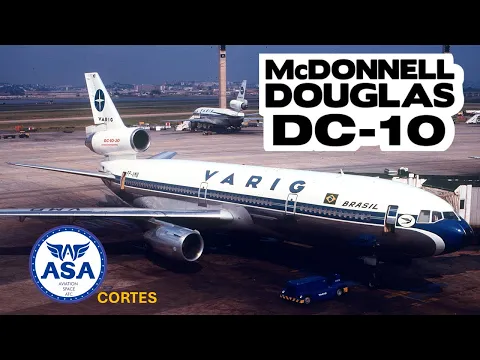
The McDonnell Douglas DC-10, Trijet Launched in the 1970s, Consumed 9 Tons of Fuel Per Hour, Was a Milestone in Aviation and Today Survives Only in Cargo and Military Flights.
At the turn of the 1960s to the 1970s, McDonnell Douglas (which would later merge with Boeing) wanted to create a medium to long-range aircraft that was cheaper than the Boeing 747 and Douglas DC-8 four-engine models, but larger and more powerful than the twin-engine options available at the time. The result was the DC-10, a widebody trijet that first flew in 1970 and entered service in 1971 with American Airlines. With one engine at the tail (mounted on the vertical stabilizer) and two under the wings, the design was aimed at providing more power and range than a twin-engine — and at a lower cost than a four-engine.
Fuel Consumption of the DC-10
The McDonnell Douglas DC-10 was a powerful aircraft, but this came at a cost: the model burned an average of 9 tons of fuel per hour, which represented more than 11,000 liters of aviation kerosene for each hour of flight.
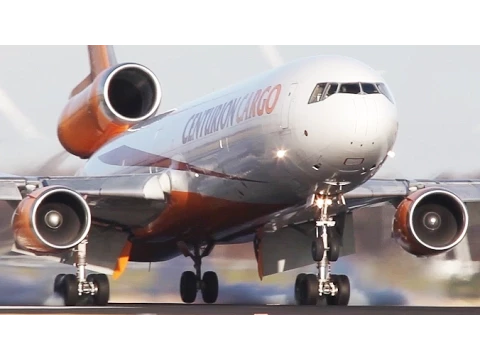

For flights lasting 10 to 12 hours, such as Los Angeles–Tokyo or New York–Paris, the DC-10 could consume over 100 tons of fuel.
-
Chaos On Airplane Could Be Expensive: Proposal Aims To Prevent Disruptive Passengers From Flying For Up To 1 Year In Brazil And Face Fines Of Up To R$17,500

-
Man Arrested After Halting Takeoff of Fire Department Helicopter During Child Rescue in Guaratuba

-
With 37 Tons of Cargo, Over 8,000 km Range, and Ability to Land on Unpaved Runways, the Airbus A400M Demonstrates How Europe Created a Military Giant That Transports Armored Vehicles, Aerially Refuels Fighters, and Operates in Conflict Zones and Humanitarian Missions Worldwide
-
Emergency Landing in Campos Amarais After Bird Strike on Small Plane
At the time, this expenditure was not seen as such a critical problem, as fuel was relatively cheap. However, in the following decades, with oil crises and advances in efficiency, the high consumption of the trijet became one of the primary reasons for its withdrawal from commercial routes.
Technical Specifications of the DC-10
- Engines: could be equipped with General Electric CF6 or Pratt & Whitney JT9D, each generating about 50,000 pounds of thrust.
- Length: 55.5 meters.
- Wingspan: 50.4 meters.
- Maximum Takeoff Weight: around 260 tons.
- Capacity: 270 to 380 passengers, depending on configuration.
- Range: up to 10,600 km, sufficient for transatlantic flights.
Why Does the McDonnell Douglas DC-10 Consume So Much?
The trijet design was an intermediate solution between twin-engine and four-engine aircraft. With three engines, the DC-10 offered more safety and power, but without the efficiency that would later come with new-generation twin engines.
Additionally, its engines were designed in the 1960s, a time when the priority was power rather than reduced consumption. Compared to a modern Boeing 787, the DC-10 uses nearly twice as much fuel to transport the same number of passengers.
The Legacy and Controversies of the DC-10
The DC-10 had a remarkable but also controversial career. In the 1970s, a series of accidents involving cargo door failures marred the aircraft’s reputation. The most severe was the crash of flight Turkish Airlines 981 in 1974, which killed 346 people.
After modifications and safety improvements, the aircraft regained the trust of airlines and passengers, but it never completely escaped the shadow of the initial tragedies. Still, over 440 units of the DC-10 were produced, and the model flew for decades with airlines such as American Airlines, Delta, United, Air France, and KLM.
Why Was the DC-10 Retired from Commercial Flights?
Starting in the 1990s, aviation changed. Fuel consumption became more expensive, and modern twin engines — such as the Boeing 767, Airbus A330, and later the Boeing 777 — demonstrated that long flights could be made more efficiently and with less maintenance.
The DC-10, with its three engines and high operational cost, was gradually retired from passenger fleets. The last airline to operate regular flights with the DC-10 was Biman Bangladesh Airlines, which retired the model in 2014, marking the end of an era.
Does the DC-10 Still Fly?
Yes — but in different roles. Today, many DC-10s have been converted into freighters (DC-10F) and continue to fly with companies like FedEx and UPS.
Additionally, a military version of the DC-10, called the KC-10 Extender, is still in service with the U.S. Air Force, operating as an aerial refueling aircraft.
- The DC-10 was the first widebody trijet in the world, paving the way for the MD-11, its successor.
- Many retired DC-10 aircraft have been turned into training simulators, museums, and even restaurants.
- The cargo version DC-10F is so robust that it is expected to continue flying until 2030.
The DC-10 in Aviation History
The McDonnell Douglas DC-10 represents a unique phase in aviation: the era when airlines sought larger and more powerful aircraft, but had not yet transitioned to modern twin-engine options as an alternative.
Even with high fuel consumption and a tarnished reputation in the beginning, the DC-10 helped popularize international flights, carried millions of passengers, and showed that commercial aviation could innovate with bold designs.
Today, it remains a discreet but still active presence in the skies — reminding us that, even with 9 tons of fuel burned every hour, some machines are so iconic that they simply refuse to disappear.







-

Uma pessoa reagiu a isso.