





 Portuguese
  English
  Spanish
  5 min of reading
  0 comments


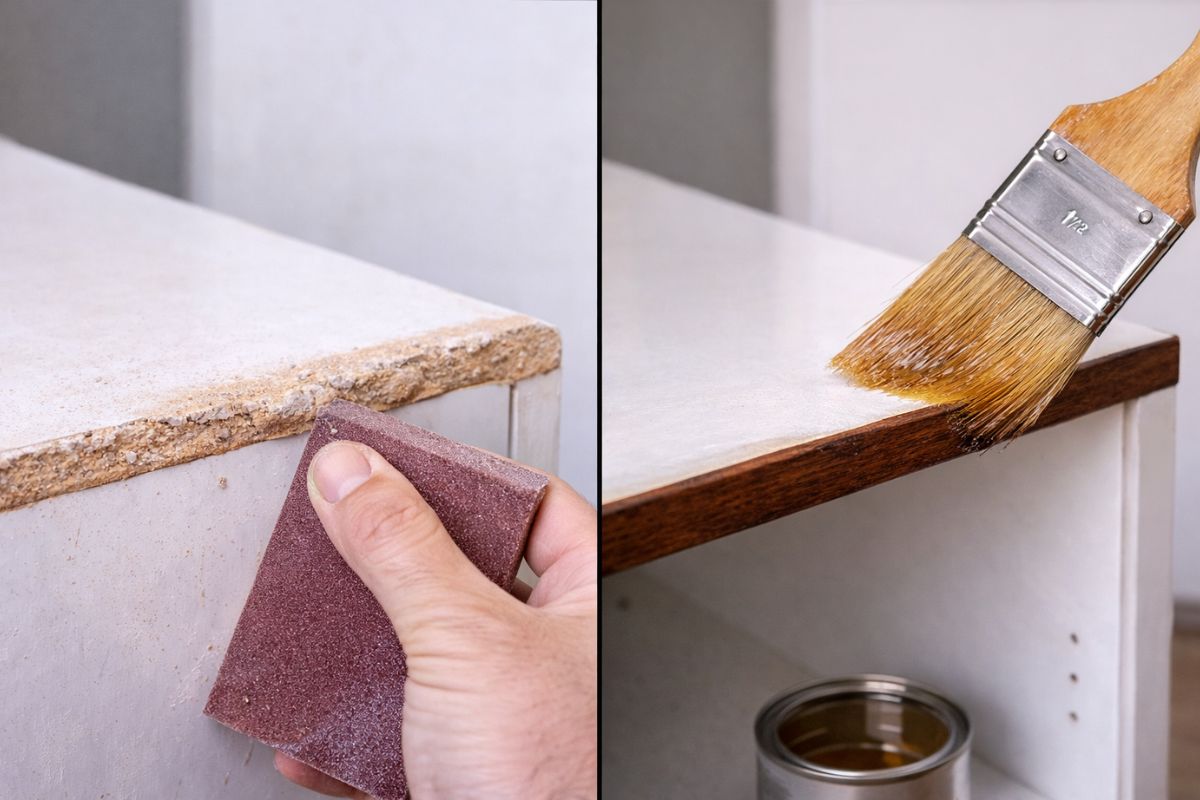
The MDF swollen by humidity can be recovered with gentle sanding followed by the application of waterproof varnish, inexpensive techniques that create a barrier against water and restore the functionality of the furniture, complemented by a dehumidifier in critical environments to prevent further damage.
Those who have MDF furniture at home already know the problem: just a few months of exposure to splashes, steam, or humid weather for the material to start swelling, forming bubbles, and losing its finish. But a swollen MDF piece does not need to be discarded, because simple techniques with sandpaper and waterproof varnish can recover its functionality without requiring the replacement of entire parts or expensive renovations. The secret is to act before the damage spreads to the interior of the board and to protect the surface to prevent the problem from recurring.
MDF is made of wood fibers bonded by resins and pressed at high temperatures, which makes it more sensitive to humidity than well-treated solid woods. When water finds gaps, unsealed edges, or wear points in MDF, it penetrates and spreads internally, causing swelling, distortions, and loss of structural integrity. In cabinets near the sink or washing machine, it is common for the MDF to start swelling at the bottom, where splashes and steam accumulate continuously over weeks and months.
Why does MDF swell with humidity and where does the problem start

The problem rarely starts with a single contact with water. In most cases, the swelling of MDF results from repeated exposures to small amounts of moisture over time, making prevention essential from the installation of the furniture.
-
Considered almost extinct and found in only three municipalities in Ceará, one of the rarest birds on the planet has just recorded 12 nests and the birth of healthy chicks in the Chapada do Araripe, renewing hope that the species can still be saved.

-
Hidden in a 75-hectare forest within a university in Minas Gerais, a newly discovered fungus reprograms the brains of spiders, turns the victims into obedient zombies, and forces them to die exactly where it needs to spread its spores.

-
Country on high alert: banned list of school supplies could result in fines of up to R$ 18.8 million and reveal abusive practices that many schools are still trying to impose in Brazil.

-
Family loses custody of 3 children after living isolated in the woods with solar panels, well water, and growing their own food in a routine far from the city, in Italy.

Edges without protective tape, worn corners, and surfaces with scratches are the most common entry points for water, which once inside the board spreads among the fibers and causes visible swelling.
Closed and poorly ventilated environments accelerate the process because they retain humid air, especially in cities with rainy or coastal climates.
The combination of heat, steam, and lack of air circulation promotes bubbling, peeling, and warping in MDF. Kitchens, bathrooms, laundry rooms, and closets are the rooms where the material suffers the most, precisely because they concentrate the largest sources of humidity in the house.
How to use sandpaper to prepare MDF before waterproofing
The first step to recover a swollen MDF piece is sanding the affected surface. The goal is to remove the damaged layer and achieve a smooth and even surface that allows the protective varnish to adhere.
Sanding should be done with gentle and consistent movements, without excessive pressure, to avoid deep grooves that could harm the final finish. Medium-grit sandpaper is recommended for initial removal, followed by fine sandpaper for finishing.
Edges and corners of MDF deserve special attention during sanding because they are the most vulnerable points to water penetration. If the edge tape is detached or damaged, it is best to remove it completely, sand the exposed surface, and reapply a new tape after waterproofing.
Sanding does not resolve deep swellings where the internal structure of the MDF has already lost cohesion, but it works perfectly for superficial and moderate damage that still maintains the board’s firmness.
How to apply waterproof varnish to MDF to create a barrier against water
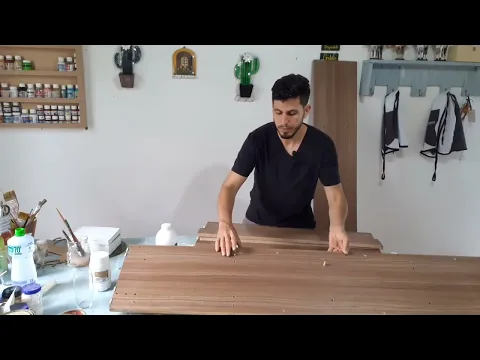

After sanding, the step that truly protects the MDF against future damage is the application of waterproof varnish. The varnish can be water-based or solvent-based, as long as it is suitable for wood and preferably compatible with MDF.
The application should be done in thin and well-distributed layers, allowing each layer to dry completely before the next. The result is a protective film that acts as a barrier against moisture.
Two to three coats of varnish are sufficient for most cases of MDF in residential environments. The varnish makes cleaning with a slightly damp cloth easier without soaking the surface, maintaining functional protection in daily use.
For furniture that is in risk areas, such as kitchen countertops and laundry cabinets, the waterproof varnish transforms the relationship of MDF with water: what was once a vulnerable surface begins to repel moisture instead of absorbing it.
How the dehumidifier complements the protection of MDF in humid environments
The varnish protects the surface, but the environment around the furniture continues to be a source of moisture. The dehumidifier removes excess water present in the indoor air, reducing condensation on walls, floors, and MDF furniture, which helps contain distortions and prevent mold formation.
In coastal regions or areas with high rainfall, the equipment is especially useful in bedrooms, closets, and living rooms with custom furniture.
The combination of waterproof varnish and dehumidifier creates dual protection for MDF: the physical barrier on the surface of the wood and the control of the indoor climate. To enhance the result, the dehumidifier should be positioned in the center of the room, with cabinet doors partially open during periods of higher humidity.
Combining the use of the device with natural ventilation routines, opening doors and windows when possible, further improves the conservation of the furniture.
Daily practices that prolong the lifespan of MDF without spending anything
In addition to sanding, varnish, and the dehumidifier, some everyday actions make a difference in the conservation of MDF. The habit of immediately drying water splashes on countertops and sides of furniture already significantly reduces the risk of infiltration and prolongs the good appearance of the finish.
It seems simple, but most damage to MDF starts with splashes that no one dried and that were absorbed by the surface over hours.
Periodically checking the edges and corners of MDF for early signs of swelling or peeling allows for targeted repairs before the damage spreads. A new localized sanding followed by reapplication of varnish in a small area costs pennies and takes minutes, but can prevent the replacement of an entire piece that would cost hundreds of reais.
Keeping the bases of MDF furniture away from direct contact with the floor also reduces moisture absorption from the bottom, which is where most problems begin.
Have you ever had problems with swollen MDF at home? Were you able to recover the furniture or did you end up needing to replace it? Share in the comments. Conservation tips that prevent waste of money and furniture always lead to good exchanges of experience.







Seja o primeiro a reagir!