





 Portuguese
  English
  Spanish
  4 min of reading
  0 comments


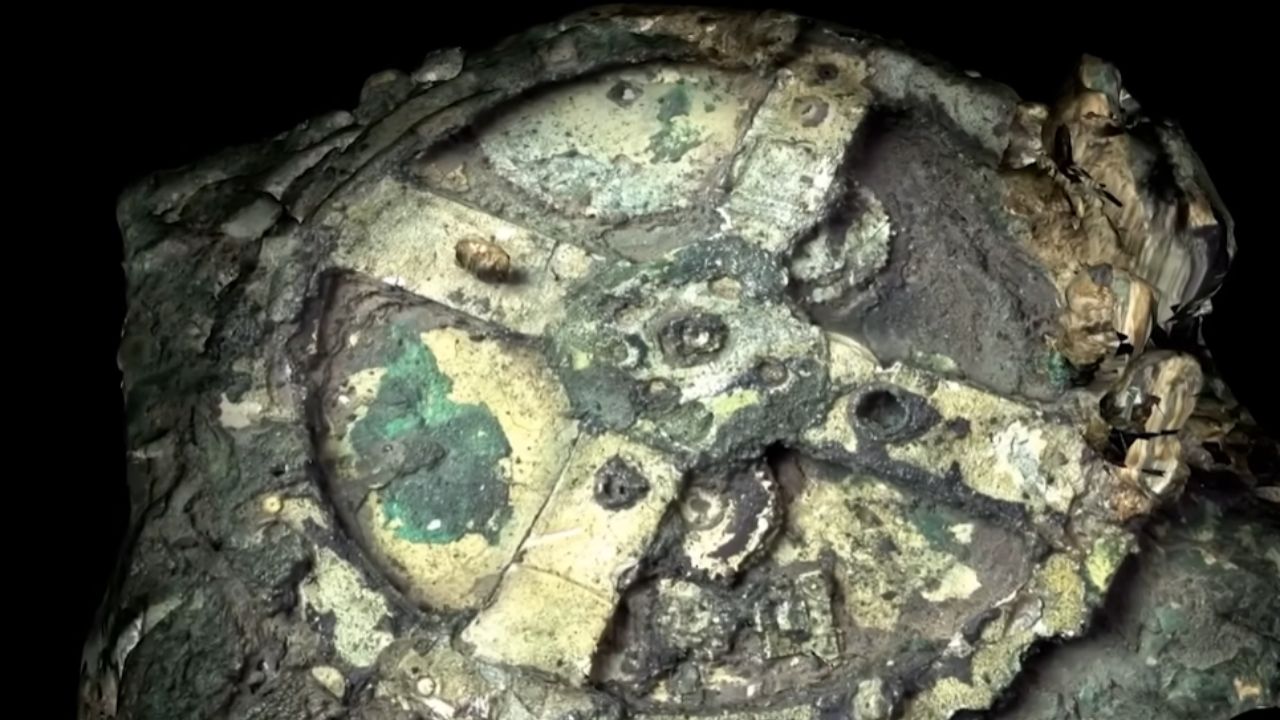
Known as the Antikythera Mechanism, the artifact is regarded as the first analog computer in history, challenging what we know about modern technology and ancient engineering.
When we think of modern technology, we usually imagine silicon processors and the digital revolution that began around the 1940s. However, a discovery at the bottom of the Mediterranean Sea changed that perspective. Detailed information from Top10 Channel reveals the story of the Antikythera Mechanism, a Greek artifact over 2,000 years old that functioned as a complex analog computer.
Discovered by sponge divers in the early 20th century off the Greek island of Antikythera, the object initially appeared to be a corroded block of bronze. However, later analyses revealed an intricate system of gears and inscriptions capable of performing astronomical calculations that would not be seen again for over a thousand years, rewriting the history of engineering.
The Accidental Discovery at the Shipwreck
The story, as narrated by Top10 Channel, begins with a Greek merchant ship that sank near the island of Antikythera more than two millennia ago. The vessel was loaded with treasures, such as bronze and marble statues, likely intended for an important buyer or a temple. The ship could not withstand a storm and sank, taking its valuable cargo to the bottom of the sea.
-
The Earth will plunge into a few minutes of darkness in broad daylight in August 2026, when a total solar eclipse transforms the sky into one of the most impressive astronomical phenomena in recent years.

-
How the terraforming of Mars can transform the planet: artificial aerosols can increase the temperature by up to 35°C in 15 years, creating conditions for liquid water.

-
Scientists drilled nearly 8,000 meters into the ocean floor above the fault that caused the 2011 tsunami in Japan and discovered that a layer of clay 130 million years old was responsible for making the wave much worse than any model had predicted.

-
Thousands of years after causing the largest eruption of the Holocene, one of the world’s largest supervolcanoes is rebuilding itself beneath the sea south of Japan, receiving new magma and alarming scientists with its transformation.


The shipwreck remained untouched for centuries until, in the early 20th century, a group of Greek sponge divers found the wreckage. Amid valuable works of art, the divers rescued what appeared to be scrap: a corroded metal block. The object was sent to the Athens Museum along with the other finds. It was only when the piece was dried and cleaned that experts realized the unthinkable: the block revealed gears, cogwheels, and mysterious inscriptions, indicating it was part of a complex machine.
Why the Antikythera Mechanism Is Considered a Computer?
The experts who first analyzed the artifact, such as archaeologist Valérius Stais, were intrigued. The initial hypothesis of it being a clock was dismissed, as mechanical clocks with similar gears would not emerge for more than 1,000 years later. It was the deciphering of inscriptions like “zodiac” that changed the course of the investigation, suggesting an astronomical function.
The definition of “computer,” as explained by Top10 Channel, is not limited to electric circuits. A computer is essentially a machine that accepts data (input), processes it internally, and delivers a result (output). The Antikythera Mechanism did exactly that in a purely mechanical way. The user would input data, such as a date, by turning a crank (input). The interlinked gear system (processing) would then move pointers and indicators that showed the position of the planets or the prediction of an eclipse (output). It was an analog computer with a functional logic similar to much more recent machines, anticipating concepts of data processing.
Decoding Greek Engineering: What the Machine Did?


The process of reconstruction was a monumental challenge. The original artifact was retrieved in 82 fragments, many corroded and incomplete. Top10 Channel highlights that modern technology, such as X-rays, computed tomography, and 3D scanning, was crucial for researchers to see inside the pieces without destroying them.
The discoveries, led by figures like Derek Price and Michael Wright, were astonishing. The mechanism was capable of calculating the Metonic cycle of 19 years (essential for aligning solar and lunar calendars) and the Olympic cycle of 4 years, used to mark the dates of the Ancient Greek Olympics. Even more impressive, it simulated the movements of the five known planets at the time (Mercury, Venus, Mars, Jupiter, and Saturn), following the geocentric model accepted by the Greeks.
The Mysteries That Still Remain
Despite advancements, the mechanism was not perfect, showing calculation errors of up to one zodiac sign, according to Top10 Channel. However, the precision for the time is what intrigues scientists. The most accepted theory is that it was built by Greek engineers who mastered astronomy, mathematics, and mechanics in an integrated manner, dismissing fictional theories about exotic origins.
Its exact purpose is still debated. Could it have been a working tool for astronomers, a luxury item to display power and prestige, an educational device to teach the cosmos, or even used to create horoscopes, a common practice at the time? The larger question, however, is speculative: what would have happened if the ship had not sunk? It is possible that the engineering behind it could have accelerated the scientific revolution by centuries.
The Antikythera Mechanism proves that the genius of engineering is not exclusive to modern technology. It remains a testament to the lost knowledge of Ancient Greece and a reminder that the past still holds surprising secrets.
Does the existence of this “computer” from 2,000 years ago change your perception of the history of technology? Do you believe that other incredible inventions like this might be lost in time? Share your thoughts in the comments, we want to know what you think about this technological leap from antiquity.







Seja o primeiro a reagir!