





 Português
  Inglês
  Espanhol
  5 min de leitura
  0 comentários


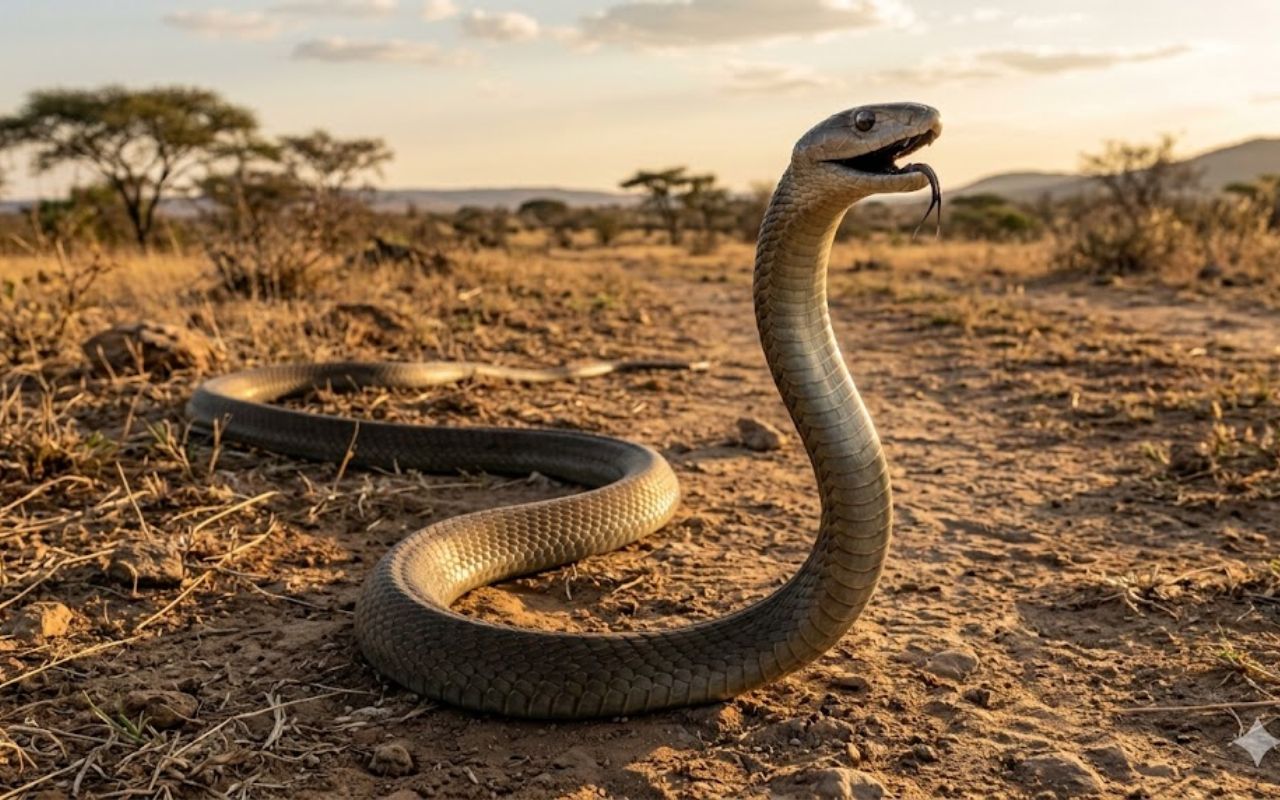
Black Mamba, The Most Lethal Snake In Africa Combines Speed, Powerful Venom, And Fascinating Scientific History.
The black mamba (Dendroaspis polylepis) is considered the most dangerous snake in Africa due to three critical factors: extremely potent venom, rapid defensive behavior, and impressive mobility.
Primarily found in the southern and eastern regions of the African continent, this snake has inspired fear for centuries, being the protagonist of myths, scientific studies, and public health warnings.
Even with medical advancements, encounters with humans still pose a real risk, especially in remote rural areas.
-
While breaking the kitchen floor during a renovation, residents in England found 260 gold coins hidden for over 300 years, with pieces dated between 1610 and 1727 and an estimated value of hundreds of thousands of pounds.

-
More tolls! The Anchieta-Imigrantes system will start implementing charges in both directions with free flow on July 1st, a fee of R$ 19.35 per segment, the end of toll plazas, and a project for a new 21.5 km lane.

-
A Brazilian city has a water park in the middle of the forest with tickets priced at R$ 29, over 300,000 m², 40 attractions, heated pools, and a record of 700,000 visitors in one year.

-
With an unusual prize, Japan transforms office chairs into a resistance race on the streets, ISU-1 Grand Prix grows, fills stages, and pays 90 kilograms of rice.


In the first minutes after being bitten by a black mamba, without proper treatment, the venom can lead to death.
It is precisely for this reason that the species occupies a central position in debates about conservation, safety, and access to antivenoms in Sub-Saharan Africa.
What Makes The Black Mamba So Dangerous To Humans?
The main risk factor associated with the black mamba (Dendroaspis polylepis) lies in the composition of its venom.
Rich in neurotoxins, it acts quickly on the nervous system, interfering with breathing and heart function.
In many cases, the first symptoms appear in less than ten minutes after the bite.
Before the creation of a specific antivenom, the mortality rate was virtually total.
Even today, the absence of the antidote in isolated regions means that the snake continues to be responsible for a significant number of deaths, especially in rural communities.
Where Does The Black Mamba Live And Why Are Encounters Becoming More Common?
The geographical distribution of the black mamba includes countries such as South Africa, Kenya, Tanzania, Mozambique, Zambia, Zimbabwe, Angola, Namibia, and Botswana.
Its habitat includes open savannas, sparsely vegetated areas, rocky slopes, and, in some regions, dense forests.
With human encroachment on these environments, the overlap between areas inhabited by people and the natural territories of the Dendroaspis polylepis has become more frequent.
As a result, unexpected encounters increase, often in situations where the snake feels threatened or has no escape route.
Behavior: Aggressiveness Or Extreme Defense?
Despite its reputation for being aggressive, the black mamba usually does not attack without provocation.
It is a naturally evasive animal that prefers to flee upon sensing a potential predator’s approach. However, when cornered, its defensive reaction is intense.
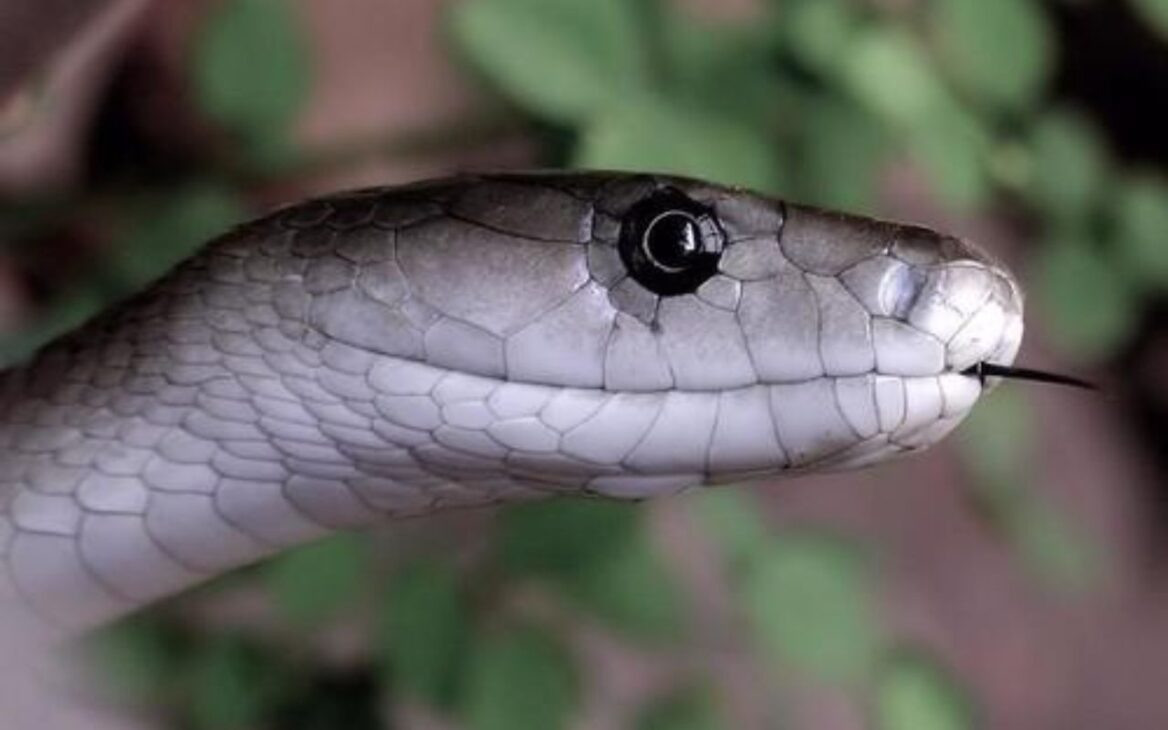
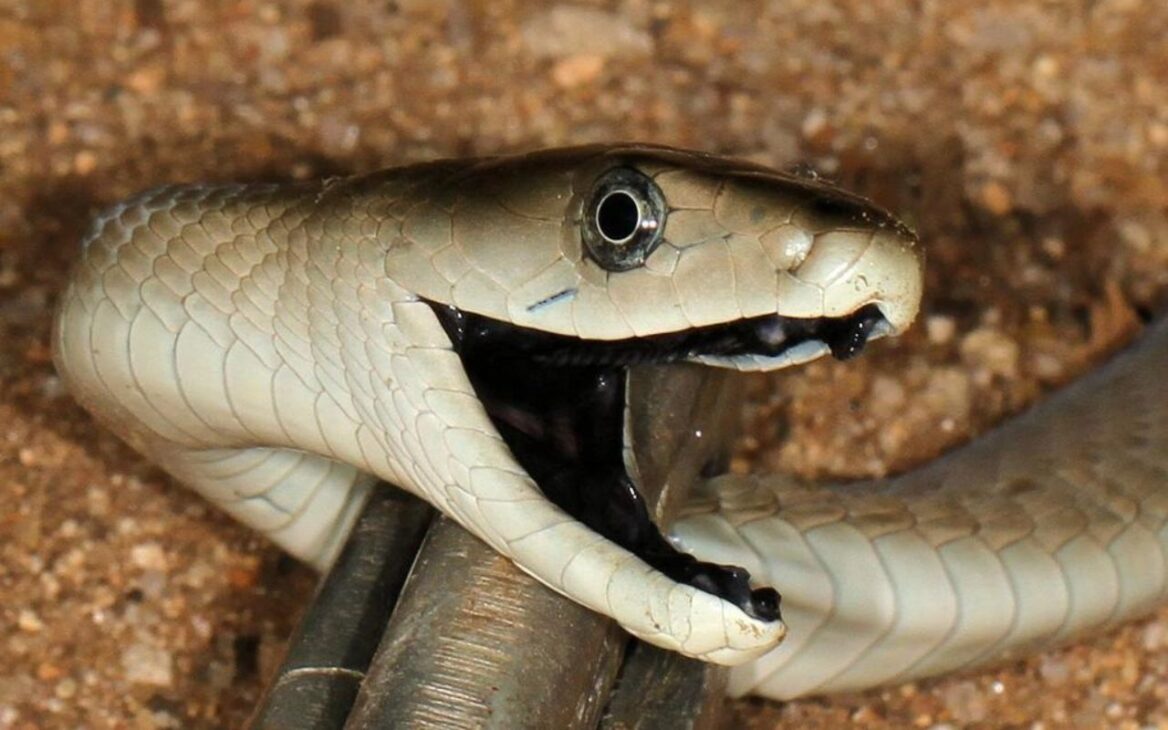
In these situations, the Dendroaspis polylepis raises part of its body, opens its mouth displaying its dark interior — a characteristic that gave rise to its name — and may perform multiple bites in rapid succession.
Each strike injects a significant amount of venom, drastically increasing the risk to the victim.
Impressive Speed And Effective Hunting
Another aspect that makes the black mamba so feared is its speed.
On suitable terrain, it can move at up to 16 km/h, and some reports indicate even higher peaks over short distances. This agility places it among the fastest snakes in the world.
During the day, when it is most active, the Dendroaspis polylepis hunts small mammals and birds, utilizing both the ground and trees. This versatility — terrestrial and arboreal — expands its range and efficiency as a predator.
Size And Physical Characteristics Of Dendroaspis Polylepis
Physically, the black mamba (Dendroaspis polylepis) is a long, slender, and muscular snake.
Most adult individuals measure between two and three meters, but specimens over four meters in length have been documented, making it the second largest venomous snake in the world, surpassed only by the king cobra.
Its narrow head, shaped like a coffin, houses short but highly efficient fangs.
These fangs, located at the front of the jaw, allow for the rapid inoculation of venom, even in brief attacks.
Colors, Dark Mouth, And Other Striking Details
Contrary to what the name suggests, the body of the black mamba is not black. Its coloration varies between olive-green, brown-yellow, khaki, bronze, and shades of gray.
Juveniles tend to have lighter colors, which darken over time.
The most emblematic feature of the Dendroaspis polylepis is the interior of the mouth, which displays a dark blue to nearly black hue.
This visual cue is displayed during defensive behaviors and serves as a warning to potential threats.
Scientific Classification And Origin Of The Name Black Mamba
The first formal description of the black mamba occurred in 1864, made by the zoologist Albert Günther.
The specimen that served as the basis for the study was collected during scientific expeditions in East Africa and is now part of the collection at the Natural History Museum in London.
The scientific name Dendroaspis polylepis has Greek origins. “Dendro” means tree, “aspis” refers to shield or snake, while “polylepis” refers to the presence of many scales. The term “mamba” comes from the Zulu language, widely spoken in southern Africa.
Relationship With Other Species And Genetic Advances
For decades, there have been debates about the classification of the black mamba in relation to other African mambas.
During certain periods, it was grouped with the eastern green mamba, but later studies reinstated the separation between the species.
Recent genetic analyses confirmed that the Dendroaspis polylepis is a close relative of the eastern green mamba, although it maintains unique characteristics in behavior, size, and toxicity.
Conservation, Human Risks, And Future Challenges
From an environmental perspective, the black mamba is classified as “Least Concern” on the IUCN Red List.
Nonetheless, habitat degradation poses an indirect threat, both to the species and to human populations.
As natural areas are transformed into agricultural or urban zones, forced coexistence with the Dendroaspis polylepis intensifies.
This scenario reinforces the importance of public policies focused on environmental education, accident prevention, and increasing access to antivenom in vulnerable regions.
The black mamba, a symbol of danger and respect in African wildlife, remains a powerful reminder of how nature, science, and society are deeply interconnected.
Source: National Geographic







Seja o primeiro a reagir!