





 Portuguese
  English
  Spanish
 5 min of reading
  7 comments


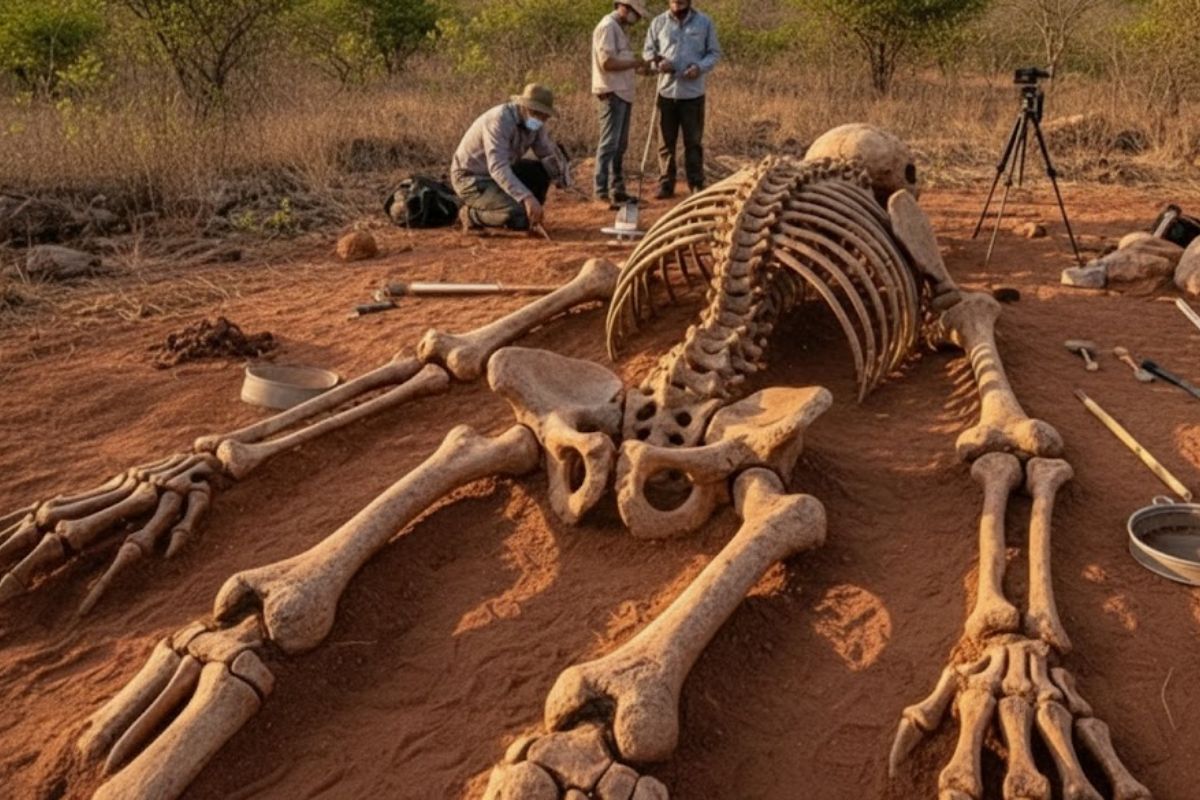


Discovery of a Prehistoric Megamammal in the Seridó Geopark Reveals a 6-Meter, 5-Ton Giant Sloth, Expands Understanding of Brazilian Pleistocene Megafauna, Strengthens University Research, and Projects the Interior of Rio Grande do Norte as a Destination for Scientific Tourism and Environmental Education for Residents, Researchers, Students, and Visitors
On December 2, 2025, the announcement of the discovery of a prehistoric megamammal in the Seridó Geopark, in Rio Grande do Norte, repositioned the region on the scientific map of Brazilian megafauna. Fossils of a giant sloth species Eremotherium laurillardi, approximately 6 meters long and estimated to weigh 5 tons, were found by a local resident and confirmed by academic teams.
The bone fragments recovered in Seridó belong to one of the largest terrestrial herbivores of the Pleistocene, a period that extended from approximately 2.5 million to 11 thousand years ago. The analysis coordinated by researchers from UFRN and Unesp transformed the find into a benchmark study of extinct megafauna, reinforcing the strategic role of the Potiguar geopark in the national paleontological landscape.
Scientific Importance of the Prehistoric Megamammal in Seridó

The fossils of the prehistoric megamammal, which include fragments of femur, rib, and phalanx, offer a rare and well-preserved set of evidence.
-
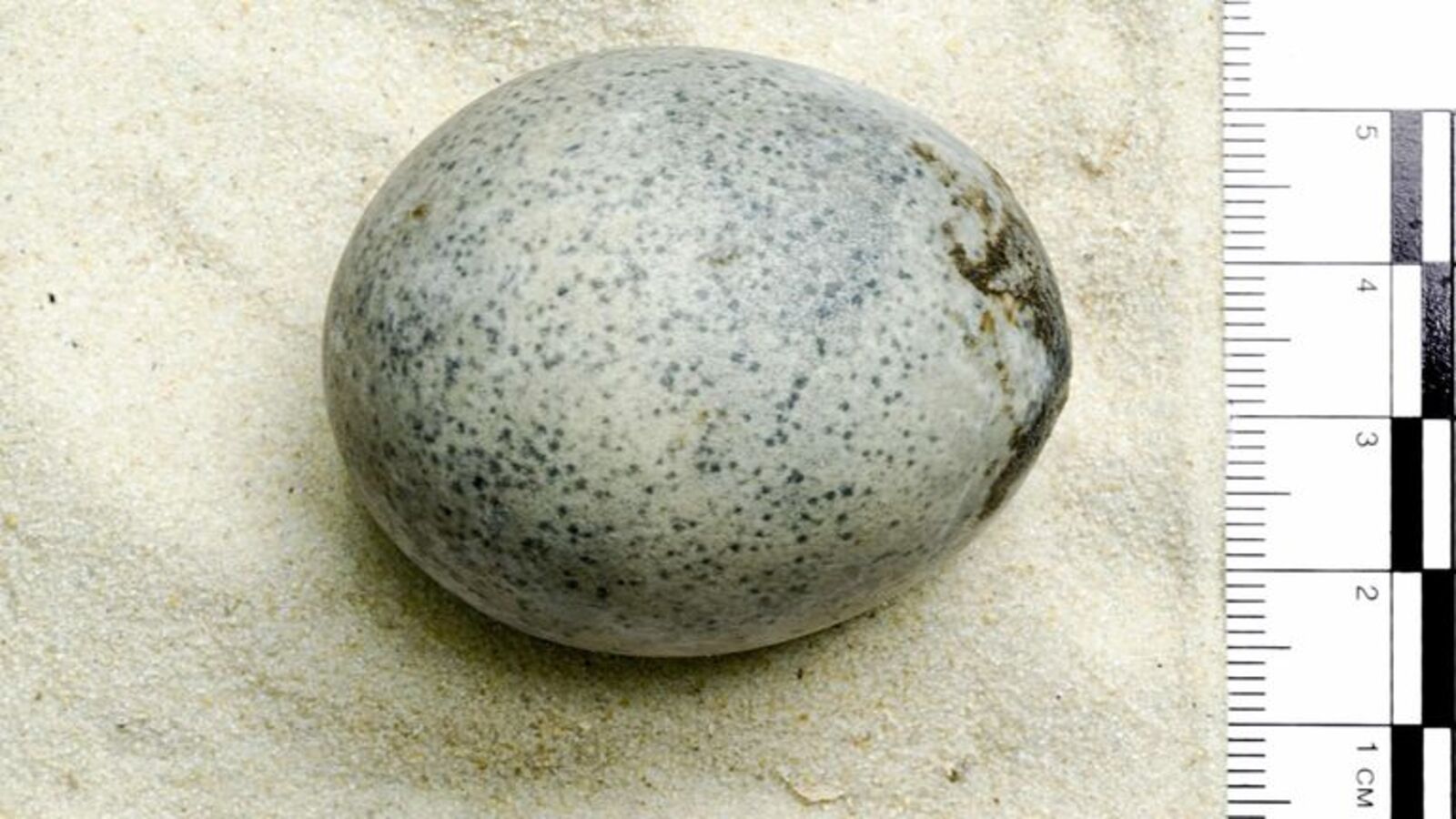
In a flooded well, archaeologists found a 1,700-year-old Roman egg that still contains clear and yolk intact inside the very thin shell.
-
Something is happening around the Earth: Inside the huge explosion of fireballs in 2026

-
A hot air bubble coming from Argentina expands over Brazil, causing thermometers to exceed 38 degrees with a thermal sensation of 40 degrees in late March, affecting 6 states at once.

-
The radish leaf that almost everyone throws away has more polyphenols, flavonoids, and fiber than the consumed root, and a 2025 study showed that the leaf contains compounds that protect the intestine, combat inflammation, and may inhibit the growth of cancer cells.


The pieces allowed for the reconstruction of anatomical features of the giant sloth and advanced the understanding of how this animal adapted to the terrestrial environment of Pleistocene Brazil.
The investigation indicated that the giant sloth had a robust bone structure, compatible with exceptional size and strength.
The identified adaptations suggest a skeleton specialized to support large body masses, with direct implications for understanding its locomotion, posture, and reach in the search for food in open environments.
Among the main scientific results are:
Clear evidence of adaptation to the terrestrial environment, with both hind and fore limbs prepared to support high body mass
Clues about dietary behavior, related to the consumption of large volumes of vegetation in areas of abundant biomass availability
Ecosystem connections with other prehistoric megamammals, allowing for a comparison of Eremotherium laurillardi with large herbivores that inhabited Brazilian territory during the same geological period
By integrating these data, researchers expand knowledge about the diversity of megafauna that occupied Brazil during the Pleistocene.
The prehistoric megamammal found in Seridó becomes part of a line of evidence that helps explain both the evolution of these animals and the environmental changes that preceded their extinction.
Seridó Geopark, UNESCO, and Fossil Heritage Preservation
The Seridó Geopark, recognized by UNESCO in 2022 as a territory of global importance, encompasses about 2,800 square kilometers distributed across six municipalities in Rio Grande do Norte.
This international classification reinforces the scientific, landscape, and cultural value of the region, which is now viewed as an open-air laboratory for geological and paleontological studies.
The fossils of the prehistoric megamammal will be registered and incorporated into the official collection of the Seridó Geopark.
The expectation is that they will be part of a permanent exhibition aimed at the general public, allowing visitors, students, and specialists to closely view the records of Brazilian megafauna and understand the geological context in which these animals lived.
The preservation work follows defined technical steps, including:
Controlled collection of fossils at the site of origin, with detailed recording of the position and conditions of the find
Laboratory analyses for taxonomic identification, ensuring precision in the classification of Eremotherium laurillardi
Comparisons with other specimens from the Pleistocene, both in and outside Brazil, to align the material with series already described in scientific literature
These procedures ensure that the prehistoric megamammal from Seridó is documented rigorously and integrated into databases that support current and future studies.
Proper curation also reduces the risk of loss, dispersion, or illegal trade of fossil pieces, a sensitive issue in areas of high geological value.
Prehistoric Megamammal as a Driver of Scientific Tourism and Education
The discovery not only impacts academia.
By revealing a prehistoric megamammal of significant size in Potiguar territory, the Seridó Geopark consolidates a powerful asset for scientific tourism and environmental education.
The combination of semi-arid landscapes, rock outcrops, and fossil sites creates a favorable scenario for guided tours, interpretive trails, and training programs.
Projects aimed at the school community can use the giant sloth as a central figure to explain themes such as evolution, climate change over thousands of years, and the importance of conserving sensitive geological areas.
By seeing the fossils of the prehistoric megamammal up close, students are likely to connect science, territory, and natural history in a concrete way, which reinforces learning.
In tourism, the geopark gains an additional element of attractiveness. The presence of a prehistoric megamammal cataloged and on display, associated with the UNESCO seal, tends to:
Increase visitors’ interest in seeking out tours related to paleontology and geodiversity
Stimulate new local businesses in hospitality, gastronomy, and specialized guiding services
Enhance the image of Seridó as a destination that unites science, culture, and landscape in one territory
Next Steps in Research on the Prehistoric Megamammal
The team involved in the analysis of the prehistoric megamammal from Seridó is expected to continue with the complete cataloging of the material, detailed anatomical description, and comparison with finds from other Brazilian regions.
The expectation is that the results will be published in specialized journals, fueling international debate about Pleistocene megafauna in South America.
Furthermore, the set of data obtained from the giant sloth may be used in studies on extinction dynamics, paleoenvironmental reconstructions, and the evolution of large herbivores in tropical environments.
Each bone of the prehistoric megamammal carries information about climate, vegetation, and ecological interactions from a past profoundly different from the present, but which helps understand ongoing processes.
At the same time, the Seridó Geopark gains additional arguments to secure funding, establish scientific partnerships, and expand its visitor infrastructure.
The discovery of this prehistoric megamammal reinforces the thesis that the region harbors other potential sites of interest, which may reveal new chapters of Brazilian natural history.
In light of this discovery, would you visit the Seridó Geopark to see the prehistoric megamammal up close and learn more about the megafauna that once occupied the interior of Brazil?






Jura que querem apresentar um jornalismo sério usando texto e imagens gerada por Inteligência Artificial. Nem se deram ao trabalho de mudar a imagem do esqueleto humano. Pior que tiram a credibilidade da história da descoberta da preguiça gigante que é real. Desfavor para os jornalismo sério.
🤥Imagens falsas. O pior é que a gente sempre acaba caindo na mesma armadilha de clicar pra ver.
E um tres
Porque usar esse esqueleto humano sem nenhuma conexão com a noticial…imprensa de hoje é mais show que informação.
****! QUERENDO CLICKS
É verdade, vc tá certo, hoje poucas pessoas acreditam nessa imprensa
E um tires