





 Portuguese
  English
  Spanish
  6 min of reading
  1 comment


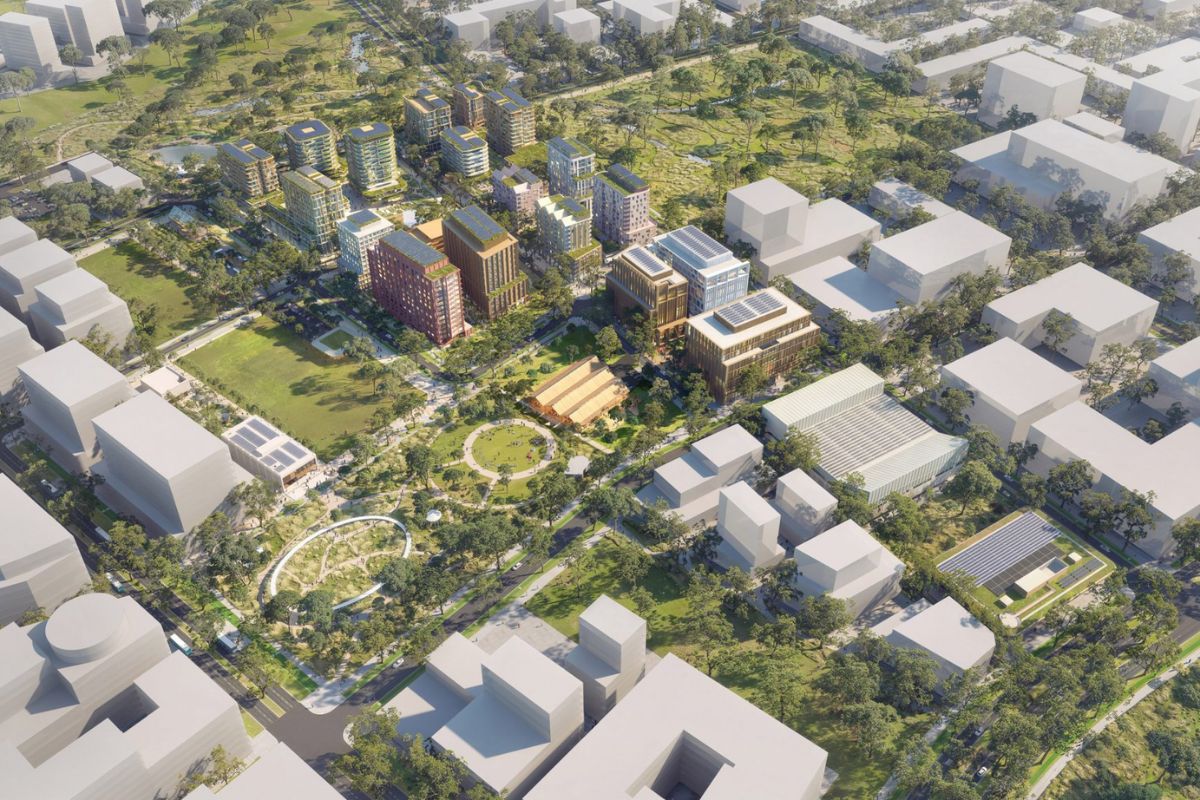


Plans Officially Unveil Australia’s New City Called Bradfield City Next to Western Sydney International Airport and 50 Km from Sydney’s City Center, Featuring 10,000 Residences, University Campus and Parks That Reconfigure Power, Territory, and Climate
On February 11, 2026, the contours of a new city in Australia planned for the western zone of Sydney were detailed, on a 114-hectare site described as a new urban core about 50 kilometers from the central business district. The design was presented by SOM and Hassell studios, with 16 comments accompanying the announcement.
Named Bradfield City, the proposal was positioned next to the newly completed Western Sydney International Airport and combines housing, jobs, and public facilities in phases. The operational milestone is to open the First Subdivision within the next five years, while urban engineering attempts to balance density, green areas, low-carbon materials, and references to First Nations Territory.
What Is in Bradfield City’s Master Plan and Who Endorses It

The project is based on a master plan that organizes Bradfield City as Australia’s most ambitious new city in over a century, both in scale and in the attempt to create a centrality outside Sydney’s historic core.
-
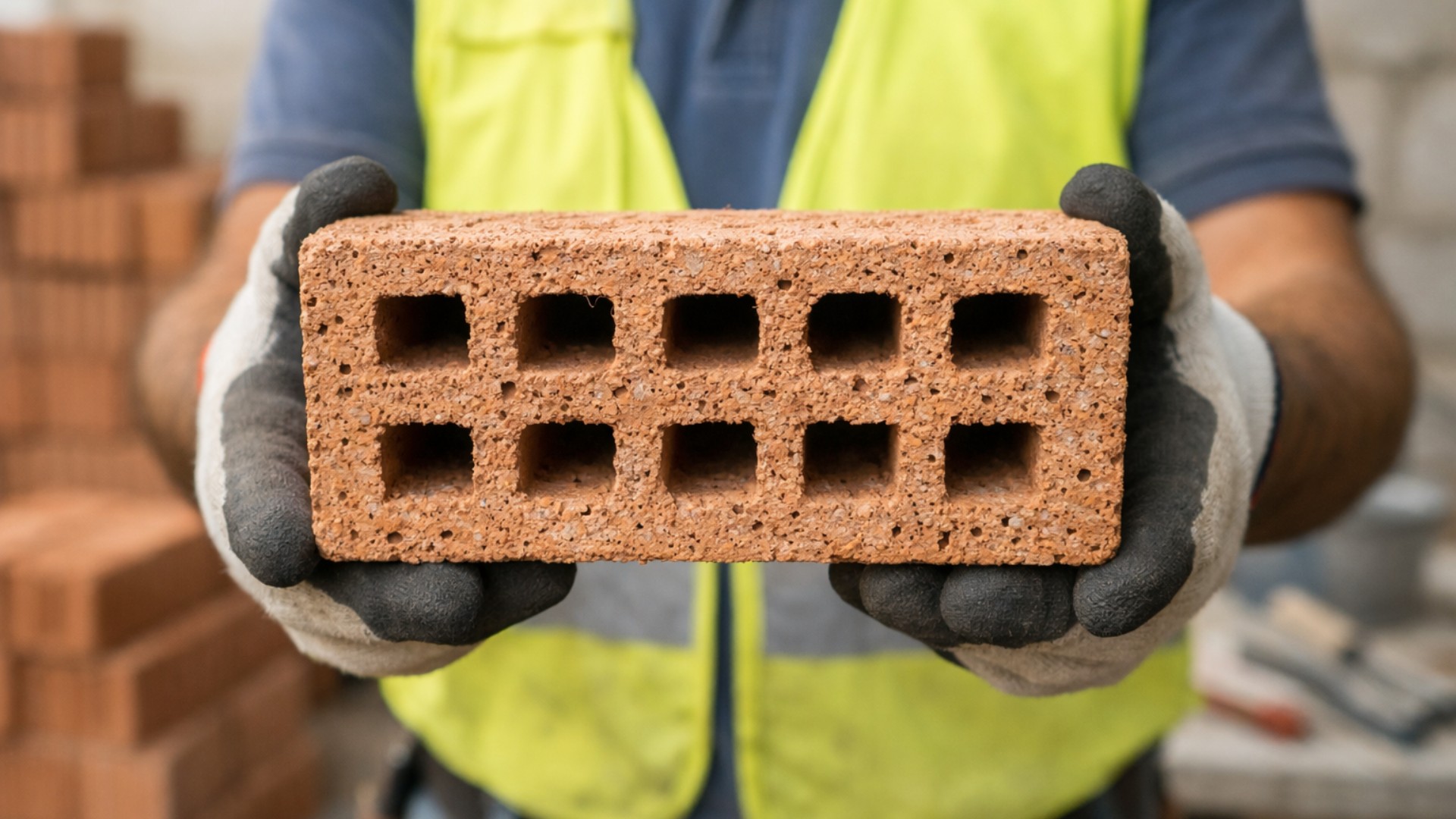
Scientists use sawdust mixed with clay to create a lighter brick, promising efficient thermal insulation and impressing by transforming waste into a solution for construction.
-
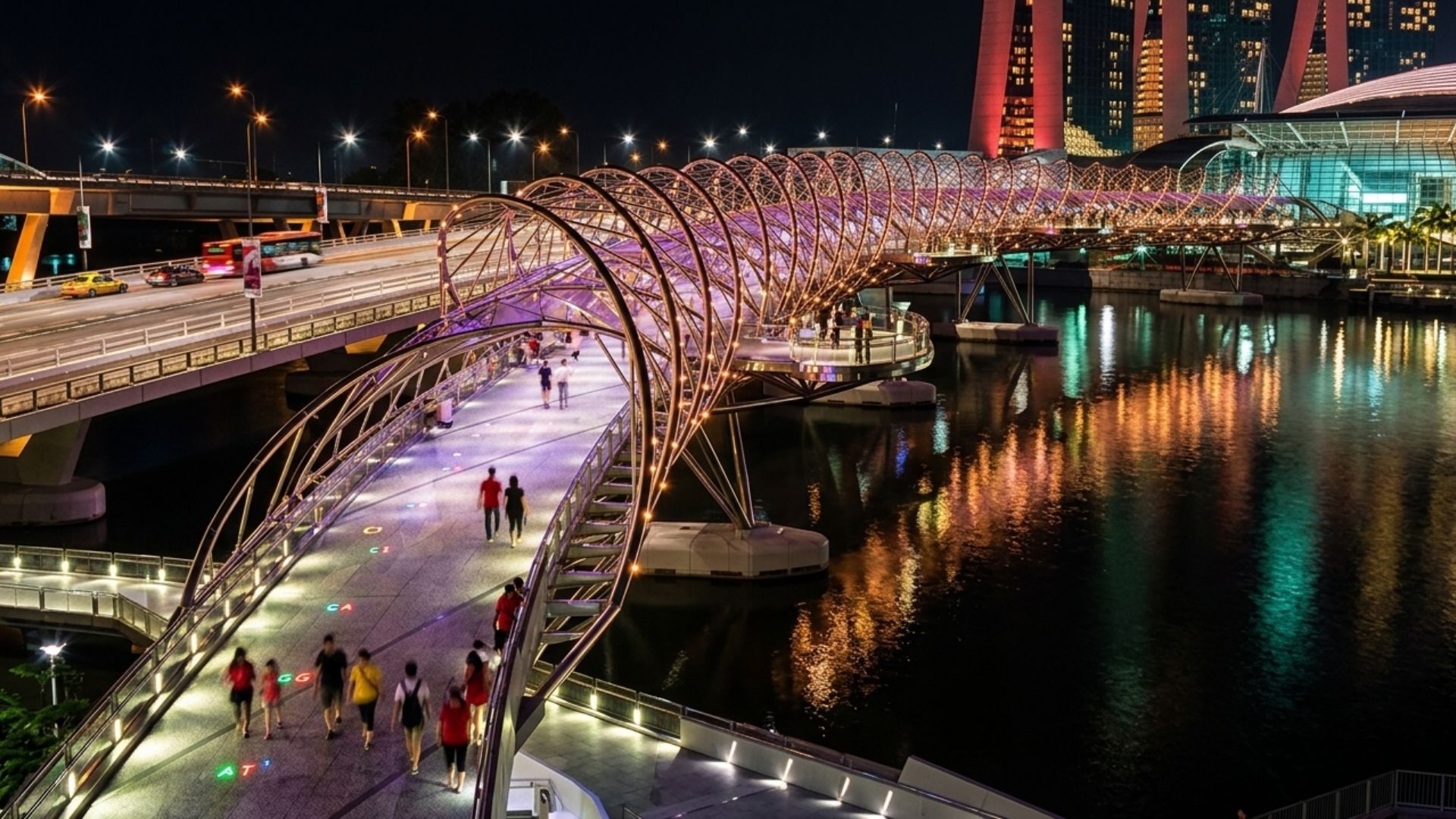
With a DNA shape, this bridge in Singapore draws attention in modern architecture and surprises tourists by transforming a simple crossing into an unforgettable visual experience in the urban heart.
-
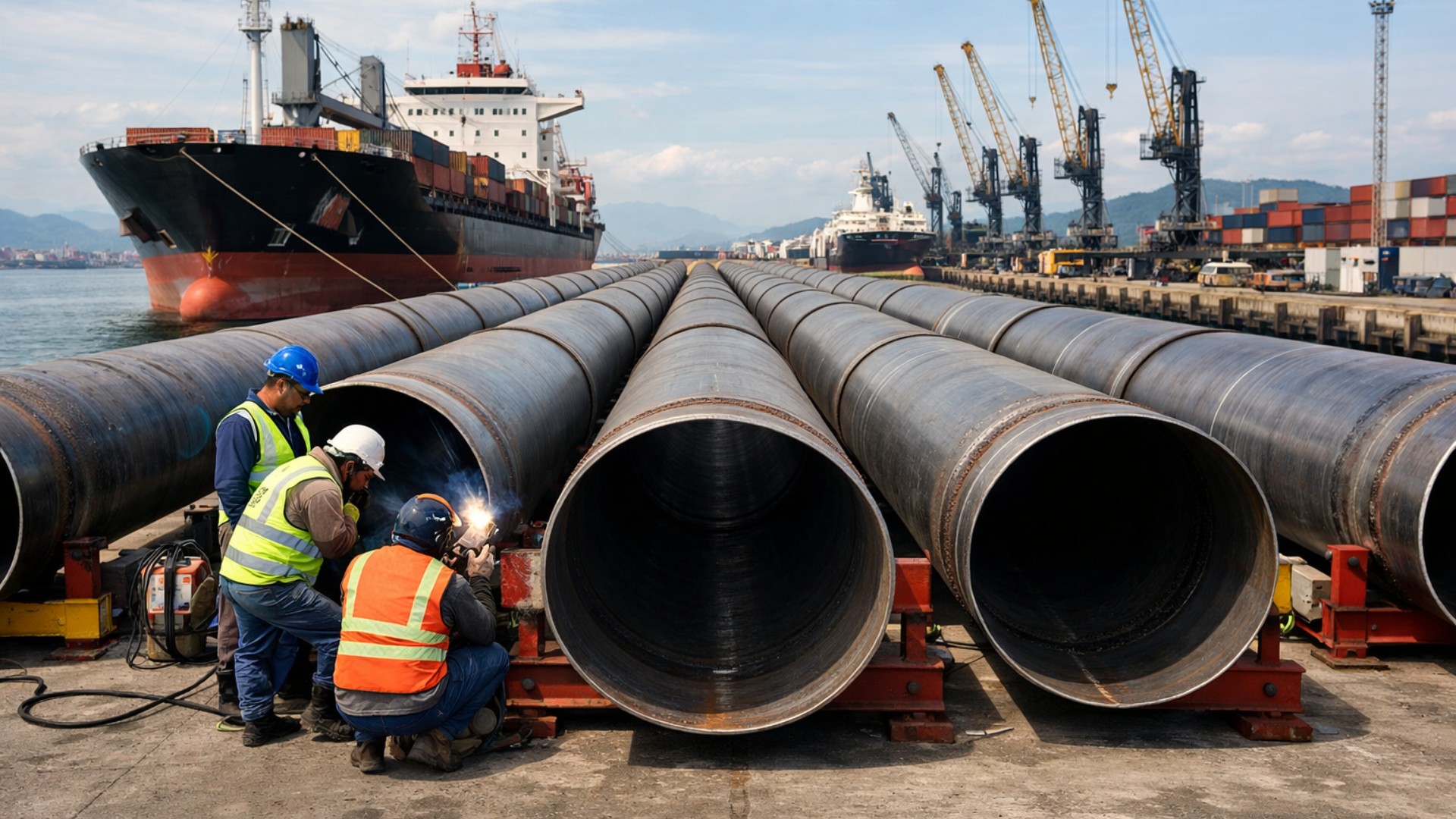
Giant underwater pipeline begins to take shape with a R$ 134.7 million project at the Port of Santos: the 1.7 km structure uses 12-meter and 700 mm pipes to supply water to 450,000 people in Guarujá.
-
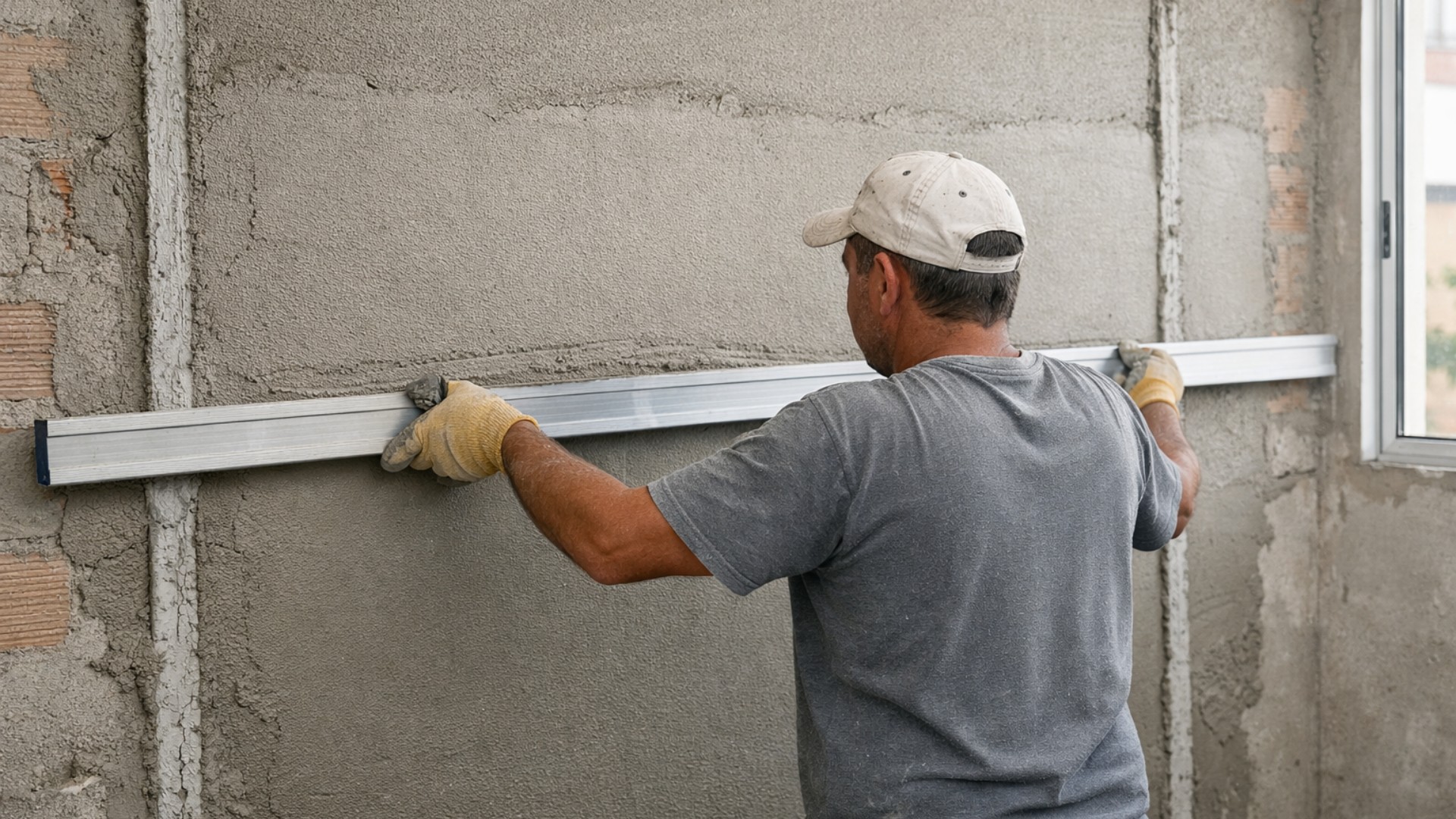
A mason reveals a professional plastering technique that uses aligned guides and a 3-meter ruler to plaster an entire wall in up to 3 hours, without visible seams, with uniform thickness, perfect plumb, and a finish ready for painting without rework.

The authorship is shared between the American firm SOM and the Australian firm Hassell, in an arrangement that treats infrastructure, blocks, public spaces, and volume as an integrated system.
The master plan outlines quantitative goals and repeated urban elements throughout the project: 10,000 residences distributed throughout the total development, a green circular park of 2.2 kilometers, a central park of two hectares, and four major civic centers.
Michael Powell framed the challenge as a rare responsibility in designing a city from scratch, and the metric is what defines how this centrality can function in practice.
Where the New City of Australia Will Be Built and Why the Airport Becomes Central
The location is the main determinant of the project: Bradfield City is planned to be immediately adjacent to Western Sydney International Airport, in the western zone of Sydney, approximately 50 kilometers from the central business district.
In urbanism, the proximity of a terminal of this size usually alters mobility patterns, land prices, and demand for services, and the master plan assumes this by proposing an urban district focused on regional connections.
From an urban engineering perspective, Western Sydney International Airport acts as an anchor for flows and, consequently, typologies. The initial phase anticipates high-rise buildings aligned with tree-lined streets, with large green areas interspersed to control microclimate and provide permeability.
It is in this interface between the airport, housing, and public space that the new city of Australia tries to justify its existence as an additional hub within Sydney.
How Much Changes in Practice: Numbers, Phases, and Superlot 1
The numbers help answer how and at what pace Bradfield City is moving from concept to reality.
The project has been associated with over 1 billion dollars in Australian public investments and is being developed by the constructor Plenary, with a timeline that points to the first phase within the next five years.
At the center of the launch, the First Subdivision, also called Superlot 1, spans 5.7 hectares and has been described as the “civic heart” of Bradfield City.
This phase concentrates 1,400 residences, a university campus, offices, retail space, a hotel, and public space, attempting to demonstrate early on how the new city of Australia can sustain continuous urban life, and not just be a dormitory.
Housing, Density, and Green: How the 10,000 Residences Are Tied to the Design
The promise of 10,000 residences is the variable that most pressures urban design, as it imposes enough density to justify transportation, commerce, and services, while also requiring thermal mitigation and open areas.
Therefore, the master plan insists on a green circular park of 2.2 kilometers as a continuity structure, complemented by a central park of two hectares.
The images released for the initial phase reinforce this thesis by showing tall buildings in sequence, setbacks for landscaping, and large green clearings.
Bradfield City, in this format, attempts to avoid the common mistake of dispersed peripheral expansion in Sydney, using green spaces as infrastructure rather than as an afterthought. The real performance will depend on implementation rules, water management, and maintenance, not just on renderings.
Operational Sustainability: Passive Design, Green Roofs, and Solar Panels
The environmental layer of the master plan combines well-known solutions, but applied as a package of urban infrastructure.
Among the strategies are passive design, green roofs, and solar panels throughout the city’s infrastructure, justified to enhance environmental performance and reduce energy load in a scenario of warming and extreme climate events.
Kevin Lloyd described the goal as a neighborhood where nature and urban life intertwine.
In technical discussions, the challenge is to turn guidelines into measurable requirements: solar orientation, cross ventilation, shading, surface albedo, and standardization of green roofs need to enter codes, contracts, and oversight.
Without this, Bradfield City runs the risk of becoming merely declared sustainability, where measures are relaxed as the timeline progresses.
Territory, Culture, and Materials: The Role of Djinjama, COLA Studio, and Sufficiency
One of the most specific points of the proposal is the collaboration with cultural design partners Djinjama and COLA Studio, aimed at making the new city of Australia “inclusive and resilient to climate change” and shaped by Indigenous connections to the Territory.
In terms of urban governance, this means incorporating repertoires and criteria that are not limited to physical efficiency.
The most tangible example is a wooden pavilion designed as a community space, under an interconnected structure and woven canopy.
According to the description, the inspiration comes from the Aboriginal principle of “sufficiency,” using only what is necessary, which led to the choice of low carbon and high-performance materials. The practical question is whether this principle will be replicated at scale, and not just in a symbolic building of Bradfield City.
What Sydney Gains or Loses with the New City of Australia by 2031
By designing a new urban core outside the traditional axis, Sydney redistributes pressures of housing, employment, and infrastructure but also takes on coordination risks.
If Bradfield City fulfills the role of centrality close to Western Sydney International Airport, it could reduce long commutes for part of the population and reorganize the economy of western Sydney.
On the other hand, the size of the public investment, the promise of 10,000 residences, and the speed of the timeline raise disputes over priorities and social return.
The big question is whether the new city of Australia will be an urban planning laboratory or a real estate corridor anchored by the airport, with undersized green areas when demand grows.
The master plan for Bradfield City places Sydney in front of a technical and political choice: to concentrate growth in a new centrality next to Western Sydney International Airport or to reinforce the historic center with densification and infrastructure.
The result, in practice, will be measured in access to housing, service costs, environmental performance, and quality of public space in the next five years.
For those following urbanism or living in Sydney, which part of this design seems most critical for success: the environmental package with passive design, green roofs, and solar panels, the cultural commitment to Territory and sufficiency, or the promise of 10,000 residences near Western Sydney International Airport?






O desafio menos considerado nesses projetos é a qualidade de vida para as crianças e adolescentes, reservando espaços para desenvolver suas aptidões naturais e criatividade integrada com a natureza