





 Portuguese
  English
  Spanish
  3 min of reading
  0 comments


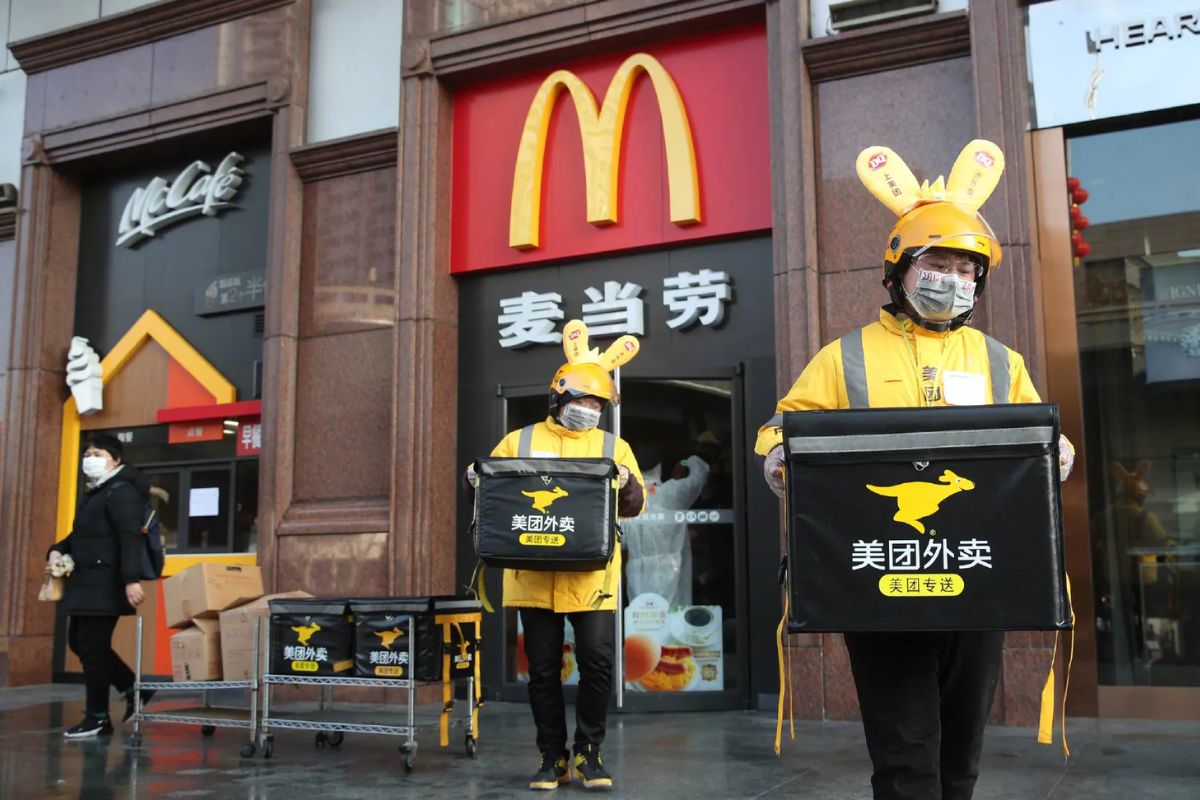
Meituan Suffers Collapse in Profits in China on the Eve of Its Debut in Brazil. Intense Competition with Alibaba and JD Caused Meituan to Lose 97% of Its Profit and Raise Doubts About Its Global Strategy.
Meituan, the Chinese delivery giant and owner of Keeta, which is about to start operations in Brazil, is facing one of the worst crises in its history. The company disclosed that direct competition with Alibaba and JD has reduced its net profit by 97% in the second quarter, bringing the result down to 365.3 million yuan (around US$ 51 million), despite a 12% increase in revenue.
This scenario pressures investors, who have already seen the company lose a quarter of its market value in 2025. According to analysts, Meituan’s arrival in Brazil comes at a time of extreme vulnerability, which could affect its ability to compete with local rivals such as 99Food and iFood.
How Meituan Lost Ground in China
Meituan, for years the absolute leader in the Chinese delivery sector, is now facing rivals willing to subsidize customers on a large scale. JD and Alibaba have started offering aggressive discounts amid the consumption crisis in the country, attracting consumers who were previously loyal to the market leader.
-
Larger than entire cities in Brazil: BYD is building a 4.6 km² complex in Bahia with a capacity for 600,000 vehicles per year, but the discovery of 163 workers in conditions analogous to slavery has shaken the entire project.

-
With an investment of R$ 612 million, a capacity to process 1.2 million liters of milk per day, Piracanjuba inaugurates a mega cheese factory that increases national production, reduces dependence on imports, and repositions Brazil on the global dairy map.

-
Brazilian city gains industrial hub for 85 companies that is equivalent to 55 football fields.

-
Peugeot and Citroën factory in Argentina cuts production by half and opens a layoff program for more than 2,000 employees after Brazil drastically reduced purchases of Argentine vehicles.


According to CFO Chen Shaohui, the company anticipates “significant losses in its core local commerce business, including food delivery”. The statement made it clear that the pressure on margins is expected to continue in the short term.
Billion-Dollar Impact for Investors
The price war between Meituan, JD, and Alibaba has already wiped out around US$ 100 billion in combined market value of the three companies. Although it has increased user participation, the incentive and subsidy model has drastically reduced profitability.
In practice, Meituan has been forced to invest billions in delivery personnel and promotions to defend its space, resulting in more losses than gains. The outcome was seen as a warning of fragility in the business model that seemed solid just a few years ago.
What to Expect from Meituan in Brazil
The entry of Meituan in Brazil, through Keeta, takes place in a competitive environment dominated by local players. iFood leads the sector, followed by 99Food, both with strong penetration in different regions. Experts believe that Meituan may adopt the same subsidy strategy, raising doubts about the financial sustainability of its operation.
Although it has successful experience in China, the challenge in Brazil will be to reconcile expansion with cost control. If it repeats its aggressive strategy, it may quickly capture market share, but at the cost of new losses.
Meituan arrives in Brazil at a delicate moment, after admitting that its profitability has been nearly destroyed by competition in China. The big question is whether the company will be able to adapt to the Brazilian scenario without repeating recent mistakes.
What do you think, do you believe that Meituan will be able to compete equally with iFood and 99Food in Brazil? Or could the price war lead it to more losses? Share your opinion in the comments — your insights help to understand the impact of this dispute.








-

-

-

-

-

-

21 pessoas reagiram a isso.