





 Portuguese
  English
  Spanish
  4 min of reading
  0 comments


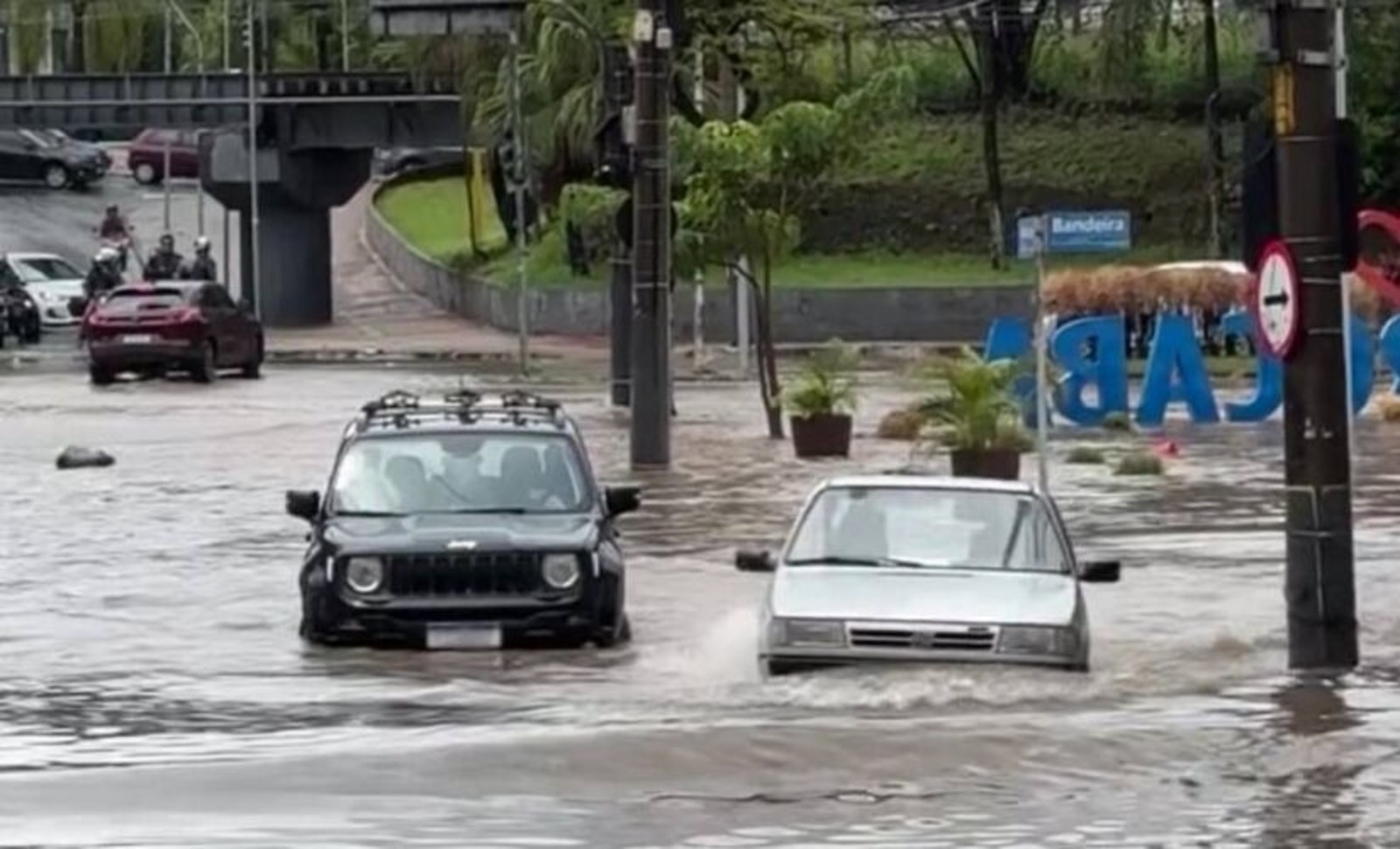
The Repetition of Fiat Uno Images Crossing Floods Exposes How Mechanical Simplicity, Intensive Use, and Urban Context Shaped a Reputation That Mixes Meme, Collective Memory, and Real Technical Fundamentals
During the rainy season, a scene always repeats itself in large Brazilian cities: flooded streets, anxious drivers, and a Fiat Uno crossing floods while more expensive vehicles remain stuck, raising doubts about the resistance, design, and real limits of these cars.
The Origin of a Fame That Crosses Generations
The image of the Fiat Uno challenging floods gained traction on social media, but it was born much earlier when simple models dominated urban traffic daily.
According to an investigation by UOL Carros, curiosity led to a technical analysis of how this car built an almost legendary reputation.
-
It surpassed the Polo, the Toro, the Hilux, and the Saveiro: with almost 17 thousand units sold, the Fiat Strada was the best-selling car in March 2026.
-
Kymco launches a 3-wheeled scooter with a 52 hp engine, a tilting front, and an audacious proposal to address one of the biggest fears of those who want to ride a motorcycle but still do not trust two wheels.
-
Most drivers make a big mistake on the road without knowing: there is an exact speed that makes the engine work with minimal effort and saves much more fuel, and it is neither 80 km/h nor 100 km/h as many imagine.
-
Mechanic explains: Ferrari 296 has a hybrid system management failure that can drain the high-voltage battery to an “irrecoverable” point in the car; recovery requires charging cell by cell on a bench, is risky, and the battery can cost R$ 250,000 imported.

The vehicle became a recurring symbol of urban resistance, especially during periods of heavy rain, when traffic reveals practical differences between old and current designs.


The Unos of Firms and the Daily Life of Floods
According to Professor Fernando Castro Pinto, the fame began with the so-called Unos of firms, common in urban maintenance services.
These cars, often used by companies, faced potholes, bad roads, and floods without much care from the drivers, creating striking images.
Over time, this everyday experience was transferred to the collective imagination, reinforced by jokes and exaggerated comparisons, amplified by the internet.
Accepted Meme, But Not Fully Unfounded
For the specialist, the phenomenon became a meme, but it did not come out of nowhere, as there are technical foundations behind this perceived performance.
The main explanation lies in the simple design of the Uno and other old cars, like the Gol and Fusca, which share similar characteristics.
These models were conceived in times with little embedded electronics, a factor that reduces vulnerabilities in situations of water contact.
Simple Design As Unexpected Advantage
According to the UFRJ professor, fewer electronic modules mean fewer sensitive points when water invades parts of the vehicle.
Even with modern protections, current electronic systems can fail if wet, interrupting essential functions during flood crossings.
Moreover, components like air intake and alternator are often positioned higher in these older cars, making direct water entry more difficult.
The Contrast with Modern and Connected Vehicles
In current vehicles, the focus is on comfort, safety, and connectivity, which implies sensors, control units, and modules distributed throughout the car.
These systems enhance sophistication, but they also increase risks when exposed to water, especially in unexpected floods.
Fernando emphasizes that no car was designed to face deep floods, and any crossing involves clear technical limits.
When the Water Rises, Everything Changes
According to the professor, when the water reaches the front grille, design, electronic protection, and driver experience come into play.
Even old vehicles can fail if water reaches critical points, showing that resistance does not mean total immunity.
Therefore, extreme situations turn any car into a candidate for failure, regardless of brand, age, or price.
The Importance of Driving Style Even If It’s a Fiat Uno
One often-overlooked aspect is the way the driver crosses a flood, a decisive factor in avoiding severe damage.
The recommendation is to maintain a constant speed, avoiding sudden accelerations and preferably in first gear, to prevent water from entering the engine.
If hydraulic lock occurs, the damage is almost certain, potentially leading to complete engine failure, according to the specialist.
Clear Limits for Any Vehicle
The recommendation is not to advance when water exceeds half the wheels, even if the car has a reputation for being resilient.
Safe crossing depends more on the driver’s common sense than on popular myths associated with specific models.
Thus, the Uno is not amphibious, but it ended up standing out due to a specific combination of mechanical simplicity and intense daily use.
Fiat Uno: Between the Joke and Technical Reality
The reputation of the Italian compact mixes humor, practical experience, and design characteristics that favored its survival in urban floods.
As Fernando summarizes, no car is made for floods, but some end up performing better because they were not designed with excessive technology in mind.
In the end, the image of the Uno with a ladder on the roof remains a cultural symbol, more linked to urban history than to absolute technical promises.
With information from UOL.








-

Uma pessoa reagiu a isso.