





 Portuguese
  English
  Spanish
  4 min of reading
  1 comment


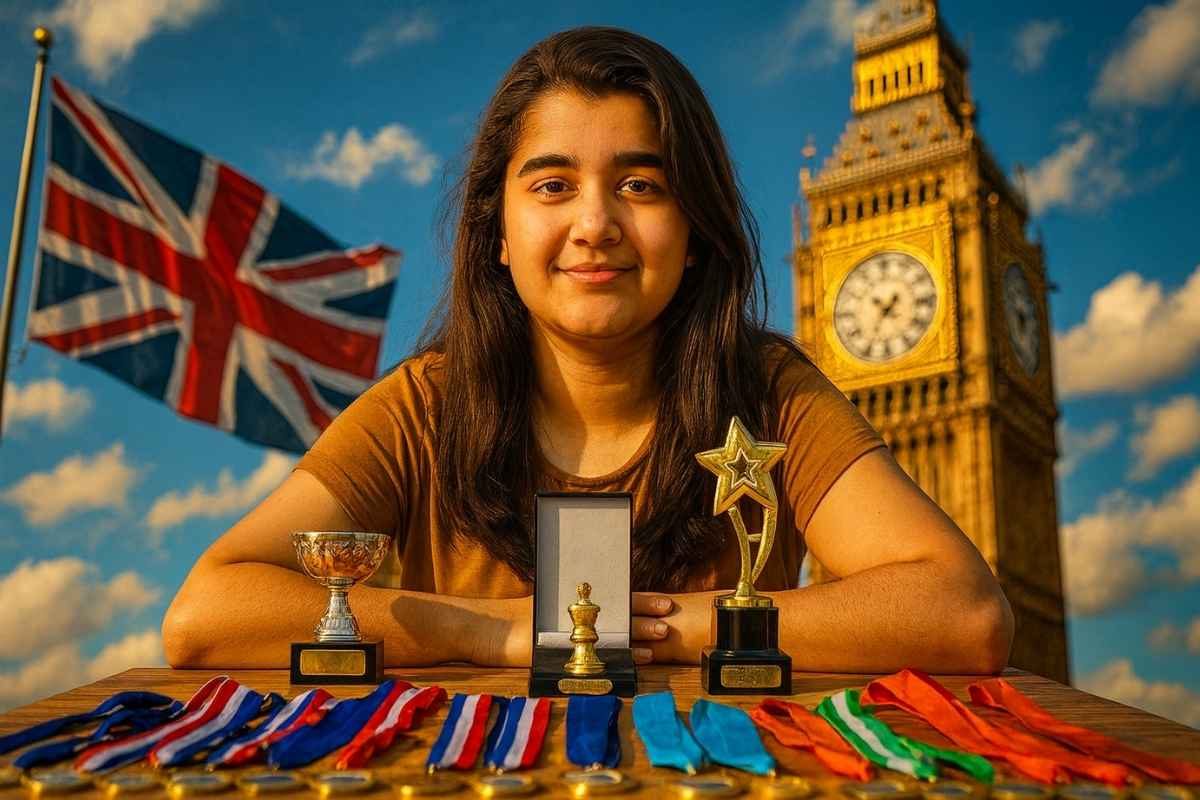


The Gifted British Girl Kashmea Wahi, 11, Took the Mensa Test Out of Curiosity, Scored the Maximum Score of 162, and Joined the Select Group of the 1% Most Intelligent People in the World, Surpassing Even Einstein and Hawking.
The story of the gifted girl Kashmea Wahi, only 11 years old, impressed the world by achieving the maximum score of 162 on a Mensa IQ test, the international society for people with high intelligence quotients. The result placed her among the 1% most intelligent people in the world, surpassing the estimated IQ of geniuses like Albert Einstein and Stephen Hawking.
Born in London to Indian parents, Kashmea decided to take the test out of curiosity, not imagining that her performance would make her one of the youngest individuals in history to achieve the maximum score. Her accomplishment raised reflections on the potential of young minds and the impact of academic pressure on gifted children.
How It All Began: Curiosity Turned Into Worldwide Recognition
Kashmea stumbled upon the Mensa test while browsing on her iPad. Tired of her parents’ insistence to study more, she decided to sign up to “prove a point” and show that she already had high cognitive performance.
-
These living root bridges and ladders are over 700 years old and help indigenous people survive in one of the rainiest regions in the world.

-
From sertanejo star to international investor: Ana Castela invests millions in a mansion in the USA, creates a themed accommodation in Orlando, and shows that the “boiadeira” also wants to grow away from the stage.

-
The 10 most stunning motorhomes in the world: a $3 million trailer with a rooftop nightclub and garage for a Ferrari, “palaces on wheels” with Italian marble, private cinema, and five-star hotel luxury for billionaires.

-
Trump wanted to spend $400 million on the White House, but the courts prohibited the million-dollar construction.


The exam, aimed at people over 10 and a half years old, was conducted in London and primarily included adults, many in their 30s.
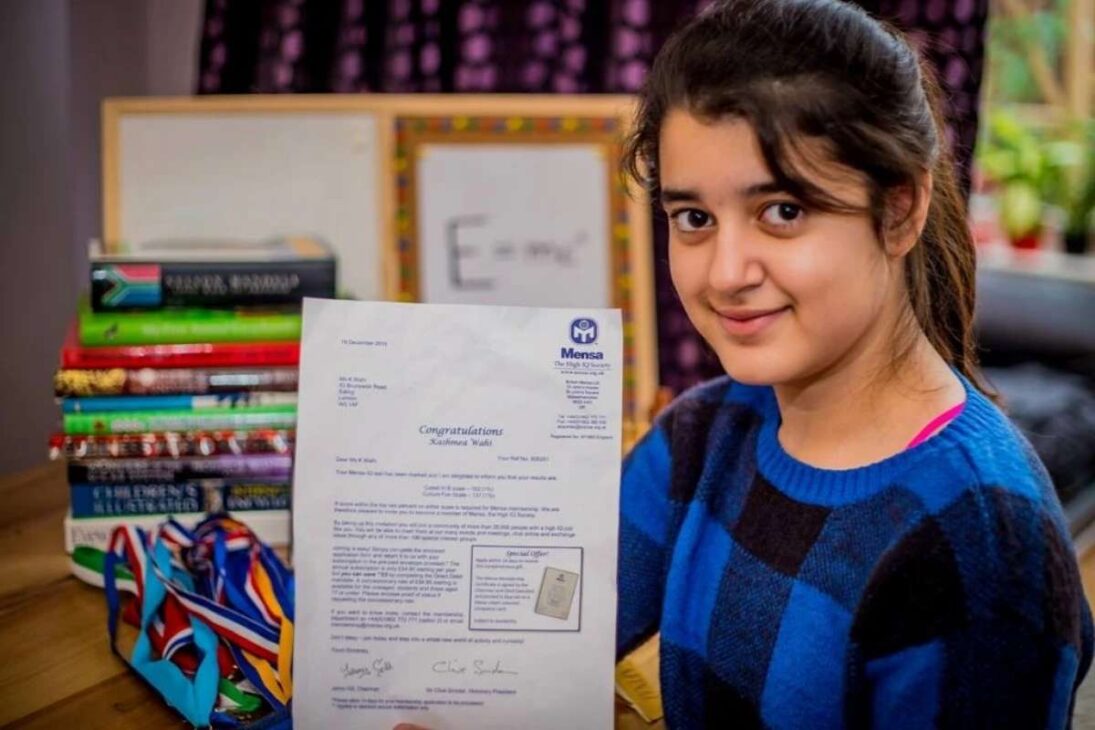
The result surprised even the examiners. Kashmea scored 162 points on the Cattell III B test, which measures logical reasoning and reading comprehension.
This is the maximum possible score for those under 18 and officially placed her among individuals of exceptional intelligence, recognized by Mensa.
What an IQ of 162 Means
The score achieved by Kashmea is considered extremely rare.
The global average IQ ranges from 85 to 115 points, while scores above 145 are classified as genius-level.
In the case of the British student, the result positions her in the intellectual elite group of the entire planet.
In comparative terms, Einstein and Hawking had estimated IQs of around 160, which means that Kashmea’s performance is, in numerical terms, superior.
The young girl, however, was emphatic in stating that “the comparison is exaggerated” and that many accomplishments would be needed to compare with the great names in science.
The Repercussion and the Routine After the Achievement
Kashmea’s feat generated widespread coverage in the international press. Headlines highlighted the “smartest girl in Britain”, and her story became an example of the power of curiosity and the encouragement of learning from an early age.
However, the notoriety also brought new pressures.
Instead of easing her parents’ demands as she expected, the result increased expectations regarding her academic performance.
Kashmea continued with a disciplined study routine and maintained her focus in multiple areas: she participated in chess tournaments, played netball, practiced tennis, and was part of an award-winning team in mathematical challenges at the University of Oxford.
Academic Development and Subsequent Achievements
Throughout her teenage years, Kashmea maintained an impressive academic record. In 2021, she achieved a perfect score (grade 9) in all 11 subjects of the international iGCSE exam, including mathematics, sciences, computing, Spanish, drama, and history.
Additionally, she engaged in social causes, volunteering with charitable organizations such as Children’s Society and Go Dharmic.
Her practical intelligence also manifested in technological initiatives.
In 2017, she participated in the creation of the Speciall app, aimed at assisting people with disabilities and allergies, demonstrating a genuine interest in using her knowledge for humanitarian purposes.
The Reflection Behind Early Genius
Despite her success, Kashmea Wahi and her family opted for a more discreet life after the peak of media exposure.
Today, her example is often used in discussions about gifted education and the mental health of young prodigies.
Experts point out that stories like hers highlight the importance of balancing intellectual stimulation and emotional well-being.
Kashmea, with an uncommon maturity for her age, has always emphasized that intelligence is just one part of life and that “curiosity, empathy, and persistence are also signs of genius”.
Do you believe that gifted children should receive special attention in schools? Or should talent be treated naturally? Share your opinion in the comments; we’d love to hear from those who closely follow the development of young prodigies.








veja minha observação no post do LinkedIn ptharsocastro… há controvérsia.