





 Portuguese
  English
  Spanish
  8 min of reading
  0 comments


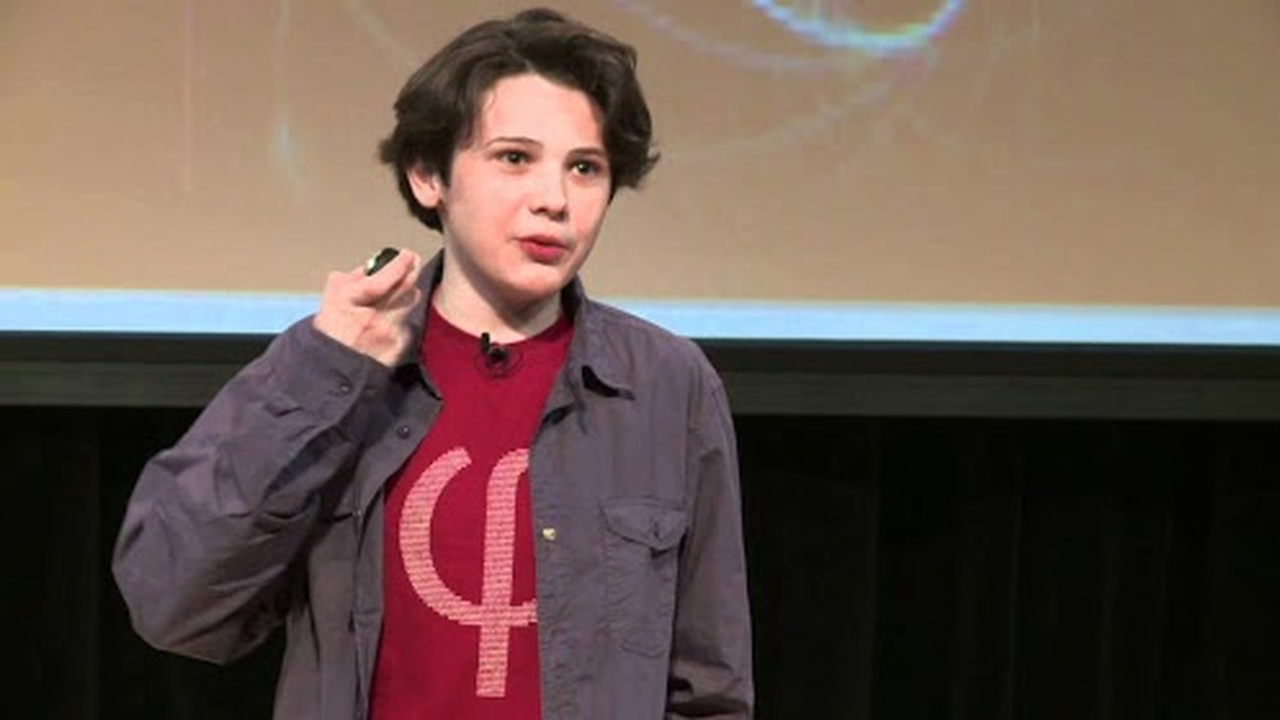
Jacob Barnett: From A Diagnosis Of Severe Autism To A PhD In Theoretical Physics And A Postdoc In Europe
Jacob Barnett was born in May 1998, in Indianapolis, Indiana, and from an early age drew the family’s attention for unusual signs of cognitive development. CBS reports on his journey note that he was diagnosed with autism at 2 years old, after a regression period in which he stopped speaking and making eye contact, and later became nationally known for taking university courses as a child. The case gained international prominence with the book The Spark, written by his mother, Kristine Barnett, and with coverage from 60 Minutes, which presented him as a prodigy in mathematics and physics.
Diagnosis Of Autism In Jacob Barnett And The Prognosis That Seemed To End Any Academic Expectation
The most striking part of Jacob Barnett’s childhood was not the early brilliance, but the sharp regression that led to the autism diagnosis. According to the story narrated by his family and reproduced in interviews and promotional materials for the book The Spark, he showed signs of accelerated development as a baby, but around the age of 2, he lost speech, eye contact, and social response.
From then on, there were harsh clinical evaluations and extremely pessimistic prognoses, with specialists telling the family that the boy might never read, never speak fluently, and possibly would not achieve autonomy in basic tasks. The promotional material for The Spark highlights that Kristine Barnett was told by professionals that her son might never even be able to tie his shoes.
-
These living root bridges and ladders are over 700 years old and help indigenous people survive in one of the rainiest regions in the world.

-
From sertanejo star to international investor: Ana Castela invests millions in a mansion in the USA, creates a themed accommodation in Orlando, and shows that the “boiadeira” also wants to grow away from the stage.

-
The 10 most stunning motorhomes in the world: a $3 million trailer with a rooftop nightclub and garage for a Ferrari, “palaces on wheels” with Italian marble, private cinema, and five-star hotel luxury for billionaires.

-
Trump wanted to spend $400 million on the White House, but the courts prohibited the million-dollar construction.




Over the years, different numbers related to Jacob Barnett’s IQ have circulated. CBS popularized the figure of 170, associating it with a comparison to Einstein, while his mother’s book reinforced the idea of extraordinary intelligence, although it did not provide complete public clinical documentation for independent verification of the exact number.
Therefore, the most responsible statement is to say that Jacob Barnett was publicly presented as a child with exceptional intelligence and autism, but that the exact scores widely reported by the media vary according to the source.
The Educational Turning Point: How The Family Abandoned The Traditional Therapeutic Model And Started Following Jacob Barnett’s Interests
The decisive break in Jacob Barnett’s trajectory occurred when his mother decided to move away from the model that, according to her, focused all energy on the child’s limitations. In interviews and in the book The Spark, Kristine Barnett reports that she began to observe the areas of spontaneous fascination of the boy instead of trying to block his repetitive interests.
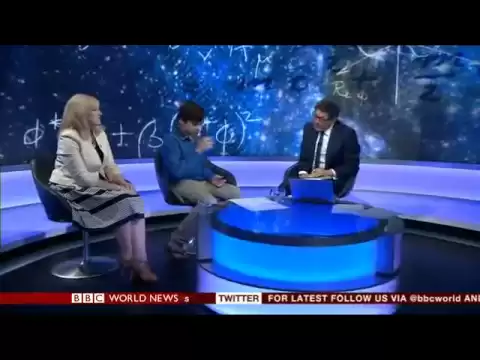
This approach, which she turned into the concept of “spark,” became the center of the family’s public narrative and also of the Jacob’s Place foundation, a community initiative created by the Barnetts to support autistic children and those with other special needs in Indiana.
CBS and other biographical profiles report that Jacob’s Place served about 200 children.
During this period, astronomy emerged as a decisive bridge. The family began to report that Jacob regained his speech and increased his interaction with the world as he immersed himself in constellations, nebulae, planetariums, and mathematical patterns linked to the cosmos.
This part of the story was central to Jacob Barnett’s public image: an autistic boy who did not “overcome” his way of thinking, but transformed it into a pathway to theoretical physics. This interpretation appears both in his mother’s speech and in interviews with Jacob himself, who told CBS that autism was an inseparable part of his reasoning and academic success.
Jacob Barnett At University: Physics Classes, Accelerated Academic Progress, And Early Entry Into Higher Education
At 13, Jacob Barnett was already presented by CBS as a university student in mathematics and sciences, after having accelerated several school years in a row.
The report from 60 Minutes stated that he had completed, in just over a year, the equivalent of Indiana’s curriculum from 6th grade to the end of high school. This leap was one of the pillars of Jacob Barnett’s fame as the “boy genius” of physics.
At this stage, the story consolidated that he had learned calculus in a very short time and began attending university courses while still very young.
Although part of this narrative has been spread primarily by biographical profiles and by the family itself, there is a verifiable and solid fact: Jacob Barnett actually became a co-author of a scientific paper published while still in his teens, which placed him early in the real academic circuit of mathematical physics.
Paper In Physical Review A And The Beginning Of Jacob Barnett’s Scientific Production
Jacob Barnett’s first academic paper published in a high-level journal was “Origin of Maximal Symmetry Breaking In Even PT-Symmetric Lattices,” co-authored with Yogesh N. Joglekar and published in Physical Review A in 2011.
The paper exists, is indexed by APS and arXiv, and marked Jacob Barnett’s entry into formal scientific literature while still very young. The Perimeter Institute also cited this work in its institutional presentation of Jacob.
Around this paper emerged another claim repeated in reports and profiles: that he was the youngest person ever published in the history of Physical Review A.
This allegation circulates in biographical materials and in secondary profiles, but I couldn’t find formal confirmation from the American Physical Society declaring this record on its institutional website. For factual rigor, the safest statement is that Jacob Barnett published in Physical Review A while still very young, in a rare and extraordinary feat for any teenager.
Perimeter Institute And The University Of Waterloo: Jacob Barnett Became The Youngest Student In The History Of The Program
The most documented academic leap in Jacob Barnett’s trajectory came in Canada. In 2014, the Perimeter Institute officially announced that its new class included “its youngest-ever student,” meaning its youngest student of all time: Jacob Barnett. This is one of the most solid and verifiable points of his entire public biography.
In the Perimeter ecosystem, Jacob Barnett became part of the high-level training network linked to the University of Waterloo.
Institutional reports from Perimeter itself list him among graduate students associated with the institute, and one of those reports records his link with Lee Smolin, one of the best-known names in contemporary theoretical physics. This confirms that his entry into the research environment was not just media-driven, but indeed institutional.
The famous master’s thesis on “Fermion Doubling In Loop Quantum Gravity” was widely associated with Jacob in news articles and biographies of the time, and his subsequent production confirms his continued interest in quantum gravity and mathematical physics. Nevertheless, the most verifiable academic milestone today is the PhD completed at Waterloo.
Jacob Barnett’s PhD In Theoretical Physics And Research In Pseudo-Hermitian Physics
In 2023, Jacob Barnett completed his thesis “Locality And Exceptional Points In Pseudo-Hermitian Physics” at the University of Waterloo, now available in the university’s institutional repository and also on arXiv.
The work addresses pseudo-hermitian operators, locality in quasi-hermitian quantum theory, symmetries, conserved quantities, and exceptional points in non-hermitian operators. This demonstrates a mature and technically specialized trajectory, far from the superficial image of a “child prodigy” often reproduced in the media.
His academic profile can also be traced through Google Scholar, where articles in Journal of Physics A and other works in quantum physics and theoretical mathematics appear.
In other words, Jacob Barnett did not get stuck in childhood fame: he has indeed built real scientific production in mathematical physics and non-hermitian quantum mechanics.
Jacob Barnett At BCAM, Spain: Postdoc And Current Work In Applied Mathematics
After completing his PhD, Jacob Barnett began working at the Basque Center for Applied Mathematics (BCAM), in Bilbao, Spain.
The official BCAM website lists him as an organizer of events and courses, including the activity “Indefinite Inner Products And Non Self-Adjoint Operators,” held in March 2025, as well as recording him in meetings on quantum mathematics. This confirms his active academic role in Europe in 2024 and 2025.
This stage is important because it shifts the narrative of Jacob Barnett from extraordinary childhood to the adult life of a researcher.
He stopped being just “the boy who surprised Einstein” in the headlines and became a mathematical physicist actively working in a European research institution. This is one of the most important points to correct in the content: Jacob Barnett is not just a former prodigy; he remains academically active and connected to cutting-edge research.
Jacob Barnett, Natalia Grace, And The Family Controversy That Returned To The News
The most delicate part of Jacob Barnett’s recent biography involves the Natalia Grace case. The family’s name returned strongly to the news with documentaries, series, and reports about the adoption of the Ukrainian girl with dwarfism by Kristine and Michael Barnett, the subsequent abandonment in an apartment in Indiana, and the public dispute over her real age.
The Hulu series The Curious Case of Natalia Grace and reports from People and Business Insider reconstructed the case, recalling that Michael was acquitted in 2022 and that the charges against Kristine were later dropped. In 2025, the dramatization Good American Family rekindled public interest in the topic.
Jacob appeared peripherally in this scandal, and his name was inevitably dragged into the media coverage for being the couple’s most well-known child. In recent profiles, he appears trying to distance himself from this public circus while continuing his academic career. This segment should be treated with precision and sobriety, as it involves litigation, family trauma, and intense narrative disputes in the media.
The Legacy Of Jacob Barnett Today
Jacob Barnett’s story remains powerful because it encompasses three layers at once: a diagnosis of severe autism in childhood, an academic leap far above average, and subsequent consolidation as a mathematical physics researcher.
At the same time, his biography demands care, as many headlines from the first phase exaggerated records, anticipated improbable awards, and mixed proven facts with enthusiastic projections.
What remains firmly verifiable is that Jacob Barnett was presented by CBS as a university student with autism while still a teenager, became the youngest student ever admitted to Perimeter Scholars International, completed his PhD at the University of Waterloo in 2023, and today appears connected to BCAM, Spain, in research and teaching activities. This is enough to place him among the most extraordinary cases of early academic development linked to theoretical physics in recent decades.








-

-

2 pessoas reagiram a isso.