





 Portuguese
  English
  Spanish
  5 min of reading
  0 comments


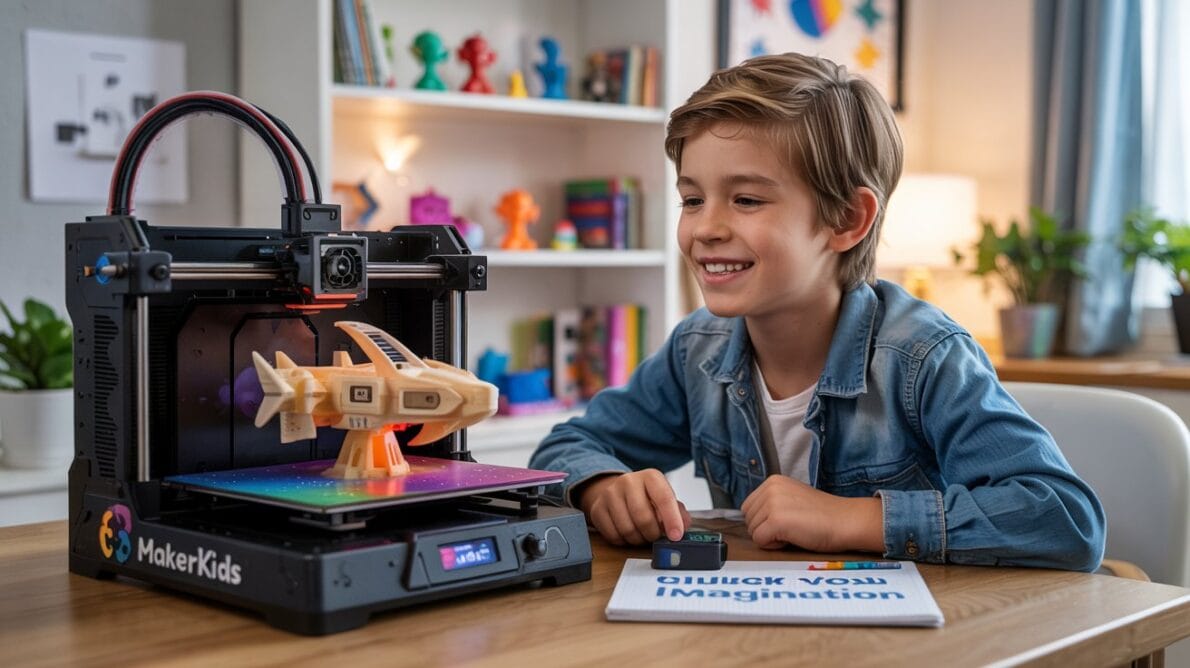
Child Entrepreneurship Stands Out With 10-Year-Old Boy Who Starts 3D Printing Company and Surprises By Applying Concepts of Finance and Technological Innovation at Home, Showing How Early Financial Education Can Transform the Future of a Generation.
At just 10 years old, American boy Jacob Heitmann is already acting like a true entrepreneur, managing a profitable 3D printing business right from his home in Indiana, in the United States.
Since he started, he has already accumulated over US$ 1,700 in revenue, selling toys and custom replicas he created himself with the help of a 3D printer.
Jacob not only runs his own company but also demonstrates skills that many adults are still learning to develop: focus, organization, and, most importantly, solid financial education concepts.
-
At 100 years old, an elderly man who dreamed of “making it to the newspaper” finally shares his story, reaching his centenary with children, grandchildren, great-grandchildren, and great-great-grandchildren, moving his family with a life of hard work, farming, honesty, and without vices.

-
Germany proposes silent propellers to solve a centuries-old problem: the damage caused in the ocean by ship noise.
-
Ports like Santos and Paranaguá are operating at their limits and may block containers as early as 2030, warns a study by Macroinfra; bottlenecks increase costs and delays and push cargo to Rio, Salvador, Pecém, and Suape across Brazil.

-
What the Public House of Julius Caesar was like inside in the Roman Forum: layout, atrium with compluvium and impluvium, tablinium and peristyle, and the scandal of the Bona Dea, revealed in an AI recreation.


His case was highlighted on the specialized website CNBC Make It, which detailed how the boy managed to turn a passion for technology into a source of income.
Routine of a Small Great Entrepreneur
Every day, even before going to school, Jacob starts his entrepreneurial journey.
He accesses his personal website and the e-commerce platform Etsy, where he maintains his virtual store, to check the orders placed by customers.
From there, he sets his 3D printer in motion and moves on to his studies while the products are automatically produced at home.
The initiative stemmed from a simple desire: to sell customized items that were different from the common toys available in stores.
Noticing their son’s enthusiasm, his parents decided to invest in an Ender model 3D printer, which cost around US$ 300.
The bet paid off.
In a short time, demand grew, and the income generated allowed for a new investment: a multicolor Bambu Lab P1S printer, valued at US$ 949.
Even at such a young age, Jacob already understands essential concepts such as pricing, cost-benefit, and sales planning.
In one of his experiences, he received an order to manufacture miniatures of the Chase Tower, one of the most iconic buildings in Chicago.
The initial intention was to sell each piece for US$ 20.
However, with guidance from his father, he realized he needed to consider the production time and material costs, readjusting the price to US$ 45 per unit.
This strategic adjustment resulted in revenue of US$ 540, an amount that was immediately allocated to the savings account the boy maintains to invest in the future — whether for college or for new equipment to improve his business.
The Importance of Financial Education From an Early Age
Jacob’s success is more than just a curiosity: it is a practical example of how financial education can be effective when taught from childhood.
Instead of merely consuming technology, he learned to use it as a tool for production and income.
Experts argue that developing financial skills in childhood helps shape adults who are more prepared to make conscious decisions about money, consumption, and investments.
Additionally, children who learn about budgeting, profit, and costs from an early age tend to have more financial responsibility throughout their lives.
In the United States, some schools already incorporate basic personal finance concepts into their curriculum, but many cases like Jacob’s arise from family encouragement and the natural curiosity of children.
In Brazil, this debate is also beginning to gain traction, with legislative projects and private initiatives aiming to include this type of content in classrooms.
3D Printing: A Universe of Possibilities
The field chosen by Jacob was not by chance.
3D printing has become an increasingly accessible and versatile technology, used in various areas such as medicine, engineering, architecture, fashion, and, of course, in creating toys and custom objects.
According to a report from Grand View Research, the global 3D printing market is expected to reach over US$ 76 billion by 2030, driven by the growing demand for customization, rapid prototyping, and on-demand production.
This means that the young entrepreneur is part of a promising sector — and with a very lucrative future.
The adoption of technology can also represent a valuable opportunity for young entrepreneurs looking to start a business with low initial costs and great potential for innovation.
With platforms like Etsy, Amazon, and Shopee, it is possible to sell personalized products worldwide without needing a physical store.
Family Support is Essential
Jacob’s success is also the result of a support network that includes his parents and family members.
In addition to investing in the necessary equipment, the boy’s parents guide him in business decisions and help ensure that the business runs without compromising his school routine and leisure time.
This balance between childhood and entrepreneurship is essential.
According to psychologists and educators, it is important for children to have space to play, rest, and develop emotionally, even when they are involved in commercial or creative projects.
Jacob’s father, in fact, has become an informal mentor, explaining more complex concepts and helping his son visualize the impact of each financial decision in the short and long term.
This type of involvement strengthens family bonds and provides a solid foundation for children to develop autonomy responsibly.
The Promising Future of a Young Dreamer
Even at just 10 years old, Jacob already has plans for the future.
Part of the money raised is being saved for college — he dreams of studying engineering or technology.
Another part will be reinvested in new equipment, allowing his production to become even more efficient and diverse.
“I always wanted to sell things to people. It’s fun. It always made me feel like a big businessman,” the proud boy Jacob said.
This statement summarizes not only the young entrepreneur’s precocious maturity but also his enthusiasm for the world of business and creation.
As he grows, young Jacob continues to learn and expand his vision of what it means to be an entrepreneur, showing that the combination of passion, family support, and education can yield extraordinary results — even when the entrepreneur is under 1.5 meters tall.
And you, have you ever thought about how encouraging children to handle money and responsibility better from an early age can shape the future of an entire generation?





Seja o primeiro a reagir!