





 Portuguese
  English
  Spanish
  7 min of reading
  0 comments



The 8-Year-Old Boy, Student in Third Grade at Bates Academy in Detroit, Learned to Read by Himself at 3, Scored High Enough to Rank Among the Top 2% IQs in the World and, Upon Joining Mensa, Began to Inspire Teachers, Colleagues, Parents and the Whole Community Around Him.
The 8-year-old Miles Dantzler went from being just a good student to becoming one of the most talked-about names in Detroit after joining Mensa, an international society known for bringing together people with very high IQ test scores. In third grade at Bates Academy, he was already attracting attention for his learning pace, but the recognition gained another dimension when his score placed him among the top 2% IQs in the world.
The achievement did not come suddenly nor was it treated as an isolated episode. From an early age, Miles showed signs of learning at an above-average speed, especially when he started reading by himself at 3 and began to surprise his family with corrections during story reading. At the same time, the case also draws attention for another reason: behind the impressive performance, there remains a child who likes video games, toys, siblings, and everyday discoveries, which makes his story even more relatable and human.
A Rare Achievement That Started Long Before the Acceptance Letter
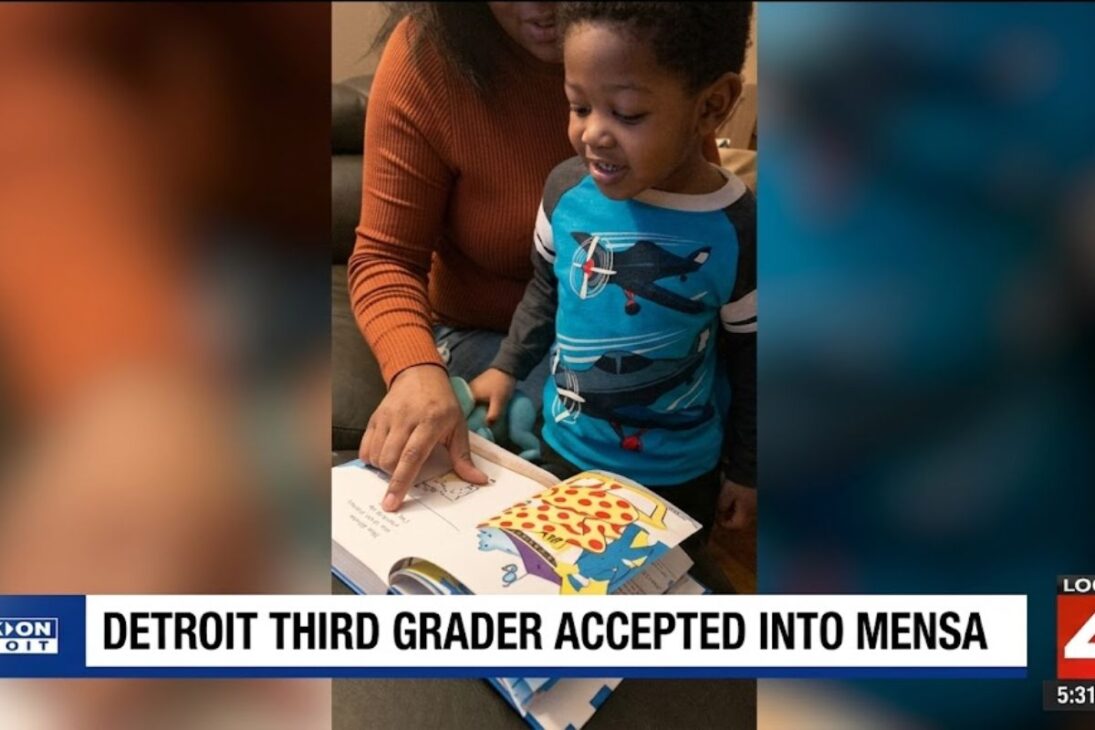
Joining Mensa is often associated with something far from the reality of most children, but in the case of Miles, the foundation of this achievement began to appear long before the formal acceptance. Reports about his childhood show that learning did not depend solely on the school environment. Self-taught reading at age 3 already indicated an unusual ability to recognize patterns, understand words, and advance in content that typically comes later for children of the same age group.
-
He found the largest gold shipwreck in the United States with tons of the precious metal at a depth of 2,400 meters in the Atlantic and recovered a treasure that no one thought possible to reach, but 500 gold coins disappeared without explanation.

-
The United States has a serious problem with its F-35s: China is already producing fighters at a pace that exceeds American capacity and could manufacture up to 300 aircraft per year before the end of the decade, shifting the global military balance.

-
A retired IT professional built a 22-meter boat in his backyard in Oklahoma with a school bus engine, light pole masts, and handmade watertight doors to become the redneck version of Jacques Cousteau.

-
China is building a city in Brazil: a complex with an investment of R$ 5.5 billion comes to light, but allegations involving workers draw attention.


This early development was perceived very concretely at home. Instead of just following stories, Miles began correcting adults during reading and demonstrated an understanding that exceeded what was expected for his age.
This does not mean just “getting good grades” or answering quickly in class, but revealing a thought structure capable of organizing information, making connections, and absorbing knowledge at an enormous speed. It was this set of signs, and not a single isolated moment, that helped explain why the boy achieved such a high score on the IQ test.
The figure that stands out is the fact that he ranked among the top 2% of the world’s best results, a demanding mark enough to open the doors of Mensa. This placement helps to gauge the size of the achievement without turning the story into an exaggeration.
In practical terms, it means that Miles’s performance was enough to place him in an extremely select group, something that the narrative around the case reinforces by reminding us that many adults never achieve this type of admission. The weight of the news lies precisely there: it is not just an intelligent child, but someone who has reached a standard of excellence that is very unusual.
Detroit, Bates Academy, and the Immediate Effect Within the School
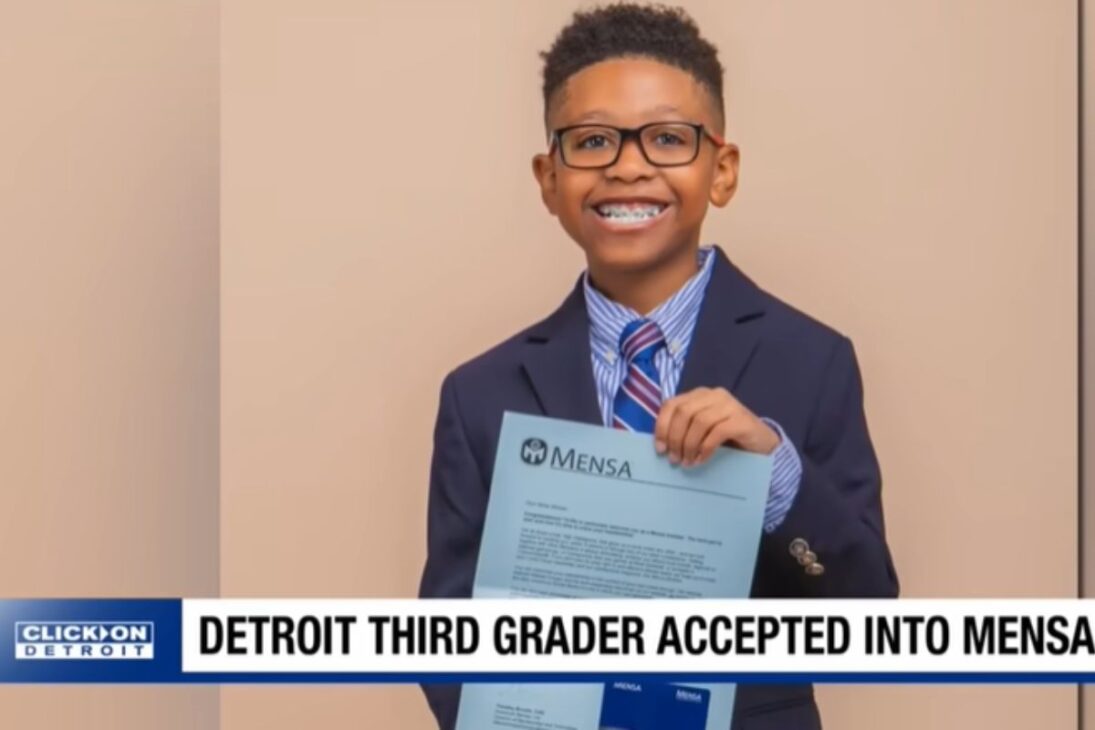
Miles spends his days at Bates Academy in Detroit, and it was precisely in this environment that his achievement gained collective significance. What could have remained within the family or a closer circle quickly became a source of pride for teachers, school staff, classmates, and residents of the community.
The repercussion did not come only from his admission to a high IQ society, but because it visibly revealed the potential of a child who was already there, sharing his routine with other third-grade students.
This detail is important because it brings the story closer to the real daily life of those who follow the school life. The 8-year-old boy is not isolated in a bubble of genius. He is in a school, interacting with other children, learning, playing, and growing in a collective space. When teachers say that this achievement inspired other students to work harder and want to understand what it meant, a concrete effect appears: the recognition of a student’s talent begins to expand the horizons of others.
The reaction of classmates also shows how an individual achievement can produce healthy curiosity. Some wanted to know what it meant to join Mensa, others asked how that was possible, and some showed a desire to pursue something similar. This kind of response is valuable because it shifts the story from the realm of distant admiration to the field of practical inspiration. When one child sees another child being recognized, the result can be a change in how they perceive study, effort, and future possibilities.
Unbridled Curiosity and Interest in Topics Beyond Their Age
Another point that helps to understand why Miles attracted so much attention is the breadth of his interests. At home, he watches educational videos on YouTube to learn more, and his repertoire ranges from dinosaurs to geography.
It is not just about liking to study in the traditional sense, but maintaining an active, constant, and spontaneous curiosity. This trait appears as one of the strongest marks of his intellectual personality: he does not wait for knowledge to arrive, he goes after it.
This continuous pursuit of information helps to explain why his development seems so organic. Children with great cognitive ability often reveal an intense relationship with varied themes, and Miles demonstrates exactly that by navigating complex subjects with ease.
The mention of curiosities like Zealand, for example, reinforces this behavior of someone who transforms little-known facts into everyday topics of interest. More than simply memorizing information, he seems to enjoy the process of discovery.
This curiosity also directly connects with how his intelligence is perceived by the adults around him. Parents and teachers noticed early that he asked questions, learned quickly, and processed content in a manner above average for his age.
Asking a lot, observing a lot, and connecting ideas quickly may be one of the clearest ways to see what makes Miles’s case so unique. It is not just the result on a test that impresses, but the continuous pattern of intellectual behavior that supports this result.
What Changes When an 8-Year-Old Boy Joins Mensa
Acceptance into Mensa represents more than a symbolic seal. For Miles, it means the possibility of further challenging his mind and connecting with others who share similar interests. This aspect is particularly relevant because children with high intellectual capacity often need appropriate stimuli to avoid being limited to routines that no longer challenge them in the same way. Joining Mensa opens doors for interaction, exchange, and broadening of repertoire.
The family’s reaction helps to gauge how much the achievement was seen as deserved, and not as an absolute surprise. The feeling conveyed is of recognition of something that has been built up over the years. When parents observe him correcting readings and absorbing knowledge at an unusual speed, joining Mensa becomes almost a formal confirmation of abilities perceived long before. This gives the story a tone less of astonishment and more of validation of a journey that was already visible.
There is also an important gain in terms of confidence. Miles himself demonstrated pride in the score achieved, and this feeling can be decisive in the development of any child. Knowing that his abilities have been recognized by a respected institution tends to strengthen self-esteem, sense of belonging, and desire to continue learning. Recognition, when well conveyed, does not have to become pressure; it can become momentum, direction, and opportunity.
Beyond High IQ, a Child Who Remains a Child
One of the most interesting aspects of this story is the care in showing that Miles has not been reduced to the image of a prodigy.
Even with the entrance into Mensa and the repercussions of the result, he continues to be presented as an 8-year-old boy who enjoys video games, toys, games, and spending time with his siblings. This point is essential because it prevents the narrative from transforming the child into an abstract and distant symbol. Talent impresses, but childhood remains.
This balance is also important for the debate on gifted children. Often, stories like this are treated solely under the lens of performance, as if everything revolves around the extraordinary result.
However, Miles’s case suggests something broader: a child can have intellectual capacity far above average and, at the same time, maintain likes, routines, and needs typical of their age. This combination helps to remind us that advanced development does not negate affection, lightness, and play.
By showing an exceptional student who continues to be described as kind, lovable, and fully integrated into the childhood universe, the story gains depth. It is not just a narrative about IQ, but about identity, belonging, and opportunity.
This changes the perspective on the achievement itself: instead of seeing just a statistical mark, we begin to see a real child, with enormous potential, but also with a life that needs to continue being lived in balance.
The trajectory of Miles Dantzler draws attention because it brings together rare elements along the same path: self-taught reading at 3 years, performance enough to rank among the top 2% IQs in the world, admission to Mensa at 8, and direct impact within the school and community in Detroit.
Still, what makes this story truly powerful is not just the extraordinary performance, but the way it inspires other children, brings pride to the family, and shows that talent, when recognized early, can gain direction without losing humanity.
Cases like this 8-year-old boy’s often evoke admiration, curiosity, and even debate over how schools and families should support children with above-average abilities. In your opinion, the most important thing is to identify these talents as early as possible, provide appropriate challenges, or ensure that childhood remains light despite all the spotlight?







-

4 pessoas reagiram a isso.