





 Portuguese
  English
  Spanish
  5 min of reading
  0 comments


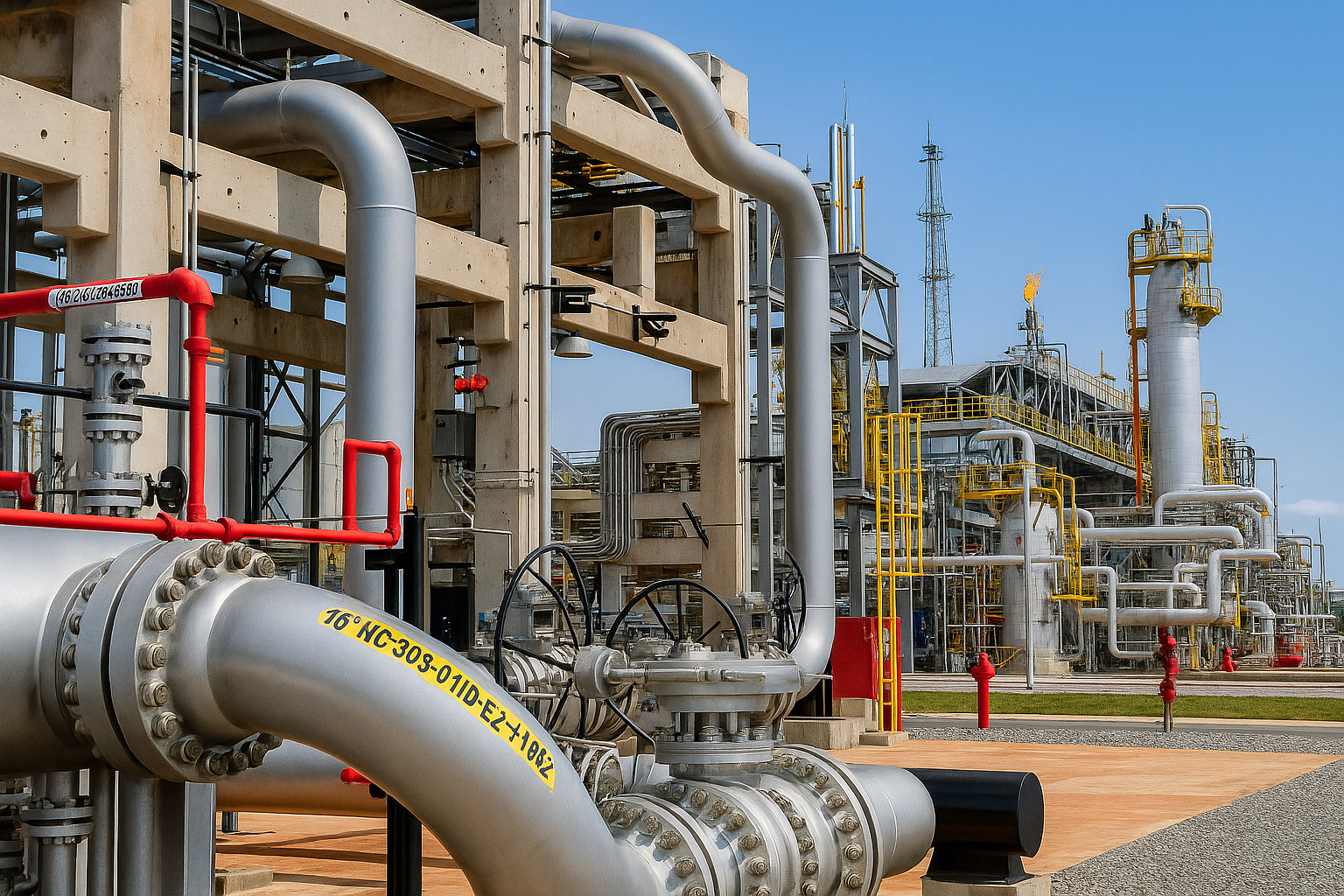
Brazil Reinjects 54% of Natural Gas Production in July, Reducing Internal Supply and Raising Prices for Industry and Consumers in the Country.
The natural gas market in Brazil has undergone significant transformations in recent decades. In this context, one of the central points is the practice of reinjecting fuel into reservoirs.
In July, Brazil reinjected 54% of its production of natural gas, totaling 103 million cubic meters per day, out of a total of 191 million cubic meters produced daily, according to data from ANP (National Agency of Petroleum, Natural Gas, and Biofuels).
Thus, although the practice is technical and strategic for oil production, it directly affects internal supply and gas prices in the country.
-
A major turn in the Justice system suspends tax increases and directly impacts oil and gas companies in Brazil by affecting costs, contracts, and financial planning, leaving uncertain what could happen to the sector if these costs had increased.

-
Brava Energia begins drilling in Papa-Terra and Atlanta and could change the game by reducing costs in oil while increasing production and strengthening competitiveness in the offshore market.
-
Petrobras surprises the world again by announcing a new discovery in the pre-salt with excellent quality oil.

-
Offshore industrial demand in Macaé skyrockets with the recovery of oil and gas and could grow by up to 396% by 2026 in the Campos Basin.
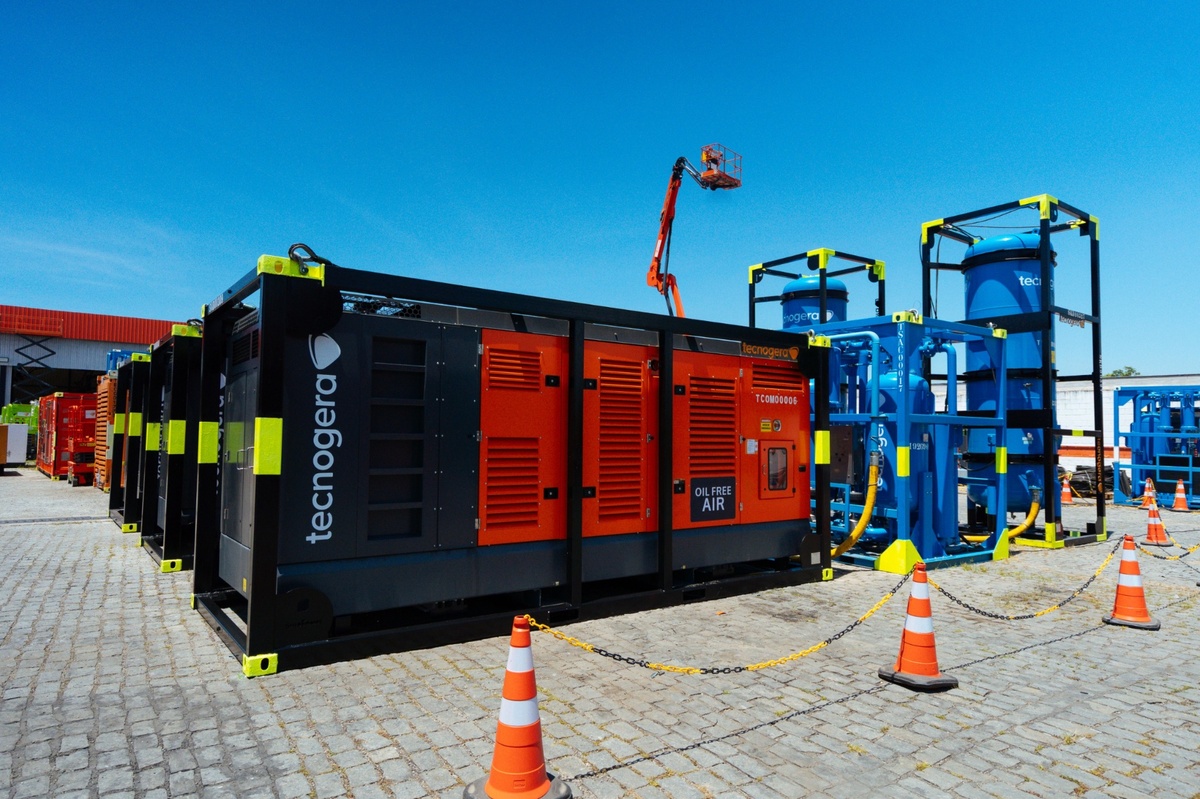

Historically, natural gas reinjection intensified in Brazil from 2015 onwards, with the commissioning of the major pre-salt platforms.
Moreover, the country extracts a large portion of its natural gas associated with oil, meaning the gas is produced alongside oil.
In such situations, operators need to choose between marketing gas or reinjecting it into reservoirs. Therefore, the decision involves not only economic factors but also operational ones, as gas extraction enables oil production.
In the years prior to the pre-salt exploration, companies performed reinjection less frequently, mainly in smaller onshore fields.
With the discovery of deep reserves, the practice became strategic, ensuring that Brazil extracted larger volumes of oil without compromising reservoir stability.
This historical context explains why the reinjection rate has significantly increased, reaching current levels of 54%.
Reinjection Strategy and Impact on Oil Production
Reinjection increases pressure in reservoirs, facilitating oil extraction and contributing to increased oil production.
On the other hand, this practice reduces the amount of gas available in the domestic market, raising prices for industry and consumers.
Therefore, the value of natural gas, while significant, often loses out to the economic benefit of maximizing oil production, which holds greater value in the international market.
Consequently, the effect on internal prices becomes significant.
The Brazilian industry, especially energy-intensive sectors, faces high natural gas costs.
The Minister of Mines and Energy, Alexandre Silveira, questions the high reinjection rate, highlighting the negative impact on the competitiveness of companies in the country.
Additionally, he points out that the price difference between Brazilian gas and that available in other countries makes industrial production more expensive, hindering national economic development.
Besides the direct impacts on prices, reinjection also influences decisions on investment in new energy projects.
Thus, companies constantly assess whether it is more worthwhile to invest in infrastructure to increase production capacity or to prioritize oil extraction with reinjection.
In this way, this strategic decision affects not only the domestic market but also Brazil’s position in the global energy trade.
The debate around natural gas reinjection involves not just technical issues, but also strategic ones.
For decades, Brazil sought to balance oil production with gas supply in the domestic market.
However, the pre-salt brought new opportunities but also challenges: increasing oil production without compromising the supply of natural gas for domestic and industrial consumption.
In this context, public policies and decisions by companies such as Petrobras gain significant relevance.
Government Programs to Expand Access to Gas
In addition to market and price issues, the federal government also seeks alternatives to expand the population’s access to gas.
A recent example is the program Gas for All, launched to replace the old Auxiliary Gas model.
This initiative aims to democratize access to natural gas and LPG, popularly known as cooking gas, especially in regions with greater social vulnerability.
Therefore, the goal is to reduce regional inequalities, improve the quality of life for Brazilian families, and strengthen the country’s energy security.
The need to expand the supply of natural gas to the domestic market has existed for decades.
In the 2000s, reliance on imports and limitations on domestic production concerned both the government and the industry.
However, the discovery of the pre-salt brought expectations of self-sufficiency and growth in energy production.
But the high reinjection keeps the supply restricted.
Thus, the country needs to reconcile oil exploration with policies that encourage the distribution of natural gas for internal consumption, without compromising economic development.
Even with high reinjection, Brazil maintains programs that encourage renewable energy production and the expansion of natural gas to less served regions.
This integrated approach seeks to reduce regional inequality in access to energy and create conditions for the population and industry to have access to more affordable and reliable fuels.
Sustainability and Energy Planning
The practice of reinjecting natural gas, although advantageous for oil production, also raises discussions about sustainability and energy efficiency.
When gas reenters the reservoirs, it ceases to generate electricity, heat industries, or supply homes.
This scenario reinforces the importance of an integrated energy policy that balances oil production, internal gas consumption, and investments in renewable energy.
Additionally, reinjection directly impacts the planning of transportation and distribution infrastructure for natural gas.
Gas pipelines and terminals need to consider both the available volume and future demand.
With 54% of production reinjected, the space for expanding the domestic market becomes limited, requiring strategic measures to improve sector efficiency and reduce logistical bottlenecks.
Historically, Brazil faced similar challenges with other natural resources, balancing production and internal consumption.
In the case of natural gas, the situation repeats itself, and the country needs solutions that encourage investments in new technologies, efficiency in extraction and distribution, as well as public policies that benefit both industry and the population.
Thus, the balance between reinjection and commercialization proves crucial to ensure that Brazil fully leverages the potential of the pre-salt and maintains competitive prices in the domestic market.
Impact on Industry and Future Perspectives
Another relevant point involves the impact of reinjection on the country’s production chain.
Industrial, steel, and chemical sectors depend on natural gas to operate efficiently.
At the same time, the high reinjection rate, by reducing supply, raises production costs and affects the competitiveness of Brazilian companies in the international market.
Consequently, technical decisions in the energy sector directly impact the economy, demanding dialogue between government, companies, and society.
In summary, the fact that Brazil reinjected 54% of natural gas production in July reflects a strategy consolidated since 2015, aimed at maximizing oil production from the pre-salt.
However, this practice brings direct impacts on the domestic market, raising gas prices and challenging both industry and the population.
Programs such as Gas for All, coupled with public policies and investments in infrastructure, represent important steps towards balancing supply and demand, ensuring that the country’s energy growth benefits all of society.
The future of the natural gas market in Brazil depends on the ability to reconcile efficient pre-salt exploration with policies that expand supply for the domestic market, reduce inequalities, and strengthen industrial competitiveness.
With strategic planning and continuous investment, the country has the potential to transform natural gas into a resource that is accessible, economical, and sustainable for all.










Seja o primeiro a reagir!