





 Portuguese
  English
  Spanish
  5 min of reading
  0 comments


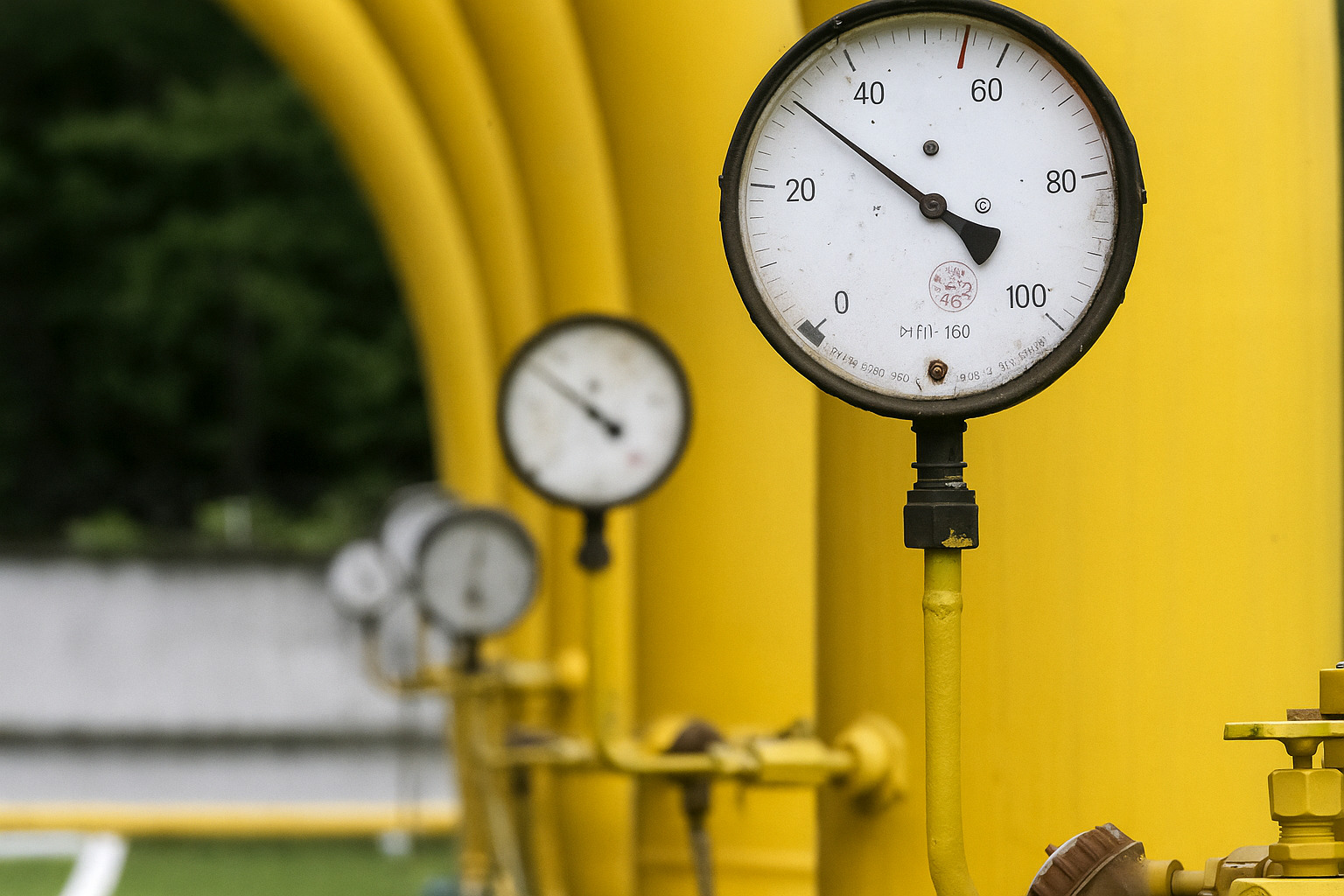
Rising Natural Gas Market Drives Negotiations and Strengthens Global Expectations
The rising natural gas market is attracting more attention from investors and analysts.
In fact, the surge in futures during the European session reinforces the growing importance of this energy resource for the global economy and for energy security.
The Start of Movements in the Market
On the New York Mercantile Exchange, natural gas futures for November rose and reached US$ 3.16 per million British thermal units.
-
Lula reveals a masterstroke by Petrobras to undo a deal made by Bolsonaro, which involves the return of an important refinery that currently produces less than half of what was expected and makes Brazil dependent on international diesel.
-
A study confirms that the natural gas sector will reduce greenhouse gas emissions in Brazil by 0.5% and accelerate the energy transition by 2026.

-
Petrobras implements a severe adjustment and confirms a 55% increase in the price of aviation kerosene with a proposal for installment payments for the companies.

-
The rise in oil prices could ensure an extra revenue of R$ 100 billion for the Federal Government, indicates a recent economic study.


Thus, the movement shows the market’s appetite for more stable energy sources in a scenario marked by volatility.
Moreover, natural gas has been consolidating as a strategic alternative amid oil fluctuations.
During the session, contracts oscillated in search of equilibrium; however, they maintained the upward trend.
Consequently, investors closely monitored the support and resistance levels, which reinforced confidence in this asset.
At the same time, the movement occurred in parallel to the appreciation of the Dollar Futures Index, which rose by 0.04% and directly influenced commodity prices.
Still, even with this strengthening of the American currency, natural gas sustained gains.
This highlights its relevance in international trade.
Historical Context of Natural Gas
However, natural gas did not gain global importance overnight.
On the contrary, its use dates back to the 19th century, when the first pipelines began supplying industrial cities.
Since then, this source has transformed into an essential energy pillar for electricity generation, heating, and industry.
Additionally, in the 20th century, oil crises such as that of 1973 boosted the search for alternative sources.
Thus, natural gas emerged as a strategic solution, as it combined availability with a lower environmental impact compared to coal and oil.
Today, countries heavily invest in infrastructure for natural gas transportation and liquefaction.
Therefore, they reinforce their position in the energy landscape.
Thus, this history helps explain why the rising natural gas market attracts so much attention.
The European Influence on the Upward Movement
Europe also plays a central role in the formation of global natural gas prices.
After all, the continent relies heavily on imports to ensure supply.
Therefore, each market fluctuation is carefully monitored by governments and companies.
In recent years, geopolitical tensions involving strategic suppliers, such as Russia, have accelerated investments in new routes and contracts.
Thus, the interest in futures traded on international exchanges has expanded and directly impacted prices.
So, when futures rise during the European session, the impact spreads across different continents.
Consequently, the market interprets this movement as a signal of confidence, especially during periods of higher demand, such as winter in the northern hemisphere.
Relation with Other Energy Commodities
The performance of natural gas is also connected to other commodities, such as oil and derivatives.
For instance, during the same period, oil fell by 0.65%, trading at US$ 64.57 per barrel.
Meanwhile, oil for October delivery rose slightly, trading at US$ 2.38 per gallon.
This correlation demonstrates that the energy market operates in an integrated manner.
That is, changes in oil influence perceptions about natural gas and vice versa.
However, the recent rise in natural gas futures reveals a growing search for diversification in the energy matrix.
The Role of the Dollar in Price Formation
The strengthening of the dollar has a direct influence on commodities.
After all, since the American currency serves as a benchmark in international transactions, its appreciation generally makes contracts more expensive for importing countries.
Still, even with this pressure, natural gas maintained gains.
Therefore, global demand remains high, and investors see safety in this asset.
In this sense, the rising natural gas market reflects not only economic factors, but also concerns about stability and energy planning.
Global Demand and Future Prospects
The demand for natural gas is growing in different regions of the world.
In Asia, for example, countries like China, Japan, and India are increasing the use of this source to reduce carbon emissions and ensure supply in urban areas.
Meanwhile, in Latin America, infrastructure projects are expanding distribution and attracting new investments.
In the United States, domestic production strengthens the country’s position as a global natural gas exporter.
Thus, the advancement of liquefied natural gas (LNG) allows it to cater to strategic partners and enhances American competitiveness in the global market.
In Europe, in turn, the energy transition and the search for lower external dependency stimulate long-term contracts.
Thus, the continent bets on new partnerships and technology to ensure energy security, especially during periods of crisis.
Natural Gas and the Energy Transition
Although the world is advancing towards renewable sources, natural gas still plays a crucial role in the energy transition.
This happens because it serves as a bridge between more polluting fossil fuels and clean alternatives.
Moreover, its combustion releases less carbon than coal and oil.
Thus, it becomes more attractive for countries that seek to meet environmental goals.
Likewise, the flexibility in transportation and the possibility of storage reinforce its position in global energy planning.
Therefore, the rising natural gas market symbolizes not only financial gains, but also the strategic relevance of this source for the future of energy.
Long-Term Prospects
Experts assess that natural gas will remain relevant in the coming decades.
After all, the expansion of LNG, the integration of new markets, and the search for energy security consolidate this trend.
At the same time, governments and companies need to balance investments in gas with the advancement of renewables.
Thus, the challenge is to build a diversified matrix, capable of meeting the growing demand without compromising climate goals.
In conclusion, the recent movement in natural gas futures shows that this source still has significant room in the international landscape.
Thus, the interest from investors confirms its strategic importance, both in the present and in the future.











Seja o primeiro a reagir!